chromium iron refractory ramming material
CN → US| HS编码 | 关税税率 | 原产国 | 目的国 | 文档 |
|---|---|---|---|---|
| 3816002050 | 38.0% | CN | US | 官方文档 |
| 6902905020 | 35.0% | CN | US | 官方文档 |
| 6815994110 | 35.0% | CN | US | 官方文档 |
| 6815910011 | 35.0% | CN | US | 官方文档 |
| 3816001000 | 35.0% | CN | US | 官方文档 |
商品图片
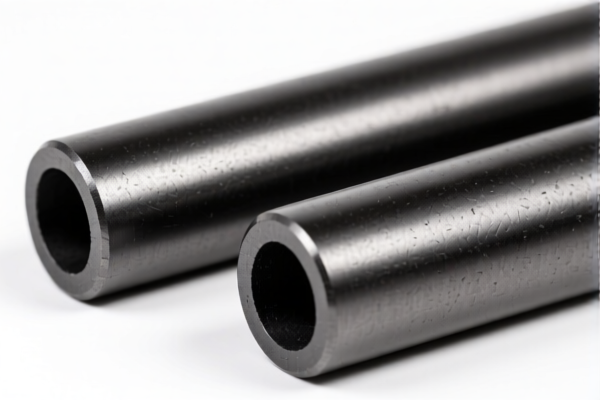
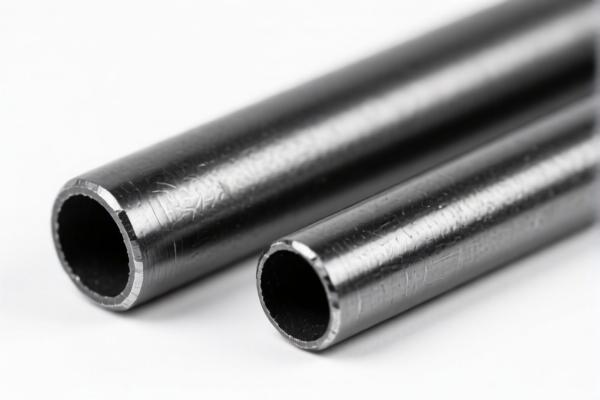

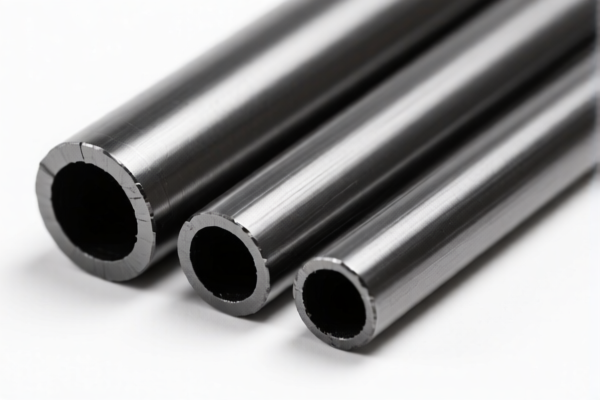
AI分析
🧱 Chromium Iron Refractory Ramming Material
🌐 HS Code Reference & Customs Clearance Guide | 2026 Latest Tariff Analysis | Professional Clearance Strategy
📌 I. Product Definition & Classification: What is "Ramming Material"?
Chromium Iron Refractory Ramming Material is a specialized unshaped refractory product. It consists of a mixture of refractory aggregates (chromium-iron oxide, magnesium oxide, alumina, etc.) and binders (often resin or asphalt-based). Unlike pre-formed bricks, it is delivered as a powder, granular, or plastic mass and must be rammed (compacted mechanically or manually) into place in furnaces, kilns, or ladles to form a monolithic lining.
⚠️ Key Distinction Point: - Unshaped/Unfired: Not a brick or tile; it is a "ramming" or "gunning" material. - Chemical Binder: Often contains organic binders (resin/asphalt) which may push classification toward Chapter 38 if it acts primarily as a chemical stabilizer, or Chapter 68/69 if it acts as a mineral structural material. - Function: High-temperature resistance (Refractory).
📦 II. HS Code Classification Details (2026 Latest Tariff Authority)
Based on the product description and technical attributes, the following HS Codes are the most probable classifications. The choice depends on the primary function and binding mechanism.
| HS Code | Product Description | Application Scenario | Primary Reason for Classification |
|---|---|---|---|
3816.00.20.50 |
Refractory cements and similar refractory mixes, whether or not chemically defined | Cement kilns, industrial furnaces | Key Match: Explicitly matches "Refractory" nature + "Cement-like" form. No clay exclusion applies. |
3816.00.10.00 |
Refractory mixes and pastes; refractory cements | High-temp lining repair/new installation | Direct Match: "Refractory" + "Ramming/Gunning" form factor. Simplest fit for unshaped refractory mixes. |
6902.90.50.20 |
Other refractory bricks, blocks, tiles and similar refractory constructions (Ceramic) | Ceramic kiln linings, specialized high-temp zones | Inferred: Viewed as an extension of ceramic refractory building materials due to "Refractory" material property. |
6815.99.41.10 |
Articles of stone or of other mineral substances (not elsewhere specified) | Chemical-bonded mineral products | Material Inference: Composed of mineral substances (MgO/Al2O3) chemically bonded. Fits "Other mineral articles." |
6815.91.00.11 |
Articles of graphite or other carbon or composite carbon articles | Electrode manufacturing, carbon-lined furnaces | Material Inference: If resin/asphalt-based binder is dominant, treated as a chemically bound mineral/carbon composite. |
🔍 Critical Clarification: - Chapter 38 vs. Chapter 68: If the product is classified as a chemical mixture for industrial use (even if refractory), Chapter 38 is often preferred by customs when specific "Refractory Mixes" headings exist. - Chapter 69: Generally for fired ceramic bricks/tiles. Since ramming material is unfired and plastic, Chapter 69 is less likely unless it is explicitly categorized under broader ceramic construction materials. - Chapter 68: For stone/mineral articles. This is a strong backup if the product is deemed a "composite mineral article" rather than a simple cement mix.
💰 III. 2026 Latest Tariff Rate Breakdown (Including Surcharges & Policy Add-ons)
✅ Applicable Country: United States (US)
✅ Origin: China (CN)
✅ Effective Time: From November 10, 2025 (and subsequent imports)
🎯 1. HS Code 3816.00.20.50 & 3816.00.10.00 (Most Likely for Refractory Mixes)
| Item | Content |
|---|---|
| Base Tariff | 3.0% (for .20.50) / 0.0% (for .10.00) |
| USITC Surcharge | +25% (Section 301 Tariff) |
| IEEPA Surcharge | +10% (China-specific tariff, effective Nov 10, 2025) |
| Total Tariff Rate | 38.0% (for .20.50) / 35.0% (for .10.00) |
| Tax Calculation | CIF Value × Total Rate |
| De Minimis Eligibility | ❌ No (Subject to strict Section 301 and IEEPA rules) |
| Legal Basis | USITC:3816.00 → FOOTNOTE:301_Section → IEEPA:China_Specific |
📌 Explanation: - Section 301 (25%): Applies to most Chinese-manufactured industrial goods, including refractory materials. - IEEPA (10%): A new or adjusted surcharge on Chinese imports, effective from late 2025. - Base Rate: Varies slightly between sub-headings (.20 vs .10), but the add-on tariffs dominate the cost. - Total Impact: Expect a 35–38% total landed duty cost. This is a high-cost category.
🎯 2. HS Code 6902.90.50.20 (Other Refractory Ceramics)
| Item | Content |
|---|---|
| Base Tariff | 0.0% |
| USITC Surcharge | +25% (Section 301) |
| IEEPA Surcharge | +10% |
| Total Tariff Rate | 35.0% |
| De Minimis Eligibility | ❌ No |
| Legal Basis | USITC:6902 → FOOTNOTE:301_Section → IEEPA:China_Specific |
🎯 3. HS Code 6815.99.41.10 & 6815.91.00.11 (Mineral/Cast Articles)
| Item | Content |
|---|---|
| Base Tariff | 0.0% |
| USITC Surcharge | +25% (Section 301) |
| IEEPA Surcharge | +10% |
| Total Tariff Rate | 35.0% |
| De Minimis Eligibility | ❌ No |
| Legal Basis | USITC:6815 → FOOTNOTE:301_Section → IEEPA:China_Specific |
📌 Note: Regardless of the Chapter (38, 68, or 69), the Section 301 (25%) + IEEPA (10%) surcharges remain consistent for Chinese-origin goods. The difference lies only in the base duty (0% vs 3%).
🛠️ IV. Customs Clearance Practical Advice (Avoiding Pitfalls)
✅ 1. Documentation Checklist (Mandatory)
| Document | Required | Notes |
|---|---|---|
| ✅ Product Spec Sheet | ✔️ | Must detail chemical composition (Cr, Fe, Mg, Al percentages), binder type, and max service temperature. |
| ✅ Material Safety Data Sheet (MSDS) | ✔️ | Crucial for customs and safety. Must indicate if resins/asphalts are hazardous. |
| ✅ Technical Description | ✔️ | Explicitly state: "Unshaped Refractory Ramming Material," "Not Pre-formed Brick." |
| ✅ Commercial Invoice | ✔️ | Clearly describe as "Refractory Ramming Mix," not just "Cement" or "Stone." |
| ✅ Certificate of Origin | ✔️ | Required for origin determination; may affect eligibility for any future exemptions. |
| ✅ Photos of Packaging/Product | ✔️ | Show bulk bags/pallets to prove it is not a finished brick. |
✅ 2. Classification Strategy (Key Mnemonic)
🔥 “Refractory + Unshaped = Ch 38 or 68; Fired Brick = Ch 69.”
| Scenario | Recommended HS Code | Risk if Misclassified |
|---|---|---|
| Powder/Granular Mix (Chromium-Iron based) | 3816.00.10.00 or 3816.00.20.50 |
Misclassifying as 6902 (Bricks) may trigger audits for "unshaped vs. shaped." |
| Resin-Bound Composite | 6815.91.00.11 or 6815.99.41.10 |
If classified as 3816, customs may argue it’s a "composite mineral article." |
| Pre-formed Ramming Brick (Rare) | 6902.90.50.20 |
If it’s actually a loose mix, this classification is wrong. |
📌 Pro Tip:
- Emphasize "Ramming Material" or "Unshaped Refractory" in the description.
- Avoid terms like "Brick," "Tile," or "Block" unless it is truly pre-formed.
- Highlight "Chromium-Iron" composition to justify refractory grade.
✅ 3. Special Cases & Exemptions
| Situation | Handling Advice |
|---|---|
| OEM Custom Mix | Provide client’s technical specs. Prove it’s not a standard commodity but a specialized industrial mix. |
| Small Samples (< $800) | ❌ No De Minimis Exemption for Section 301 goods. Even small shipments are subject to 35-38% tariffs. |
| Transshipment via Vietnam/Mexico | ⚠️ High Scrutiny: Customs will verify substantial transformation. Simple repackaging does not change origin. |
| Used/Recycled Refractory | May face additional EPA restrictions. Ensure compliance with hazardous waste laws. |
🌍 V. Global Market Comparison (2026 Overview)
| Country/Region | Recommended HS Code | Tariff (China Origin) | Certifications | Notes |
|---|---|---|---|---|
| 🇺🇸 USA | 3816.00.10.00 |
35-38% | None specific, but MSDS required | Highest cost due to Section 301 + IEEPA. |
| 🇨🇳 China | 3816.00 / 6815 |
Varies (0-10%) | CCC (if applicable) | Lower tariffs; domestic use. |
| 🇪🇺 EU | 3824.99 / 6815 |
Varies (0-6.5%) | REACH, CLP | No Section 301. Lower duty burden. |
| 🇮🇳 India | 3824.99 |
Varies (5-10%) | BIS, WQCM | Check for anti-dumping duties. |
| 🇯🇵 Japan | 3824.99 |
0-5% | JIS Standards | Generally low tariffs. |
📌 Conclusion:
- The US market is the most expensive due to cumulative tariffs (Base + 301 + IEEPA).
- EU/Asia markets offer significantly lower duty risks.
- For US imports, pre-classification rulings are highly recommended to avoid audits.
📌 VI. Common Errors & Pitfalls (Lessons Learned)
❌ Error 1: Classifying "Ramming Material" as "Cement" (2523)
👉 Consequence: Incorrect classification; cement is for construction, not high-temp refractory. May lead to penalties.
❌ Error 2: Classifying as "Bricks" (6902) when it’s loose powder
👉 Consequence: Customs may reject for "unshaped" product mismatch. Delays in release.
❌ Error 3: Ignoring Section 301 & IEEPA applicability
👉 Consequence: Unexpected 35-38% duty payment at border. Cash flow disruption.
❌ Error 4: Not providing MSDS for resin/asphalt-based mixes
👉 Consequence: Safety holds, inspection delays, or rejection if deemed hazardous.
✅ Correct Approach:
"Chromium-Iron Refractory Ramming Material (Unshaped), Chemical Mix, Non-Hazardous, for Industrial Furnace Lining, HS 3816.00.10.00"
🎯 VII. Conclusion: Professional Classification Saves Costs!
🎯 Remember This:
🔹 "Ramming = Unshaped = Ch 38/68; Brick = Fired = Ch 69."
🔹 "US Imports: 25% + 10% + Base = 35-38%."
🔹 "Always declare 'Refractory' and 'Unshaped' to avoid misclassification."
📌 Pro Tip:
If your supply chain includes Vietnam, Mexico, or Thailand, verify if substantial transformation has occurred. Simple transshipment will not avoid Section 301 tariffs. Consider Advance Ruling from US CBP to lock in the correct HS Code and tariff rate before shipping.
📣 Immediate Action:
📞 Contact a Licensed Customs Broker
📄 Provide MSDS + Technical Spec Sheet
📝 Request a Binding Ruling for HS 3816.00.10.00
🚀 Ensure Smooth Clearance, Avoid Delays, and Protect Margins!
✨ Professional Classification Starts with Precision!
💼 Every Percent of Duty Counts in Your Bottom Line!
用户评价
关于 HS 编码归类
协调制度(HS)是由世界海关组织(WCO)制定的国际贸易商品分类标准。全球 200 多个国家采用 HS 系统作为海关关税、贸易统计和进出口监管的基础。
每个 HS 编码遵循以下层级结构:
- 章(2 位)——商品大类(例如:第 84 章:机器和机械设备)
- 品目(4 位)——章内的更具体分类
- 子目(6 位)——国际通用细分,所有 WCO 成员国统一使用
- 本国细分(8-10 位)——各国自行扩展的细分编码,如美国 HTSUS 10 位编码
正确的 HS 编码归类对于顺利通关、准确缴纳关税和遵守贸易法规至关重要。错误归类可能导致海关延误、多缴关税或罚款。
从CN进口到US时,适用的关税税率可能包括:
- 最惠国(MFN)税率——适用于 WTO 成员国的标准关税税率
- 普通税率——适用于无贸易协定国家
- 贸易救济关税——附加关税,如 301 条款(反倾销)、232 条款(国家安全)或反补贴税
本页内容仅供参考。如需正式归类,请咨询当地海关或持牌报关代理。