clear silicone nail stamper
CN → US| HS编码 | 关税税率 | 原产国 | 目的国 | 文档 |
|---|---|---|---|---|
| 3919102040 | 40.8% | CN | US | 官方文档 |
| 3919905040 | 40.8% | CN | US | 官方文档 |
| 3926909989 | 22.8% | CN | US | 官方文档 |
| 9602001080 | 20.5% | CN | US | 官方文档 |
| 3926400090 | 15.3% | CN | US | 官方文档 |
商品图片
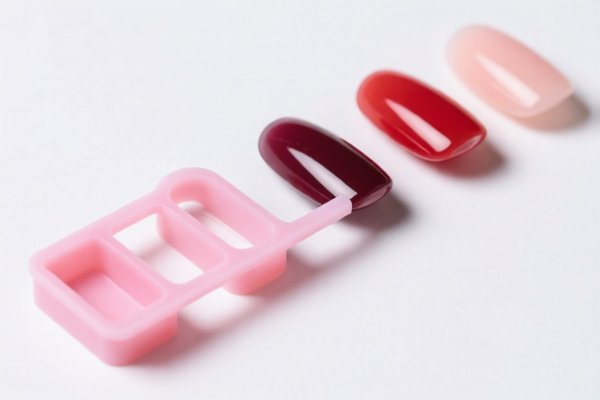
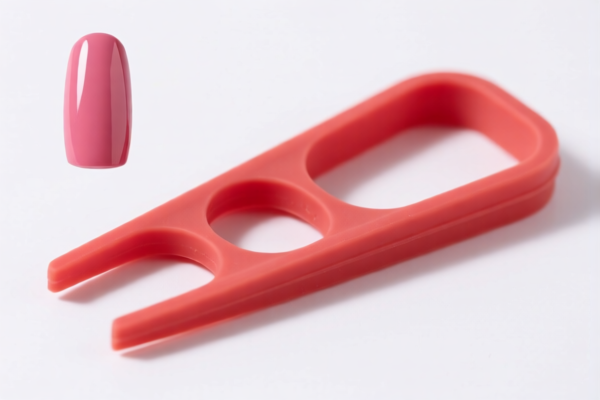

AI分析
🖌️ Clear Silicone Nail Stamper (Transparent Nail Printing Tool)
🌐 HS Code Reference & Customs Clearance Guide | 2024-2025 Latest Tariff Analysis | Professional Strategy
📌 I. Product Definition & Classification: Do You Truly Understand the "Nail Stamper"?
A clear silicone nail stamper is a cosmetic tool used in manicure procedures to transfer nail art patterns from an etched plate onto the nail surface. It consists of a silicone cylinder or flat pad attached to a handle. In international trade, the classification hinges on the material composition (Silicone vs. Plastic), physical form (Flat/Stamp vs. Other), and functional specificity.
Because silicone is often classified under Chapter 39 (Plastics) unless it meets specific chemical definitions for Chapter 40 (Rubber), many importers face complex classification decisions. The following HS Codes are derived strictly from the provided data for Clear Silicone Nail Stampers.
⚠️ Key Distinction Point:
- Silicone vs. General Plastic: While "Silicone" implies rubber-like properties, U.S. Customs and Border Protection (CBP) often classifies silicone rubber products under Chapter 39 (Plastics) if they do not meet the strict definition of natural or synthetic rubber in Chapter 40, or if they are considered "articles of plastic."
- Form Factor: Is it a "Flat/Stamp" shape (Chapter 39.19) or a "General Article" (Chapter 39.26 or 96.02)?
📦 II. HS Code Classification Details (Based on Provided Data)
| HS Code | Product Description | Basis for Classification | Total Tax Rate |
|---|---|---|---|
3919.10.20.40 |
Flat/Stamp-shaped | Transparent silicone, form is a stamp/seal. Classified as "Self-adhesive plates/rolls and other flat shapes of plastics." | 40.8% |
3919.90.50.40 |
Flat/Stamp-shaped | Transparent silicone, form is flat/stamp-like. Classified as "Other self-adhesive plastic plates/films/shapes." | 40.8% |
3926.90.99.89 |
Other Plastic Articles | Transparent silicone, form is a stamp. Classified as "Other plastic articles" (General provision). | 22.8% |
9602.00.10.80 |
Processed Material Articles | Transparent silicone, form is a stamp. Classified as "Articles of processed materials" (Specific niche). | 20.5% |
3926.40.00.90 |
Decorative/Auxiliary Items | Transparent silicone, form is a stamp. Classified as "Statuettes and other ornamental articles." | 15.3% |
🔍 Critical Analysis:
- Chapter 39 (Plastics) dominates the classification (3919and3926codes), indicating that despite being "Silicone," customs may view this as a plastic article due to its manufacturing process or specific composition standards.
- Chapter 96 (9602) offers a lower tax rate (20.5%) by classifying it as an "Article of processed material," suggesting a potential argument for it being a finished cosmetic accessory rather than a raw material or general plastic good.
- Chapter 39.26 (3926.40) offers the lowest tax rate (15.3%) by categorizing the stamper as an "ornamental" or "auxiliary" item, though this requires proving it is used for decorative purposes.
💰 III. Detailed Tariff Rate Breakdown (High-Importance)
✅ Applicable Country: United States (US)
✅ Origin: China (CN) (Inferred from "122 Clause" and typical duty structures)
✅ Effective Time: Current Regulations (Subject to Change)
🎯 1. High-Tax Bracket: 3919.10.20.40 & 3919.90.50.40
Classification: Self-adhesive plastic plates, films, sheets, and other flat shapes.
| Component | Rate | Source/Reason |
|---|---|---|
| Base Duty | 5.8% | General Column 1 Rate for plastic flat shapes |
| Section 301 / "Additional" Tariff | +25.0% | Retaliatory/Trade War tariffs on specific plastic articles from China |
| "122 Clause" Tariff | +10.0% | Specific punitive tariff provision (often related to forced labor or specific country lists) |
| TOTAL EFFECTIVE RATE | 40.8% | High Cost! |
📌 Explanation:
- The 25% addition is standard for many Chinese plastic goods under Section 301.
- The 10% "122 Clause" tariff is an additional layer, making the total cost burden significant.
- Total: 5.8% + 25.0% + 10.0% = 40.8%.
🎯 2. Medium-Tax Bracket: 3926.90.99.89
Classification: Other plastic articles (General residual category).
| Component | Rate | Source/Reason |
|---|---|---|
| Base Duty | 5.3% | General rate for other plastic articles |
| Section 301 / "Additional" Tariff | +7.5% | Reduced additional tariff for this specific subheading |
| "122 Clause" Tariff | +10.0% | Applies to the origin/product list |
| TOTAL EFFECTIVE RATE | 22.8% | Moderate Cost |
📌 Explanation:
- The base duty is slightly lower (5.3% vs 5.8%).
- The additional tariff is significantly reduced to 7.5% (down from 25%), likely due to the HS code being further removed from "flat plastic sheets."
- Total: 5.3% + 7.5% + 10.0% = 22.8%.
🎯 3. Lower-Tax Bracket: 9602.00.10.80
Classification: Articles of processed materials (e.g., seals, stampers).
| Component | Rate | Source/Reason |
|---|---|---|
| Base Duty | 3.0% | General rate for processed material articles |
| Section 301 / "Additional" Tariff | +7.5% | Same reduced additional tariff as 3926 |
| "122 Clause" Tariff | +10.0% | Applies to the origin/product list |
| TOTAL EFFECTIVE RATE | 20.5% | Lower Cost |
📌 Explanation:
- Base duty is the lowest among non-ornamental codes at 3.0%.
- Additional tariffs remain at 7.5% + 10%.
- Total: 3.0% + 7.5% + 10.0% = 20.5%.
🎯 4. Lowest-Tax Bracket: 3926.40.00.90
Classification: Statuettes and other ornamental articles of plastic.
| Component | Rate | Source/Reason |
|---|---|---|
| Base Duty | 5.3% | General rate for ornamental plastic articles |
| Section 301 / "Additional" Tariff | 0.0% | Exempt from Additional Tariff |
| "122 Clause" Tariff | +10.0% | Applies to the origin/product list |
| TOTAL EFFECTIVE RATE | 15.3% | Lowest Cost |
📌 Explanation:
- The key advantage here is the 0% Additional Tariff. By classifying the stamper as an "ornamental article" rather than a "tool" or "plastic sheet," it avoids the punitive 7.5% or 25% Section 301 tariffs.
- Total: 5.3% + 0.0% + 10.0% = 15.3%.
- ⚠️ Risk: You must prove the item is "ornamental" or used in a decorative context, not just a functional tool, to justify this classification.
🛠️ IV. Customs Clearance Practical Advice (Pitfall Avoidance Guide)
✅ 1. Documentation Checklist (Essential)
| Document | Required? | Description |
|---|---|---|
| ✅ Product Specifications | ✔️ | Material: 100% Silicone or Plastic? Shape: Cylindrical or Flat? |
| ✅ Product Photos | ✔️ | Clear images showing the handle, stamping surface, and packaging. |
| ✅ Commercial Invoice | ✔️ | Must clearly state "Nail Art Tool" or "Cosmetic Accessory." Avoid vague terms like "Plastic Item." |
| ✅ Packing List | ✔️ | Detailed weight and dimensions. |
| ✅ Composition Statement | ✔️ | Explicitly state the material composition (e.g., "Silicone Rubber" vs. "Thermoplastic Elastomer"). |
| ✅ Intended Use Statement | ✔️ | Explain how it is used (manicure tool) to support classification under 9602 or 3926. |
✅ 2. Classification Strategy (Key Tips)
| Scenario | Recommended HS Code | Strategy |
|---|---|---|
| High Cost Sensitivity | 3926.40.00.90 |
Argue that the stamper is a "decorative cosmetic accessory" or "ornamental tool" to access the 15.3% rate. Provide marketing images showing aesthetic design. |
| Standard Industrial Use | 3926.90.99.89 |
If the item is purely functional with no ornamental value, use 22.8%. This is a safer, middle-ground classification. |
| Flat Stamp Design | 3919.10.20.40 / 3919.90.50.40 |
Only use if the product is literally a flat silicone sheet/roll. Avoid if it has a handle or cylindrical shape, as CBP may reject it, leading to penalties. |
| Processed Material | 9602.00.10.80 |
Use if the stamper is considered a "finished article of processed material" (like a seal). Ensure the description emphasizes its finished state. |
✅ 3. Special Considerations
| Issue | Advice |
|---|---|
| "Silicone" vs. "Plastic" | Do not assume "Silicone" automatically means Chapter 40 (Rubber). In the US, many silicone cosmetic tools are classified under Chapter 39 (Plastics). Be prepared to provide technical data sheets. |
| "122 Clause" Tariff | This 10% tariff applies regardless of the HS Code in the provided data. It is a blanket punitive tariff. Mitigate this by choosing the HS Code with the lowest base and additional duties. |
| Misclassification Risk | Misclassifying a functional stamp as "ornamental" (3926.40) to save taxes can lead to audits. Ensure your product has aesthetic features or is marketed as a beauty accessory. |
| Volume Discounts | Consider if the product can be modified (e.g., added decorative elements) to strengthen the case for 3926.40 (Ornamental) classification. |
🌍 V. Summary of Cost Comparison
| HS Code | Description | Base Duty | Additional | 122 Clause | Total Tax |
|---|---|---|---|---|---|
3919.10.20.40 |
Flat Plastic Shape | 5.8% | 25.0% | 10.0% | 40.8% |
3919.90.50.40 |
Other Flat Plastic | 5.8% | 25.0% | 10.0% | 40.8% |
3926.90.99.89 |
Other Plastic Article | 5.3% | 7.5% | 10.0% | 22.8% |
9602.00.10.80 |
Processed Material Article | 3.0% | 7.5% | 10.0% | 20.5% |
3926.40.00.90 |
Ornamental Article | 5.3% | 0.0% | 10.0% | 15.3% |
📌 Conclusion:
- Best Case:3926.40.00.90(15.3%) – Requires strong argument for "ornamental" status.
- Safest Middle Ground:9602.00.10.80(20.5%) – Good balance of cost and classification safety.
- Worst Case:3919.xxxx(40.8%) – Avoid unless the product is strictly a flat plastic sheet.
📌 VI. Common Mistakes & Pitfalls (Lessons Learned)
❌ Mistake 1: Assuming "Silicone" = Chapter 40 (Rubber)
👉 Result: CBP reclassifies to Chapter 39 (Plastics), leading to retroactive duties and penalties.
❌ Mistake 2: Ignoring the "122 Clause"
👉 Result: Unexpected 10% tax hit on all codes. Must factor this into all cost calculations.
❌ Mistake 3: Misclassifying Cylindrical Stampers as "Flat" (3919)
👉 Result: High 40.8% tax. A cylindrical stamper with a handle is NOT a flat shape.
❌ Mistake 4: Using "Cosmetic Tool" without supporting documentation
👉 Result: CBP may classify as a general plastic article (3926.90) with 22.8% tax, missing the 15.3% ornamental rate.
✅ Correct Approach:
"Silicone Nail Art Stamper, Decorative Design, Handle Included. Classify as Ornamental Article (
3926.40) for lowest duty, or Processed Material (9602) for safer classification."
🎯 VII. Final Recommendations for Importers
- Prioritize
3926.40.00.90: If your stamper has any aesthetic design (colors, patterns, shaped handles), argue for this classification to achieve the 15.3% rate. - Fallback to
9602.00.10.80: If the stamper is purely functional and plain, use this code for 20.5% tax. - Avoid
3919Codes: These are for flat sheets/rolls and carry the highest tax (40.8%). Do not use for handheld stampers. - Document Everything: Provide technical data sheets, photos, and marketing materials that highlight the product's design and intended cosmetic use.
📌 Pro Tip:
📞 Consult a Customs Broker: HS Code classification is subjective. Submit a Binding Ruling Request to US CBP if your shipment volume is high, to lock in your preferred classification and tax rate.
✨ Accurate Classification = Maximized Profit
💼 Don't let 25% additional duties eat your margins!
用户评价
关于 HS 编码归类
协调制度(HS)是由世界海关组织(WCO)制定的国际贸易商品分类标准。全球 200 多个国家采用 HS 系统作为海关关税、贸易统计和进出口监管的基础。
每个 HS 编码遵循以下层级结构:
- 章(2 位)——商品大类(例如:第 84 章:机器和机械设备)
- 品目(4 位)——章内的更具体分类
- 子目(6 位)——国际通用细分,所有 WCO 成员国统一使用
- 本国细分(8-10 位)——各国自行扩展的细分编码,如美国 HTSUS 10 位编码
正确的 HS 编码归类对于顺利通关、准确缴纳关税和遵守贸易法规至关重要。错误归类可能导致海关延误、多缴关税或罚款。
从CN进口到US时,适用的关税税率可能包括:
- 最惠国(MFN)税率——适用于 WTO 成员国的标准关税税率
- 普通税率——适用于无贸易协定国家
- 贸易救济关税——附加关税,如 301 条款(反倾销)、232 条款(国家安全)或反补贴税
本页内容仅供参考。如需正式归类,请咨询当地海关或持牌报关代理。