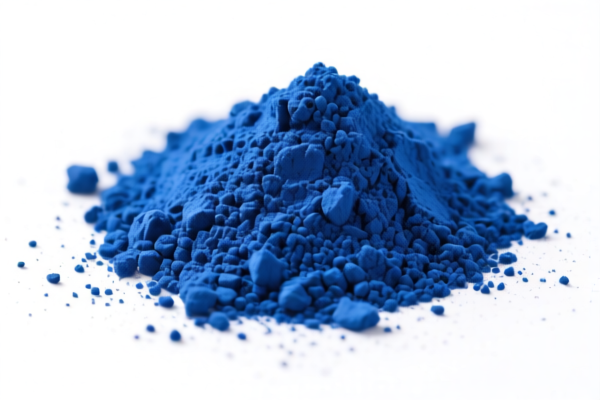
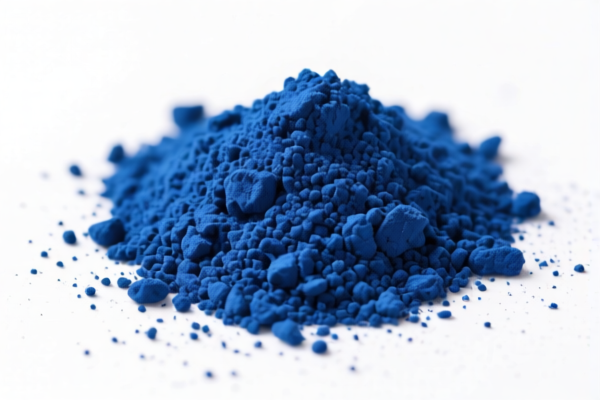
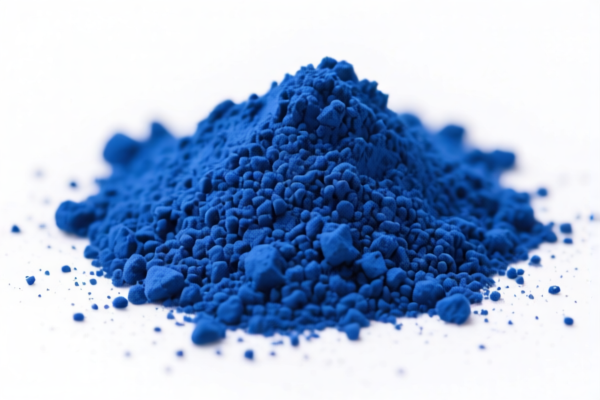
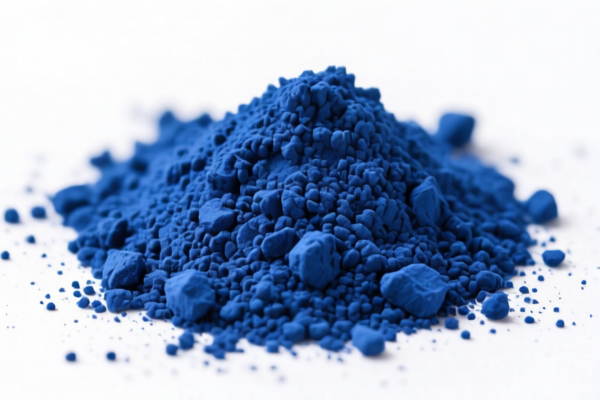
cobalt sulfide ore
CN → US商品图片
AI分析
🌋 Cobalt Sulfide Ore (Cobaltite & Erythrite Group Minerals)
🌐 HS Code Reference & Customs Clearance Guide | 2026 Latest Tariff Analysis | Professional-Level Clearance Strategy
📌 I. Product Definition & Classification: Do You Truly Understand "Cobalt Sulfide Ore"?
Cobalt sulfide ore refers to natural minerals where cobalt exists primarily in the form of sulfides (such as cobaltite, $CoAsS$, or other complex sulfide ores). In international trade, these are classified as raw mineral products, distinct from processed cobalt salts, metallic cobalt, or cobalt compounds.
Key Distinction:
- Raw Ore/Concentrate: Natural minerals mined from the earth, possibly crushed or beneficiated, but not chemically processed into pure cobalt salts or metal. → Classified under Chapter 26.
- Processed Cobalt Products: Cobalt oxides, cobalt sulfate, cobalt metal, etc. → Classified under Chapter 28 or Chapter 79.
⚠️ Critical Differentiation Point:
- If the material is natural mineral rock or concentrate containing cobalt sulfide → HS Code 2620.19.00.00 (or similar based on origin/species).
- If it is chemically synthesized cobalt sulfide ($CoS$, $Co_9S_8$) for industrial use (e.g., battery precursors) → HS Code 2851.00.00.00.
- Common Mistake: Exporters often misclassify natural cobalt sulfide ore as "cobalt compound" (2851) to avoid high tariffs, but customs will demand geological/mineral proof.
📦 II. HS Code Classification Details (2026 Latest Tariff Authority Comparison)
| HS Code | Product Description | Applicable Scenario | Contains Chemical Processing? |
|---|---|---|---|
2620.19.00.00 |
Residues from the treatment of cobalt ores and concentrates (not elsewhere specified); other cobalt residues | Cobalt sulfide ore concentrate, roasted cobalt sulfide ore | ❌ No (physical beneficiation) |
2620.20.00.00 |
Coppersmith's dross and other copper residues; cobalt residues from other sources | Impure cobalt sulfide waste | ❌ No |
2851.00.00.00 |
Cobalt sulfides (pure or synthetic) | Synthetic cobalt sulfide for battery material, catalysts | ✅ Yes (chemical synthesis) |
2614.00.00.00 |
Titanium ores and concentrates | Confusion risk: Not cobalt | ❌ N/A |
2619.00.00.00 |
Ferroalloys | Confusion risk: Cobalt is not iron-based | ❌ N/A |
🔍 Key Reminder:
- Natural Cobalt Sulfide Ore (e.g., from DRC, Australia, Canada) must be declared as mineral residues/ores under Chapter 26.
- Synthetic Cobalt Sulfide (used in high-tech battery precursors) is a chemical product under Chapter 28.
- Do not misdeclare natural ore as chemical product to evade tariffs – customs will require assay reports and origin certificates.
💰 III. 2026 Latest Tariff Rate Details (Including Additional Taxes & Policy Surcharges)
✅ Applicable Country: United States (US)
✅ Origin: China (CN) (Note: Most cobalt sulfide ore originates from DRC, but if processed/exported from China, these rates apply. For DRC origin, GSP or preferential rates may apply.)
✅ Effective Time: November 10, 2025 onwards
🎯 1. 2620.19.00.00 —— Cobalt Residues & Ore Concentrates (Natural/Processed)
| Item | Content |
|---|---|
| Base Tariff | 0% (ad valorem) |
| USITC Additional Tariff | +25% (from USITC Footnote 9903.88.01, under Section 301) |
| IEEPA Additional Tariff | +10% (targeting Chinese products, effective Nov 10, 2025) |
| Total Tariff | 35% |
| Tax Calculation | CIF Value × 35% |
| De Minimis Exemption Eligible | ❌ No (deny_de_minimis) |
| Legal Basis Path | IEEPA:9903.01.25 → USITC:2620.19.00.00 → FOOTNOTE:9903.88.01 |
📌 Explanation:
- The 25% USITC tariff is part of the Section 301 tariffs on Chinese goods;
- The 10% IEEPA tariff is a new surcharge on Chinese-origin cobalt-related residues;
- Total 35% is significant for low-margin bulk commodities.
- Note: If cobalt ore originates from Democratic Republic of Congo (DRC), it may qualify for GSP (Generalized System of Preferences) or specific exemptions, reducing tariffs to 0%~5% (check current USITC rulings).
🎯 2. 2851.00.00.00 —— Synthetic Cobalt Sulfide (Chemical Product)
| Item | Content |
|---|---|
| Base Tariff | 0% |
| USITC Additional Tariff | +25% |
| IEEPA Additional Tariff | +10% |
| Total Tariff | 35% |
| Tax Calculation | CIF × 35% |
| De Minimis Exemption Eligible | ❌ No |
| Legal Basis Path | IEEPA:9903.01.25 → USITC:2851.00.00.00 → FOOTNOTE:9903.88.01 |
📌 Note:
- Synthetic cobalt sulfide faces the same high tariffs as natural ore residues if originating from China.
- Strategic Tip: If sourcing from non-China origins (e.g., DRC, Canada), apply for preferential origin certification to reduce tariffs.
🛠️ IV. Customs Clearance Practical Advice (Battle-Tested Pitfall Avoidance)
✅ 1. Required Documentation Checklist (No Omissions)
| Document | Mandatory | Description |
|---|---|---|
| ✅ Assay Report | ✔️ | Must show Co, S, As, Fe, and other element content. Critical for distinguishing ore vs. chemical. |
| ✅ Mineralogical Analysis | ✔️ | XRD (X-ray Diffraction) report to confirm crystal structure (natural sulfide vs. synthetic). |
| ✅ Certificate of Origin (CO) | ✔️ | Essential for GSP claims if from DRC or other eligible countries. |
| ✅ Commercial Invoice | ✔️ | Clearly state "Cobalt Sulfide Ore Concentrate" or "Synthetic Cobalt Sulfide". Avoid vague terms like "cobalt material". |
| ✅ Packing List | ✔️ | Detail net/gross weight, packaging type (bulk/ton bags). |
| ✅ MSDS/SDS | ✔️ | Required for hazardous material handling (if applicable). |
| ✅ Bill of Lading | ✔️ | Must match invoice weight and description. |
✅ 2. Declaration Tips (Key Mantra)
🔥 "Ore is Chapter 26, Chemical is 28, assay proves the truth!"
| Scenario | Correct Declaration | Wrong Practice |
|---|---|---|
| Natural Cobalt Sulfide Ore | 2620.19.00.00 |
Misdeclare as 2851 → 35% tariff + penalty |
| Synthetic Cobalt Sulfide | 2851.00.00.00 |
Misdeclare as 2620 → Delayed clearance |
| DRC-Origin Cobalt Ore | 2620.19.00.00 + GSP Claim |
Miss GSP → Pay 35% instead of 0-5% |
| Mixed Ore (Co + Cu/Ni) | Declare as primary metal residue | Split declaration → Higher total tax |
✅ 3. Special Case Handling
| Situation | Handling Advice |
|---|---|
| High Arsenic Content | Cobalt sulfide (cobaltite) often contains arsenic. Ensure arsenic levels meet US EPA/customs standards. If too high, may be classified as hazardous waste. |
| GSP Origin (DRC) | Apply for Form A or digital GSP certificate. Verify if the specific cobalt product still qualifies for preferential treatment in 2026. |
| Battery-Grade Material | If intended for EV batteries, ensure compliance with Uyghur Forced Labor Prevention Act (UFLPA) documentation if transiting through China. |
| Mixed Metals | If cobalt is secondary to copper/nickel, declare based on primary metal content. |
🌍 V. Global Market Comparison (2026 Latest)
| Country/Region | Recommended HS Code | Tariff (China Origin) | Certification | Notes |
|---|---|---|---|---|
| 🇺🇸 USA | 2620.19.00.00 |
35% | No specific | High tariffs due to Section 301/IEEPA |
| 🇨🇳 China | 2620.19.00.00 |
0% | N/A | Import tariff-free for raw ore |
| 🇪🇺 EU | 2620.19.00.00 |
0% | REACH Compliance | No additional tariffs |
| 🇯🇵 Japan | 2620.19.00.00 |
0% | JIS Standards | Stable supply chain |
| 🇰🇷 South Korea | 2620.19.00.00 |
0% | KCS | Key market for battery materials |
📌 Conclusion:
- USA is the only major market imposing high additional tariffs on Chinese-origin cobalt residues/ore.
- EU, Japan, Korea have 0% tariffs, making them more attractive for Chinese exporters.
- If shipping to USA, consider transshipment (e.g., from Canada or DRC) to reduce tariff burden, but ensure compliance with anti-circumvention laws.
📌 VI. Common Mistakes & Pitfall Guide (Lessons Learned)
❌ Mistake 1: Declaring natural cobalt sulfide ore as "cobalt compound" (2851)
👉 Consequence: Customs demands assay report → Delay + Potential 35% tariff + Penalty.
❌ Mistake 2: Ignoring arsenic content in cobaltite ore
👉 Consequence: Classified as hazardous waste → Denied entry or disposal costs.
❌ Mistake 3: Failing to claim GSP for DRC-origin ore
👉 Consequence: Pay 35% instead of 0-5% → Unnecessary cost increase.
❌ Mistake 4: Using vague descriptions like "cobalt material"
👉 Consequence: Customs classification uncertainty → Audit risk.
✅ Correct Declaration:
"Natural Cobalt Sulfide Ore Concentrate, Co Content >X%, As Content <Y%, Origin: DRC, HS Code 2620.19.00.00, GSP Eligible"
🎯 VII. Conclusion: Precise Classification Saves Money!
🎯 Remember the Mantra:
🔹 "Ore is 26, Chemical is 28, assay proves it all!"
🔹 "GSP can cut 30%, but only if origin is right!"
📌 Pro Tip:
If your cobalt sulfide ore originates from non-China countries (e.g., DRC, Australia, Canada), apply for preferential origin certification to reduce tariffs to 0%~5%.
For China-origin cobalt sulfide, consider tariff engineering or supply chain diversification to mitigate the 35% burden.
📣 Immediate Action:
📞 Contact a licensed customs broker + Provide Assay Report + Apply for GSP Certificate (if eligible)
🚀 Let your cobalt sulfide ore clear customs smoothly, avoid tariffs, and maximize profit!
✨ Professional Clearance Starts with Accurate Classification!
💼 Every dollar of tariff saved is pure profit!
用户评价
关于 HS 编码归类
协调制度(HS)是由世界海关组织(WCO)制定的国际贸易商品分类标准。全球 200 多个国家采用 HS 系统作为海关关税、贸易统计和进出口监管的基础。
每个 HS 编码遵循以下层级结构:
- 章(2 位)——商品大类(例如:第 84 章:机器和机械设备)
- 品目(4 位)——章内的更具体分类
- 子目(6 位)——国际通用细分,所有 WCO 成员国统一使用
- 本国细分(8-10 位)——各国自行扩展的细分编码,如美国 HTSUS 10 位编码
正确的 HS 编码归类对于顺利通关、准确缴纳关税和遵守贸易法规至关重要。错误归类可能导致海关延误、多缴关税或罚款。
从CN进口到US时,适用的关税税率可能包括:
- 最惠国(MFN)税率——适用于 WTO 成员国的标准关税税率
- 普通税率——适用于无贸易协定国家
- 贸易救济关税——附加关税,如 301 条款(反倾销)、232 条款(国家安全)或反补贴税
本页内容仅供参考。如需正式归类,请咨询当地海关或持牌报关代理。