colored dye film wide format
CN → US| HS编码 | 关税税率 | 原产国 | 目的国 | 文档 |
|---|---|---|---|---|
| 3919905040 | 40.8% | CN | US | 官方文档 |
| 3921905050 | 39.8% | CN | US | 官方文档 |
| 3921190010 | 41.5% | CN | US | 官方文档 |
| 3920591000 | 41.0% | CN | US | 官方文档 |
| 3919905060 | 40.8% | CN | US | 官方文档 |
商品图片


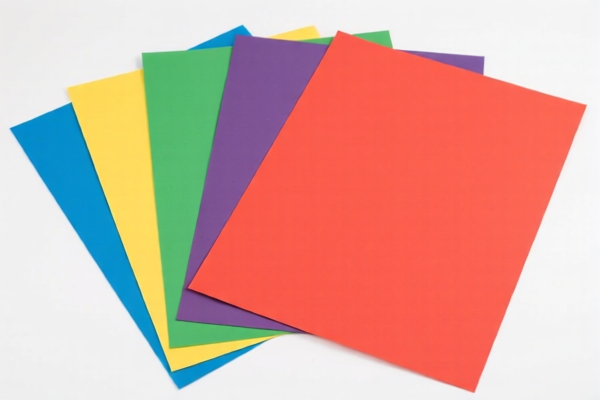
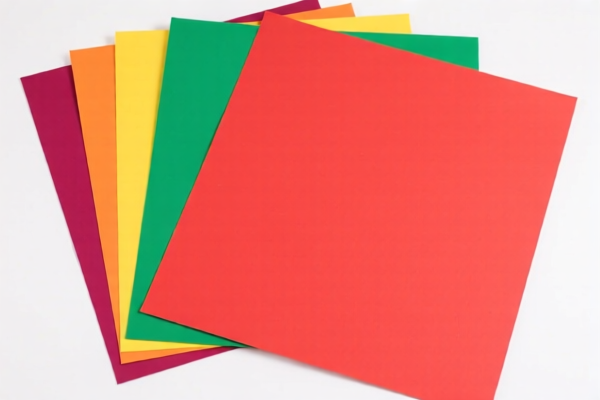
AI分析
🎨 Colored Dye Film – Wide Format (Sublimation & Thermal Transfer Media)
🌐 HS Code Reference & Customs Clearance Guide | 2026 Latest Tariff Analysis | Professional-Level Clearance Strategy
📌 I. Product Definition & Classification: What Exactly is "Colored Dye Film"?
"Colored Dye Film" in the context of wide-format printing typically refers to thermal transfer ribbons, sublimation films, or dye-sublimation media used for transferring color onto substrates (textiles, plastics, ceramics, etc.).
In international trade, these products are primarily classified under Chapter 39 (Plastics and Articles Thereof), as the core material is a plastic carrier coated with dye or resin. They are not classified as "ink" (Chapter 32) because they are solid-state transfer media on a plastic backing.
⚠️ Key Distinction:
- If the product is a plain plastic film with no print/dye layer intended for transfer → It may fall under general plastic sheets.
- If the product is a carrier film coated with dye/resin for thermal transfer or sublimation → It falls under plastic sheets/films with special coatings (usually 3920 or 3921).
- Crucial Note: The presence of "colored dye" and its application via heat/pressure pushes it into specific sub-headings based on the polymer type (PE, PP, PVC, etc.).
📦 II. HS Code Classification Details (Based on Provided Data)
The following HS Codes are derived from the provided dataset. All are classified under Chapter 39 (Plastics) due to the plastic carrier film nature. The total tax burden is extremely high due to US-China trade tensions (Section 301 + IEEPA).
| HS Code | Product Description & Summary | Key Characteristics | Total Tax Rate |
|---|---|---|---|
3919.90.50.40 |
Self-adhesive plastic plates, sheets, film, tape, and other flat shapes, other. | Matches film morphology; inferred material is plastic; fits self-adhesive or general plastic film characteristics. | 40.8% |
3921.90.50.50 |
Other plates, sheets, film, armor, and strips, of plastics. | Morphology is film; material unspecified but no conflict; fits "other plastic films" category. | 39.8% |
3921.19.00.10 |
Other plates, sheets, film, armor, and strips, of polymers of ethylene. | Morphology is film; inferred material is Polyethylene (PE) or Polypropylene (PP); no conflict with code requirements. | 41.5% |
3920.59.10.00 |
Other plates, sheets, single layer, of acrylic polymers. | Morphology is film; inferred material is Acrylic polymer; belongs to "other" category with no conflicts. | 41.0% |
3919.90.50.60 |
Self-adhesive plastic plates, sheets, film, tape, and other flat shapes, other. | Morphology is film; inferred material is plastic; fits the fallback rule for "other" plastic films. | 40.8% |
🔍 Critical Insight:
- All five codes represent plastic films/sheets.
- The difference lies in the specific polymer type (PE, PP, Acrylic, or General Plastic) and structure (Self-adhesive vs. Non-adhesive).
- Sublimation/Dye films are most commonly made of PET or PVC carriers. If PET/PVC is not explicitly listed in the provided data, the closest fallbacks are3921.90.50.50(Other plastics) or3919.90.50.40/60(General plastic films).
- Do not classify under Chapter 48 (Paper) or Chapter 32 (Inks) if it has a plastic carrier.
💰 III. 2026 Latest Tariff Rate Breakdown (Including Additional Duties & Policy Surcharges)
✅ Applicable Country: United States (US)
✅ Origin: China (CN)
✅ Effective Date: November 10, 2025 (and subsequent imports)
🎯 1. General Tax Structure for All Codes Listed
| Item | Content |
|---|---|
| Base Tariff Rate | 4.8% – 6.5% (ad valorem) |
| USITC Supplementary Tariff (Section 301) | +25.0% |
| IEEPA Supplementary Tariff (122 Provision) | +10.0% |
| Total Effective Tax Rate | 39.8% – 41.5% |
| Tax Calculation Basis | CIF Value × Total Tax Rate |
| De Minimis Exemption | ❌ Not Eligible (deny_de_minimis) |
📌 Explanation:
- Base Tariff: Varies by specific plastic type (e.g., PE is 6.5%, Acrylic is 6.0%, General is 5.8%).
- Section 301 Tariff (+25%): Applied to all Chinese-made plastic articles under these codes due to US trade policy.
- IEEPA 122 Tariff (+10%): Additional surcharge for Chinese imports under the International Emergency Economic Powers Act.
- Total Burden: Near 40%. This is a high-cost category for US importers.
🛠️ IV. Customs Clearance Operational Advice (Practical Pitfall Avoidance)
✅ 1. Required Documentation Checklist (Mandatory)
| Document | Must Provide | Description |
|---|---|---|
| ✅ Product Specification Sheet | ✔️ | Must specify: Carrier material (PET/PVC/PE), Dye type (Sublimation/Thermal Transfer), Width, Roll length, Weight. |
| ✅ Composition Analysis | ✔️ | Proof of plastic carrier % vs. dye/resin coating. Crucial for distinguishing from paper-based films. |
| ✅ Product Photos | ✔️ | Clear images of the roll, label, and coating side. Show "Sublimation" or "Transfer" markings if any. |
| ✅ Commercial Invoice | ✔️ | Must state: "Plastic Film for Thermal Transfer," not just "Dye Film." |
| ✅ Bill of Lading / Air Waybill | ✔️ | Consistency with invoice quantity and weight. |
| ✅ Certificate of Origin (CO) | ✔️ | If originating from China, standard CO applies. No preferential rate available. |
⚠️ Warning:
- Do NOT describe as "Ink" or "Printing Fluid." This will cause immediate rejection or misclassification.
- Do NOT describe as "Paper." If the carrier is plastic, it must be Chapter 39.
✅ 2. Declaration Strategy (Key Mnemonics)
🔥 "Plastic Carrier, Heat Transfer, Declare Under 39!"
| Scenario | Correct Declaration | Incorrect Practice |
|---|---|---|
| Standard Sublimation Roll | 3921.90.50.50 (Other Plastic Films) or 3921.19.00.10 (if PE/PP) |
Declaring as "Printing Consumables" (Chapter 48) → Risk of penalty |
| Self-Adhesive Vinyl with Dye Layer | 3919.90.50.40 or 3919.90.50.60 |
Declaring as "Paper Labels" → Incorrect Chapter |
| Acrylic-Based Transfer Film | 3920.59.10.00 |
Declaring as "Glass" or "Ceramics" → Wrong Material |
| Mixed Material (e.g., PET Carrier + Paper Backing) | Depends on essential character | Splitting shipment → Higher logistics cost & complexity |
📌 Advice:
- If the film is PET-based (most common for sublimation), and PET is not explicitly listed in your provided data,3921.90.50.50(Other plastics) is the safest fallback, though you may want to consult a customs broker for the exact 10-digit subheading for PET films if available.
- Self-adhesive products must be declared under 3919.
✅ 3. Special Cases & Handling
| Scenario | Handling Advice |
|---|---|
| OEM/White Label Films | Provide customer contract + technical data sheet. Ensure brand name on invoice doesn't imply a different country of origin. |
| Samples vs. Commercial | No de minimis exemption. Both are subject to the same 40%+ tax. |
| Damaged/Defective Goods | Must declare accurately as "Defective Plastic Film." No duty refund for pre-import defects. |
| Re-export | If transiting through a third country, ensure US origin rules are not violated. |
🌍 V. Global Market Comparison (2026 Latest)
| Country/Region | Recommended HS Code | Tariff Rate | Certification | Notes |
|---|---|---|---|---|
| 🇺🇸 USA | 3921.90.50.50 |
~40% (Total) | None specific | High tariff burden. Section 301 + IEEPA applies. |
| 🇨🇳 China | 3921.90.50.50 |
4.8% – 6.5% | CNCA | Low import duty. No additional surcharges. |
| 🇪🇺 EU | 3920.59.00 |
4.5% – 6.5% | REACH | No Section 301 equivalent. Lower total cost. |
| 🇦🇺 Australia | 3921.90.00 |
5% | GOTS (if textile) | Moderate tariff. |
| 🇯🇵 Japan | 3921.90.00 |
6.0% – 8.0% | JIS | No major surcharges. |
📌 Conclusion:
- USA is the most expensive market for importing colored dye films from China due to ~40% total tariffs.
- EU and Asia offer significantly better tariff conditions (~5-8%).
- Strategy: If targeting the US, consider cost-plus pricing to absorb the 40% duty, or explore third-country assembly (if eligible for origin rules).
📌 VI. Common Errors & Pitfall Guide (Lessons from Practice)
❌ Error 1: Declaring "Dye Film" under Chapter 48 (Paper Products)
👉 Consequence: HS Code misclassification → Penalty + Back Taxes (Paper tariffs vary, but if caught as plastic, surcharges apply).
❌ Error 2: Failing to specify Carrier Material (e.g., PET vs. PVC)
👉 Consequence: Customs may assign the highest general tariff code (3919.90.50.40 at 40.8%) instead of a potentially lower one.
❌ Error 3: Claiming "De Minimis" Exemption for Small Orders
👉 Consequence: Seizure. Section 301 and IEEPA duties do not apply to de minimis thresholds ($800). All imports are taxable.
❌ Error 4: Using "Ink" in the Product Name
👉 Consequence: Misleading description → Customs Audit → Delay in clearance.
✅ Correct Declaration Example:
"Plastic Film for Thermal Sublimation Printing, Carrier: PET, Width: 50cm, Roll Length: 100m, Coated with Dye-Resin Mixture, Model XYZ."
🎯 VII. Conclusion: Professional Declaration, Save Costs!
🎯 Remember the Mantra:
🔹 "Plastic Carrier = Chapter 39"
🔹 "Dye Film ≠ Ink (Chapter 32)"
🔹 "US Tariff = ~40% (Base + 301 + 122)"
🔹 "No De Minimis Exemption for China-Origin Plastic Films"
📌 Pro Tip:
- If your film is made of PET (Polyethylene Terephthalate), check if there is a more specific 10-digit code for "PET Films" in your customs broker's database, as 3921.90.50.50 is a "catch-all." A more specific code might have a slightly different base rate, though the 301/IEEPA surcharges will remain.
- Pre-Ruling: Consider applying for an Advance Ruling from US Customs (CBP) to confirm the exact HS Code for your specific film composition, avoiding post-import audits.
📣 Immediate Action:
📞 Consult a licensed US Customs Broker
📄 Prepare Technical Data Sheets (TDS)
🚀 Budget for ~40% landed cost for US shipments from China
✨ Professional Clearance, Precise Classification, Profit Protection!
💼 Every percentage point of duty counts!
用户评价
关于 HS 编码归类
协调制度(HS)是由世界海关组织(WCO)制定的国际贸易商品分类标准。全球 200 多个国家采用 HS 系统作为海关关税、贸易统计和进出口监管的基础。
每个 HS 编码遵循以下层级结构:
- 章(2 位)——商品大类(例如:第 84 章:机器和机械设备)
- 品目(4 位)——章内的更具体分类
- 子目(6 位)——国际通用细分,所有 WCO 成员国统一使用
- 本国细分(8-10 位)——各国自行扩展的细分编码,如美国 HTSUS 10 位编码
正确的 HS 编码归类对于顺利通关、准确缴纳关税和遵守贸易法规至关重要。错误归类可能导致海关延误、多缴关税或罚款。
从CN进口到US时,适用的关税税率可能包括:
- 最惠国(MFN)税率——适用于 WTO 成员国的标准关税税率
- 普通税率——适用于无贸易协定国家
- 贸易救济关税——附加关税,如 301 条款(反倾销)、232 条款(国家安全)或反补贴税
本页内容仅供参考。如需正式归类,请咨询当地海关或持牌报关代理。