commercial rigid pvc pipe
CN → US| HS编码 | 关税税率 | 原产国 | 目的国 | 文档 |
|---|---|---|---|---|
| 3917230000 | 38.1% | CN | US | 官方文档 |
| 3917290090 | 38.1% | CN | US | 官方文档 |
| 3926909987 | 22.8% | CN | US | 官方文档 |
| 3916200091 | 40.8% | CN | US | 官方文档 |
| 3916200020 | 40.8% | CN | US | 官方文档 |
| 3926909989 | 22.8% | CN | US | 官方文档 |
商品图片


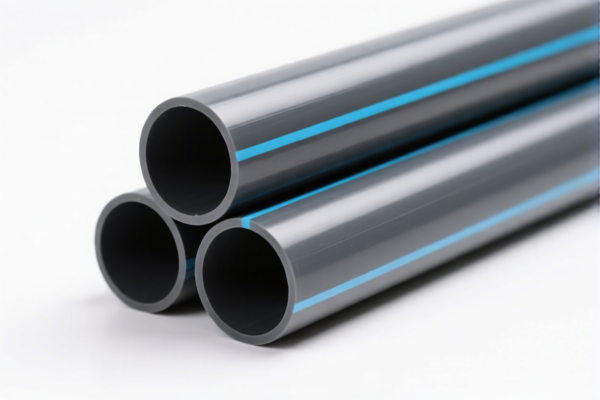
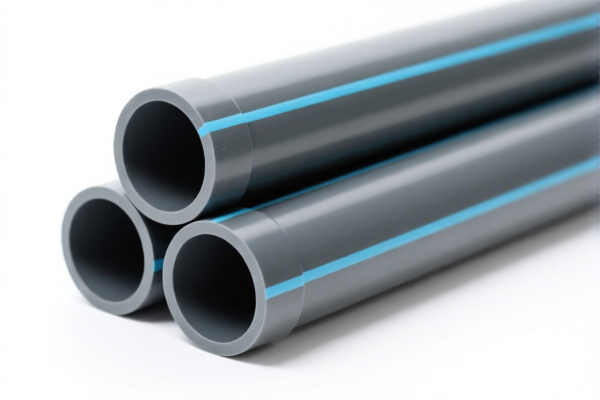
AI分析
🏗️ Commercial Rigid PVC Pipe (Vinyl Conduit & Piping)
🌐 HS Code Reference & Customs Clearance Guide | 2026 Latest Tariff Analysis | Professional Clearance Strategy
📌 I. Product Definition & Classification: What Exactly Is "Commercial Rigid PVC Pipe"?
Commercial Rigid PVC Pipe refers to rigid piping systems made from polyvinyl chloride (PVC), primarily used for electrical conduit, plumbing, and industrial chemical drainage. In international trade, classification depends heavily on the physical form (whether it is a hollow tube, a solid rod/profile, or a general plastic article) and the material composition.
Key Distinction Points:
- Hollow Tubes/Pipes (Chapter 3917): If the product is hollow and intended for carrying fluids or protecting cables, it typically falls under heading 3917 ("Tubes, pipes and hoses, rigid").
- Rod/Bar/Profile (Chapter 3916): If the product is solid or semi-solid profile (even if it has a hollow cross-section that doesn't meet the definition of "pipe" in some specific national interpretations), it may fall under heading 3916 ("Rod, bar and stick").
- General Plastic Articles (Chapter 3926): If the product is considered an accessory, fitting, or a "other" plastic article not specifically described as a pipe or profile, it falls under 3926.
⚠️ Critical Classification Trap:
Customs authorities often scrutinize 3917.23.00.00 (PVC pipes) vs. 3916.20.00.91 (PVC rods/profiles).
- 3917 generally attracts a higher total tax burden due to specific additional duties.
- 3926 (General plastics) sometimes offers a lower total tax rate if classified correctly as a "other plastic article," but risks misclassification penalties if declared as a pipe.
📦 II. HS Code Classification Details (2026 Tariff Reference)
Based on the provided data, here are the valid HS Codes for Commercial Rigid PVC Pipe, along with their tax implications:
| HS Code | Product Description | Classification Logic | Total Tax Rate |
|---|---|---|---|
3917.23.00.00 |
Rigid PVC Pipe (Commercial) Material: Vinyl Polymer Form: Rigid Piping |
Classified strictly as rigid plastic pipes (Heading 3917). This is the most direct classification for standard PVC plumbing or electrical conduit pipes. | 38.1% |
3917.29.00.90 |
Rigid PVC Pipe (Commercial) Material: PVC Form: Hard Tube |
Also classified under Heading 3917 (Other plastic pipes/tubes). Used when the specific "chlorine polymer" description isn't the primary descriptor, but it remains a rigid tube. | 38.1% |
3926.90.99.87 |
Rigid PVC Pipe (Commercial) Material: PVC Form: Hard Pipe |
Classified as an Other Plastic Article (Heading 3926). This is a "Alternative Classification" strategy, often used to reduce tariff burden if the product can be argued as a general plastic component rather than a dedicated pipe system. | 22.8% |
3916.20.00.91 |
Rigid PVC Pipe (Commercial) Material: PVC Form: Rod/Bar/Profile |
Classified under Heading 3916 (Rod, bar, stick). Some rigid PVC profiles used in construction are classified as "profiles" rather than "pipes." Note the High Tax Rate. | 40.8% |
3916.20.00.20 |
Rigid PVC Pipe (Commercial) Material: PVC Form: Pipe (Profile Attribute) |
Also under Heading 3916, specifically for PVC rods/bars that have a pipe-like shape but are legally defined as profiles in this tariff line. High Tax Rate. | 40.8% |
3926.90.99.89 |
Rigid PVC Pipe (Commercial) Material: PVC Form: Pipe (General Plastic) |
Another Alternative Classification under Heading 3926. Similar to 3926.90.99.87, this is a general catch-all for plastic goods, potentially offering a Lower Tax Rate. | 22.8% |
🔍 Key Observation:
- Highest Tax:3916.20.00.91/3916.20.00.20at 40.8%. Avoid this unless the product is clearly a solid profile.
- Mid Tax:3917.23.00.00/3917.29.00.90at 38.1%. This is the standard classification for PVC pipes.
- Lowest Tax:3926.90.99.87/3926.90.99.89at 22.8%. This is the most cost-effective classification, but requires strong justification that the item is a "general plastic article" rather than a dedicated "pipe."
💰 III. 2026 Latest Tariff Rate Breakdown (Detailed Policy)
✅ Applicable Country: United States (US)
✅ Origin: China (CN)
✅ Effective Date: Post-2025 Trade Policies (Includes Section 301, Section 232, and IEEPA surcharges)
🎯 1. Standard PVC Pipe Classification (3917.23.00.00 / 3917.29.00.90)
Total Tax: 38.1%
| Item | Rate | Source/Legal Basis |
|---|---|---|
| Basic Duty | 3.1% | US Harmonized Tariff Schedule (HTS) Base Rate |
| Section 301 Surcharge | 25.0% | Trade Promotion Authority Act (TPA) - "China Tariffs" |
| Section 122 / IEEPA Surcharge | 10.0% | International Emergency Economic Powers Act (Specific to China imports) |
| Total Effective Rate | 38.1% | Sum of all applicable duties |
📌 Explanation:
- 3.1% Basic Duty: Standard duty for plastic pipes.
- 25.0% Section 301: Applied to most Chinese plastics under trade war measures.
- 10.0% Additional Surcharge: Reflects recent policy adjustments (labeled as "122 Clause" in some datasets, often linked to executive orders on specific Chinese imports).
- Warning: This is the standard, safe classification for clear PVC pipes.
🎯 2. Alternative "General Article" Classification (3926.90.99.87 / 3926.90.99.89)
Total Tax: 22.8%
| Item | Rate | Source/Legal Basis |
|---|---|---|
| Basic Duty | 5.3% | US HTS Base Rate for Other Plastic Articles |
| Section 301 Surcharge | 7.5% | Reduced Section 301 rate for this specific subheading (if applicable/excluded) |
| Section 122 / IEEPA Surcharge | 10.0% | IEEPA surcharge still applies to China-origin goods |
| Total Effective Rate | 22.8% | Savings: ~15.3% compared to standard pipe classification |
📌 Explanation:
- This classification is significantly cheaper.
- Risk: You must prove that the PVC product is not primarily "pipe" (3917) but rather a "general plastic component" (3926). If customs audits and disagrees, you will face back taxes + penalties.
- Strategy: Use this only if the product is non-standard, custom-shaped, or sold as a component rather than a finished plumbing/electrical system.
🎯 3. Rod/Profile Classification (3916.20.00.91 / 3916.20.00.20)
Total Tax: 40.8%
| Item | Rate | Source/Legal Basis |
|---|---|---|
| Basic Duty | 5.8% | US HTS Base Rate for PVC Rods/Bars |
| Section 301 Surcharge | 25.0% | Standard Section 301 rate |
| Section 122 / IEEPA Surcharge | 10.0% | IEEPA surcharge |
| Total Effective Rate | 40.8% | Highest Tax Rate |
📌 Explanation:
- Avoid this classification if possible. It is the most expensive option.
- This is only applicable if the product is strictly a solid profile or extruded rod that does not meet the hollow "pipe" definition.
🛠️ IV. Customs Clearance Practical Advice (Real-World Pitfall Guide)
✅ 1. Documentation Checklist (Non-Negotiable)
| Document | Required | Notes |
|---|---|---|
| ✅ Commercial Invoice | ✔️ | Must clearly state: "Rigid PVC Pipe, Commercial Use, Material: PVC" |
| ✅ Product Specifications | ✔️ | Include OD, ID, wall thickness, pressure rating (PSI), and material grade. |
| ✅ Material Safety Data Sheet (MSDS) | ✔️ | Proves chemical composition (PVC) and fire ratings. |
| ✅ Test Reports (ASTM/UL) | ✔️ | UL Listed for electrical conduit; ASTM D1784 for plumbing. Crucial for 3917 classification. |
| ✅ Packing List | ✔️ | Show if pipes are coiled, cut to length, or bundled. |
| ✅ Country of Origin Certificate | ✔️ | Required to apply/verify Section 301 rates. |
✅ 2. Declaration Tips (Key Mantras)
🔥 "Shape Determines Code, Standard Dictates Tax!"
| Scenario | Recommended HS Code | Reasoning |
|---|---|---|
| Standard Hollow Pipe (Plumbing/Electrical) | 3917.23.00.00 |
Clear "Pipe" definition. Standard tax (38.1%). Safe. |
| Custom/Non-Standard Plastic Profile | 3926.90.99.87 |
Argue as "General Plastic Article" to save tax (22.8%). High Audit Risk. |
| Solid PVC Rod/Bar | 3916.20.00.91 |
If not hollow enough to be a "pipe," but still expensive (40.8%). |
| PVC Fittings (Elbows/Joints) | Check 3917.29 or 3926 |
Fittings are often classified separately. Ensure they are declared correctly. |
✅ 3. Special Case Handling
| Situation | Strategy |
|---|---|
| Dual-Use (Electrical Conduit) | Must have UL Listing. Without it, customs may reject 3917 or demand higher safety compliance docs. |
| Exporting to US from China | Expect 38.1% if declared as pipe. Plan cash flow for the high Section 301 + IEEPA duties. |
| Attempt to Use 3926 for Standard Pipes | NOT RECOMMENDED unless the pipe is highly non-standard. Customs algorithms flag "PVC Pipe" descriptions under 3926. Expect audits. |
| PVC Pipes for Non-Commercial Use | If intended for residential/daily use, it still falls under commercial pipe definitions in HTS. No special exemption. |
🌍 V. Global Market Comparison (2026 Outlook)
| Market | Recommended HS Code | Est. Duty (China Origin) | Key Requirement |
|---|---|---|---|
| 🇺🇸 USA | 3917.23.00.00 |
38.1% | UL/ASTM Certs, High Tariffs |
| 🇺🇸 USA (Alt) | 3926.90.99.87 |
22.8% | Risk of Misclassification Audit |
| 🇨🇳 China | 3917.23.00.00 |
~5-6% | Standard Import Duty |
| 🇪🇺 EU | 3917.21.00 |
0-6.5% | REACH Compliance, CE Marking |
| 🇦🇺 Australia | 3917.21.00 |
5% | AS/NZS Standards |
📌 Conclusion:
- The US market is the most expensive due to叠加 (stacking) of Section 301 and IEEPA tariffs.
- 3926 classification offers savings but is high-risk.
- 3917 is the safest and most accurate for standard pipes.
📌 VI. Common Mistakes & Pitfalls (Blood Lessons)
❌ Mistake 1: Declaring PVC Pipes as "Plastic Rods" (3916) to avoid pipe duties.
👉 Result: Tax rate jumps to 40.8%. Worse than pipes!
❌ Mistake 2: Declaring Standard Pipes as "General Plastic Articles" (3926) to save tax.
👉 Result: 22.8% rate, but high risk of CBP (Customs Border Protection) audit. If denied, you pay the difference (38.1% - 22.8% = 15.3%) + penalties.
❌ Mistake 3: Missing UL/ASTM Certificates for Electrical Conduit.
👉 Result: Goods held at port for safety compliance review, causing delays and demurrage fees.
❌ Mistake 4: Not declaring "China Origin" correctly on the invoice.
👉 Result: Incorrect tariff application (e.g., applying non-China rates), leading to fraud allegations.
✅ Correct Approach:
"Rigid PVC Conduit, UL Listed, 1/2 inch, ASTM D1785, Origin: China" → Declare under
3917.23.00.00→ Pay 38.1%.
Transparency saves money on penalties.
🎯 VII. Conclusion: Professional Declaration, Cost Optimization!
🎯 Remember the Mantra:
🔹 "Pipes go to 3917 (38.1%), Profiles to 3916 (40.8%), General to 3926 (22.8%)."
🔹 "3926 saves tax but risks audits. 3917 is safe but expensive. Choose wisely!"📌 Pro Tip:
If you are shipping large volumes, consider Advance Rulings (CBP Request) for3926classification if your product is non-standard. This legally binds Customs to your classification, avoiding retroactive penalties.
📣 Immediate Action:
📞 Contact your freight forwarder with technical specs (OD, ID, Material Certs).
🚀 Apply for CBP Advance Ruling if considering3926classification.
💼 Prepare for 38.1% duty in your cost model to stay safe!
✨ Precision in Classification Saves Thousands!
💼 Every Percent of Duty Counts!
用户评价
关于 HS 编码归类
协调制度(HS)是由世界海关组织(WCO)制定的国际贸易商品分类标准。全球 200 多个国家采用 HS 系统作为海关关税、贸易统计和进出口监管的基础。
每个 HS 编码遵循以下层级结构:
- 章(2 位)——商品大类(例如:第 84 章:机器和机械设备)
- 品目(4 位)——章内的更具体分类
- 子目(6 位)——国际通用细分,所有 WCO 成员国统一使用
- 本国细分(8-10 位)——各国自行扩展的细分编码,如美国 HTSUS 10 位编码
正确的 HS 编码归类对于顺利通关、准确缴纳关税和遵守贸易法规至关重要。错误归类可能导致海关延误、多缴关税或罚款。
从CN进口到US时,适用的关税税率可能包括:
- 最惠国(MFN)税率——适用于 WTO 成员国的标准关税税率
- 普通税率——适用于无贸易协定国家
- 贸易救济关税——附加关税,如 301 条款(反倾销)、232 条款(国家安全)或反补贴税
本页内容仅供参考。如需正式归类,请咨询当地海关或持牌报关代理。