compression storage bags
CN → US| HS编码 | 关税税率 | 原产国 | 目的国 | 文档 |
|---|---|---|---|---|
| 3923210011 | 38.0% | CN | US | 官方文档 |
| 3923210030 | 38.0% | CN | US | 官方文档 |
| 4819502000 | 35.0% | CN | US | 官方文档 |
| 4819400040 | 35.0% | CN | US | 官方文档 |
| 4202920809 | 42.0% | CN | US | 官方文档 |
商品图片
AI分析
🧳 Compression Storage Bags (Vacuum Storage Bags)
🌐 HS Code Reference & Customs Clearance Guide | 2026 Latest Tariff Analysis | Professional Clearance Strategy
📌 I. Product Definition & Classification: What Exactly Are "Compression Storage Bags"?
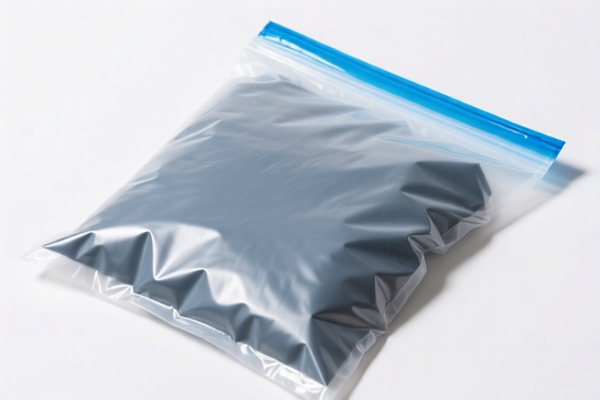
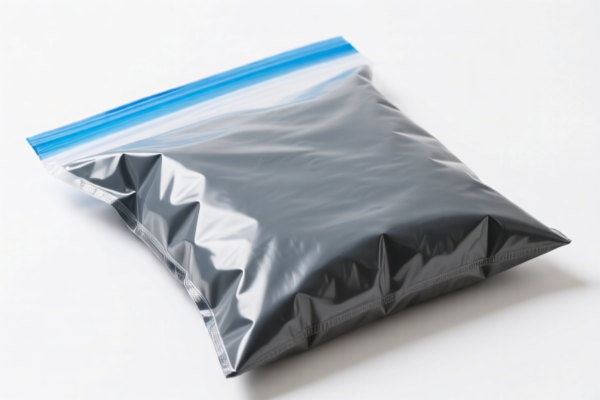
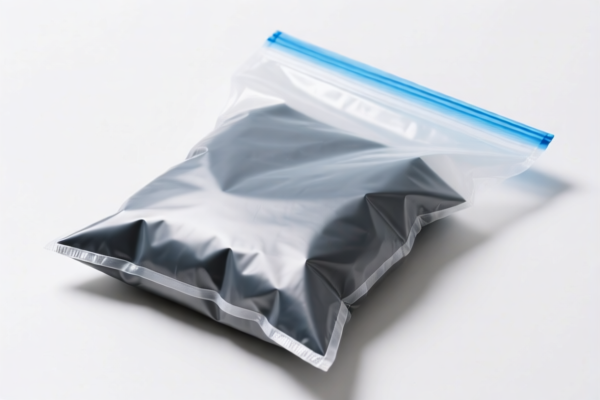
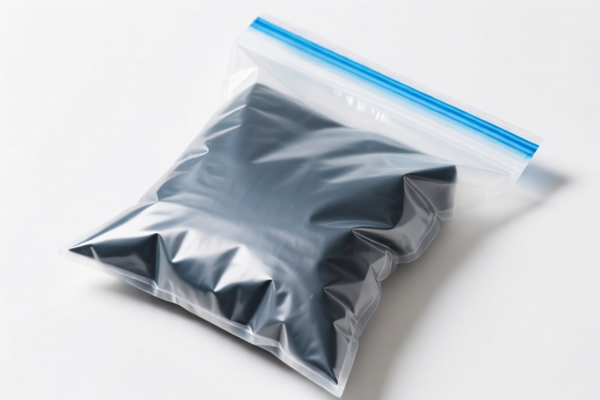
Compression Storage Bags, commonly known as Vacuum Storage Bags, are packaging containers designed to reduce the volume of soft goods (clothing, bedding, quilts, plush toys) by removing air. In international trade, their classification hinges on two critical factors: 1. Material Composition: Are they made of plastics (vinyl/polyethylene) or paper/composite materials? 2. Form & Function: Are they "sacs, pouches, and bags" (Chapter 39) or "paper/paperboard sacks/bags" (Chapter 48)?
⚠️ Key Distinction:
- If the bag is made of plastic/polymer (e.g., PE, PVC, EVA) → It falls under Chapter 39.
- If the bag is made of paper or paperboard (including coated paper/composites) → It falls under Chapter 48.
- Misclassification Risk: Declaring a plastic bag as "paper" to lower tariffs is a common audit trigger. Customs often requests material declarations or test reports.
📦 II. HS Code Classification Details (2026 Latest Tariff Authority)
Based on the product "Compression Storage Bags," here are the most likely HS Code matches provided in the data, analyzed for accuracy and tax implications.
| HS Code | Product Description | Material Basis | Application Scenario |
|---|---|---|---|
3923.21.00.11 |
Sac, pouch, and bag, of plastics, of polymers of ethylene, suitable for holding compressed articles | Plastic (Ethylene Polymers) (e.g., PE, EVA) |
Standard vacuum bags for clothes/bedding. Most Common. |
3923.21.00.30 |
Sac, pouch, and bag, of plastics, of polymers of ethylene | Plastic (Ethylene Polymers) | General plastic storage bags without specific "compressed article" designation, but same material logic. |
4819.50.20.00 |
Sacks and bags (including cones), of paper, paperboard, cellulose wadding or webs of cellulose fibres | Paper/Paperboard (Including Composites) |
Bags made of paper-coated plastic or pure paper-based vacuum bags (less common for heavy-duty compression, but possible). |
4819.40.00.40 |
Other sacks and bags, of paper or paperboard | Paper/Paperboard | "Other" category for paper-based packaging. Used if the bag doesn't fit the specific "cellulose wadding" description. |
4202.92.08.09 |
Articles of apparel and clothing accessories, of plastics or of sheeting of plastics | Plastic (Non-Chapter 39) | Rare/Unlikely. Usually for rigid or semi-rigid plastic cases/bags not classified as simple "sacs/pouches." |
🔍 Critical Note:
-3923.21is the standard and most accurate classification for 95% of vacuum compression bags found in retail (plastic, sealed, flexible).
-4819applies only if the primary material is paper-based. Many "composite" bags (paper inner, plastic outer) may still be classified under Chapter 39 depending on the essential character.
-4202is generally incorrect for simple flexible bags unless they are part of a larger article of apparel/accessory.
💰 III. 2026 Latest Tariff Rate Breakdown (Including Additional Duties & Policy Surcharges)
✅ Applicable Country: United States (US)
✅ Country of Origin: China (CN)
✅ Effective Date: November 10, 2025 onwards (for subsequent imports)
🎯 1. 3923.21.00.11 & 3923.21.00.30 —— Plastic Compression Bags (Most Likely)
| Item | Details |
|---|---|
| Base Tariff | 3.0% (ad valorem) |
| Section 301 Surcharge | +25.0% (USITC Footnote 9903.88.01) |
| IEEPA Surcharge | +10.0% (针对中国产品, 2025年11月10日起生效) |
| Total Tariff Rate | 38.0% |
| Tax Calculation | CIF Value × 38% |
| De Minimis Exemption? | ❌ No (deny_de_minimis) |
| Legal Authority Path | IEEPA:9903.01.25 → IEEPA:9903.01.24 → USITC:3923.21.00.11 → FOOTNOTE:9903.88.01 |
📌 Explanation:
- These bags are considered "packaging of plastics" subject to full Section 301 and IEEPA tariffs.
- Total cost impact is high (38%). Importers must factor this into landed cost calculations.
- No de minimis exemption applies; even small shipments are taxed.
🎯 2. 4819.50.20.00 & 4819.40.00.40 —— Paper-Based Storage Bags (Less Common)
| Item | Details |
|---|---|
| Base Tariff | 0.0% |
| Section 301 Surcharge | +25.0% (USITC Footnote 9903.88.01) |
| IEEPA Surcharge | +10.0% (针对中国产品, 2025年11月10日起生效) |
| Total Tariff Rate | 35.0% |
| Tax Calculation | CIF Value × 35% |
| De Minimis Exemption? | ❌ No (deny_de_minimis) |
| Legal Authority Path | IEEPA:9903.01.24 → USITC:4819.50.20.00 → FOOTNOTE:9903.88.01 |
📌 Note:
- While the base tariff is 0%, the additional duties push the total to 35%, which is 3% lower than the plastic classification.
- ⚠️ Warning: Misclassifying plastic bags as paper to save 3% is a high-risk audit target. Customs may demand material composition certificates.
- Only use this if the bag is primarily paper-based (e.g., kraft paper with thin plastic coating, where paper provides essential character).
🎯 3. 4202.92.08.09 —— Plastic Apparel/Accessory Bags (Unlikely for Storage)
| Item | Details |
|---|---|
| Base Tariff | 7.0% |
| Section 301 Surcharge | +25.0% |
| IEEPA Surcharge | +10.0% |
| Total Tariff Rate | 42.0% |
| Tax Calculation | CIF Value × 42% |
| De Minimis Exemption? | ❌ No |
📌 Note:
- This rate is the highest (42%).
- Generally, storage bags are not classified under Chapter 42 unless they are integral to an article of apparel.
- Avoid this classification for standard compression bags unless specifically advised by a ruling.
🛠️ IV. Customs Clearance Practical Advice (Pitfall Avoidance Guide)
✅ 1. Required Documentation Checklist
| Document | Mandatory? | Purpose |
|---|---|---|
| ✅ Material Declaration | ✔️ | Must specify % composition (e.g., "100% Polyethylene" or "Paper with 10% PE coating"). |
| ✅ Product Photos | ✔️ | Show bag structure, valve, seal type, and any labeling. |
| ✅ Commercial Invoice | ✔️ | Clear description: "Vacuum Compression Storage Bag, Plastic, for Clothing." |
| ✅ Packing List | ✔️ | Weight and dimensions per package. |
| ✅ Origin Certificate | ✔️ | Proof of Chinese origin for tariff calculation. |
| ❌ De Minimis Claim | ❌ | Do not file under Section 321 for these goods; they are denied de minimis. |
✅ 2. Classification Tips (Key Rules)
🔥 “Material is King, Function is Queen”
| Scenario | Recommended HS Code | Reason |
|---|---|---|
| Standard Plastic Bag (PE/EVA) | 3923.21.00.11 |
Matches "sacs, pouches, bags of plastics of polymers of ethylene." Most accurate. |
| Paper-Based Bag | 4819.50.20.00 |
Only if paper is the essential character. Rare for vacuum compression. |
| Mixed Material (e.g., Plastic + Zipper + Handle) | 3923.21.00.11 |
Plastic dominates the value and function. |
| Rigid Plastic Case | 4202.92.08.09 |
If it’s a hard-shell case, not a flexible bag. |
✅ 3. Special Considerations
| Situation | Advice |
|---|---|
| Customs Audit | Have material test reports ready. If customs questions a 4819 classification, they will ask for proof that the bag is primarily paper. |
| Valuation | Ensure CIF value includes freight and insurance. Tariff is calculated on CIF. |
| Labeling | Ensure the bag has proper labeling (e.g., "Made in China") as required by US Customs. |
| IEEPA Exemptions | No exemptions for China-origin compression bags under current IEEPA rules (Nov 2025 onwards). |
🌍 V. Global Market Comparison (2026 Latest)
| Country/Region | Recommended HS Code | Total Tariff (China Origin) | Key Notes |
|---|---|---|---|
| 🇺🇸 USA | 3923.21.00.11 |
38.0% | High tariff due to Section 301 + IEEPA. |
| 🇨🇳 China | 3923.21.00.11 |
~3.0% | No additional surcharges. |
| 🇪🇺 EU | 3923.29.39 |
~6.5% | No Section 301/IEEPA equivalents. |
| 🇬🇧 UK | 3923.29.00 |
~6.0% | Post-Brexit tariffs apply. |
| 🇨🇦 Canada | 3923.21.00 |
~5.0% | No additional tariffs. |
📌 Conclusion:
- The US market is the most challenging for compression bags due to 38% total tariffs.
- Cost Optimization: Consider sourcing from Vietnam, Thailand, or Mexico (if rules of origin allow) to avoid US surcharges.
- Alternative: Explore biodegradable/compostable bags (different HS code) if applicable, but check current tariff status.
📌 VI. Common Errors & Pitfall Guide (Lessons Learned)
❌ Error 1: Classifying plastic bags as 4819 (Paper) to save 3%.
👉 Result: Customs audit, penalty, and forced reclassification. The risk is not worth the 3% savings.
❌ Error 2: Claiming de minimis ($800) for small shipments.
👉 Result: Entry refusal. These goods are explicitly denied de minimis under current IEEPA rules.
❌ Error 3: Incomplete material description.
👉 Result: Delayed release. Customs may request additional documentation, causing demurrage charges.
❌ Error 4: Using 4202 for flexible bags.
👉 Result: Higher tariff (42%) and potential misclassification penalty.
✅ Correct Approach:
"Vacuum Compression Storage Bag, 100% Polyethylene, Plastic, for Clothing and Bedding. HS Code: 3923.21.00.11."
🎯 VII. Conclusion: Professional Clearance, Cost Optimization!
🎯 Remember the Rules:
🔹 “Plastic bags = 38% Tariff” (Base 3% + 301 25% + IEEPA 10%)
🔹 “Paper bags = 35% Tariff” (Base 0% + 301 25% + IEEPA 10%)
🔹 “No De Minimis” for China-origin compression bags.
🔹 “Material Proof is Mandatory” to avoid audit risks.
📌 Pro Tip:
If you are importing large volumes, apply for an Advance Ruling from US Customs to confirm your classification. This provides legal certainty and avoids post-entry audits.
📣 Immediate Action:
📞 Contact a licensed customs broker with your product specs.
📄 Prepare material certificates and supplier invoices.
🚀 Optimize your supply chain to mitigate high tariff costs.
✨ Professional Clearance Starts with Accurate Classification!
💼 Your Bottom Line Depends on Every Percent of Duty!
用户评价
关于 HS 编码归类
协调制度(HS)是由世界海关组织(WCO)制定的国际贸易商品分类标准。全球 200 多个国家采用 HS 系统作为海关关税、贸易统计和进出口监管的基础。
每个 HS 编码遵循以下层级结构:
- 章(2 位)——商品大类(例如:第 84 章:机器和机械设备)
- 品目(4 位)——章内的更具体分类
- 子目(6 位)——国际通用细分,所有 WCO 成员国统一使用
- 本国细分(8-10 位)——各国自行扩展的细分编码,如美国 HTSUS 10 位编码
正确的 HS 编码归类对于顺利通关、准确缴纳关税和遵守贸易法规至关重要。错误归类可能导致海关延误、多缴关税或罚款。
从CN进口到US时,适用的关税税率可能包括:
- 最惠国(MFN)税率——适用于 WTO 成员国的标准关税税率
- 普通税率——适用于无贸易协定国家
- 贸易救济关税——附加关税,如 301 条款(反倾销)、232 条款(国家安全)或反补贴税
本页内容仅供参考。如需正式归类,请咨询当地海关或持牌报关代理。