coniferous sawnwood unprocessed
CN → US| HS编码 | 关税税率 | 原产国 | 目的国 | 文档 |
|---|---|---|---|---|
| 4403240104 | 35.0% | CN | US | 官方文档 |
| 4403260108 | 35.0% | CN | US | 官方文档 |
| 4403260165 | 35.0% | CN | US | 官方文档 |
| 4403260108 | 35.0% | CN | US | 官方文档 |
| 4403960130 | 35.0% | CN | US | 官方文档 |
商品图片
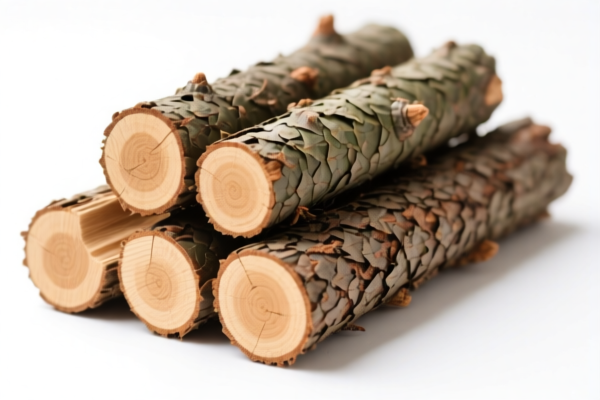
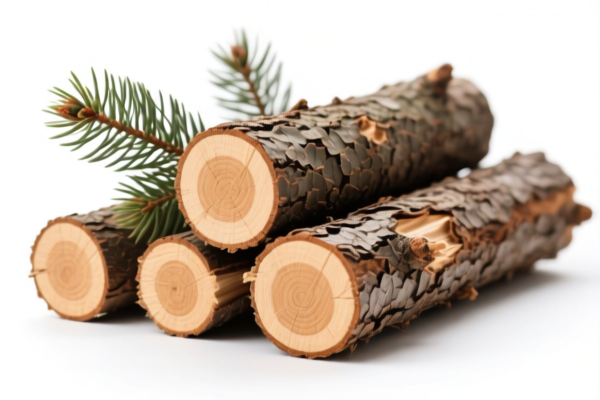
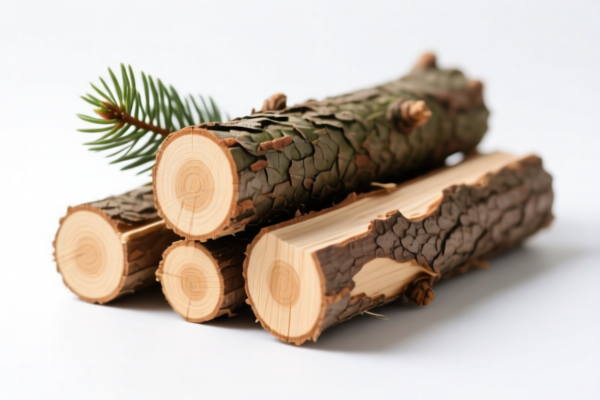
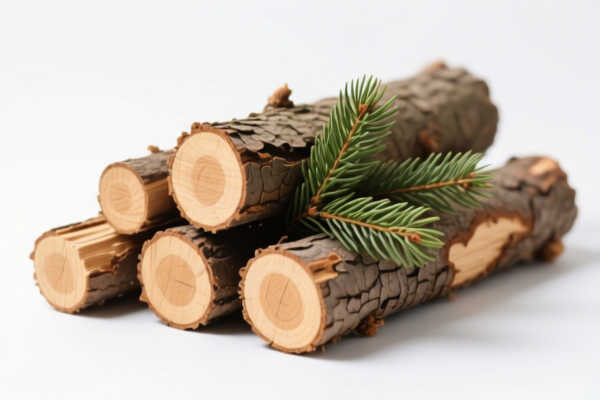
AI分析
🌲 Coniferous Sawnwood (Unprocessed) | Rough-Sawn Timber for Export
🌐 HS Code Reference & Customs Clearance Guide | 2024/2025 Tax Regulations | Strategic Compliance for Bulk Timber Imports
📌 Part I: Product Definition & Classification – What Exactly is "Coniferous Sawnwood Unprocessed"?
Coniferous Sawnwood (Unprocessed), often referred to in trade as "rough-sawn timber" or "logs with minimal processing," constitutes the primary raw material for construction, furniture, and pulp industries. In international trade (specifically under Harmonized System codes Chapter 44), this category is strictly defined by its botanical origin and physical state.
Key Distinction: "Unprocessed" vs. "Sawn"
"Unprocessed" (Rough-Sawn): The wood has been sawn but retains its natural shape, bark (partially or fully), or uneven surfaces. It has not been planed, smoothed, or shaped for immediate end-use (like flooring or molding).
* Coniferous Origin:* Derived from evergreen trees such as Pine, Spruce, Fir, Larch, or Douglas Fir.
⚠️ Critical Classification Point:
- If the wood is merely debarked and roughly sawn (not further worked) → It falls under Heading 4403 (Wood freshly cut, not chemically treated).
- If the wood is planed, smoothed, or shaped → It moves to Heading 4407 (Wood continuously sawn/chipped lengthwise, smoothed).
- Misclassification Risk: Declaring rough-sawn timber as "finished lumber" (4407) or "logs" (4403.10) leads to massive duty discrepancies and customs holds.
📦 Part II: HS Code Classification Details (Based on Provided Data)
The following HS Codes are derived strictly from the provided dataset. All items listed below are classified as Unprocessed Coniferous Wood subject to specific tariff structures.
| HS Code | Product Description (Summary) | Key Characteristics & Matching Criteria |
|---|---|---|
4403.24.01.04 |
Bulk Unprocessed Coniferous Sawedwood | Matches Coniferous wood material in a Rough/Unprocessed state. Typically implies sawn but not planed timber. |
4403.26.01.08 |
Bulk Unprocessed Coniferous Sawedwood | Matches Coniferous wood material in Log/Raw or un-rough-sawn form. Often used for raw timber shipments not yet cut to dimension. |
4403.26.01.65 |
Other Unprocessed Coniferous Logs | Matches Coniferous material in Rough/Raw form. Specifically targets logs that have undergone minimal processing but are not fully sawn. |
4403.26.01.08 |
Other Unprocessed Coniferous Logs | Matches Coniferous wood material in Log form. Duplicate entry indicating broad coverage for raw coniferous timber. |
4403.96.01.30 |
Unprocessed Birch Wood | ⚠️ NOTE: This code is for Birch (Deciduous), NOT Coniferous. Included in data but incorrect for "Coniferous" classification. Must be excluded for coniferous shipments. |
🔍 Important Clarification:
- Codes4403.24.01.04and4403.26.01.08/.65are the primary codes for Coniferous unprocessed wood.
- Code4403.96.01.30is for Birch (a hardwood/deciduous tree). Do not use for Pine, Spruce, Fir, etc.
- The term "Unprocessed" in these codes refers to wood that has not been chemically treated, impregnated, or further machined (planed/doweled).
💰 Part III: 2024/2025 Tariff Rate Breakdown (Detailed Tax Structure)
✅ Applicable Jurisdiction: United States (US)
✅ Origin: China (CN) (Implied by "Section 301" and "122 Clause" references)
✅ Effective Date: Current as of latest regulatory updates
All coniferous unprocessed wood codes listed (4403.24.01.04, 4403.26.01.08, 4403.26.01.65) carry the same total tax rate due to identical tariff treatments under current US trade policy.
🎯 1. Standard Tariff Structure for Coniferous Unprocessed Wood
| Tax Component | Rate | Explanation |
|---|---|---|
| Base Duty (MFN) | 0.0% | General Free Trade rate for unprocessed wood under normal conditions. |
| Section 301 Additional Duty | +25.0% | Imposed under US Trade Act Section 301 against Chinese goods. Applies to most wood products from China. |
| Section 122 / IEEPA Penalty Duty | +10.0% | Specific penalty tariff (often associated with "122 Clause" or IEEPA actions on specific Chinese timber/forestry products). |
| TOTAL EFFECTIVE RATE | 35.0% | Sum of Base + Section 301 + Section 122 |
📌 Calculation Example:
- CIF Value of Shipment: $100,000
- Base Duty: $0
- Section 301 Duty (25%): $25,000
- Section 122 Duty (10%): $10,000
- Total Duty Payable: $35,000 (35%)⚠️ Legal Basis Path:
USITC:4403.24.01.04→SECTION_301:9903.88.01(25%) →IEEPA:9903.01.24(10%) → Total 35%
🛠️ Part IV: Customs Clearance Practical Advice (Avoiding Delays & Penalties)
✅ 1. Essential Documentation Checklist
| Document | Requirement | Why It Matters |
|---|---|---|
| Phytosanitary Certificate | MANDATORY | Issued by the exporting country’s plant protection agency. Proves wood is free from pests (e.g., pine beetle, bark beetles). Without it, shipment is rejected. |
| Fumigation Certificate | MANDATORY | If wood is not treated, fumigation may be required to meet ISPM 15 standards. |
| Commercial Invoice | Detailed | Must explicitly state: "Coniferous Wood, Unprocessed, Rough-Sawn," species name (e.g., Pinus sylvestris), volume (CBM), and value. |
| Bill of Lading | Accurate | Must match invoice description. Avoid vague terms like "Wood Products." |
| Wood Species Declaration | Critical | Must specify Coniferous (e.g., Spruce, Pine) vs. Hardwood. Mislabeling as hardwood may avoid some tariffs but is fraud if incorrect. |
✅ 2. Declaration Best Practices (Do’s and Don’ts)
| Scenario | Correct Declaration | Incorrect Declaration | Consequence |
|---|---|---|---|
| Rough-Sawn Timber | "Coniferous Sawnwood, Unprocessed, Not Planed" | "Lumber" or "Finished Wood" | Misclassification → 35% + Penalties + Seizure |
| Log Shipment | "Coniferous Logs, Unprocessed, Debarked" | "Sawnwood" | Delayed inspection → Demurrage fees |
| Birch vs. Coniferous | "Birch Wood" | "Coniferous Wood" | Wrong HS Code (4403.96.01.30) → Incorrect tax application |
🔥 Key Rule:
"Be Specific, Be Honest, Be Phyto-Compliant."
- Never declare "unprocessed wood" as "furniture" or "construction material" to avoid tariffs.
- Ensure the HS Code matches the physical state: Rough-sawn =4403.24; Logs =4403.26.
✅ 3. Special Considerations for Coniferous Wood
-
Pest Control is Non-Negotiable:
Coniferous wood from China is subject to strict phytosanitary inspections due to risks of pine wilt nematode and bark beetles. Ensure the exporting facility is accredited and fumigation was performed before shipping. -
Volume Measurement:
Custom duties are often calculated on ad valorem (value) but inspections are based on volume (CBM). Ensure the volume on the invoice matches the bill of lading and physical inspection. -
Section 301 Exemptions?
As of current data, no exemptions are listed for unprocessed coniferous wood under Section 301. The 25% + 10% is cumulative. Plan for 35% total duty cost. -
Avoid "Birch" Misclassification:
If you are shipping Pine, Spruce, or Fir, do NOT use4403.96.01.30(Birch). This is a different species and may trigger audits for incorrect classification.
🌍 Part V: Global Market Comparison (2024/2025)
| Market | Recommended HS Code | Base Duty | Additional Tariffs | Total Est. Duty | Notes |
|---|---|---|---|---|---|
| 🇺🇸 USA | 4403.24.01.04 / 4403.26.01.08 |
0% | +35% (301+122) | 35% | Strict phytosanitary rules. High duty. |
| 🇨🇳 China | 4403.24.01.04 |
0-5% | None | 0-5% | Imports of unprocessed wood may be restricted for domestic forestry protection. |
| 🇪🇺 EU | 4403.24.01.00 |
0-3% | EUDR Compliance | Low Duty | New! EU Deforestation Regulation (EUDR) requires geo-location data for wood products. |
| 🇬🇧 UK | 4403.24.01.00 |
0-5% | None | 0-5% | Post-Brexit trade terms apply. |
📌 Conclusion:
- USA is the most challenging market due to 35% combined tariffs and strict phytosanitary controls.
- EU has low duties but high compliance costs (EUDR).
- China has low duties but may restrict imports to protect domestic resources.
📌 Part VI: Common Mistakes & Pitfalls (Lessons Learned)
❌ Mistake 1: Declaring "Unprocessed Wood" as "Sawn Lumber"
👉 Result: If actually rough-sawn, misclassified. If planed, under-declaring. Both lead to penalties.
👉 Fix: Clearly state "Rough-Sawn, Not Planed" in description.
❌ Mistake 2: Ignoring Phytosanitary Requirements
👉 Result: Shipment rejected at port, destroyed, or returned. Cost: 100% of cargo value.
👉 Fix: Obtain valid Phytosanitary Certificate before loading.
❌ Mistake 3: Using Birch Code (4403.96.01.30) for Coniferous Wood
👉 Result: Customs audit for incorrect species classification. Potential fraud allegations.
👉 Fix: Use 4403.24 or 4403.26 for Pine/Spruce/Fir.
❌ Mistake 4: Assuming 0% Duty Because Base is 0%
👉 Result: Underestimating landed cost by 35%.
👉 Fix: Budget for 35% total duty for US imports from China.
✅ Correct Approach:
"Coniferous Sawnwood, Unprocessed, Rough-Sawn, Species: [Pinus sylvestris], Volume: [X] CBM, Fumigated, Phytosanitary Certificate Attached."
🎯 Part VII: Final Checklist for Exporters
- Verify Wood Species: Is it Coniferous (Pine/Spruce) or Hardwood (Birch/Oak)?
- Confirm Processing Level: Is it Rough-Sawn (
4403.24) or Logs (4403.26)? - Check Tariffs: Are you shipping to the US? Expect 35% duty.
- Secure Phyto Cert: Ensure phytosanitary certificate is valid and matches invoice.
- Accurate Description: Use "Unprocessed Coniferous Sawnwood" – never vague terms.
📌 Pro Tip:
If you are importing coniferous wood into the US, pre-classify your goods with a licensed customs broker. Apply for a Binding Ruling from CBP if the volume is large, to lock in the HS Code and duty rate.
📣 Immediate Action:
📞 Engage a customs broker specializing in wood and forestry products.
📄 Prepare Phytosanitary Certificate and Fumigation Certificate.
💰 Calculate 35% duty into your landed cost model.
✨ Precision in Classification Saves 35% in Duties!
💼 Don’t Let Unprocessed Wood Become a Costly Mistake.
用户评价
关于 HS 编码归类
协调制度(HS)是由世界海关组织(WCO)制定的国际贸易商品分类标准。全球 200 多个国家采用 HS 系统作为海关关税、贸易统计和进出口监管的基础。
每个 HS 编码遵循以下层级结构:
- 章(2 位)——商品大类(例如:第 84 章:机器和机械设备)
- 品目(4 位)——章内的更具体分类
- 子目(6 位)——国际通用细分,所有 WCO 成员国统一使用
- 本国细分(8-10 位)——各国自行扩展的细分编码,如美国 HTSUS 10 位编码
正确的 HS 编码归类对于顺利通关、准确缴纳关税和遵守贸易法规至关重要。错误归类可能导致海关延误、多缴关税或罚款。
从CN进口到US时,适用的关税税率可能包括:
- 最惠国(MFN)税率——适用于 WTO 成员国的标准关税税率
- 普通税率——适用于无贸易协定国家
- 贸易救济关税——附加关税,如 301 条款(反倾销)、232 条款(国家安全)或反补贴税
本页内容仅供参考。如需正式归类,请咨询当地海关或持牌报关代理。