construction rough timber
CN → US| HS编码 | 关税税率 | 原产国 | 目的国 | 文档 |
|---|---|---|---|---|
| 4403210130 | 35.0% | CN | US | 官方文档 |
| 4401120000 | 35.0% | CN | US | 官方文档 |
| 4401110000 | 35.0% | CN | US | 官方文档 |
| 4403220165 | 35.0% | CN | US | 官方文档 |
商品图片
AI分析
🌲 Construction Rough Timber: HS Code Classification & Tax Breakdown (2026)
🌐 HS Code Reference & Clearance Guide | 2026 Latest Tariff Analysis | Professional Customs Strategy
📌 I. Product Definition: What is "Construction Rough Timber"?
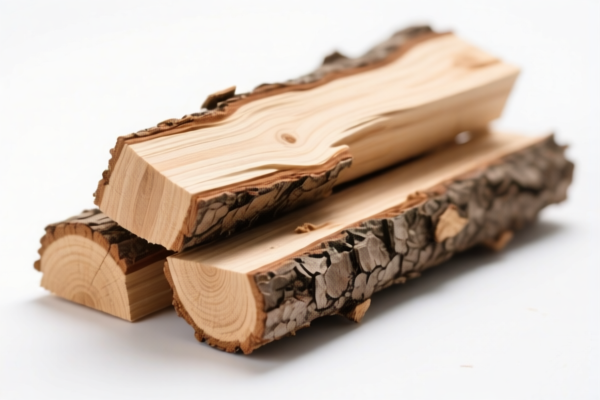
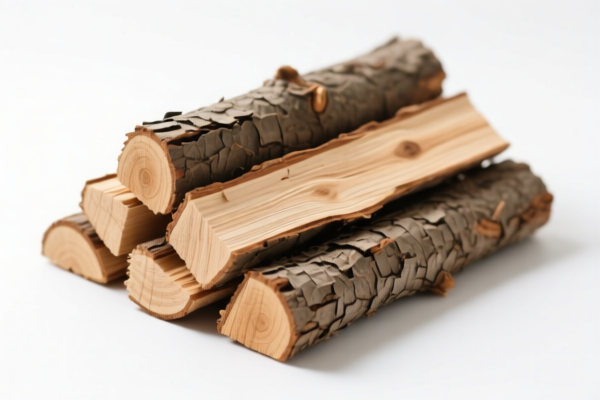
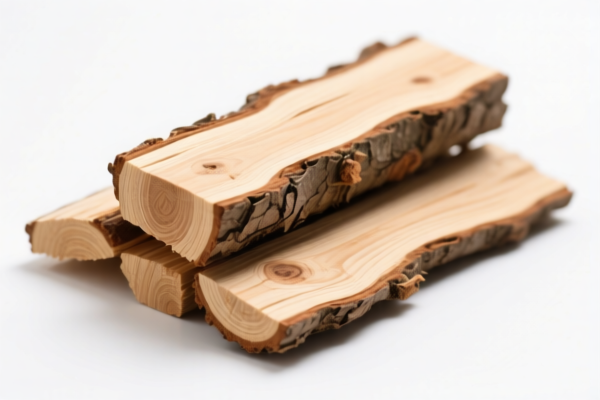
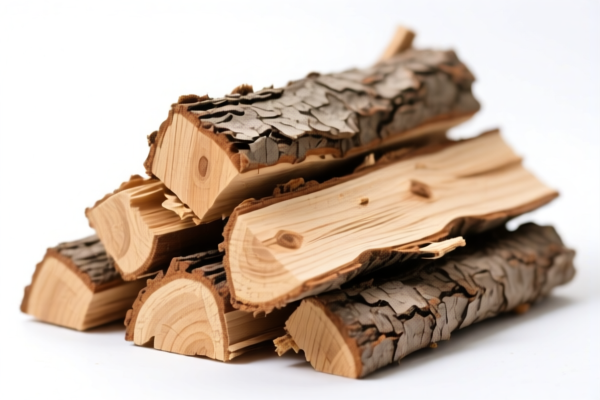
Construction Rough Timber refers to wood that has undergone primary processing—such as sawing or squaring—but has not yet been planed, sanded, or joined into finished carpentry products. It serves as the fundamental raw material for construction framing, flooring substructures, and industrial pallets.
In international trade, this category is strictly divided based on: 1. Wood Species: Coniferous (Softwood) vs. Non-Coniferous (Hardwood/Broadleaf). 2. Processing Level: "Rough" means it retains its natural round shape (logs) or has only been roughly squared/sawn, lacking refined surfaces.
⚠️ Key Distinction:
- If the wood is unprocessed/logs: It falls under Chapter 44.01 (Fuelwood) or 44.03 (Treated/Untreated Logs).
- If the wood is squared/sawn but rough: It falls under 44.03 (Specific species) or 44.07 (Sawn wood).
- Crucial Note: "Construction Timber" is often misclassified as "Fuelwood" (44.01) to evade taxes. However, if it is intended for construction structures, it must be declared under its specific species code in 44.03 or 44.07.
📦 II. HS Code Classification Details (Based on Provided Data)
The following HS Codes are derived strictly from your provided dataset. These codes apply to Chinese-origin wood products entering the US market (implied by the "122 Clause" and "Section 301" tax structure).
| HS Code | Product Description (Summary) | Key Characteristics |
|---|---|---|
| 4403.21.01.30 | Rough timber, matching logs and wood forms, rough sawn or rough squared. | General rough timber; includes both round logs and rough-squared beams. |
| 4401.12.00.00 | Rough timber, conforming to wood material and fuelwood form. | Specifically for wood used as fuel/biomass, even if raw. |
| 4401.11.00.00 | Rough timber, conforming to wood material and firewood form. | Similar to 44.01.12 but specifically categorized as firewood. |
| 4403.22.01.65 | Rough timber, matching Pine logs in any state (barked, debarked, or sapwood removed). | Specific to Pine species; raw log form. |
🔍 Critical Analysis:
- Codes 4403.xx are for structural/construction timber (Softwoods like Pine, Fir, etc.).
- Codes 4401.xx are for Fuelwood/Firewood.
- ⚠️ Risk: If you import Pine logs for construction but declare them as "Fuelwood" (44.01), customs may reclassify them, leading to penalties. However, note that in the provided data, ALL listed items carry the same high tax burden, suggesting strict enforcement on Chinese wood imports regardless of the "fuel vs. construction" label.
💰 III. 2026 Latest Tariff Rate Breakdown (Detailed Tax Clauses)
✅ Applicable Country: United States (US)
✅ Country of Origin: China (CN)
✅ Effective Date: Ongoing (Post-2025 policies)
🎯 1. 4403.21.01.30 & 4403.22.01.65 (Construction Rough Timber)
These codes cover rough-sawn or rough-squared timber, including Pine logs.
| Item | Detail |
|---|---|
| Base Tariff | 0.0% (Most Favored Nation rate for some wood products, but see below) |
| Section 301 Additional Tariff | +25.0% |
| 122 Clause Tariff | +10.0% (Specific administrative or anti-dumping duty clause) |
| Total Effective Rate | 35.0% |
| Calculation Base | CIF Value (Cost, Insurance, and Freight) |
| De Minimis Exemption | ❌ NOT APPLICABLE (Shipments under $800 are still subject to these tariffs for Chinese goods) |
| Legal Authority Path | USITC:4403.21.01.30 → Section 301: Footnote 9903.88.01 → 122 Clause: Admin Order |
📌 Explanation:
- The 0% base rate might seem low, but the 25% Section 301 tariff (imposed on Chinese wood products) is the primary cost driver.
- The 10% "122 Clause" appears to be an additional administrative duty often applied to specific Chinese wood imports to mitigate unfair trade practices.
- Total 35% significantly impacts profitability. Importers must factor this into landed cost calculations.
🎯 2. 4401.12.00.00 & 4401.11.00.00 (Fuelwood/Firewood)
These codes apply to wood intended for fuel, even if in rough form.
| Item | Detail |
|---|---|
| Base Tariff | 0.0% |
| Section 301 Additional Tariff | +25.0% |
| 122 Clause Tariff | +10.0% |
| Total Effective Rate | 35.0% |
| Calculation Base | CIF Value |
| De Minimis Exemption | ❌ NOT APPLICABLE |
| Legal Authority Path | USITC:4401.11.00.00 → Section 301: Footnote 9903.88.01 → 122 Clause: Admin Order |
📌 Explanation:
- Interestingly, Fuelwood and Construction Timber have the exact same tax rate (35%) in this dataset.
- This removes the incentive to misclassify construction timber as "fuelwood" to avoid higher duties (if any existed). Both are heavily taxed.
🛠️ IV. Customs Clearance Practical Advice (Battle-Tested Strategies)
✅ 1. Required Documentation Checklist
| Document | Mandatory? | Notes |
|---|---|---|
| Commercial Invoice | ✔️ | Must clearly state "Rough Sawn Timber" or "Pine Logs," not generic "Wood." |
| Packing List | ✔️ | Detail volume (CBM) and weight. Discrepancies cause delays. |
| Certificate of Origin (CO) | ✔️ | Essential for verifying Chinese origin. |
| Phytosanitary Certificate | ✔️ | CRITICAL: Required by USDA APHIS to prevent pest introduction. Must be issued by the exporting country's NPPO. |
| Fumigation Certificate | ✔️ | Often required alongside Phytosanitary cert, especially for pine logs. |
| ISPM 15 Marking (if pallets) | ✔️ | If wood is on pallets, pallets must be heat-treated and marked. |
✅ 2. Declaration Tips (Avoid Penalties)
🔥 "Be Specific, Be Honest, Be Accurate!"
| Scenario | Correct Declaration | Wrong Declaration | Consequence |
|---|---|---|---|
| Pine Logs | 4403.22.01.65 - "Rough Pine Logs, Barked/De-barked" |
"Wood Lumber" or "Plywood" | Misclassification Penalty + 35% Tax + Possible Seizure |
| Rough Sawn Oak | 4403.21.01.30 (if applicable) or correct hardwood code |
"Construction Timber" (Vague) | Customs Request for More Info (RMA) → Delay |
| Fuelwood | 4401.11.00.00 - "Firewood, Rough Form" |
"Lumber" | Tax Rate Discrepancy Audit |
| Mixed Species | Split declaration by HS Code | "Assorted Wood" | Denial of Entry or Re-valuation |
✅ 3. Special Circumstances Handling
| Situation | Recommendation |
|---|---|
| Sapwood Removal | For Pine (44.03.22), specifying "sapwood removed" is crucial for correct sub-heading. Ensure invoices match. |
| Moisture Content | If wood is green (wet), it may be subject to different weight-based duties or phytosanitary scrutiny. Declare accurately. |
| Anti-Dumping/Countervailing Duties (AD/CVD) | Check if specific pine species from China are under active AD/CVD orders. The "122 Clause" may be related. Verify with a trade lawyer. |
| De Minimis ($800) | Warning: While $800 shipments are usually duty-free, Section 301 tariffs often apply regardless of value for Chinese goods. Do not assume small shipments are tax-free. |
🌍 V. Global Market Comparison (2026)
| Region | Recommended HS Code | Base Tariff | Additional Duties | Total Est. Rate | Notes |
|---|---|---|---|---|---|
| 🇺🇸 USA | 4403.21.01.30 / 4403.22.01.65 |
0% | +35% (Section 301 + 122) | 35% | High Barrier. Focus on value-added processing in US. |
| 🇨🇳 China | 4403 |
0-5% | None | ~0-5% | Export hub for rough timber. |
| 🇪🇺 EU | 4403 |
0% | None (Usually) | 0% | No Section 301 equivalent. Phytosanitary rules strict. |
| 🇨🇦 Canada | 4403 |
0% | None | 0% | Free trade under CUSMA, but phytosanitary still required. |
📌 Conclusion:
- The US market is exceptionally expensive for Chinese rough timber due to the 35% blended tariff.
- Competitors in EU, Canada, and Southeast Asia have a significant cost advantage.
- Strategy: Consider sourcing rough timber from non-Chinese origins (e.g., Russia, Canada, Baltic States) to avoid the 35% US duty, or invest in value-added processing abroad before shipping to the US.
📌 VI. Common Errors & Pitfalls (Lessons Learned)
❌ Error 1: Declaring "Construction Timber" as "Firewood" to simplify classification.
👉 Result: Customs audits reveal intended use is structural. Back-taxes + Fines.
❌ Error 2: Ignoring Phytosanitary Certificates.
👉 Result: Shipment quarantined or destroyed by USDA. Total loss.
❌ Error 3: Assuming "De Minimis" ($800) applies.
👉 Result: Seizure of LCL shipments under $800. Section 301 applies to all values.
❌ Error 4: Incorrect Pine Species Identification.
👉 Result: Misclassification between 4403.21 (Other coniferous) and 4403.22 (Pine/Fir/Spruce). Leads to re-valuation and penalties.
✅ Correct Practice:
"Rough Sawn Southern Yellow Pine, 2x4s, De-barked, Phytosanitary Certified, Origin: China"
🎯 VII. Conclusion: Professional Clearance, Cost Control, Efficiency!
🎯 Remember the Mantra:
🔹 "Specs Matter, Phytosanitary is Key, 35% Tax is Real, De Minimis is a Myth for CN!"
🔹 "HS Code decides fate, 35% is a steep hill, declare accurately or pay the price!"
📌 Pro Tip:
If your volume is high, apply for a Pre-Ruling from CBP (Customs and Border Protection) to confirm the exact HS Code and taxability. This provides legal certainty and protects against future audits.
📣 Immediate Action Required:
📞 Engage a licensed Customs Broker.
📄 Ensure Phytosanitary Certificates are ready before shipment.
💰 Calculate landed cost with 35% duty included.
🚀 Clear the logs, clear the costs, clear the border!
✨ Professional clearance starts with precise classification!
💼 Every penny of duty saved is pure profit!
用户评价
关于 HS 编码归类
协调制度(HS)是由世界海关组织(WCO)制定的国际贸易商品分类标准。全球 200 多个国家采用 HS 系统作为海关关税、贸易统计和进出口监管的基础。
每个 HS 编码遵循以下层级结构:
- 章(2 位)——商品大类(例如:第 84 章:机器和机械设备)
- 品目(4 位)——章内的更具体分类
- 子目(6 位)——国际通用细分,所有 WCO 成员国统一使用
- 本国细分(8-10 位)——各国自行扩展的细分编码,如美国 HTSUS 10 位编码
正确的 HS 编码归类对于顺利通关、准确缴纳关税和遵守贸易法规至关重要。错误归类可能导致海关延误、多缴关税或罚款。
从CN进口到US时,适用的关税税率可能包括:
- 最惠国(MFN)税率——适用于 WTO 成员国的标准关税税率
- 普通税率——适用于无贸易协定国家
- 贸易救济关税——附加关税,如 301 条款(反倾销)、232 条款(国家安全)或反补贴税
本页内容仅供参考。如需正式归类,请咨询当地海关或持牌报关代理。