copper nut
CN → US| HS编码 | 关税税率 | 原产国 | 目的国 | 文档 |
|---|---|---|---|---|
| 7415338010 | 88.0% | CN | US | 官方文档 |
| 8309900085 | 37.6% | CN | US | 官方文档 |
| 8309900080 | 37.6% | CN | US | 官方文档 |
| 7415338050 | 88.0% | CN | US | 官方文档 |
| 7415338010 | 88.0% | CN | US | 官方文档 |
商品图片
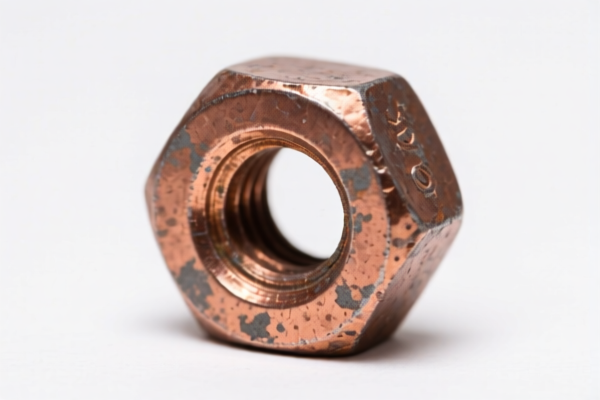
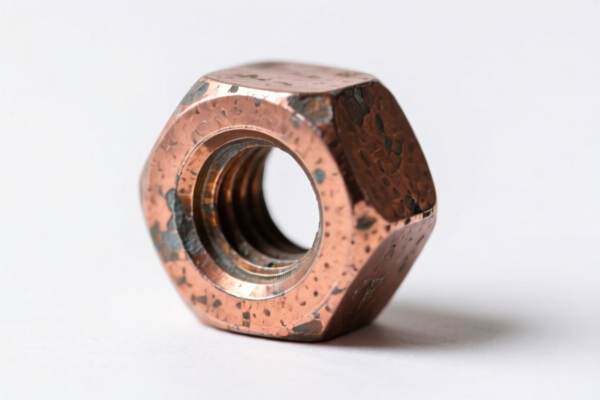
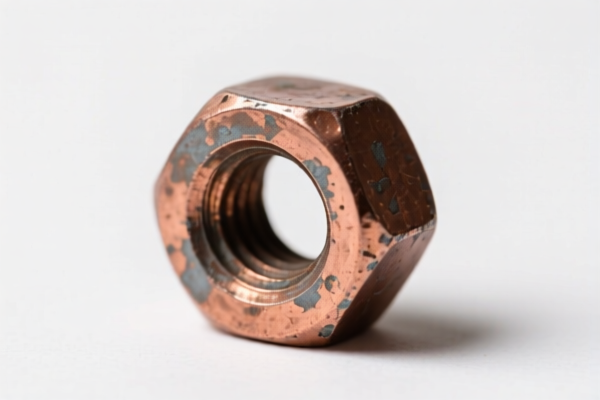
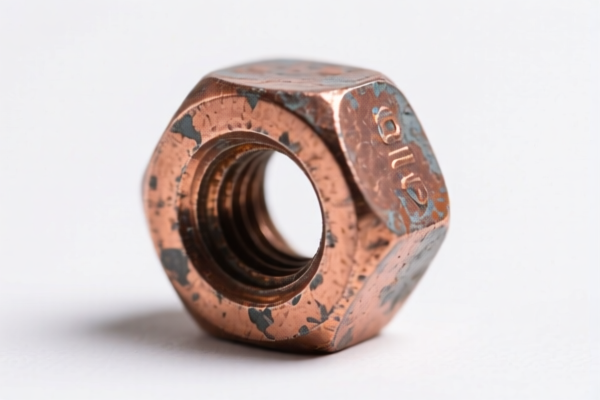
AI分析
🔩 Copper Nuts (Cu Niú)
🌐 HS Code Reference & Customs Clearance Guide | 2026 Latest Tariff Analysis | Professional Clearance Strategy
📌 I. Product Definition & Classification: What Exactly Are "Copper Nuts"?
Copper Nuts are fastening components made primarily of copper or copper alloys. In international trade, they are classified based on their material composition and functional category. While copper is technically a "precious metal" in some contexts, for customs tariff purposes (Chapter 74 vs. Chapter 83), it is often treated under specific provisions for copper articles. However, some classifications may fall under "base metal articles" if the definition of "copper" is interpreted loosely or if the item is considered a general metallic accessory.
⚠️ Key Distinction Point:
- If the nut is explicitly identified as "Copper" and fits the heading for "Articles of Copper" (Chapter 74) → It falls under 7415.33.80.xx.
- If the customs authority interprets the item as a "General Metal Accessory" or "Fastener" under "Base Metal Articles" (Chapter 83), it may fall under 8309.90.00.xx.
- Critical Note: Chapter 74 items face significantly higher additional tariffs (122 Section Tariffs) compared to Chapter 83 items.
📦 II. HS Code Classification Details (2026 Latest Tariff Authority Comparison)
| HS Code | Product Description | Applicable Scenario | Material |
|---|---|---|---|
7415.33.80.10 |
Copper Nuts: Material is copper, form is nut, fully conforms to classification definition. | Specific copper fasteners. | ✅ Copper |
7415.33.80.50 |
Copper Nuts: Material is copper, form is nut, completely consistent with classification explanation. | Specific copper fasteners. | ✅ Copper |
8309.90.00.85 |
Metal Fittings: Copper is considered a "base metal" in this context; form falls under similar metal fittings like plugs, caps, and sealing accessories. | General metal accessories where copper is not the primary differentiator for Chapter 74. | ✅ Base Metal (Copper treated as such) |
8309.90.00.80 |
Copper Nuts: Belongs to metal fastening/sealing accessories, consistent with base metal and accessories attributes. | General metal fasteners/sealants. | ✅ Base Metal (Copper treated as such) |
🔍 Important Reminder:
- Chapter 74 (7415.33.80.xx): Explicitly for Copper articles. Faces high additional tariffs (see Section III).
- Chapter 83 (8309.90.00.xx): Broadly for Base Metal Articles. If customs allows classification here, tariffs are significantly lower.
- Risk: Misclassification from Ch. 83 to Ch. 74 can result in a massive tariff increase (from ~37.6% to ~88.0%).
💰 III. 2026 Latest Tariff Rate Detailed Breakdown (Including Surcharges & Policy Add-ons)
✅ Applicable Country: United States (US)
✅ Origin: China (CN)
✅ Effective Date: Includes all imports from 2025 onwards (subject to ongoing policy)
🎯 1. 7415.33.80.10 & 7415.33.80.50 —— Copper Nuts (Chapter 74)
| Item | Content |
|---|---|
| Base Tariff | 3.0% |
| Section 301 Surcharge | +25.0% |
| Section 122 Tariff (Steel, Aluminum, Copper Products) | +50.0% |
| Total Tariff Rate | 88.0% |
| Tax Calculation | CIF Value × 88.0% |
| De Minimis Eligibility | ❌ Not Eligible (High value, specific exclusion) |
| Legal Basis Path | Section 122: 50% for Copper → Section 301: 25% → Base: 3.0% |
📌 Explanation:
- The 50% Section 122 Tariff is a critical addition for Copper products originating from China. This is a recent and severe trade barrier.
- The 25% Section 301 Tariff applies to all Chinese goods under Chapter 74.
- Total 88% is an extremely high effective duty rate, drastically impacting profitability.
🎯 2. 8309.90.00.85 & 8309.90.00.80 —— Metal Fittings/Fasteners (Chapter 83)
| Item | Content |
|---|---|
| Base Tariff | 2.6% |
| Section 301 Surcharge | +25.0% |
| Section 122 Tariff | 0% (Not applicable to this specific subheading interpretation) |
| Total Tariff Rate | 37.6% |
| Tax Calculation | CIF Value × 37.6% |
| De Minimis Eligibility | ❌ Not Eligible |
| Legal Basis Path | Section 301: 25% → Base: 2.6% |
📌 Explanation:
- If classified under Chapter 83, the 50% Section 122 Tariff for Copper is avoided (assuming customs accepts the "Base Metal Article" classification).
- Total 37.6% is still high due to Section 301, but less than half of the Chapter 74 rate.
- Strategy: Argue for Chapter 83 if the nut is a general-purpose fitting, not specifically a "Copper Article" under Chapter 74’s exclusive scope.
🛠️ IV. Customs Clearance Practical Advice (Battle-Tested Pitfall Guide)
✅ 1. Required Documentation Checklist (Non-Negotiable)
| Document | Must Provide | Explanation |
|---|---|---|
| ✅ Product Specification Sheet | ✔️ | Must specify material composition (e.g., 99.9% Copper vs. Copper Alloy). |
| ✅ Product Photos (Including Nameplate) | ✔️ | Clear view of threads, shape, and any markings indicating material. |
| ✅ Commercial Invoice | ✔️ | Clearly state "Copper Nuts" or "Metal Fasteners". Avoid vague terms like "Hardware". |
| ✅ Bill of Lading / Packing List | ✔️ | Ensure weight and quantity match invoice. |
| ✅ Certificate of Origin (CO) | ✔️ | Proves Chinese origin, triggering Section 301/122 if applicable. |
✅ 2. Declaration Techniques (Key Mantras)
🔥 “Material Matters, Chapter 74 is Heavy, Chapter 83 is Lighter!”
| Scenario | Correct Declaration Strategy | Incorrect Action |
|---|---|---|
| Explicitly Copper Nuts | Declare as 7415.33.80.xx but prepare for 88% tax. |
Try to hide material → Fraud risk. |
| General Metal Fittings (Copper-like) | Argue for 8309.90.00.xx as "Base Metal Article". |
Declare as "Copper" without justification for Ch. 74 → Higher tax. |
| Mixed Shipments | Separate HS Codes for Copper (Ch.74) vs. Steel (Ch.73/83). | Mixed declaration → Customs audit delay. |
| Accessories (Caps/Plugs) | Use 8309.90.00.85 for sealing accessories. |
Force "Nut" classification → Mismatched function. |
✅ 3. Special Situation Handling
| Situation | Handling Advice |
|---|---|
| OEM Custom Copper Nuts | Provide customer drawings showing material spec. If material is critical, Ch. 74 is unavoidable. |
| Copper Alloy (Not Pure Copper) | If alloy <50% copper, it may fall under Brass/Bronze rules, potentially shifting to Ch. 83. Verify alloy composition! |
| Small Quantity Samples | Still subject to tariffs if >$800 (de minimis not applicable for Ch. 74/83 with surcharges). |
| Re-export from Third Country | If processed in Vietnam/Mexico, origin rules may change. Apply for Advance Ruling. |
🌍 V. Global Market Clearance Comparison (2026 Latest)
| Country/Region | Recommended HS Code | Tariff (China Origin) | Certification Requirements | Notes |
|---|---|---|---|---|
| 🇺🇸 USA | 8309.90.00.80 |
37.6% (Best Case) | None | If Ch. 74, 88.0%. High risk. |
| 🇨🇳 China | 7415.33.80.xx |
Low | None | Import duty is low; focus is on domestic market. |
| 🇪🇺 EU | 7415.33.80.xx |
0-3% | REACH + RoHS | No Section 301/122 equivalents. |
| 🇬🇧 UK | 7415.33.80.xx |
0-5% | UKCA | Post-Brexit rules may vary. |
| 🇯🇵 Japan | 7415.33.80.xx |
0% | JIS | Free trade agreement benefits possible. |
📌 Conclusion:
- USA is the only major market with punitive tariffs (88% or 37.6%).
- EU/UK/Japan offer much lower barriers. Consider diversifying supply chains to non-US markets if tariffs are prohibitive.
- Critical Strategy: Try to classify under Chapter 83 for US imports to save ~50% in duties, but only if technically defensible.
📌 VI. Common Mistakes & Pitfall Guide (Lessons Learned from Pain)
❌ Mistake 1: Declaring "Copper Nuts" as "Plastic Fittings"
👉 Consequence: Smuggling/Fraud charges if discovered. Customs labs test material composition.
❌ Mistake 2: Assuming all "Metal Nuts" fall under Chapter 83
👉 Consequence: 88% tariff if customs insists on Chapter 74 for copper. Missed savings of 50.4%.
❌ Mistake 3: Not specifying alloy percentage
👉 Consequence: Customs may default to pure copper rules, triggering Section 122.
❌ Mistake 4: Ignoring Section 122 for Copper
👉 Consequence: Budgeting for 30% tariff, but facing 88%. Cash flow crisis.
✅ Correct Approach:
“Copper Nuts, Brass Alloy (55% Cu), for Industrial Fastening, Model XYZ, Certified to ISO 4014”
🎯 VII. Conclusion: Precision Classification Saves Millions!
🎯 Remember the Mantra:
🔹 “Chapter 74 = Copper = 88% Tax. Chapter 83 = Base Metal = 37.6% Tax. Choose Wisely!”
🔹 “Section 122 is the Killer for Copper. Section 301 is the Constant.”
🔹 “HS Code determines your profit margin. Get it right or pay the price.”
📌 Pro Tip:
If your copper nuts are originating from Vietnam, Mexico, or Thailand, you may be eligible for IEEPA Exemptions or FTZ benefits, reducing rates to 0%~5%.
Recommendation: Apply for a Binding Ruling (Advance Ruling) from US Customs and Border Protection (CBP) to lock in your HS Code classification before shipment.
📣 Immediate Action:
📞 Contact a professional customs broker + Provide Material Certs + Apply for CBP Ruling
🚀 Let your Copper Nuts clear smoothly, optimize costs, and boost profits!
✨ Professional Clearance Starts with Accurate Classification!
💼 Every cent of your cost deserves precise calculation!
用户评价
关于 HS 编码归类
协调制度(HS)是由世界海关组织(WCO)制定的国际贸易商品分类标准。全球 200 多个国家采用 HS 系统作为海关关税、贸易统计和进出口监管的基础。
每个 HS 编码遵循以下层级结构:
- 章(2 位)——商品大类(例如:第 84 章:机器和机械设备)
- 品目(4 位)——章内的更具体分类
- 子目(6 位)——国际通用细分,所有 WCO 成员国统一使用
- 本国细分(8-10 位)——各国自行扩展的细分编码,如美国 HTSUS 10 位编码
正确的 HS 编码归类对于顺利通关、准确缴纳关税和遵守贸易法规至关重要。错误归类可能导致海关延误、多缴关税或罚款。
从CN进口到US时,适用的关税税率可能包括:
- 最惠国(MFN)税率——适用于 WTO 成员国的标准关税税率
- 普通税率——适用于无贸易协定国家
- 贸易救济关税——附加关税,如 301 条款(反倾销)、232 条款(国家安全)或反补贴税
本页内容仅供参考。如需正式归类,请咨询当地海关或持牌报关代理。