cork shavings building insulation
CN → US| HS编码 | 关税税率 | 原产国 | 目的国 | 文档 |
|---|---|---|---|---|
| 4504104000 | 35.0% | CN | US | 官方文档 |
| 6808000000 | 35.0% | CN | US | 官方文档 |
| 4504103000 | 35.0% | CN | US | 官方文档 |
| 4504105000 | 35.0% | CN | US | 官方文档 |
| 6808000000 | 35.0% | CN | US | 官方文档 |
商品图片

AI分析
🌿 Cork Shavings: Building Insulation (Natural & Sustainable Thermal Solutions)
🌐 HS Code Reference & Customs Clearance Guide | 2026 Latest Tariff Analysis | Professional Strategy for Cork Insulation
📌 I. Product Definition & Classification: What Exactly is "Cork Insulation"?
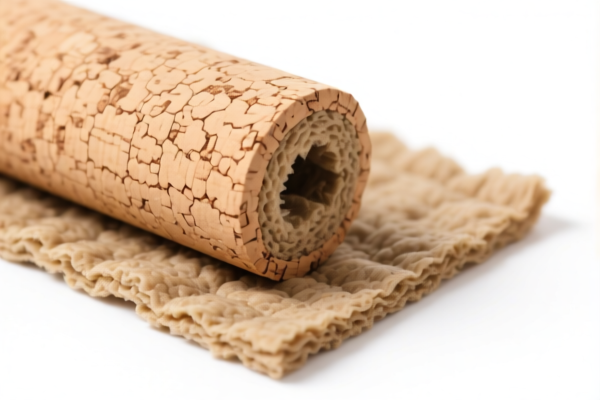
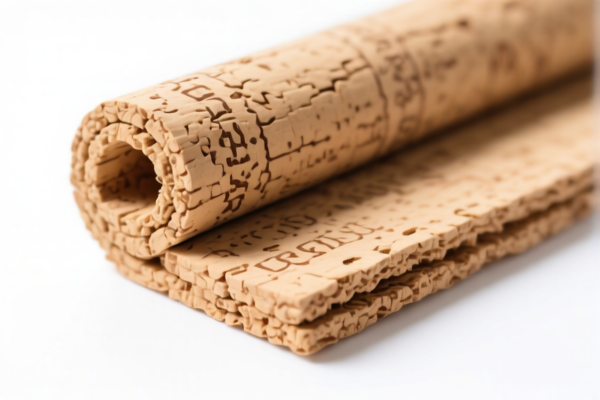
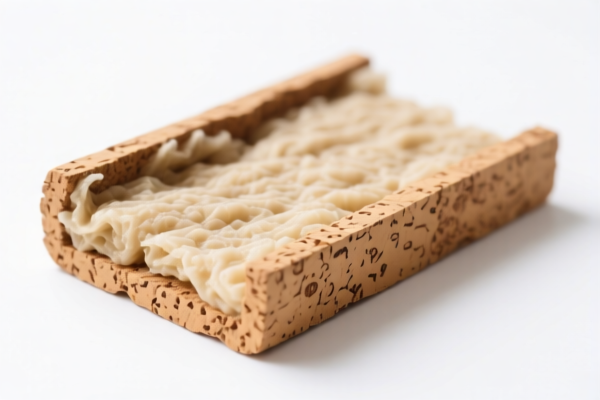
Cork shavings used for building insulation are typically composed of granulated cork bark (often post-industrial waste or recycled cork) compressed into blocks, boards, or loose-fill pellets. In international trade, the classification hinges on two critical factors: 1. Material State: Is it raw cork crumbs/granules? Or processed boards/blocks? 2. Application: Is it specifically identified as an insulation material?
⚠️ Key Distinction Point: - If the product is loose shavings/granules or simple blocks primarily defined by their material (cork) rather than a specific manufactured shape, they often fall under Chapter 45. - If the product is processed into rigid boards, sheets, or composite panels that fit the description of other construction materials (like mineral wool or wood fiber boards), customs may look at Chapter 68 (articles of stone, plaster, cement, etc.) if treated as composite construction articles, though cork itself is Chapter 45. Note: The provided data suggests Chapter 68 is also a potential match for "plant fiber/wood waste boards," likely due to classification nuances regarding processed insulation boards.
📦 II. HS Code Classification Details (2026 Latest Tariff Authority Cross-Reference)
Based on the provided data, here are the potential HS Codes for Cork Shavings/Insulation imported into the US from China:
| HS Code | Product Description | Match Logic / Summary | Tax Rate (Total) |
|---|---|---|---|
4504.10.40.00 |
Cork Granules & Agglomerates | Matches material (cork) and basic form. Suitable for building materials category. | 35.0% |
6808.00.00.00 |
Boards, Planks, Sheets of Wood or Plant Fibers | Matches construction material category. Material: Plant fiber/wood waste. Fits heat insulation properties. | 35.0% |
4504.10.30.00 |
Cork Agglomerates (Blocks/Sheets) | Matches material (cork) and use (building insulation covers tiles, boards, blocks). | 35.0% |
4504.10.50.00 |
Other Cork Articles (Insulation Boards/Srips) | Material match (cork). Form matches insulation material (boards, sheets, strips). Other category. | 35.0% |
6808.00.00.00 |
Wood/Plant Fiber Waste Boards | Material: Plant fiber/wood waste scraps. Form: Boards, blocks, etc. for heat insulation. | 35.0% |
🔍 Important Note: - Chapter 45 (Cork) is the most direct match for products primarily composed of cork. - Chapter 68 is considered when the product is viewed as a "composite construction board" or "insulation board" made from wood/plant fibers, even if cork is the primary component, depending on how it is manufactured and presented. - All listed codes carry the same total tariff rate of 35% under the current US-China trade policy (Section 301 + IEEPA).
💰 III. 2026 Latest Tariff Rate Breakdown (Including Additional Duties)
✅ Applicable Country: United States (US) ✅ Origin: China (CN) ✅ Effective Date: 2025/2026 (Current Policy)
🎯 1. All Listed HS Codes (4504.10.xxxx.00 & 6808.00.00.00)
| Item | Details |
|---|---|
| Base Tariff Rate | 0.0% (Ad Valorem) |
| Section 301 Additional Duty | +25.0% (From USITC Footnotes/Trade Act) |
| IEEPA Section 122 Duty | +10.0% (Targeting specific Chinese imports, often linked to strategic materials or specific trade disputes) |
| Total Tariff Rate | 35.0% |
| Tax Calculation | CIF Value × 35% |
| De Minimis Exemption | ❌ Not Applicable |
| Legal Basis Path | Base: 0% → Section 301: +25% → IEEPA/Sec 122: +10% → Total 35% |
📌 Explanation: - The 25% is the standard Section 301 tariff on most Chinese goods. - The 10% is an additional levy under Section 122 of the Trade Expansion Act or similar executive orders targeting specific imports. - Combined 35% is a significant cost factor. Unlike some electronics (45%) or steel (25%+steel tariffs), cork insulation faces a flat 35% across these specific subheadings.
🛠️ IV. Customs Clearance Practical Advice (Risk Avoidance Guide)
✅ 1. Required Documentation Checklist (Essential for Smooth Clearance)
| Document | Must Provide | Explanation |
|---|---|---|
| ✅ Product Specification Sheet | ✔️ | Must clearly state: "100% Natural Cork," "Granules/Blocks/Boards," "Thermal Insulation R-Value," "Moisture Content." |
| ✅ Material Composition Proof | ✔️ | Certificate of Analysis or Mill Test Report proving origin (Cork) and lack of prohibited chemical binders (if claiming natural). |
| ✅ Commercial Invoice | ✔️ | Clearly describe as: "Cork Insulation Boards/Granules, HS Code: 4504.10.xx.00." Avoid vague terms like "Building Supplies." |
| ✅ Packing List | ✔️ | Detail net/gross weight, dimensions, and number of pallets. |
| ✅ Bill of Lading/Air Waybill | ✔️ | Standard shipping documents. |
| ✅ Optional: Test Reports | ✔️ | Fire retardancy, mold resistance, or density tests if requested by CBP to confirm insulation properties. |
✅ 2. Declaration Tips (Key Mantras)
🔥 "Be Specific, Prove the Cork, Avoid 'Wood' Confusion!"
| Scenario | Correct Declaration | Incorrect Declaration |
|---|---|---|
| Loose Cork Granules | "Cork Granules for Insulation, HS 4504.10.40.00" | "Wood Chips" or "Flooring Material" |
| Cork Boards/Blocks | "Agglomerated Cork Boards, Insulation Use, HS 4504.10.30.00" | "Wood Panels" (Risk of Chapter 44 or 68 confusion) |
| Mixed Composite Insulation | "Cork-Backed Insulation Board, HS 6808.00.00.00" | "Insulation Blanket" (Too vague) |
⚠️ Critical Warning: - Do NOT misdeclare cork as "Wood" or "Lumber" (Chapter 44) to avoid tariffs. If it’s cork, declare it as cork. Misclassification leads to severe penalties, audits, and back-tariffs. - If using Chapter 68, ensure the product is described as a "board/sheet of wood or other vegetable fiber" and not just raw cork. CBP may challenge Chapter 68 if the product is >95% cork and clearly a cork article.
✅ 3. Special Cases Handling
| Situation | Handling Advice |
|---|---|
| Recycled vs. Virgin Cork | Declare accurately. "Recycled Cork Insulation" may face additional environmental scrutiny but typically same HS. |
| Treated with Flame Retardants | If chemicals are added, ensure safety data sheets (SDS) are available. May affect "natural" claims but not necessarily HS code if core material remains cork. |
| Bulk vs. Pre-cut | Bulk shipments (pallets) are easier to clear than individual small packages. |
| Origin Labeling | Must clearly mark "Made in China" on packaging and documents. |
🌍 V. Global Market Comparison (2026 Status)
| Market | Recommended HS Code | Est. Tariff (China Origin) | Notes |
|---|---|---|---|
| 🇺🇸 USA | 4504.10.xx.00 or 6808.00.00.00 |
35% | High duties due to Section 301 + IEEPA. |
| 🇪🇺 EU | 4504.10.00 |
~0-2% | Generally low tariffs for cork. No Section 301 equivalent. |
| 🇬🇧 UK | 4504.10.00 |
~0-2% | Post-Brexit tariff schedules similar to EU for cork. |
| 🇨🇦 Canada | 4504.10.00 |
~0% (If eligible under USMCA? Check origin) | Generally favorable for non-US origin if rules of origin met, but China-made still faces tariffs. |
| 🇦🇺 Australia | 4504.10.00 |
~5% | Moderate tariff, no Section 301. |
📌 Conclusion: - The US market is the most expensive for Chinese cork insulation due to the 35% cumulative tariff. - EU and UK markets are significantly more competitive for this product class. - Consider supply chain diversification (e.g., sourcing from Portugal or Spain) if targeting the US, as these origins may not face the same punitive tariffs (though check current US trade rules for EU goods).
📌 VI. Common Errors & Pitfalls (Lessons Learned)
❌ Error 1: Declaring cork shavings as "Flooring Accessories" to avoid duties. 👉 Consequence: CBP will classify based on principal use (insulation) or material. Penalty for misdeclaration + back duties.
❌ Error 2: Using HS Code 4407 (Wood) for cork.
👉 Consequence: Cork is Chapter 45, not Chapter 44. Wrong HS leads to immediate query, delays, and potential rejection.
❌ Error 3: Ignoring the IEEPA 10% surcharge. 👉 Consequence: Underquoting landed cost. Buyers receive unexpected 10% bill at customs.
❌ Error 4: Vague description "Insulation Material." 👉 Consequence: CBP may apply the highest general tariff rate or request additional classification rulings, delaying clearance by weeks.
✅ Correct Practice:
"Natural Cork Granules/Boards, for Thermal Insulation, HS Code: 4504.10.40.00, Country of Origin: China, Value: $X, Tariff: 35%"
🎯 VII. Conclusion: Professional Declaration, Cost Control
🎯 Remember the Rules:
🔹 "Cork is Chapter 45, Not 44. Insulation boards can be 68. Tariff is 35%. Be Specific!" 🔹 "35% is the fixed cost for China-origin cork. Plan margins accordingly." 🔹 "De Minimis does NOT apply. Every shipment pays full duty."
📌 Pro Tip:
- Advance Ruling: Apply for a Customs Ruling with CBP before shipping if your product is borderline between Chapter 45 and 68. This locks in the classification and prevents surprises.
- Supply Chain: If possible, explore cork sourcing from non-China origins (e.g., Portugal) for US-bound shipments to mitigate the 35% tariff burden.
📣 Take Action Now:
📞 Consult a licensed customs broker. 🚀 Accurately declare your HS Code to avoid penalties. 💼 Insulation is a growing green market, but tariffs are high. Precision is profit.
✨ Smart Customs, Smooth Logistics, Lower Costs! 💼 Your Cork Insulation Business, Optimized for 2026 Trade Realities.
用户评价
关于 HS 编码归类
协调制度(HS)是由世界海关组织(WCO)制定的国际贸易商品分类标准。全球 200 多个国家采用 HS 系统作为海关关税、贸易统计和进出口监管的基础。
每个 HS 编码遵循以下层级结构:
- 章(2 位)——商品大类(例如:第 84 章:机器和机械设备)
- 品目(4 位)——章内的更具体分类
- 子目(6 位)——国际通用细分,所有 WCO 成员国统一使用
- 本国细分(8-10 位)——各国自行扩展的细分编码,如美国 HTSUS 10 位编码
正确的 HS 编码归类对于顺利通关、准确缴纳关税和遵守贸易法规至关重要。错误归类可能导致海关延误、多缴关税或罚款。
从CN进口到US时,适用的关税税率可能包括:
- 最惠国(MFN)税率——适用于 WTO 成员国的标准关税税率
- 普通税率——适用于无贸易协定国家
- 贸易救济关税——附加关税,如 301 条款(反倾销)、232 条款(国家安全)或反补贴税
本页内容仅供参考。如需正式归类,请咨询当地海关或持牌报关代理。