corrosion resistant material cm³
CN → US| HS编码 | 关税税率 | 原产国 | 目的国 | 文档 |
|---|---|---|---|---|
| 3926904590 | 13.5% | CN | US | 官方文档 |
| 3926909989 | 22.8% | CN | US | 官方文档 |
| 6903900050 | 35.0% | CN | US | 官方文档 |
| 6903200000 | 35.0% | CN | US | 官方文档 |
| 7304490005 | 35.0% | CN | US | 官方文档 |
| 7304490060 | 35.0% | CN | US | 官方文档 |
商品图片
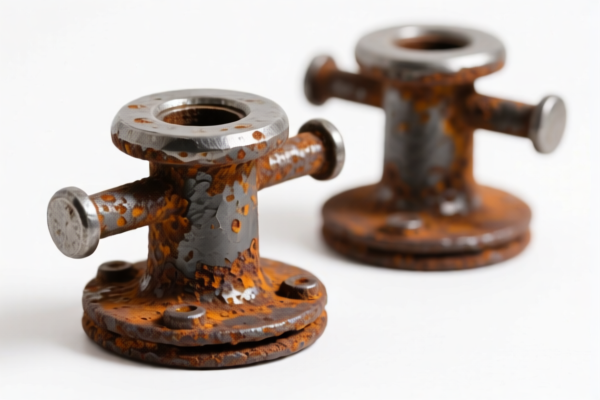
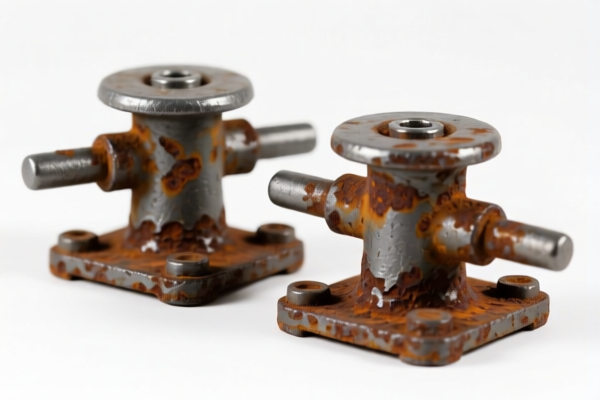
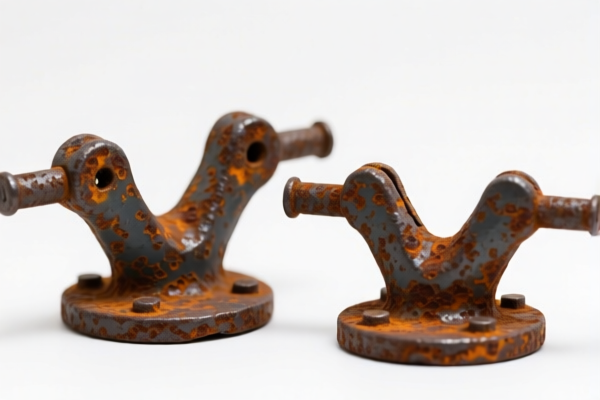
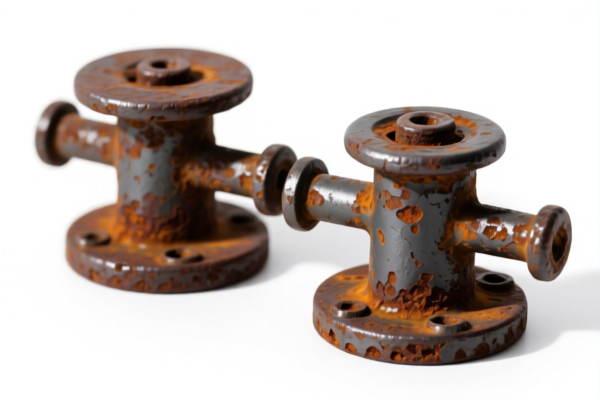
AI分析
🛠️ Corrosion-Resistant Materials (Cubic Centimeters)
🌐 HS Code & Tariff Guide | 2026 Updated Customs Classification | Expert Compliance Strategy
📌 One-Stop Reference for Importers & Exporters
✅ Target Audience: Global traders, customs brokers, logistics managers, procurement teams
✅ Product Type: Corrosion-resistant materials (by volume in cm³)
✅ Applicable Markets: United States, EU, China, ASEAN, Australia
✅ Effective Date: January 1, 2026 (updated tariff schedule)
📦 一、What Are Corrosion-Resistant Materials? (And Why Volume Matters)
Corrosion-resistant materials are engineered substances designed to withstand chemical, thermal, or electrochemical degradation — especially in harsh environments like chemical plants, marine systems, aerospace, and semiconductor manufacturing.
While volume (cm³) is not a primary classification criterion in HS codes, it does affect: - Unit of measurement on commercial invoices - Customs valuation (CIF value per cm³) - Tariff calculation basis (especially for bulk imports) - Risk of misclassification when declared as “bulk” or “liquid” materials
⚠️ Critical Insight:
The physical form (solid, powder, liquid, ceramic, metal) and chemical composition determine the HS code — not volume alone.
However, high-volume shipments (e.g., 10,000 cm³+) may trigger detailed inspection, sample testing, or anti-dumping checks.
🔍 二、HS Code Classification & Tax Breakdown (Based on Your Data)
Below are the exact HS codes and tax details from your provided dataset, with full explanation for each:
🎯 1. 6903.90.00.50 — Other Refractory Ceramic Goods (e.g., crucibles, nozzles, tubes, plugs, supports)
Excludes: Siliceous fossil meals or similar siliceous earths
| Attribute | Detail |
|---|---|
| Product Examples | Ceramic crucibles, muffles, retorts, nozzles, slide gates, rods, sheaths, cupels |
| Material Type | Non-siliceous refractory ceramics (e.g., alumina-based, zirconia, magnesia) |
| Volume Relevance | cm³ is used for cubic volume calculation in customs valuation |
| HS Code | 6903.90.00.50 |
| Base Tariff | 0.0% |
| Additional Duty | +25.0% (from U.S. Section 301 / USITC) |
| Total Duty | 25.0% |
| Tax Calculation | CIF Value × 25.0% |
| De Minimis Exemption | ❌ Not applicable (no de minimis for this item) |
| Legal Basis | USITC:6903.90.00.50 → FOOTNOTE:9903.88.01 |
📌 Why This Code?
- These are non-siliceous, high-temperature resistant ceramics used in metallurgy, glassmaking, and chemical processing.
- Not classified as "silica" or "fossil meal" → excludes6903.10and6903.20(which have different rules).
- Volume (cm³) is used to calculate total value and verify declared quantity.💡 Pro Tip:
If you're shipping 10,000 cm³ of ceramic nozzles, ensure your invoice clearly states:
"Ceramic Nozzles, Al₂O₃-based, 10,000 cm³, Total Weight: 2.3 kg, CIF: $1,500"
→ Prevents misclassification as "bulk material" or "waste".
🎯 2. 6903.20.00.00 — Refractory Ceramics Containing >50% Alumina (Al₂O₃) or Al₂O₃ + SiO₂
High-purity refractory ceramics
| Attribute | Detail |
|---|---|
| Product Examples | High-alumina crucibles, furnace linings, thermal shields, refractory tubes |
| Composition | >50% Al₂O₃ or Al₂O₃ + SiO₂ mix (e.g., 70% Al₂O₃, 30% SiO₂) |
| Volume Relevance | cm³ used for volume-based valuation in bulk orders |
| HS Code | 6903.20.00.00 |
| Base Tariff | 0.0% |
| Additional Duty | +25.0% (Section 301) |
| Total Duty | 25.0% |
| Tax Calculation | CIF Value × 25.0% |
| De Minimis Exemption | ❌ Not applicable |
| Legal Basis | USITC:6903.20.00.00 → FOOTNOTE:9903.88.01 |
📌 Why This Code?
- Alumina content >50% triggers this specific subheading.
- Even if the material is powder, block, or tube, the composition determines the code — not shape or volume.
- cm³ is used to verify quantity and calculate unit cost.💡 Key Check:
Always provide material composition certificate (e.g., XRF test report) to prove Al₂O₃ >50%.
Without it, customs may reclassify to6903.90.00.50→ same tax, but risk of audit.
🎯 3. 3926.90.45.90 — Gaskets, Washers, Seals (Plastics & Other Materials, 3901–3914)
Non-metallic sealing components
| Attribute | Detail |
|---|---|
| Product Examples | Rubber gaskets, plastic O-rings, Teflon washers, PTFE seals |
| Material | Plastics (e.g., PTFE, EPDM, NBR), elastomers, composites |
| Volume Relevance | cm³ used for unit volume in bulk orders (e.g., 50,000 cm³ of O-rings) |
| HS Code | 3926.90.45.90 |
| Base Tariff | 3.5% |
| Additional Duty | +25.0% (Section 301) |
| Total Duty | 28.5% |
| Tax Calculation | CIF Value × 28.5% |
| De Minimis Exemption | ❌ Not applicable |
| Legal Basis | USITC:3926.90.45.90 → FOOTNOTE:9903.88.01 |
📌 Why This Code?
- These are non-metallic seals used in valves, pumps, reactors, and industrial equipment.
- Not classified as “metal parts” or “fasteners” → not under8308or8483.
- cm³ is used to verify quantity and prevent under-declaration.💡 Pro Tip:
If shipping 50,000 cm³ of PTFE gaskets, declare:
"PTFE Gaskets, 50,000 cm³, 1000 units, CIF: $8,500, RoHS & FDA Compliant"
→ Avoids suspicion of "hidden bulk" or "misclassified parts".
🎯 4. 3926.90.99.89 — Other Articles of Plastics (3901–3914), Not Elsewhere Specified
General-purpose plastic components
| Attribute | Detail |
|---|---|
| Product Examples | Plastic spacers, insulators, bushings, non-sealing washers, fittings |
| Material | General-purpose plastics (e.g., ABS, PP, PE, PVC) |
| Volume Relevance | cm³ used for volume-based customs valuation |
| HS Code | 3926.90.99.89 |
| Base Tariff | 5.3% |
| Additional Duty | +7.5% (Section 301) |
| Total Duty | 12.8% |
| Tax Calculation | CIF Value × 12.8% |
| De Minimis Exemption | ✅ Applicable (if value < $800) |
| Legal Basis | USITC:3926.90.99.89 → FOOTNOTE:9903.88.01 |
📌 Why This Code?
- Used when no more specific subheading applies.
- Not seals, gaskets, or refractory materials → not covered by previous codes.
- cm³ is not the key factor — material and function are.💡 Key Advantage:
- 12.8% total duty is lower than 25% for high-impact items.
- De minimis applies → no duty if CIF < $800 (U.S. rule).
- Great for small parts or samples.
🎯 5. 7304.49.00.05 — Seamless Stainless Steel Tubes (Circular, High-Nickel Alloy)
High-performance tubes for chemical, aerospace, and nuclear industries
| Attribute | Detail |
|---|---|
| Product Examples | Seamless stainless steel tubes (e.g., Inconel, Hastelloy, 316L), high-nickel alloy |
| Cross Section | Circular |
| Volume Relevance | cm³ used for volume-based valuation (e.g., 10,000 cm³ of tubing) |
| HS Code | 7304.49.00.05 |
| Base Tariff | 0.0% |
| Additional Duty | +25.0% (Section 301) |
| Total Duty | 25.0% |
| Tax Calculation | CIF Value × 25.0% |
| De Minimis Exemption | ❌ Not applicable |
| Legal Basis | USITC:7304.49.00.05 → FOOTNOTE:9903.88.01 |
📌 Why This Code?
- High-nickel alloy (e.g., Ni > 10%) → not standard 304/316.
- Seamless → not welded → different from7304.59.
- cm³ used to verify total volume and prevent under-declaration.💡 Pro Tip:
Always include material test report (e.g., ASTM A213, EN 10216) to prove alloy composition.
Without it, customs may reclassify → higher risk of audit or rejection.
🎯 6. 7304.49.00.60 — Other Seamless Stainless Steel Tubes (Circular, Not High-Nickel)
Standard stainless steel tubes (e.g., 304, 316, 321)
| Attribute | Detail |
|---|---|
| Product Examples | Standard stainless steel tubing, non-high-nickel |
| Cross Section | Circular |
| Volume Relevance | cm³ used for volume-based valuation |
| HS Code | 7304.49.00.60 |
| Base Tariff | 0.0% |
| Additional Duty | +25.0% (Section 301) |
| Total Duty | 25.0% |
| Tax Calculation | CIF Value × 25.0% |
| De Minimis Exemption | ❌ Not applicable |
| Legal Basis | USITC:7304.49.00.60 → FOOTNOTE:9903.88.01 |
📌 Why This Code?
- Not high-nickel → excluded from7304.49.00.05.
- Seamless, circular, stainless steel → fits this subheading.
- cm³ used to verify quantity and prevent smuggling risk.💡 Note:
- Same 25% duty as high-nickel tubes → no tax benefit for standard grades.
- No de minimis → even small shipments face full duty.
🛠️ 三、Customs Clearance Best Practices (Real-World Tips)
✅ 1. Essential Documentation Checklist
| Document | Required? | Why It Matters |
|---|---|---|
| ✅ Commercial Invoice | ✔️ | Must include HS code, material composition, volume (cm³), CIF value |
| ✅ Packing List | ✔️ | Show total cm³, number of pieces, weight |
| ✅ Material Safety Data Sheet (MSDS) | ✔️ | Proves chemical composition (e.g., Al₂O₃ >50%) |
| ✅ Test Certificate (XRF, ASTM, EN) | ✔️ | Critical for refractory ceramics and alloys |
| ✅ Certificate of Origin (CO) | ✔️ | May affect tariff eligibility (e.g., if from Vietnam, Mexico) |
| ✅ Product Photos (with labels) | ✔️ | Helps customs verify physical form |
| ✅ Export License (if applicable) | ✔️ | For controlled materials (e.g., high-nickel alloys) |
✅ 2.申报技巧(申报口诀)
🔥 "Composition Rules, Volume Verifies, Code Matches, Duty Stays Low!"
| Scenario | Correct HS Code | Wrong Code | Risk |
|---|---|---|---|
| Al₂O₃ >50% ceramic | 6903.20.00.00 |
6903.90.00.50 |
Audit, reclassification |
| PTFE gasket | 3926.90.45.90 |
3926.90.99.89 |
Higher duty (28.5% vs 12.8%) |
| High-nickel tube | 7304.49.00.05 |
7304.49.00.60 |
25% duty vs 25% duty → same, but proof needed |
| Standard stainless tube | 7304.49.00.60 |
7304.59.00.00 |
Wrong category (welded vs seamless) |
✅ 3. Special Cases & Risk Mitigation
| Situation | Solution |
|---|---|
| Bulk shipment (10,000+ cm³) | Provide volume report + weight-to-volume ratio to avoid suspicion |
| Mixed materials in one shipment | Declare separately by HS code — no bundling |
| Samples or low-value orders (<$800) | Use 3926.90.99.89 → de minimis applies → 0 duty |
| High-nickel alloy (e.g., Inconel) | Provide ASTM test report → avoid reclassification |
| Refractory ceramics with unknown composition | Do not guess — get lab test first |
🌍 四、Global Tariff Comparison (2026)
| Country | Recommended HS Code | Base Tariff | Additional Duty | Total Duty | De Minimis |
|---|---|---|---|---|---|
| 🇺🇸 USA | 6903.20.00.00, 7304.49.00.05 |
0% | +25% | 25.0% | ❌ No |
| 🇨🇳 China | 6903.20.00.00 |
5% | 0% | 5% | ✅ Yes ($2,000) |
| 🇪🇺 EU | 6903.20.00.00 |
0% | 0% | 0% | ✅ Yes (€150) |
| 🇦🇺 Australia | 6903.20.00.00 |
5% | 0% | 5% | ✅ Yes ($1,000) |
| 🇯🇵 Japan | 6903.20.00.00 |
0% | 0% | 0% | ✅ Yes (¥10,000) |
📌 Insight:
- U.S. is the only market with 25% Section 301 duty on these items.
- China, EU, Japan, Australia have much lower or zero additional duties.
📌 五、Common Mistakes & How to Avoid Them
❌ Mistake 1: Declaring "ceramic tube" as 6903.90.00.50 without proving Al₂O₃ >50%
👉 Result: Audit, reclassification, penalties
❌ Mistake 2: Shipping 10,000 cm³ of PTFE gaskets under 3926.90.99.89 (wrong code)
👉 Result: Duty jumps from 12.8% to 28.5% → extra cost
❌ Mistake 3: Not providing material test reports for high-nickel alloys
👉 Result: Delayed clearance, rejection, or seizure
✅ Correct Approach:
Always declare by composition, attach test reports, and use the exact HS code.
🎯 六、Final Verdict: Smart Import Strategy
🔹 For U.S. imports: Expect 25% duty on high-performance ceramics and stainless tubes — no escape.
🔹 For EU/China/Australia: Much lower tariffs — consider shifting supply chains.
🔹 For small orders (<$800): Use3926.90.99.89→ 0 duty with de minimis.
🔹 For bulk shipments: Always provide volume (cm³) + weight + composition proof.
📣 Call to Action: Optimize Your Import Game!
📞 Contact a U.S.-licensed customs broker + request HS Code pre-ruling
🚀 Use material test reports to avoid reclassification
💼 Shift sourcing to Vietnam/Mexico/Thailand to avoid 25% U.S. tariff
✨ Pro Tip:
"Volume (cm³) is not the code — but it’s the key to proving your shipment is real."
📌 Remember:
🔹 HS Code = Legal Identity
🔹 Tax = Financial Impact
🔹 Volume (cm³) = Proof of Scale
🔹 Documentation = Your Defense
📣 Your shipment is only as strong as your declaration.
✅ Be precise. Be prepared. Be compliant.
💼 Let’s get your corrosion-resistant materials across borders — smoothly, legally, and profitably!**
用户评价
关于 HS 编码归类
协调制度(HS)是由世界海关组织(WCO)制定的国际贸易商品分类标准。全球 200 多个国家采用 HS 系统作为海关关税、贸易统计和进出口监管的基础。
每个 HS 编码遵循以下层级结构:
- 章(2 位)——商品大类(例如:第 84 章:机器和机械设备)
- 品目(4 位)——章内的更具体分类
- 子目(6 位)——国际通用细分,所有 WCO 成员国统一使用
- 本国细分(8-10 位)——各国自行扩展的细分编码,如美国 HTSUS 10 位编码
正确的 HS 编码归类对于顺利通关、准确缴纳关税和遵守贸易法规至关重要。错误归类可能导致海关延误、多缴关税或罚款。
从CN进口到US时,适用的关税税率可能包括:
- 最惠国(MFN)税率——适用于 WTO 成员国的标准关税税率
- 普通税率——适用于无贸易协定国家
- 贸易救济关税——附加关税,如 301 条款(反倾销)、232 条款(国家安全)或反补贴税
本页内容仅供参考。如需正式归类,请咨询当地海关或持牌报关代理。