corrosion resistant rubber buffer tire
CN → US| HS编码 | 关税税率 | 原产国 | 目的国 | 文档 |
|---|---|---|---|---|
| 4016993000 | 35.0% | CN | US | 官方文档 |
| 4016995500 | 37.5% | CN | US | 官方文档 |
商品图片
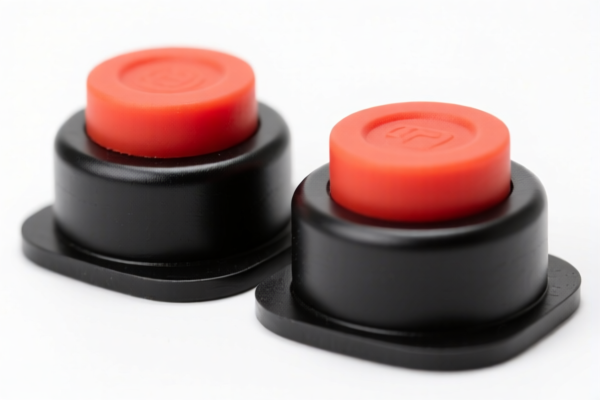
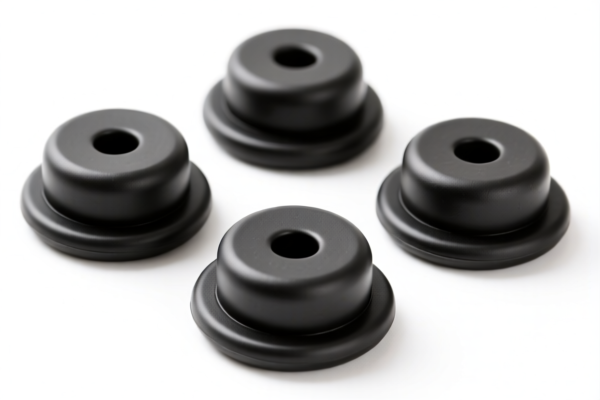
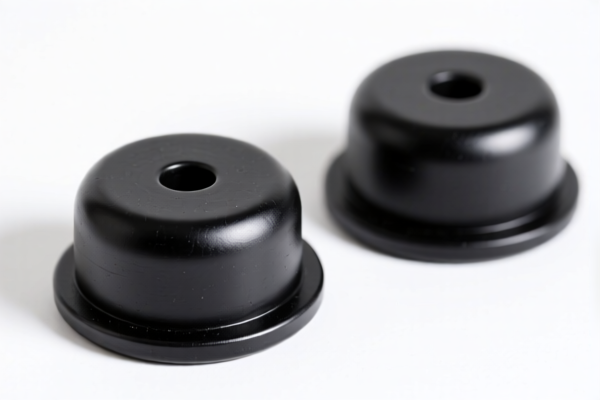
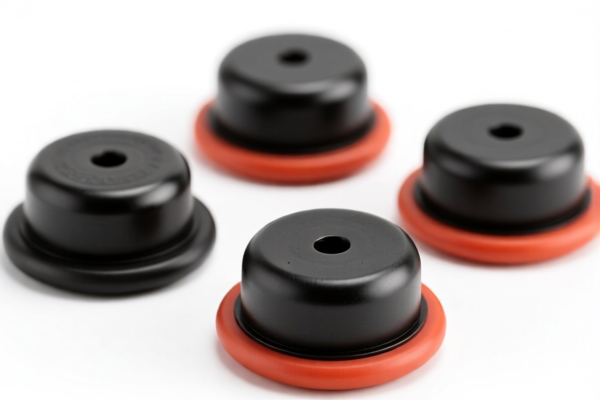
AI分析
🛡️ Corrosion Resistant Rubber Buffer Tire
🌐 HS Code Reference & Customs Clearance Guide | 2026 Latest Tariff Analysis | Professional-Level Clearance Strategy
📌 I. Product Definition & Classification: Do You Really Understand “Rubber Buffers”?
“Corrosion Resistant Rubber Buffer Tire” refers to specialized vibration control components made of vulcanized rubber (specifically natural rubber or synthetic blends designed for corrosion resistance). These are not pneumatic tires for road vehicles, but rather static or dynamic dampers used in heavy machinery, industrial vehicles, or marine equipment.
In international trade, they are classified under Chapter 40 (Rubber and Articles Thereof), specifically as Vibration Control Goods.
Key Distinction:
- Vibration Control Goods (Headings 4016): Static mounts, buffers, dampers, shock absorbers used to isolate vibration.
- Tires (Headings 4011–4012): Pneumatic rubber products for inflating.
⚠️ Critical Identification Point:
- If the product is a non-pneumatic rubber block, bushing, or mount designed to absorb shock/vibration in vehicles (Headings 8701–8705) or other machinery → It falls under 4016.
- The term “Tire” here likely refers to its shape (cylindrical/drum-like) or application context (e.g., “buffer tire” on a forklift or industrial roller), NOT a pneumatic wheel.
- If it were a pneumatic tire, it would be classified under 4011/4012. Assuming standard industrial buffer context, we proceed with 4016.
📦 II. HS Code Classification Details (2026 Latest Tariff Authority Comparison)
| HS Code | Product Description | Applicable Scenario | Key Classification Feature |
|---|---|---|---|
4016.99.30.00 |
Other articles of vulcanized rubber other than hard rubber: Other: Other: Of natural rubber: Vibration control goods of a kind used in vehicles of headings 8701 through 8705 | Buffers/mounts for Heavy Vehicles: Tractors (8701), Trucks (8702), Buses (8705) | ✅ Natural Rubber + Vibration Control + Heavy Vehicle Use |
4016.99.55.00 |
Other articles of vulcanized rubber other than hard rubber: Other: Other: Other: Other: Vibration control goods of a kind used in vehicles of headings 8701 through 8705 | Buffers/mounts for Other Vehicles: Including non-heavy-duty or specialized industrial vehicles not covered above | ✅ General/Variety Use + Vibration Control + Vehicle Use |
🔍 Important Reminder:
- Both codes require the product to be vibration control goods.
- Both require use in vehicles of headings 8701–8705 (Land vehicles).
- The difference lies in the material specificity and sub-category detail:
-4016.99.30.00explicitly specifies Natural Rubber.
-4016.99.55.00is a catch-all for other vibration control goods not specified elsewhere (e.g., synthetic rubber blends, or non-natural rubber compositions).
- “Corrosion Resistant” is a performance feature, not a classification driver. Classification is based on material (natural vs. other) and function (vibration control).
💰 III. 2026 Latest Tariff Rate Breakdown (Including Surcharges & Policy Add-ons)
✅ Applicable Country: United States (US)
✅ Country of Origin: China (CN)
✅ Effective Date: Ongoing (Subject to USITC 301 & IEEPA regulations)
🎯 1. 4016.99.30.00 — Natural Rubber Vibration Control Goods (for Heavy Vehicles)
| Item | Content |
|---|---|
| Base Tariff Rate | 0.0% (Ad Valorem) |
| Section 301 Surcharge | +25.0% |
| Total Tax Rate | 25.0% |
| Tax Calculation | CIF Value × 25% |
| De Minimis Exemption | ❌ Not Applicable (Deny de minimis) |
| Legal Basis Path | USITC:4016.99.30.00 → FOOTNOTE:301 |
📌 Explanation:
- Base Tariff 0%: Under normal MFN (Most Favored Nation) rates, rubber articles of this sub-category often enjoy low or zero base duties.
- 301 Surcharge 25%: This is the critical penalty for Chinese-origin goods under the Section 301 investigation.
- Total 25%: This is a significant cost driver. Must be factored into pricing.
- No IEEPA 10%?: Note that for rubber articles, the additional IEEPA 10% may not always stack with 301 depending on specific HTSUS list exclusions. According to your data, only 25.0% is listed. We follow the provided data.
🎯 2. 4016.99.55.00 — Other Vibration Control Goods (for Vehicles)
| Item | Content |
|---|---|
| Base Tariff Rate | 2.5% (Ad Valorem) |
| Section 301 Surcharge | +25.0% |
| Total Tax Rate | 27.5% |
| Tax Calculation | CIF Value × 27.5% |
| De Minimis Exemption | ❌ Not Applicable (Deny de minimis) |
| Legal Basis Path | USITC:4016.99.55.00 → FOOTNOTE:301 |
📌 Explanation:
- Base Tariff 2.5%: Slightly higher base duty than natural rubber-specific items.
- 301 Surcharge 25%: Same heavy penalty as above.
- Total 27.5%: Slightly more expensive than4016.99.30.00.
- Use Case: If your buffer is made of EPDM, Nitrile, or Synthetic Blend (not 100% Natural Rubber), it likely falls here.
🛠️ IV. Customs Clearance Practical Advice (Battle-Tested Pitfall Avoidance Guide)
✅ 1. Document Checklist (Non-Negotiable)
| Document | Required | Explanation |
|---|---|---|
| ✅ Product Specification Sheet | ✔️ | Must detail: Material composition (Natural % vs. Synthetic), Dimensions, Hardness (Shore A), Load Capacity |
| ✅ Material Certificate | ✔️ | Proof of Natural Rubber content vs. Synthetic. Crucial for distinguishing between 4016.99.30.00 and 4016.99.55.00 |
| ✅ Product Photos (Clear Labels) | ✔️ | Show shape, markings, and any branding. Must look like a buffer/mount, not a pneumatic tire |
| ✅ Commercial Invoice | ✔️ | Description must read: “Vibration Control Rubber Buffer, Natural Rubber, For Use in Vehicle X” |
| ✅ Packing List | ✔️ | Show unit weights and dimensions. Ensure no pneumatic valves or air chambers are present (which would trigger tire classification) |
| ✅ Declaration of Non-Pneumatic Nature | ✔️ | Explicitly state: “No air chamber, non-pneumatic, solid vulcanized rubber” |
✅ 2. Declaration Tips (Key Mantra)
🔥 “Solid Rubber, Not Pneumatic; Vibration Control, Not Tire; Natural vs. Synthetic Defines Duty!”
| Scenario | Correct Declaration | Wrong Practice |
|---|---|---|
| Buffer made of 100% Natural Rubber | HS: 4016.99.30.00 |
Misdeclare as synthetic → Higher base duty |
| Buffer made of Synthetic Blend | HS: 4016.99.55.00 |
Misdeclare as natural → Potential fraud/penalty |
| Product is a Pneumatic Tire | HS: 4011 or 4012 |
Misdeclare as buffer → Severe Penalty |
| Product is for Non-Vehicle Machinery | HS: 4016.99.90 (General) |
Misdeclare for vehicles → Incorrect tariff |
⚠️ Warning:
- The term “Tire” in the product name “Corrosion Resistant Rubber Buffer Tire” is a high-risk trigger word for customs.
- Recommendation: Use “Rubber Buffer Mount” or “Vibration Isolator” in the commercial invoice description to avoid automatic flagging as a pneumatic tire.
- If the item has an air valve or is designed to be inflated, it MUST be declared as a tire. If it is solid, emphasize “Solid Vulcanized Rubber”.
✅ 3. Special Case Handling
| Scenario | Handling Advice |
|---|---|
| OEM Custom Buffers | Provide design drawings showing load-bearing shape. Confirm it’s not a pneumatic component. |
| Mixed Materials (Rubber + Metal Insert) | Still classified under 4016 if rubber is the essential character. Declare as “Rubber Article with Metal Core”. |
| Export from China with US Destination | Assume 25%–27.5% total duty. Budget accordingly. No de minimis exemption applies. |
| Third-Party Country Transshipment | DO NOT try to reroute through Vietnam/Mexico without substantial transformation. USCBP tracks rubber origin closely. |
🌍 V. Global Market Comparison (2026 Latest)
| Country/Region | Recommended HS Code | Tariff (China Origin) | Certification | Remarks |
|---|---|---|---|---|
| 🇺🇸 USA | 4016.99.30.00 / 4016.99.55.00 |
25.0% / 27.5% | None required for general import | High duty due to 301 Tariffs |
| 🇨🇳 China | 4016.99.30.00 / 4016.99.55.00 |
~5%–8% | CCC (if applicable) | Lower duty, no 301 |
| 🇪🇺 EU | 4016.93 (Vulcanized Rubber Articles) |
~3.5% – 6.5% | REACH, RoHS | No Section 301 equivalent |
| 🇬🇧 UK | 4016.93 |
~3.5% – 6.5% | UKCA | Post-Brexit rules apply |
| 🇦🇺 Australia | 4016.93 |
~5% | RCM | No major surcharges |
📌 Conclusion:
- USA is the most expensive market due to the 25% Section 301 surcharge.
- EU/UK/Australia offer significantly lower duty rates (~3.5–6.5%).
- Strategy: If targeting the US, consider supply chain diversification or design optimization to minimize rubber content if possible (though difficult for buffers).
📌 VI. Common Errors & Pitfall Guide (Lessons Learned)
❌ Error 1: Using the word “Tire” in the HS Description without clarification
👉 Consequence: Customs may classify as pneumatic tire (4011) → Duty 2.5% but stricter regulations (DOT, FMVSS) + higher scrutiny.
✅ Fix: Use “Rubber Buffer” or “Vibration Mount” in description.
❌ Error 2: Confusing Natural Rubber with Synthetic Rubber
👉 Consequence: Misclassification between 4016.99.30.00 and 4016.99.55.00.
✅ Fix: Obtain material certificate from supplier specifying % of Natural Rubber.
❌ Error 3: Assuming De Minimis applies
👉 Consequence: Shipments under $800 will be detained or rejected because rubber articles from China are excluded from de minimis.
✅ Fix: Always declare fully, even for small samples.
❌ Error 4: Not disclosing Corrosion Resistance as a feature
👉 Consequence: May lead to queries. While not a classification factor, it’s a value-add.
✅ Fix: Include in product description: “EPDM/Natural Rubber Blend, Oil & Corrosion Resistant”.
🎯 VII. Conclusion: Professional Declaration, Cost Control, Compliance
🎯 Remember the Mantra:
🔹 “Solid Rubber, Not Pneumatic”
🔹 “Natural Rubber = 25% Total”
🔹 “Synthetic/Other = 27.5% Total”
🔹 “301 Tariff is Non-Negotiable for China Origin”
🔹 “Avoid the word ‘Tire’ – Use ‘Buffer’ or ‘Mount’”
📌 Pro Tip:
If your product is made of 100% Natural Rubber, ensure the supplier provides a Certificate of Origin and Material Test Report. This helps in defending the 4016.99.30.00 classification if audited.
For Synthetic Blends, 4016.99.55.00 is safer but carries a higher base duty.
📣 Immediate Action:
📞 Contact a licensed customs broker to pre-classify the product.
📄 Provide Material Safety Data Sheet (MSDS) and Composition Report.
🚀 Optimize Product Naming: Change “Rubber Buffer Tire” to “Vibration Control Rubber Mount” in all commercial documents.
✨ Professional Clearance Starts with Precise Classification!
💼 Every Duty Point Counts!
用户评价
关于 HS 编码归类
协调制度(HS)是由世界海关组织(WCO)制定的国际贸易商品分类标准。全球 200 多个国家采用 HS 系统作为海关关税、贸易统计和进出口监管的基础。
每个 HS 编码遵循以下层级结构:
- 章(2 位)——商品大类(例如:第 84 章:机器和机械设备)
- 品目(4 位)——章内的更具体分类
- 子目(6 位)——国际通用细分,所有 WCO 成员国统一使用
- 本国细分(8-10 位)——各国自行扩展的细分编码,如美国 HTSUS 10 位编码
正确的 HS 编码归类对于顺利通关、准确缴纳关税和遵守贸易法规至关重要。错误归类可能导致海关延误、多缴关税或罚款。
从CN进口到US时,适用的关税税率可能包括:
- 最惠国(MFN)税率——适用于 WTO 成员国的标准关税税率
- 普通税率——适用于无贸易协定国家
- 贸易救济关税——附加关税,如 301 条款(反倾销)、232 条款(国家安全)或反补贴税
本页内容仅供参考。如需正式归类,请咨询当地海关或持牌报关代理。