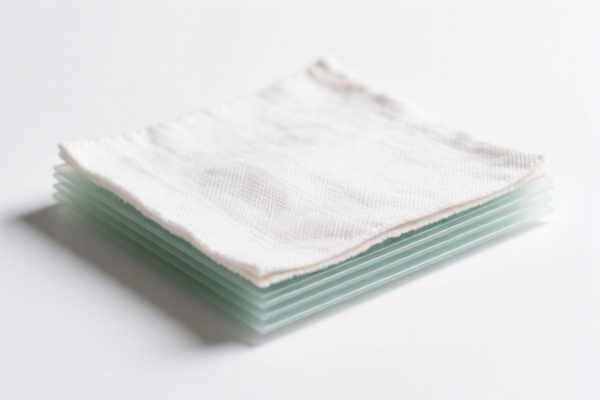
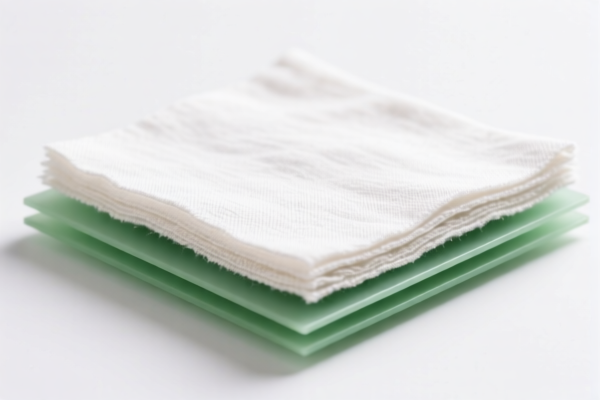
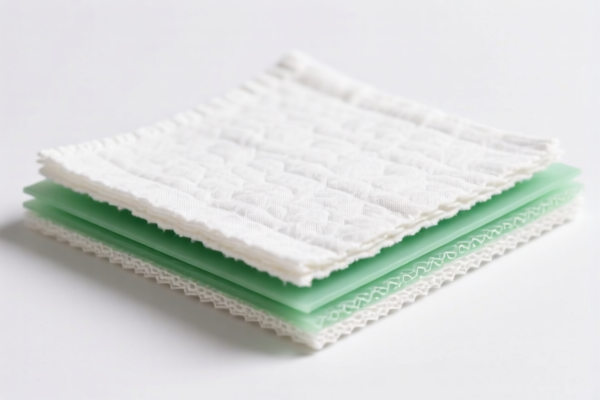
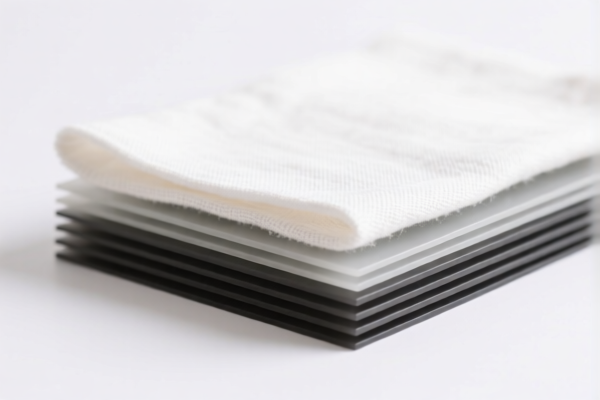
cotton based textile composite plastic sheets
CN → US| HS编码 | 关税税率 | 原产国 | 目的国 | 文档 |
|---|---|---|---|---|
| 3920992000 | 39.2% | CN | US | 官方文档 |
| 3921904090 | 39.2% | CN | US | 官方文档 |
| 3921905050 | 39.8% | CN | US | 官方文档 |
商品图片
AI分析
🧶 Cotton-Based Textile Composite Plastic Sheets
🌐 HS Code Reference & Clearance Guide | 2026 Latest Tariff Full Analysis | Professional Clearance Strategy
📌 I. Product Definition & Classification: Do You Really Understand "Cotton-Based Textile Composite Plastic Sheets"?
Cotton-based textile composite plastic sheets are versatile materials combining the durability and texture of cotton textiles with the waterproof, insulating, or structural properties of plastics. In international trade, these products are often categorized based on their primary material composition and physical form.
Because cotton (a natural fiber) is combined with plastic, classification can be tricky. However, under the Harmonized System (HS), if the plastic forms the essential character of the sheet (providing structure, waterproofing, or primary function), it is typically classified under Chapter 39 (Plastics and Articles Thereof) rather than Chapter 54 (Man-made Filaments) or Chapter 55 (Synthetic Staple Fibers).
⚠️ Key Classification Points:
- If the product is a sheet/board where plastic is the main component, even if cotton is present as a layer or composite, it generally falls under HS 3920 or 3921.
- HS 3920: Plastics in primary forms (sheets, plates, film, foil, and strip).
- HS 3921: Other plates, sheets, film, foam, and strip of plastics.
📦 II. HS Code Classification Details (2026 Latest Tariff Authoritative Comparison)
Based on the provided data, the product falls into one of the following three HS codes, depending on the specific structural characteristics and exact composition:
| HS Code | Product Description | Applicable Scenario | Key Characteristics |
|---|---|---|---|
3920.99.20.00 |
Plastic Composite Boards, Material: Plastic, Form: Composite Board | Composite sheets where plastic is the primary bonding or structural layer, often with textile reinforcement (cotton). | Composite Nature: Emphasizes the "composite" aspect. |
3921.90.40.90 |
Plastic Boards, Material: Plastic, Form: Board | Solid plastic boards that may include embedded cotton fibers or laminates but are primarily classified as "boards" of plastic. | Form Focus: Classified as a "board" (rigid form). |
3921.90.50.50 |
Plastic Boards, Sheets, Films, Foils, and Strips, Material: Plastic, Form: Board | General plastic boards/sheets including composites, often used when specific "composite board" codes are not precise enough. | General Category: Covers a broader range of plastic board/sheet forms. |
🔍 Key Reminder:
- The presence of cotton does not automatically push this to Chapter 63 (Other Made Up Textile Articles) if the plastic component gives the article its essential character (e.g., waterproofing, structural rigidity).
- Customs officers will look at the layering: Is the cotton just a surface finish, or is it a core structural element? If plastic dominates, HS 39 applies.
💰 III. 2026 Latest Tariff Rate Breakdown (Including Surcharges & Policy Add-ons)
✅ Applicable Country: United States (US)
✅ Origin: China (CN)
✅ Effective Date: Ongoing (Subject to Section 301 & IEEPA rules)
🎯 1. 3920.99.20.00 —— Plastic Composite Boards
| Item | Content |
|---|---|
| Base Tariff | 4.2% (ad valorem) |
| Section 301 Surtax | +25.0% (Under USITC Footnote 301) |
| 122-Clause Tariff (IEEPA) | +10.0% (Specific to Chinese-origin goods) |
| Total Tariff Rate | 39.2% |
| Tax Calculation | CIF Value × 39.2% |
| De Minimis Exemption | ❌ Not Available (Section 301 duties apply regardless of value) |
| Legal Basis Path | HTSUS:3920.99.20.00 → Section 301:100% surtax on 301 List 3 → 122-Clause:10% |
📌 Explanation:
- Base Tariff (4.2%): Standard Most Favored Nation (MFN) rate for plastic composite products.
- Section 301 (25%): The major trade war tariff on Chinese plastics and composites.
- 122-Clause (10%): Additional surcharge under the International Emergency Economic Powers Act (IEEPA) targeting specific Chinese imports.
- Total 39.2%: This is a high-duty item. Cost planning must account for nearly 40% of the CIF value.
🎯 2. 3921.90.40.90 —— Plastic Boards
| Item | Content |
|---|---|
| Base Tariff | 4.2% |
| Section 301 Surtax | +25.0% |
| 122-Clause Tariff (IEEPA) | +10.0% |
| Total Tariff Rate | 39.2% |
| Tax Calculation | CIF Value × 39.2% |
| De Minimis Exemption | ❌ Not Available |
| Legal Basis Path | HTSUS:3921.90.40.90 → Section 301:100% surtax → 122-Clause:10% |
📌 Note:
- Identical tariff structure to3920.99.20.00.
- The distinction between3920and3921is often subtle and depends on the specific manufacturing process (e.g., lamination vs. extrusion with core).
🎯 3. 3921.90.50.50 —— Plastic Boards, Sheets, Films, Foils, and Strips
| Item | Content |
|---|---|
| Base Tariff | 4.8% |
| Section 301 Surtax | +25.0% |
| 122-Clause Tariff (IEEPA) | +10.0% |
| Total Tariff Rate | 39.8% |
| Tax Calculation | CIF Value × 39.8% |
| De Minimis Exemption | ❌ Not Available |
| Legal Basis Path | HTSUS:3921.90.50.50 → Section 301:100% surtax → 122-Clause:10% |
📌 Note:
- Slightly higher base tariff (4.8% vs. 4.2%) leads to a total of 39.8%.
- This code is often used for generic plastic boards that don't fit the strict "composite" definition of 3920 or the specific "board" definition of 3921.40.
🛠️ IV. Customs Clearance Practical Advice (Battle-Hardened Pitfall Guide)
✅ 1. Required Documentation Checklist (Non-Negotiable)
| Document | Mandatory? | Description |
|---|---|---|
| ✅ Product Specification Sheet | ✔️ | Must detail layers: e.g., "Cotton Layer: 2mm, Plastic Core: 5mm, Outer Plastic Film: 0.5mm". |
| ✅ Composition Percentage | ✔️ | Explicitly state % by weight or volume of Plastic vs. Cotton. Crucial for Chapter determination. |
| ✅ Product Photos (Cross-Section) | ✔️ | Clear images showing the composite layers to prove plastic is the essential character. |
| ✅ Commercial Invoice | ✔️ | Must clearly state "Plastic Composite Board" or "Plastic Sheet with Cotton Lining". Avoid vague terms like "Fabric". |
| ✅ Packing List | ✔️ | Show net/gross weights accurately. |
| ✅ Certificate of Origin (CO) | ✔️ | Confirm Chinese origin to verify applicability of Section 301 & IEEPA taxes. |
✅ 2. Declaration Tips (Key Mnemonic)
🔥 “Plastic Dominates, Chapter 39; Cotton is Minor, Don’t Be Shy! Specify Layers, Avoid Delays!”
| Scenario | Correct Declaration | Incorrect Practice |
|---|---|---|
| Plastic is structural/waterproof | 3920.99.20.00 or 3921.90.40.90 |
Declaring as "Textile Fabric" (Chapter 54/55) → High Risk of Rejection |
| Cotton is the main value driver | Review Chapter 63 | Misclassifying as Plastic → Audit Trigger |
| Ambiguous Composite | Provide detailed technical specs | Vague description: "Plastic Sheet" |
✅ 3. Special Cases Handling
| Scenario | Handling Advice |
|---|---|
| Cotton > 50% by Weight | If cotton truly dominates, consult if Chapter 63 (Made-up Textile Articles) is more appropriate. If so, tariffs may differ, but risk of classification error increases. |
| Recycled Plastic Content | If plastic is recycled, ensure documentation highlights this, though it doesn’t exempt from Section 301. |
| OEM/Custom Printing on Cotton Side | Still considered a plastic composite board if the base is plastic. Provide artwork proofs if required for labeling compliance. |
🌍 V. Global Market Clearance Comparison (2026 Latest)
| Country/Region | Recommended HS Code | Base Tariff | Surcharges (China Origin) | Total Est. Rate | Notes |
|---|---|---|---|---|---|
| 🇺🇸 USA | 3920.99.20.00 / 3921.90.40.90 |
4.2%-4.8% | +35% (301 + 122) | 39.2% - 39.8% | High duty burden. |
| 🇨🇳 China | 3920.99.20.00 |
6.5% - 8% | None | ~7-8% | Lower import duty. |
| 🇪🇺 EU | 3921.90 |
6.5% | None | ~6.5% | No Section 301 equivalent. |
| 🇬🇧 UK | 3921.90 |
6.5% | None | ~6.5% | Post-Brexit tariff alignment. |
📌 Conclusion:
- USA: The primary market with high tariffs (39.2%+). Profit margins are heavily impacted.
- EU/UK/China: Significantly lower tariffs (~6-8%). Consider supply chain diversification if targeting non-US markets.
📌 VI. Common Mistakes & Pitfall Guide (Lessons Learned)
❌ Mistake 1: Declaring as "Textile Fabric" (HS 54/55) when plastic is the base.
👉 Consequence: Customs reclassifies to HS 39, applies 39.2% tariff retroactively, plus penalties.
❌ Mistake 2: Ignoring the "122-Clause" tariff.
👉 Consequence: Underpayment by 10%. Result: Seizure of goods and significant fines.
❌ Mistake 3: Vague description "Plastic Sheet" without mentioning cotton.
👉 Consequence: Customs may suspect smuggling of restricted materials or misclassification. Request for detailed specs → Delay in clearance.
❌ Mistake 4: Assuming "De Minimis" applies for small shipments.
👉 Consequence: Section 301 and IEEPA duties do not have a $800 de minimis exemption. All shipments are taxed.
✅ Correct Approach:
"Plastic Composite Board, 3920.99.20.00, Laminated Cotton & PP, 100% Chinese Origin, Subject to 301 & 122 Duties."
🎯 VII. Conclusion: Precision in Classification Saves Money!
🎯 Remember the Mantra:
🔹 "Plastic Base, Chapter 39; Cotton Layer, Don't Deny! Section 301 is Real, 39.2% Will Steal Your Meal!"
🔹 "HS Code is Key, Tariff is High, Declare Properly, or Pay the Price!"
📌 Pro Tip:
- If your cotton content is significant, consult a customs broker to see if Chapter 63 (Other Made Up Textile Articles) could be a valid alternative, though this is rare for rigid boards.
- For US imports, pre-classification rulings are highly recommended to avoid surprise bills at customs.
📣 Take Action Now:
📞 Contact a Licensed Customs Broker + Provide Layered Material Specs + Verify HS Code
🚀 Ensure Smooth Clearance, Minimize Duties, Maximize Profits!
✨ Professional Clearance Starts with Accurate Classification!
💼 Every Percent of Tax Saved is Pure Profit!
用户评价
关于 HS 编码归类
协调制度(HS)是由世界海关组织(WCO)制定的国际贸易商品分类标准。全球 200 多个国家采用 HS 系统作为海关关税、贸易统计和进出口监管的基础。
每个 HS 编码遵循以下层级结构:
- 章(2 位)——商品大类(例如:第 84 章:机器和机械设备)
- 品目(4 位)——章内的更具体分类
- 子目(6 位)——国际通用细分,所有 WCO 成员国统一使用
- 本国细分(8-10 位)——各国自行扩展的细分编码,如美国 HTSUS 10 位编码
正确的 HS 编码归类对于顺利通关、准确缴纳关税和遵守贸易法规至关重要。错误归类可能导致海关延误、多缴关税或罚款。
从CN进口到US时,适用的关税税率可能包括:
- 最惠国(MFN)税率——适用于 WTO 成员国的标准关税税率
- 普通税率——适用于无贸易协定国家
- 贸易救济关税——附加关税,如 301 条款(反倾销)、232 条款(国家安全)或反补贴税
本页内容仅供参考。如需正式归类,请咨询当地海关或持牌报关代理。