cotton bedding
CN → US| HS编码 | 关税税率 | 原产国 | 目的国 | 文档 |
|---|---|---|---|---|
| 5208114020 | 44.0% | CN | US | 官方文档 |
| 5208112020 | 42.0% | CN | US | 官方文档 |
| 5209210050 | 42.7% | CN | US | 官方文档 |
| 5209110050 | 41.5% | CN | US | 官方文档 |
| 5208124040 | 42.0% | CN | US | 官方文档 |
| 6302215010 | 38.4% | CN | US | 官方文档 |
商品图片
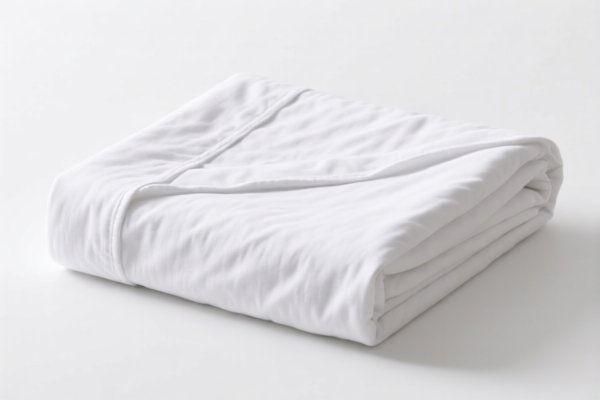
AI分析
🛏️ Cotton Bedding & Textiles (Cotton Containing 85% or More)
🌐 HS Code Reference & Customs Clearance Guide | 2026 Latest Tariff Analysis | Professional Clearance Strategy
📌 Part I: Product Definition & Classification: What Exactly is "Cotton Bedding"?
Cotton bedding, in the context of international trade, primarily refers to woven fabrics and finished home textiles made predominantly of cotton. The critical factor for classification is the cotton content and the form of the product (fabric vs. finished goods like pillowcases).
1. Woven Fabrics (Grey or Bleached/Dyed): Raw materials or semi-finished goods used for manufacturing. * Key Criterion: Cotton content ≥ 85%. * Structure: Plain weave, twill, sateen, etc.
2. Finished Home Textiles (e.g., Pillowcases): Ready-to-use consumer goods. * Key Criterion: Specifically designed for household use (bedding). * Distinction: Must be distinguished from general "woven cotton fabric" by its specific end-use (e.g., pillowcases).
⚠️ Critical Distinction Point: * If the item is a rolled fabric (even if pre-cut for sewing) → It falls under Chapter 52 (Cotton Textile Fabrics). * If the item is a finished product (e.g., a sewn pillowcase) → It falls under Chapter 63 (Other Made Up Textile Articles). * High Cotton Content: Items with ≥ 85% cotton often face stricter scrutiny and higher duties compared to lower cotton content items due to specific trade remedies.
📦 Part II: HS Code Classification Details (2026 Latest Tariff Authority Alignment)
| HS Code | Product Description | Application Scenario | Cotton Content |
|---|---|---|---|
5208.11.40.20 |
Woven Fabric of Cotton, Containing ≥ 85% Cotton | Raw fabric, bleached/dyed woven cotton fabric, unmade | ✅ ≥ 85% |
5208.11.20.20 |
Woven Fabric of Cotton, Containing ≥ 85% Cotton | Raw fabric, plain weave, unmade | ✅ ≥ 85% |
5209.21.00.50 |
Woven Fabric of Cotton, Containing ≥ 85% Cotton | Dyed woven cotton fabric, heavier weight | ✅ ≥ 85% |
5209.11.00.50 |
Woven Fabric of Cotton, Containing ≥ 85% Cotton | Bleached Woven Cotton Fabric | ✅ ≥ 85% |
5208.12.40.40 |
Cotton Pillowcases (Household Use) | Finished household textile products | ✅ > 85% |
6302.21.50.10 |
Cotton Pillowcases (Not Lengthened) | Finished household textile products (Standard size) | ✅ 100% Cotton |
🔍 Key Reminder: * Fabric vs. Finished Goods: Do not declare a finished pillowcase as "Cotton Fabric" (Chapter 52). This is a common error that leads to penalties. Finished items go to Chapter 63. * Cotton Threshold: The distinction between
<85%and≥85%is crucial for HS Code selection. The data provided specifically covers high-cotton-content items.
💰 Part III: 2026 Latest Tariff Rate Breakdown (Including Additional Duties & Policy Surcharges)
✅ Applicable Country: United States (US)
✅ Origin: China (CN)
✅ Effective Time: Current trade policy applies (Section 301 & 122 Clauses)
🎯 1. 5208.11.40.20 & 5208.11.20.20 — Cotton Woven Fabrics (≥ 85% Cotton)
| Item | Content |
|---|---|
| Base Tariff Rate | 9.0% (5208.11.40.20) / 7.0% (5208.11.20.20) |
| Additional Duty (Section 301) | +25.0% |
| 122 Clause Duty | +10.0% |
| Total Tariff Rate | 44.0% (5208.11.40.20) / 42.0% (5208.11.20.20) |
| Tax Calculation | CIF Value × Total Rate |
| De Minimis Eligibility | ❌ No (Deny de minimis for Section 301/122 items) |
| Legal Basis Path | Base Tariff → Section 301 (Footnote 1) → Section 122 (EO) |
📌 Explanation: * "Additional Duty 25%": From US Trade Act Section 301, targeting Chinese manufactured goods. * "122 Clause 10%": From Executive Order 14061 (Section 122 of the Trade Expansion Act of 1962), imposed on specific textile imports to protect domestic industry. * Total Cost: These fabrics are heavily taxed. Ensure your pricing model accounts for this ~42-44% burden.
🎯 2. 5209.21.00.50 & 5209.11.00.50 — Other Cotton Woven Fabrics (≥ 85% Cotton)
| Item | Content |
|---|---|
| Base Tariff Rate | 7.7% (5209.21.00.50) / 6.5% (5209.11.00.50) |
| Additional Duty (Section 301) | +25.0% |
| 122 Clause Duty | +10.0% |
| Total Tariff Rate | 42.7% (5209.21.00.50) / 41.5% (5209.11.00.50) |
| Tax Calculation | CIF Value × Total Rate |
| De Minimis Eligibility | ❌ No |
| Legal Basis Path | Base Tariff → Section 301 → Section 122 |
📌 Note: * Slightly lower base rates than
5208.11, but the additional duties are identical. * Classification depends on the specific weave structure (e.g., dyed vs. bleached, weight per square meter). Misclassification can lead to underpayment accusations.
🎯 3. 5208.12.40.40 — Cotton Pillowcases (Household Textile)
| Item | Content |
|---|---|
| Base Tariff Rate | 7.0% |
| Additional Duty (Section 301) | +25.0% |
| 122 Clause Duty | +10.0% |
| Total Tariff Rate | 42.0% |
| Tax Calculation | CIF Value × 42.0% |
| De Minimis Eligibility | ❌ No |
| Legal Basis Path | Base Tariff → Section 301 → Section 122 |
📌 Distinction: * This code is for household textiles. Even though it's a "pillowcase," if it's classified under Chapter 52 (which is rare for finished goods), it might have different nuances. However, note that
6302.21.50.10exists for pillowcases. * Correction/Clarification based on data: The data lists5208.12.40.40as "Cotton Pillowcases, Cotton content >85%, Household Textile." This suggests a specific sub-category within woven fabric for bedding preparations. Ensure documentation specifies "Household Use."
🎯 4. 6302.21.50.10 — Cotton Pillowcases (Not Lengthened)
| Item | Content |
|---|---|
| Base Tariff Rate | 20.9% (Significantly Higher Base) |
| Additional Duty (Section 301) | +7.5% (Reduced Section 301 portion for this specific HTS) |
| 122 Clause Duty | +10.0% |
| Total Tariff Rate | 38.4% |
| Tax Calculation | CIF Value × 38.4% |
| De Minimis Eligibility | ❌ No |
| Legal Basis Path | Base Tariff → Section 301 (Specific Footnote) → Section 122 |
📌 Important Note: * While the base tariff (20.9%) is higher than fabric (7%), the Section 301 duty is lower (7.5% vs 25%). * Result: The total rate (38.4%) is lower than the fabric rates (~42%). * Strategy: If you are importing finished pillowcases, ensure they are clearly described as "Finished Household Textiles" to potentially benefit from the lower Section 301 rate, rather than being misclassified as "fabric."
🛠️ Part IV: Customs Clearance Practical Advice (Real-World Pitfall Avoidance)
✅ 1. Required Documentation Checklist (Non-negotiable)
| Document | Mandatory? | Description |
|---|---|---|
| ✅ Commercial Invoice | ✔️ | Must clearly state: "Cotton Woven Fabric" OR "Cotton Pillowcases (Household Use)" |
| ✅ Packing List | ✔️ | Detail weight, dimensions, and number of packages |
| ✅ Certificate of Origin | ✔️ | Essential for proving Chinese origin (to apply correct 301/122 duties) |
| ✅ Product Specification Sheet | ✔️ | Crucial: Must specify Cotton Content % (e.g., 85%, 100%) and Weave Type |
| ✅ Photos of Goods | ✔️ | Show label, content tag, and product appearance |
✅ 2. Declaration Tips (Key Mantras)
🔥 "Cotton % is King, Form is Queen! Don't Mix Fabric with Finished Goods!"
| Scenario | Correct Declaration | Incorrect Action |
|---|---|---|
| Finished Pillowcases | 6302.21.50.10 or 5208.12.40.40 (as per data) |
Declare as "Cotton Fabric" → Risk of penalty for misclassification |
| Rolls of Fabric | 5208.11.40.20 / 5209.21.00.50 |
Declare as "Bedding" → Customs may reclassify and fine |
| Mixed Cotton Content | Accurate % (e.g., 85%) | Underreporting cotton % to avoid higher duty tiers |
| Small Shipments | Full declaration | Attempting De Minimis (Section 122 & 301 items are excluded) |
✅ 3. Special Circumstances Handling
| Situation | Handling Advice |
|---|---|
| OEM Custom Prints | Provide design approval sheets. Ensure "Cotton Content" is verified by third-party lab test if requested. |
| Pillowcases vs. Bedsheets | Bedsheets may fall under 6302.31. Ensure HTS matches the specific item type. |
| "Household Use" Proof | For 5208.12.40.40, emphasize "Household" in the description. Industrial-grade cotton textiles may have different classifications. |
| Section 122 Exclusions | Verify if the product falls under any exclusion lists for Section 122 duties. Currently, most cotton textiles are included. |
🌍 Part V: Global Market Comparison (2026 Latest)
| Country/Region | Recommended HS Code | Total Tariff (China Origin) | Certification Requirements | Notes |
|---|---|---|---|---|
| 🇺🇸 USA | 5208.11.40.20 / 6302.21.50.10 |
38.4% - 44.0% | None (General) | High Duties due to Sec 301 & 122. De Minimis excluded. |
| 🇨🇳 China | 5208.11.40.20 / 6302.21.50.10 |
9.0% - 20.9% (Base) | CCC (if applicable) | No Section 301 or 122. Lower cost. |
| 🇪🇺 EU | 5208.11.40 / 6302.21 |
4.5% - 12% (Varies) | OEKO-TEX (Recommended) | No Section 301/122. Focus on labor standards. |
| 🇦🇺 Australia | 5208.11.40 / 6302.21 |
5% - 10% | ACCC Compliance | No Section 301/122. |
📌 Conclusion: * The USA is the most challenging market for cotton bedding due to Section 301 (25%) and Section 122 (10%) duties. * Canada/Mexico/ASEAN: If you manufacture in these regions, you may avoid US duties via Free Trade Agreements (USMCA, etc.). * Strategy: Consider supply chain diversification if targeting the US market heavily.
📌 Part VI: Common Errors & Pitfall Guide (Blood & Tears Lessons)
❌ Error 1: Declaring Finished Pillowcases as "Cotton Fabric" (5208...)
👉 Consequence: Customs may reject the shipment for misclassification, or impose penalties for evading specific "Household Textile" regulations.
❌ Error 2: Ignoring Section 122 Duty 👉 Consequence: Underpayment of 10%. The CBP (Customs and Border Protection) is actively auditing cotton imports. Expect retroactive billing + interest.
❌ Error 3: Using De Minimis (Section 321) for Small Packages 👉 Consequence: Immediate seizure. Section 122 and Section 301 duties explicitly exclude Section 321 de minimis relief. Even a single pillowcase from China to a US consumer is subject to duties.
❌ Error 4: Inaccurate Cotton Content Reporting 👉 Consequence: If declared as 60% cotton but found to be 85%, you may face fraud allegations for underpaying the base duty rate.
✅ Correct Practice:
"100% Cotton Woven Pillowcases, Household Use, Bleached, 20x30 inch, Model XYZ, Origin: China" Ensure the HS Code matches the exact finished good, not the material.
🎯 Part VII: Conclusion: Precise Classification Saves Money!
🎯 Remember the Mantra:
🔹 "Fabric vs. Finished? Check Chapter 52 vs. 63!"
🔹 "Cotton ≥85%? Expect High Duties in the USA!"
🔹 "Section 301 (25%) + Section 122 (10%) = ~35-44% Total!"
🔹 "No De Minimis for China! Plan your logistics accordingly!"
📌 Pro Tip:
If your cotton bedding is originating from Vietnam, India, or Bangladesh, you may avoid US Section 301 and 122 duties entirely.
Recommendation: Obtain a Pre-Ruling from US CBP if you are unsure about the exact HS Code for your specific product design (e.g., embroidered vs. plain).
📣 Take Action Now:
📞 Consult a licensed customs broker.
📄 Prepare detailed product specs showing Cotton Content %.
🚀 Navigate US Customs smoothly, avoid costly penalties, and protect your profit margins!
✨ Professional Clearance Starts with Accurate Classification!
💼 Every Percentage Point of Duty Counts!
用户评价
关于 HS 编码归类
协调制度(HS)是由世界海关组织(WCO)制定的国际贸易商品分类标准。全球 200 多个国家采用 HS 系统作为海关关税、贸易统计和进出口监管的基础。
每个 HS 编码遵循以下层级结构:
- 章(2 位)——商品大类(例如:第 84 章:机器和机械设备)
- 品目(4 位)——章内的更具体分类
- 子目(6 位)——国际通用细分,所有 WCO 成员国统一使用
- 本国细分(8-10 位)——各国自行扩展的细分编码,如美国 HTSUS 10 位编码
正确的 HS 编码归类对于顺利通关、准确缴纳关税和遵守贸易法规至关重要。错误归类可能导致海关延误、多缴关税或罚款。
从CN进口到US时,适用的关税税率可能包括:
- 最惠国(MFN)税率——适用于 WTO 成员国的标准关税税率
- 普通税率——适用于无贸易协定国家
- 贸易救济关税——附加关税,如 301 条款(反倾销)、232 条款(国家安全)或反补贴税
本页内容仅供参考。如需正式归类,请咨询当地海关或持牌报关代理。