cotton handbag polka dot
CN → US| HS编码 | 关税税率 | 原产国 | 目的国 | 文档 |
|---|---|---|---|---|
| 4202228930 | 52.6% | CN | US | 官方文档 |
| 4202929336 | 52.6% | CN | US | 官方文档 |
| 6307909891 | 24.5% | CN | US | 官方文档 |
| 6307908940 | 17.0% | CN | US | 官方文档 |
商品图片
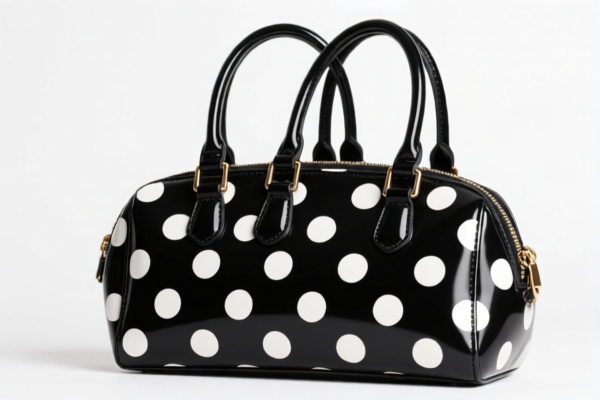
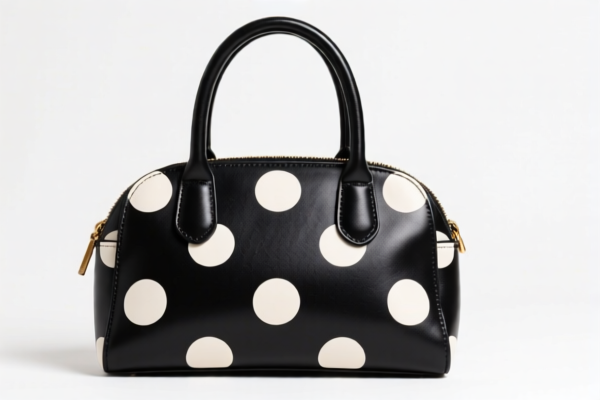
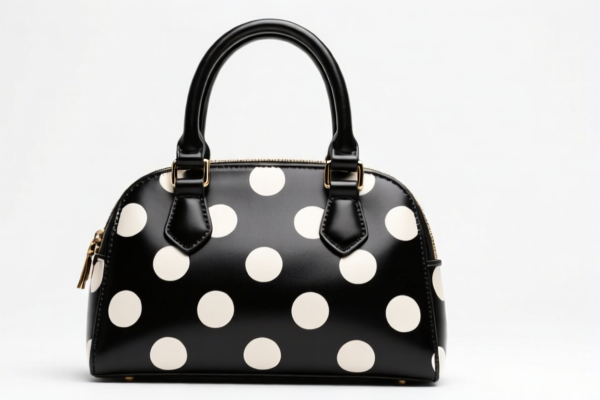
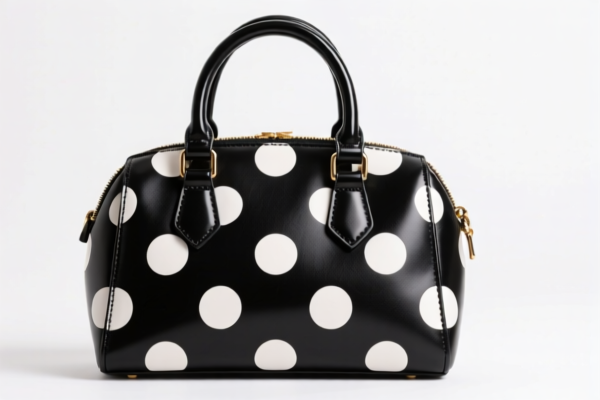
AI分析
👜 Cotton Handbag (Polka Dot) | HS Code Guide & Customs Clearance Strategy 2026
🌐 HS Code Reference & Customs Clearance Guide | 2026 Latest Tariff Analysis | Professional Clearance Strategy
📌 I. Product Definition & Classification: Do You Really Understand "Cotton Polka Dot Handbags"?
A cotton handbag, especially one with a polka dot pattern, is a classic fashion accessory. However, in international trade, its classification depends heavily on material composition, lining structure, and functional design. It is not simply "a bag"; it is categorized based on whether it meets the specific definitions of Chapter 42 (Articles of Apparel and Accessories) or Chapter 63 (Other Made-Up Textile Articles).
Key Distinction Criteria: * Chapter 42 (Handbags) If the bag has a permanent structure, handle, and is designed primarily for carrying personal items as a fashion accessory, it often falls here. The outer surface material is key. * Chapter 63 (Other Textile Articles) If the bag is loose, soft, unstructured, or serves a general utility function rather than a strict "handbag" aesthetic, it may fall here. * Material: 100% Cotton (Textile Material).
⚠️ Critical Classification Point:
- If the outer surface is textile material (Cotton) and it is a handbag with outer surface of textile materials, it typically falls under 4202.
- If it is considered a "made-up textile article" that doesn't fit the strict "handbag" definition of 4202, it may fall under 6307.
- Polka Dot Pattern: The pattern itself does not change the HS Code, but it confirms the item is a fashion accessory, supporting classification under 4202.
📦 II. HS Code Classification Details (2026 Latest Tariff Authority Comparison)
Based on the provided data for a Cotton Polka Dot Handbag, here are the four potential HS Codes and their corresponding tax implications:
| HS Code | Product Description | Application Scenario | Tax Rate (Total) |
|---|---|---|---|
4202.22.89.30 |
Cotton Handbag, Cotton Material Meets textile material and cotton requirements. Explicitly categorized as a cotton handbag. |
Classic structured handbags, totes, or satchels made primarily of cotton fabric. | 52.6% |
4202.92.93.36 |
Cotton Handbag Other containers with outer surface of textile materials. |
Handbags where the cotton outer surface is part of a broader category of "other containers" in Chapter 42. | 52.6% |
6307.90.98.91 |
Cotton Handbag Categorized as other made-up articles. Material and form are consistent with textile articles. |
Soft, unstructured cotton bags, market-style totes, or items deemed "other textile articles" rather than strict fashion handbags. | 24.5% |
6307.90.89.40 |
Cotton Handbag Meets the fallback classification principle for cotton and other articles. |
General utility cotton bags, non-fashion cotton bags, or items falling under the general "other made-up textile articles" basket. | 17.0% |
🔍 Key Reminder:
- Chapter 42 Codes (4202.xx.xx.xx) are for articles of apparel and accessories, including handbags. These carry the highest tax burden (52.6%) due to specific 122 Clause tariffs.
- Chapter 63 Codes (6307.xx.xx.xx) are for other made-up textile articles. These are classified as 24.5% and 17.0%, offering significant tax savings.
- Risk: Misclassifying a standard fashion handbag as a general textile article (6307) can lead to customs audits, back taxes, and penalties if the item is deemed a "handbag" per legal definitions. Conversely, over-classifying a simple utility bag as a fashion handbag (4202) results in unnecessary high taxes.
💰 III. 2026 Latest Tariff Rate Breakdown (Including Additional Taxes & Policy Surcharges)
✅ Applicable Country: United States (US)
✅ Origin: China (CN)
✅ Effective Date: Current rates apply (2026 Tariff Schedule)
🎯 1. 4202.22.89.30 & 4202.92.93.36 —— Cotton Handbags (Chapter 42)
| Item | Content |
|---|---|
| Base Tariff Rate | 17.6% (Ad Valorem) |
| Section 301 Additional Tariff | +25.0% (Section 301 List 4B) |
| Section 122 Tariff | +10.0% (Specific to certain textile/apparel articles) |
| Total Tariff Rate | 52.6% |
| Tax Calculation | CIF Value × 52.6% |
| De Minimis Exemption? | ❌ Not Eligible (Deny De Minimis) |
| Legal Basis Path | USITC:4202.22.89.30 → Section 301: Footnote 9903.88.01 → Section 122: Specific Textile Provision |
📌 Explanation:
- Base Rate (17.6%) Standard Most Favored Nation (MFN) rate for handbags of textile materials.
- Section 301 (25%) Broad tariffs on Chinese goods, including fashion accessories.
- Section 122 (10%) A specific additional duty targeting certain imported textile and apparel products.
- Total 52.6% is a very high tariff. This significantly impacts profit margins. Producers and importers must carefully evaluate if this cost can be absorbed or passed on.
🎯 2. 6307.90.98.91 —— Other Made-Up Textile Articles (Cotton)
| Item | Content |
|---|---|
| Base Tariff Rate | 7.0% (Ad Valorem) |
| Section 301 Additional Tariff | +7.5% (Reduced Section 301 rate for some textile articles) |
| Section 122 Tariff | +10.0% (Applicable to this category) |
| Total Tariff Rate | 24.5% |
| Tax Calculation | CIF Value × 24.5% |
| De Minimis Exemption? | ❌ Not Eligible |
| Legal Basis Path | USITC:6307.90.98.91 → Section 301: Footnote 9903.88.01 → Section 122: Specific Textile Provision |
📌 Explanation:
- This classification offers a 28.1% tax saving compared to the 4202 codes.
- It applies if the bag is deemed a "made-up article" rather than a specific "handbag" under Chapter 42.
- Caution: Customs may challenge this if the bag has hard structure, specific handles, and fashion branding, which are hallmarks of a Chapter 42 handbag.
🎯 3. 6307.90.89.40 —— Fallback Cotton/Textile Articles
| Item | Content |
|---|---|
| Base Tariff Rate | 7.0% (Ad Valorem) |
| Section 301 Additional Tariff | 0.0% (Exempt from Section 301 in this specific sub-category) |
| Section 122 Tariff | +10.0% (Applicable) |
| Total Tariff Rate | 17.0% |
| Tax Calculation | CIF Value × 17.0% |
| De Minimis Exemption? | ❌ Not Eligible |
| Legal Basis Path | USITC:6307.90.89.40 → Section 301: Exempt/Zero → Section 122: Specific Textile Provision |
📌 Explanation:
- Lowest Tax Burden (17.0%) This is the most cost-effective classification.
- It applies to "other made-up textile articles" that do not fit other specific textile article headings.
- Risk: This is a fallback classification. Using it for a clearly defined fashion handbag is high-risk. It is best suited for plain, utility-style cotton bags (e.g., market totes, reusable shopping bags) without strong fashion characteristics.
🛠️ IV. Customs Clearance Practical Advice (Combat Pitfall Guide)
✅ 1. Documentation Checklist (All Required)
| Document | Mandatory | Description |
|---|---|---|
| ✅ Product Specification Sheet | ✔️ | Details material (100% Cotton), lining, handle type, dimensions. |
| ✅ Product Photos (Clear) | ✔️ | Show front, back, interior, handle attachment, and polka dot pattern. |
| ✅ Commercial Invoice | ✔️ | Must clearly state "Cotton Handbag, Polka Dot" and HS Code. |
| ✅ Packing List | ✔️ | Item count, net/gross weight. |
| ✅ Material Declaration | ✔️ | Confirm 100% Cotton. No leather, PVC, or synthetic outer surfaces. |
| ✅ Origin Certificate (CO) | ✔️ | Proof of Chinese origin (triggers Section 301/122 tariffs). |
| ✅ Design Drawings (if any) | ✔️ | To support classification if challenged (e.g., showing it's a "made-up article"). |
✅ 2. Declaration Strategy (Key Mantra)
🔥 “Structure Defines Chapter, Material Defines Sub-Heading, Honesty Saves Money!”
| Scenario | Correct Declaration | Error to Avoid |
|---|---|---|
| Structured Fashion Handbag (Hard bottom, specific handles, brand logo) | 4202.22.89.30 or 4202.92.93.36 (Tax: 52.6%) |
❌ Declare as 6307 → Audit Risk & Back Taxes |
| Soft, Unstructured Cotton Bag (Tote, market bag, no rigid structure) | 6307.90.98.91 (Tax: 24.5%) |
❌ Declare as 4202 → Overpaid Taxes |
| Plain Utility Cotton Bag (Simple, no fashion features) | 6307.90.89.40 (Tax: 17.0%) |
❌ Declare as 4202 → Overpaid Taxes |
✅ 3. Special Handling Tips
| Situation | Handling Advice |
|---|---|
| Mixed Materials | If the bag has leather trim or PVC coating, it may still be classified as textile if the cotton is the chief material. Document this clearly. |
| Polka Dot Pattern | The pattern confirms it is a consumer fashion item. Do not claim it is "industrial" to avoid higher taxes; instead, ensure the structure supports a Chapter 63 classification if possible. |
| Section 122 Impact | All four codes include a 10% Section 122 tariff. This is non-negotiable for these textile/apparel imports from China. Plan for this cost. |
| Pre-Ruling | For large shipments, apply for an Advance Ruling from US Customs (CBP) to lock in the HS Code and avoid disputes. |
🌍 V. Global Market Clearance Comparison (2026 Latest)
| Country/Region | Recommended HS Code | Tariff (China Origin) | Certification | Notes |
|---|---|---|---|---|
| 🇺🇸 USA | 4202.22.89.30 / 6307.90.98.91 |
52.6% / 24.5% | N/A | High tariffs due to Section 301 + 122. |
| 🇨🇳 China | 4202.22.89.30 |
~10-15% | N/A | Lower base rates, no Section 301. |
| 🇪🇺 EU | 4202.22.80 |
12% | CE (if applicable) | No Section 301/122 equivalents, but higher base VAT. |
| 🇬🇧 UK | 4202.22.80 |
12% | UKCA | Post-Brexit tariffs align with EU but separate rules. |
| 🇯🇵 Japan | 4202.22.00 |
10.8% | PSE (if electronic) | No major trade war tariffs on cotton bags. |
📌 Conclusion:
- The US market is the most challenging for cotton handbags due to the combination of Base Tariff + Section 301 + Section 122.
- Chapter 63 (6307) offers significant tax savings (17%-24.5%) vs. Chapter 42 (52.6%).
- Strategic Advice: If the product is not a strict "fashion handbag," attempt to classify under 6307.90.89.40 (17.0%) to maximize profit. However, ensure the product description and physical attributes support this to avoid customs penalties.
📌 VI. Common Errors & Pitfall Guide (Lessons Learned)
❌ Error 1: Declaring a structured leather-trimmed cotton bag as 6307.90.89.40
👉 Consequence: Customs reclassifies to 4202, back-taxes 52.6%, imposes penalties.
❌ Error 2: Ignoring Section 122 Tariff (10%)
👉 Consequence: Underestimating landed cost, leading to unexpected financial loss.
❌ Error 3: Vague Product Description ("Cotton Bag")
👉 Consequence: Customs may assign the highest duty rate or request additional documentation, causing delays.
❌ Error 4: Assuming De Minimis Applies
👉 Consequence: Textile/apparel articles from China are excluded from de minimis exemptions. Small shipments are still taxed.
✅ Correct Approach:
"Cotton Polka Dot Handbag, 100% Cotton Outer, Fabric Lining, Soft Structure, Reusable Market Tote, HS 6307.90.89.40, Country of Origin: China"
🎯 VII. Conclusion: Professional Declaration, Time-Saving, Cost-Effective!
🎯 Remember the Mantra:
🔹 "Structure is Key: Fashion Handbag (4202) vs. Textile Article (6307)"
🔹 "Tax Gap is Huge: 52.6% vs. 17.0%. Choose Wisely!"
🔹 "Section 122 is Always 10%. Plan for It."
📌 Pro Tip:
If you are importing large volumes, consult a licensed customs broker to review the physical product. A slight difference in handle attachment or lining can change the chapter. Consider transshipment through non-China hubs (if permitted and compliant) or supply chain diversification to mitigate Section 301 risks, though Section 122 may still apply.
📣 Immediate Action:
📞 Contact a Professional Customs Broker + Provide Product Photos + Request HS Code Pre-Ruling
🚀 Ensure Your Cotton Polka Dot Handbags Clear Customs Smoothly, Efficiently, and Profitably!
✨ Professional Clearance Starts with Precise Classification!
💼 Every Cent of Cost Deserves Precise Calculation!
用户评价
关于 HS 编码归类
协调制度(HS)是由世界海关组织(WCO)制定的国际贸易商品分类标准。全球 200 多个国家采用 HS 系统作为海关关税、贸易统计和进出口监管的基础。
每个 HS 编码遵循以下层级结构:
- 章(2 位)——商品大类(例如:第 84 章:机器和机械设备)
- 品目(4 位)——章内的更具体分类
- 子目(6 位)——国际通用细分,所有 WCO 成员国统一使用
- 本国细分(8-10 位)——各国自行扩展的细分编码,如美国 HTSUS 10 位编码
正确的 HS 编码归类对于顺利通关、准确缴纳关税和遵守贸易法规至关重要。错误归类可能导致海关延误、多缴关税或罚款。
从CN进口到US时,适用的关税税率可能包括:
- 最惠国(MFN)税率——适用于 WTO 成员国的标准关税税率
- 普通税率——适用于无贸易协定国家
- 贸易救济关税——附加关税,如 301 条款(反倾销)、232 条款(国家安全)或反补贴税
本页内容仅供参考。如需正式归类,请咨询当地海关或持牌报关代理。