crochet cargo pants
CN → US| HS编码 | 关税税率 | 原产国 | 目的国 | 文档 |
|---|---|---|---|---|
| 6109908030 | 33.5% | CN | US | 官方文档 |
| 6111205000 | 32.4% | CN | US | 官方文档 |
| 6111301000 | 45.7% | CN | US | 官方文档 |
商品图片
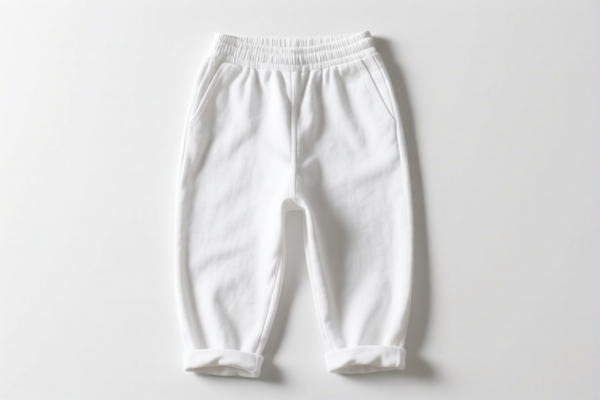
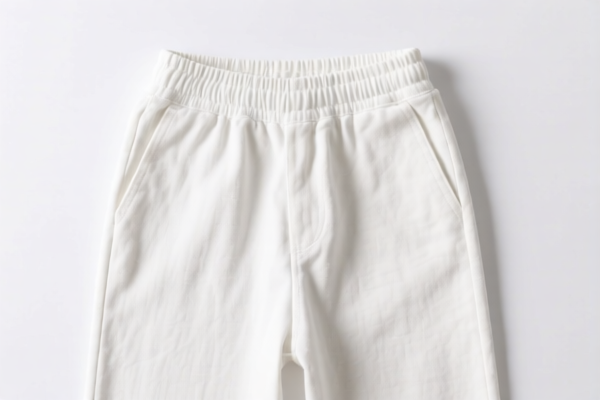
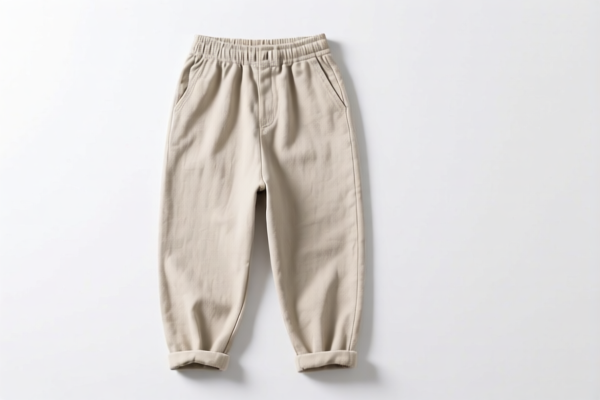
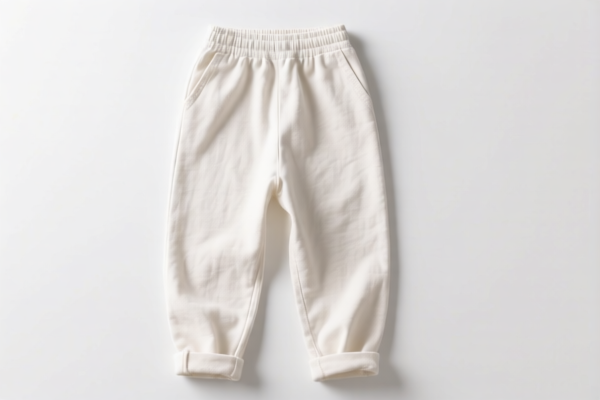
AI分析
Here is the comprehensive trade compliance guide for Crochet Cargo Pants, structured in a professional Wiki format with actionable clearance strategies.
👖 Crochet Cargo Pants (钩编工装裤) | Global HS Code & Tax Compliance Guide
🌐 2026 Trade Compliance & Duty Strategy | Expert Clearance for Textile Imports
📌 One Product, Three Classification Scenarios: Understanding why "Cargo Pants" can trigger vastly different tax rates based on Material and Target Demographic.
📦 I. Product Definition & Critical Classification Logic
Crochet Cargo Pants are a specialized textile item characterized by: 1. Manufacturing Method: Knitted via Crochet (Hand-made or Machine Crochet), distinct from "Knitted" (Weft/Knitted) or "Woven". 2. Style: Cargo pockets indicate a specific utility design, but the material and wearer define the HS Code. 3. Target Market: The classification splits sharply between General Adult Use (not in this dataset) vs. Infant/Baby Use.
⚠️ The "Baby" Trap: In the provided dataset, all three HS Codes are designated for Infants/Babies. If your "Cargo Pants" are for adults, these codes do not apply, and you would likely fall under Chapter 61 (Knitted) or 62 (Woven) adult categories.
If these are Baby Crochet Cargo Pants, the tax liability depends entirely on the fiber content (Cotton vs. Synthetic vs. Non-Wool Blends).
📊 II. HS Code Classification Matrix (Data-Driven Analysis)
Based strictly on the provided dataset, here is how the Crochet Cargo Pants are categorized by material composition:
| HS Code | Target User | Material Inference | Manufacturing | Total Duty Rate | Key Tax Components |
|---|---|---|---|---|---|
6109.90.80.30 |
🍼 Infant / Girl | Non-Wool (Inferred) | Crochet | 33.5% | Base (16%) + Add-on (7.5%) + 122 (10%) |
6111.20.50.00 |
🍼 Infant | Cotton (Inferred) | Crochet | 32.4% | Base (14.9%) + Add-on (7.5%) + 122 (10%) |
6111.30.10.00 |
🍼 Infant | Synthetic or Cotton | Crochet | 45.7% | Base (28.2%) + Add-on (7.5%) + 122 (10%) |
🔍 Deep Dive into Classification Logic
1. 6109.90.80.30 – The "Non-Wool" General Infant Category
- Why this code? The summary indicates the pants are for Babies/Girls, shaped for infants, and explicitly excludes wool.
- Material Note: If your crochet pants are made of acrylic, polyester blends (non-cotton), or rayon, this is likely the correct fallback if not "Synthetic" under 6111.30.
- Tax Impact: 33.5% (Base 16.0% + 7.5% + 10%).
2. 6111.20.50.00 – The "Cotton" Specialist (Best Rate?)
- Why this code? This is the specific subheading for Cotton infant garments.
- Critical Detail: The summary explicitly states: "Material inferred as Cotton."
- Tax Impact: 32.4% (Base 14.9% + 7.5% + 10%).
- Strategy: If your product is 100% Cotton Crochet, this is often the most favorable classification among the three (lowest base rate).
3. 6111.30.10.00 – The "High-Tax" Synthetic Category
- Why this code? This covers Synthetic Fiber infant garments (e.g., Polyester, Nylon, Acrylic). The summary notes "Synthetic or Cotton" as a possibility, but the 28.2% Base Tax confirms this is the Synthetic bucket.
- Tax Impact: 45.7% (Base 28.2% + 7.5% + 10%).
- Warning: If you label synthetic cargo pants as "Cotton" to get the 32.4% rate, you risk severe penalties for misdeclaration.
💰 III. 2026 Tariff Breakdown & Policy Details
✅ Origin: China (CN)
✅ Destination: United States (US)
✅ Applicable Policy: Section 301 / 122 / Additional Duties
🎯 Tax Structure Analysis (All 3 Codes)
All three classifications share the same Add-on Structure: 1. Base Tariff (MFN): Varies by material (14.9% for Cotton, 16.0% for Non-Wool, 28.2% for Synthetic). 2. Add-on Tariff (Section 301): +7.5% (Standard "Additional Duty"). 3. 122 Clause Tariff: +10% (Specific retaliatory tariff applicable to Chinese textiles).
💣 Scenario A: Cotton Crochet Cargo Pants (6111.20.50.00)
- Calculation: 14.9% (Base) + 7.5% (Add-on) + 10% (122 Clause) = 32.4%
- Total Duty Cost: If the CIF value is $1,000, you pay $324 in duties alone.
💣 Scenario B: Non-Wool Crochet Cargo Pants (6109.90.80.30)
- Calculation: 16.0% (Base) + 7.5% (Add-on) + 10% (122 Clause) = 33.5%
- Total Duty Cost: $335 per $1,000.
💣 Scenario C: Synthetic Crochet Cargo Pants (6111.30.10.00)
- Calculation: 28.2% (Base) + 7.5% (Add-on) + 10% (122 Clause) = 45.7%
- Total Duty Cost: $457 per $1,000.
- 💸 Risk: Synthetic material carries a 42% higher total tax burden than Cotton in this dataset.
📌 Key Legal Path:
Base Tariff+Section 301 (7.5%)+Retaliatory 122 (10%)= Cumulative Liability. Note: No de minimis exemptions are available for these textile categories under current policies.
🛠️ IV. Clearance Strategy & Actionable Advice
✅ 1. Material Verification (The Most Critical Step)
- Action: Do not guess the material.
- Requirement: Submit a Laboratory Test Report (e.g., ASTM D629 or ISO standards) confirming the fiber composition.
- Strategy:
- If 100% Cotton → Declare under
6111.20.50.00(Save 3% vs. Non-Wool, 13% vs. Synthetic). - If Synthetic Blend → Declare under
6111.30.10.00. Do not attempt to "Cotton-ify" the declaration.
- If 100% Cotton → Declare under
✅ 2. "Infant" Status Proof
- Action: All three codes in the dataset are for Infants.
- Requirement:
- Size tag must reflect infant sizing (e.g., 0-6M, 9M, 12M).
- Product description must explicitly state "Baby/Toddler".
- Warning: If these are "Cargo Pants" for Adults or Teens, these codes are invalid. You must find the Adult Chapter 61/62 code, or face rejection.
✅ 3. Documentation Checklist for US Customs (CBP)
| Document | Requirement | Why? |
|---|---|---|
| Fiber Content Label | Must match the declared HS Code (e.g., "100% Cotton") | Prevents "Material Mismatch" audits. |
| Care Label | Must show "Infant" sizing | Validates the 6111 vs 6109 distinction. |
| Composition Test Report | From an accredited third-party lab | Proof of "Cotton" vs "Synthetic". |
| Bill of Lading | Must specify "Crochet" method | Differentiates from "Knitted" (6109) or "Woven" (6209). |
| Country of Origin | China (CN) | Triggers the 122 Clause and 301 duties. |
✅ 4. Cost Optimization Tips
- Switch to Cotton: If your design allows, moving from Synthetic to Cotton reduces the base tax by 13.3% (28.2% → 14.9%).
- Avoid "Wool" Claims: If the product contains wool, it may fall into a different, potentially higher tax bracket not listed here. The dataset explicitly excludes wool for
6109.90.80.30. - Volume Discounting: No standard duty reduction exists for textiles under these clauses, but accurate declaration avoids 10%+ penalty fees.
🚫 V. Common Pitfalls & "Red Flags"
❌ Pitfall 1: The "Adult" Mismatch
* Scenario: Shipping adult-sized cargo pants under 6111 (Infant codes).
* Consequence: Shipment Rejection + Seizure of goods + $1,000+ fine per entry.
* Fix: Check size tags immediately. Adult = Chapter 62 (Woven) or different 61 code.
❌ Pitfall 2: "Crochet" vs. "Knitted" Confusion
* Scenario: Declaring as "Knitted" (6109) but the product is clearly Crochet (hand-knotted loops).
* Consequence: CBP may reject the description as inaccurate, leading to delays.
* Fix: Use the term "Crochet" in the commercial invoice and product description to match the 6111/6109 descriptions provided.
❌ Pitfall 3: Material Ambiguity * Scenario: Labeling a "Synthetic Blend" as "Cotton" to get the lower 32.4% rate. * Consequence: Customs Audit → Back-taxes of $457 vs $324 per shipment + Penalties. * Fix: Always test the fabric composition.
🎯 VI. Final Verdict & Professional Summary
🚀 The "Golden Rule" for Crochet Cargo Pants: "Material is King, Age is Queen." 1. Confirm Age: Must be Infant to use the provided codes (
6111/6109). 2. Confirm Material: * Cotton =6111.20.50.00(Lowest Tax: 32.4%) 🏆 * Non-Wool/Other =6109.90.80.30(Medium Tax: 33.5%) * Synthetic =6111.30.10.00(Highest Tax: 45.7%) 🚨
Clearance Strategy:
Submit 3rd-party lab reports proving fiber content. If Cotton, declare
6111.20.50.00. If Synthetic, declare6111.30.10.00. Do not misclassify to save taxes; the 13.3% difference is not worth the audit risk.
✨ Need a Pre-Entry Consultation?
Contact your Customs Broker with: 1. Fabric Sample (for lab testing) 2. Size Tag Photos (proving "Infant" status) 3. Crochet Construction Diagram
Ensure your goods clear the US port without detention! 🚢✨
用户评价
关于 HS 编码归类
协调制度(HS)是由世界海关组织(WCO)制定的国际贸易商品分类标准。全球 200 多个国家采用 HS 系统作为海关关税、贸易统计和进出口监管的基础。
每个 HS 编码遵循以下层级结构:
- 章(2 位)——商品大类(例如:第 84 章:机器和机械设备)
- 品目(4 位)——章内的更具体分类
- 子目(6 位)——国际通用细分,所有 WCO 成员国统一使用
- 本国细分(8-10 位)——各国自行扩展的细分编码,如美国 HTSUS 10 位编码
正确的 HS 编码归类对于顺利通关、准确缴纳关税和遵守贸易法规至关重要。错误归类可能导致海关延误、多缴关税或罚款。
从CN进口到US时,适用的关税税率可能包括:
- 最惠国(MFN)税率——适用于 WTO 成员国的标准关税税率
- 普通税率——适用于无贸易协定国家
- 贸易救济关税——附加关税,如 301 条款(反倾销)、232 条款(国家安全)或反补贴税
本页内容仅供参考。如需正式归类,请咨询当地海关或持牌报关代理。