deep red mahogany rough sawn timber
CN → US| HS编码 | 关税税率 | 原产国 | 目的国 | 文档 |
|---|---|---|---|---|
| 4407210000 | 35.0% | CN | US | 官方文档 |
| 4407290206 | 35.0% | CN | US | 官方文档 |
商品图片
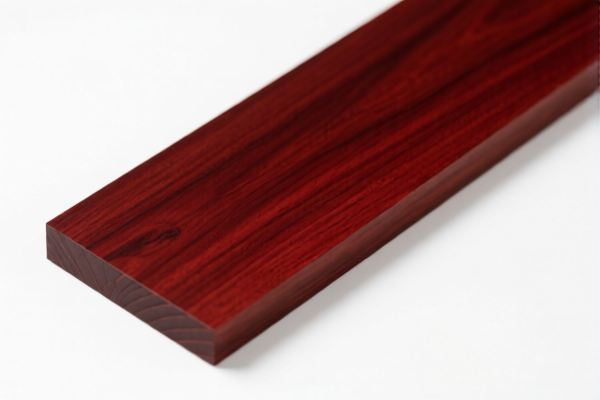
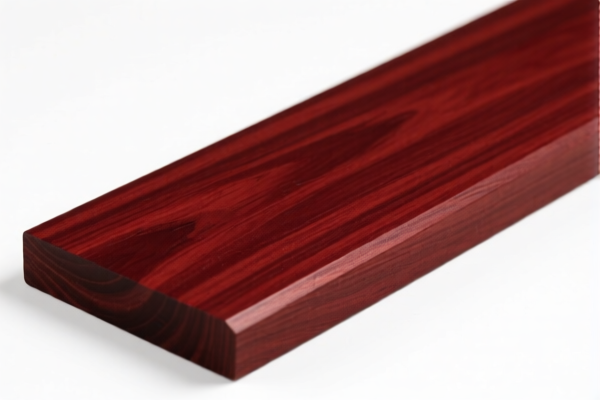
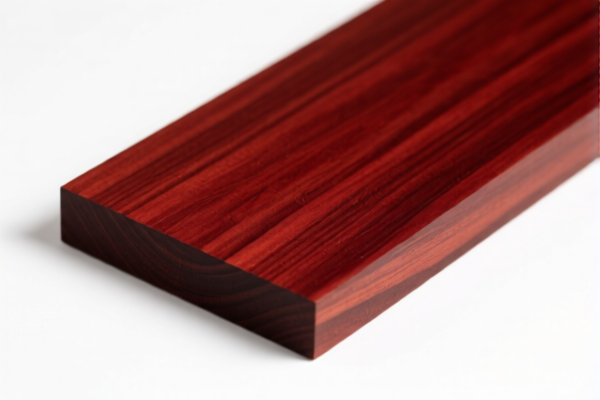
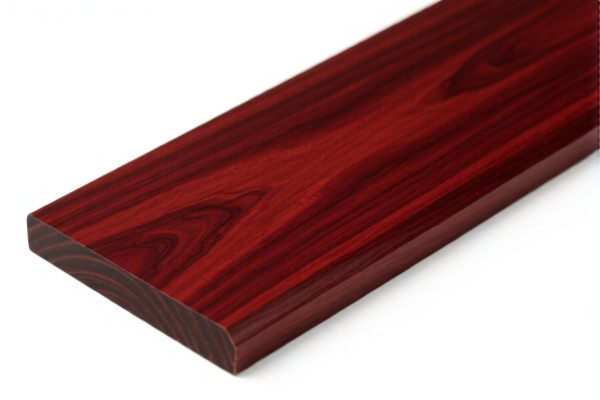
AI分析
🌲 Deep Red Mahogany Rough Sawn Timber (Swietenia spp.)
🌐 HS Code Reference & Customs Clearance Guide | 2026 Latest Tariff Analysis | Professional Strategy
📌 I. Product Definition & Classification: What Exactly Is "Deep Red Mahogany"?
Deep Red Mahogany, scientifically known as Swietenia spp., is a premium tropical hardwood prized for its rich color, fine texture, and stability. In international trade, it falls under the category of "Wood Sawn Lengthwise, of a Thickness Exceeding 6 mm."
However, classification is not one-size-fits-all. It is critical to distinguish between True Mahogany (Swietenia) and African Mahogany (Khaya), as they have different HS codes and potential regulatory nuances.
⚠️ Key Distinction Point:
- If the wood is botanically Swietenia spp. (True/Swietenia Mahogany) → HS Code: 4407.21.00.00
- If the wood is botanically Khaya spp. (African Mahogany) → HS Code: 4407.29.02.06
- Physical State: "Rough Sawn" implies the wood has been cut to length but not necessarily planed or sanded smooth, yet it must exceed 6mm in thickness to be classified here.
📦 II. HS Code Classification Details (2026 Latest Tariff Reference)
| HS Code | Product Description | Applicable Scenario | Tax Rate (China Origin) |
|---|---|---|---|
4407.21.00.00 |
Wood sawn lengthwise, sliced, or peeled, thickness > 6mm: Of Tropical Wood: Mahogany (Swietenia spp.) | Genuine Swietenia mahogany logs, planks, or boards. | 25.0% |
4407.29.02.06 |
Wood sawn lengthwise, sliced, or peeled, thickness > 6mm: Of Tropical Wood: Other Acajou d'Afrique (Khaya spp.), also known as African Mahogany | Khaya species timber marketed as African Mahogany. | 25.0% |
🔍 Critical Reminder:
- Both codes apply to wood exceeding 6mm in thickness. Wood ≤ 6mm is classified differently (usually as plywood or veneer).
- Rough Sawn does not exempt the wood from this classification. Even if unplaned, if it is sawn/chipped lengthwise and >6mm, it belongs here.
- Botanical Identification is Key: Customs may require botanical proof to distinguish Swietenia from Khaya. Misclassification can lead to penalties.
💰 III. 2026 Latest Tariff Rate Breakdown (Detailed)
✅ Applicable Country: United States (US)
✅ Origin: China (CN)
✅ Effective Date: Ongoing under current trade agreements (Section 301)
🎯 1. 4407.21.00.00 —— Mahogany (Swietenia spp.)
| Item | Detail |
|---|---|
| Base Tariff | 0.0% (ad valorem) |
| Additional Tariff (Section 301) | +25.0% |
| Total Tax Rate | 25.0% |
| Tax Calculation | CIF Value × 25.0% |
| De Minimis Exemption | ❌ Not Applicable (Wood products generally excluded from low-value exemptions for agricultural/timber imports) |
| Legal Basis | HTSUS 4407.21.00.00 + USITC Footnote for Section 301 |
📌 Explanation:
- The Base Tariff is 0%, which might seem favorable.
- However, the 25% Section 301 tariff is the dominant cost driver.
- This applies to all Swietenia mahogany imported from China.
- No partial exemptions apply to rough-sawn timber of this category.
🎯 2. 4407.29.02.06 —— African Mahogany (Khaya spp.)
| Item | Detail |
|---|---|
| Base Tariff | 0.0% (ad valorem) |
| Additional Tariff (Section 301) | +25.0% |
| Total Tax Rate | 25.0% |
| Tax Calculation | CIF Value × 25.0% |
| De Minimis Exemption | ❌ Not Applicable |
| Legal Basis | HTSUS 4407.29.02.06 + USITC Footnote for Section 301 |
📌 Note:
- Despite being "Other" tropical wood, Khaya (African Mahogany) is explicitly listed with the same 25% total tax rate when imported from China.
- The distinction between Swietenia and Khaya is critical for phytosanitary and CITES regulations, even if the tax rate is identical.
🛠️ IV. Customs Clearance Practical Advice (Field Guide)
✅ 1. Required Documentation Checklist (Non-Negotiable)
| Document | Required? | Description |
|---|---|---|
| ✅ Commercial Invoice | ✔️ | Must specify "Wood, Sawn, >6mm, Mahogany (Swietenia/Khaya spp.)" |
| ✅ Packing List | ✔️ | Detail dimensions, volume (CBM), and weight |
| ✅ Phytosanitary Certificate | ✔️ | Issued by country of origin. Crucial for wood. |
| ✅ CITES Permit (if applicable) | ✔️ | Swietenia species are often CITES-listed. Verify if permits are needed for Swietenia mahagoni or Swietenia macrophylla. |
| ✅ Botanical Identification | ✔️ | Expert confirmation if Swietenia vs. Khaya is ambiguous. |
| ✅ Bill of Lading/Air Waybill | ✔️ | Standard shipping docs |
| ✅ ISPM 15 Marking | ✔️ | Confirm wood packaging is heat-treated or fumigated |
⚠️ Warning:
- CITES Compliance: Swietenia species (especially S. macrophylla) are listed in CITES Appendix II. Without proper export permits from the country of origin, your shipment WILL BE SEIZED.
- Phytosanitary: Wood is highly scrutinized for pests (e.g., bark beetles). A valid phytosanitary certificate is mandatory.
✅ 2. Declaration Tips (Golden Rules)
🔥 “Specify Species, Confirm Thickness, CITES is King!”
| Scenario | Correct Declaration | Wrong Declaration |
|---|---|---|
| Swietenia spp. | 4407.21.00.00 – Mahogany (Swietenia spp.) |
Vague term "Mahogany" → May be classified under higher general rates or flagged |
| Khaya spp. | 4407.29.02.06 – African Mahogany (Khaya spp.) |
Mislabeling Khaya as Swietenia → CITES violation risk |
| Thickness ≤ 6mm | Do NOT use 4407 codes. Use veneer/plywood codes. | Using 4407 for thin wood → Incorrect classification |
| Planed/Sanded | Still 4407.xx.xx.xx if >6mm. |
Assuming planing changes HS code → It does not. |
✅ 3. Special Handling & Pitfalls
| Issue | Advice |
|---|---|
| CITES Permit | Check the country of origin. If from Brazil (for S. macrophylla), CITES permits are strictly enforced. If from sustainable sources with proper paperwork, clearance is smoother. |
| Fumigation | Ensure wood is free of living organisms. Non-compliant wood will be destroyed at importer’s expense. |
| Valuation | Customs may challenge CIF value. Keep records of raw log prices, milling costs, and transport. |
| Duty Payment | Prepare for 25% duty upfront. Factor this into your Landed Cost calculation. |
🌍 V. Global Market Comparison (2026)
| Country/Region | Recommended HS Code | Tariff (China Origin) | Key Requirement | Notes |
|---|---|---|---|---|
| 🇺🇸 USA | 4407.21.00.00 or 4407.29.02.06 |
25.0% | CITES + Phytosanitary | High scrutiny on tropical timber |
| 🇨🇳 China | 4407.21.00 / 4407.29.02 |
Varies (Check FTA) | Phytosanitary | Lower duties if under FTA (e.g., RCEP) |
| 🇪🇺 EU | 4407.21.00 / 4407.29.02 |
0%–6% | EUTR (Timber Regulation) | EUTR Compliance is mandatory |
| 🇬🇧 UK | 4407.21.00 / 4407.29.02 |
0%–6% | UK Tree Planting & Forestry Act | Similar to EU EUTR |
📌 Conclusion:
- USA: High tariff (25%) + CITES/Phytosanitary.
- EU/UK: Lower tariff but strict environmental compliance (EUTR/UKTRA).
- China: Potentially lower tariffs under FTAs, but check specific origin rules.
📌 VI. Common Mistakes & Avoidance Guide (Lessons Learned)
❌ Mistake 1: Using generic term "Mahogany" without specifying Swietenia or Khaya.
👉 Consequence: Customs may delay for botanical verification, incurring demurrage fees.
❌ Mistake 2: Ignoring CITES permits for Swietenia macrophylla.
👉 Consequence: Shipment seizure, fines, and blacklisting.
❌ Mistake 3: Misdeclaring thickness.
👉 Consequence: If <6mm, it’s not 4407. Incorrect classification leads to back-taxes and penalties.
❌ Mistake 4: Assuming "Rough Sawn" means no processing.
👉 Consequence: Incorrectly declaring as "Logs" (HS 4403) instead of "Sawn Wood" (HS 4407). Logs have different tariff rates and phytosanitary requirements.
✅ Correct Practice:
"Mahogany Timber, Rough Sawn, >6mm Thickness, Swietenia spp. (or Khaya spp.), CITES Permit #XXXX, Phytosanitary Certificate #YYYY"
🎯 VII. Conclusion: Professional Declaration Saves Money & Time
🎯 Key Takeaways:
🔹 HS Code is Species-Specific: Swietenia vs. Khaya matters for CITES, even if tax is same.
🔹 Thickness is Crucial: >6mm =4407; ≤6mm = Veneer/Plywood.
🔹 Tax is 25%: For China-origin wood into the US, expect 25% duty.
🔹 Compliance is Non-Negotiable: CITES and Phytosanitary certificates are mandatory for wood.
📌 Pro Tip:
If your mahogany is sourced from Central/South America (e.g., Brazil, Peru) and exported to the US, ensure CITES permits are perfectly aligned with the invoice and packing list. Any mismatch = Detention.
📣 Immediate Action:
📞 Contact your customs broker with the following:
1. Botanical species name (Swietenia or Khaya)
2. Exact thickness of each board/log
3. CITES permit numbers (if applicable)
4. Phytosanitary certificate
🚀 Clear customs smoothly, avoid seizures, and maximize your profit margin!
✨ Professional Clearance Starts with Accurate Classification!
💼 Your Timber, Your Rules, Your Compliance!
用户评价
关于 HS 编码归类
协调制度(HS)是由世界海关组织(WCO)制定的国际贸易商品分类标准。全球 200 多个国家采用 HS 系统作为海关关税、贸易统计和进出口监管的基础。
每个 HS 编码遵循以下层级结构:
- 章(2 位)——商品大类(例如:第 84 章:机器和机械设备)
- 品目(4 位)——章内的更具体分类
- 子目(6 位)——国际通用细分,所有 WCO 成员国统一使用
- 本国细分(8-10 位)——各国自行扩展的细分编码,如美国 HTSUS 10 位编码
正确的 HS 编码归类对于顺利通关、准确缴纳关税和遵守贸易法规至关重要。错误归类可能导致海关延误、多缴关税或罚款。
从CN进口到US时,适用的关税税率可能包括:
- 最惠国(MFN)税率——适用于 WTO 成员国的标准关税税率
- 普通税率——适用于无贸易协定国家
- 贸易救济关税——附加关税,如 301 条款(反倾销)、232 条款(国家安全)或反补贴税
本页内容仅供参考。如需正式归类,请咨询当地海关或持牌报关代理。