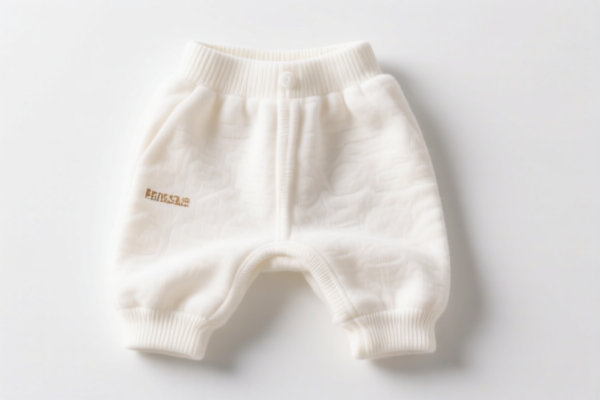
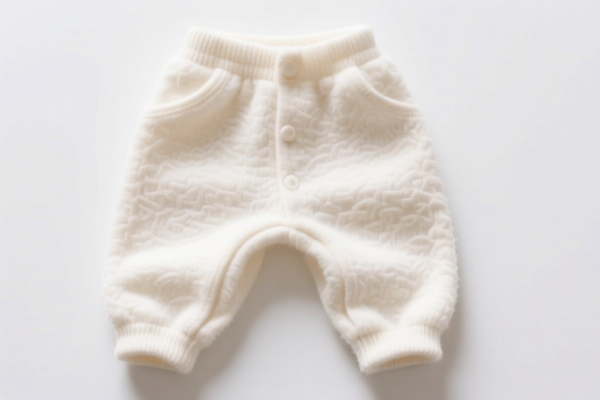
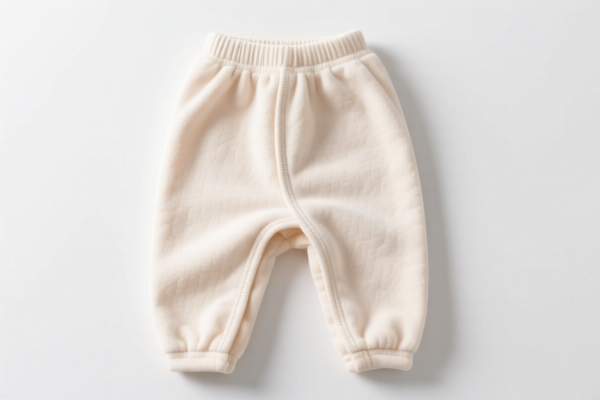
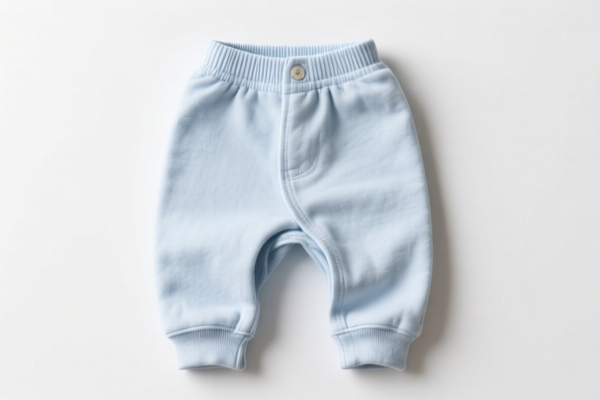
diaper pants
CN → US| HS编码 | 关税税率 | 原产国 | 目的国 | 文档 |
|---|---|---|---|---|
| 9619001100 | 17.5% | CN | US | 官方文档 |
| 4818100000 | 35.0% | CN | US | 官方文档 |
| 9619001530 | 17.5% | CN | US | 官方文档 |
| 4818900080 | 17.5% | CN | US | 官方文档 |
| 6307906010 | 17.5% | CN | US | 官方文档 |
商品图片
AI分析
🩷 Diaper Pants (Pull-Ups / Training Pants)
🌐 HS Code Reference & Customs Clearance Guide | 2026 Latest Tariff Analysis | Strategic Classification for Hygiene Products
📌 I. Product Definition & Classification: What Exactly Are "Diaper Pants"?
Diaper Pants (also known as Training Pants, Pull-Ups, or Elasticated Sanitary Articles) are disposable hygiene products designed for babies, adults with incontinence, or children in toilet training. Unlike traditional taped diapers, they feature elasticated waistbands and leg openings, resembling underwear.
In international trade, their classification is critical because the HS Code determines not just the basic tariff, but also the impact of Section 301 (USITC) and Section 122 (IEEPA) tariffs, which can drastically alter the landed cost. The classification hinges on: 1. Material Composition: Paper, cellulose pulp, non-woven fabrics, or plastic films. 2. Core Function: Absorbency, disposal nature, and hygiene purpose. 3. Structure: Disposable, single-use, containing absorbent material (fluff pulp, SAP, etc.).
⚠️ Key Distinction:
- If the product is disposable and contains absorbent core material (pulp/SAP) → Falls under Chapter 96 (Artificial Flowers, Hair Products, etc.) or Chapter 48 (Paper Products) depending on specific manufacturing and material dominance.
- If it is reusable cloth underwear → Falls under Chapter 61/62 (Apparel) or Chapter 63 (Other Made-Up Textile Articles).
- Note: The following analysis focuses on disposable diaper pants, as implied by the provided data context.
📦 II. HS Code Classification Details (Based on Provided Data)
The provided data suggests four potential HS Codes for disposable diaper pants, split between Chapter 96 (Specialized hygiene articles) and Chapter 48/63 (Paper/Textile based). The choice depends on the precise material composition and manufacturing process.
| HS Code | Product Description | Material/Structure Logic | Total Tax Rate |
|---|---|---|---|
9619.00.11.00 |
Sanitary Pads / Diaper Liners (Paper Pulp Based) | Summary: Form is sanitary pad/diaper, usage matches, material contains paper pulp. Meets classification for pulp-based hygiene items. | 17.5% |
4818.10.00.00 |
Sanitary Napkins / Diapers (Cellulose Fiber Network) | Summary: Classified as paper/cellulose fiber hygiene articles. Fits definition of hygiene consumables made of cellulose fiber networks or paper. | 35.0% |
9619.00.15.30 |
Sanitary Articles (Paper/Cellulose Fiber) | Summary: Usage and form match. Material is paper, cellulose pulp, or fiber network. Fits the specific sub-heading for paper-based sanitary articles. | 17.5% |
4818.90.00.80 |
Other Paper Toilet/Health Care Articles | Summary: Paper/cellulose fiber product. Form is health/sanitary consumable. Fits definition of toilet paper or similar paper hygiene products. | 17.5% |
6307.90.60.10 |
Other Made-Up Textile Articles (Paper-Based Fabric) | Summary: Hygiene/nursing use. Base material includes paper or paper-coated fabric. Fits definition of fabric backed/covered with paper. | 17.5% |
🔍 Classification Insight:
-9619.00.11.00&9619.00.15.30: These are the most specific for "sanitary articles" in Chapter 96. They often attract lower additional tariffs compared to broad paper categories.
-4818.10.00.00: This code carries a higher additional tariff (25%), leading to a 35% total rate. This is likely due to stricter interpretation of "sanitary napkins" or specific paper product rules under USITC Footnotes.
-4818.90.00.80&6307.90.60.10: These are "other" categories. While the total tax is 17.5%, customs officers may scrutinize them if the product clearly fits the more specific9619headings.
💰 III. 2026 Latest Tariff Breakdown (Detailed Tax Clauses)
✅ Applicable Country: United States (US)
✅ Origin: China (CN)
✅ Effective Date: Post-2025 Policy (Section 122 & Section 301)
🎯 1. Lowest Tax Scenario: 17.5% Total
(Applicable to HS Codes: 9619.00.11.00, 9619.00.15.30, 4818.90.00.80, 6307.90.60.10)
| Component | Rate | Legal Basis/Source |
|---|---|---|
| Basic Tariff | 0% | General Rate of Duty (GRT) for many hygiene/paper items is 0%. |
| Additional Tariff (301) | 7.5% | USITC Section 301 Tariff. Note: The data shows 7.5% for these codes, unlike the 25% for 4818.10. This suggests a specific exclusion or lower bracket for certain paper/pulp items. |
| Section 122 Tariff | 10% | IEEPA (International Emergency Economic Powers Act) additional duty on Chinese goods. |
| Total Effective Rate | 17.5% | (0% + 7.5% + 10%) |
📌 Explanation:
- The 7.5% Section 301 tariff is significantly lower than the standard 25%. This implies that the customs administration may view these specific paper/pulp hygiene articles as having lower strategic sensitivity or being processed under a different footnote.
- The 10% Section 122 tariff is a flat additional duty on Chinese-origin goods, applied on top of the Section 301 rate.
- De Minimis Exemption: ❌ NOT Applicable. These goods are not eligible for the $800 de minimis exemption (deny_de_minimis). Must be formally entered.
🎯 2. Highest Tax Scenario: 35.0% Total
(Applicable to HS Code: 4818.10.00.00)
| Component | Rate | Legal Basis/Source |
|---|---|---|
| Basic Tariff | 0% | General Rate of Duty. |
| Additional Tariff (301) | 25.0% | USITC Section 301 Tariff. Standard high-rate category for certain paper products. |
| Section 122 Tariff | 10% | IEEPA additional duty. |
| Total Effective Rate | 35.0% | (0% + 25% + 10%) |
📌 Explanation:
- The 25% Section 301 tariff is the standard high rate for many Chinese manufacturing goods.
- This code (4818.10.00.00) is interpreted as "Sanitary Napkins of Paper" under a stricter category, attracting the full 25% duty.
- Risk: Misclassifying a9619item as4818.10can increase costs by 17.5 percentage points (from 17.5% to 35%).
🛠️ IV. Customs Clearance Practical Advice (Avoiding Pitfalls)
✅ 1. Documentation Checklist (Essential for Clearance)
| Document | Required? | Purpose |
|---|---|---|
| ✅ Product Spec Sheet | ✔️ | Must detail: Material composition (e.g., "70% Wood Pulp, 30% Non-woven"), absorbent core (SAP/fluff), and disposable nature. |
| ✅ Material Composition Breakdown | ✔️ | Crucial for distinguishing between 9619 (pulp-based) and 4818 (paper-based). |
| ✅ Product Photos (Front, Back, Cross-Section) | ✔️ | Show elastic waistband, leg cuffs, and internal layers. |
| ✅ Commercial Invoice | ✔️ | Clearly state: "Disposable Diaper Pants for Infants," not just "Clothing" or "Textiles." |
| ✅ Certificate of Origin (CO) | ✔️ | To confirm Chinese origin for Section 122 assessment. |
✅ 2. Classification Strategy: How to Choose the Right Code?
🔥 Rule of Thumb:
"Check the Core: Pulp vs. Paper Fabric."
| Scenario | Recommended HS Code | Why? |
|---|---|---|
| Standard Baby Diaper Pants (High pulp content, fluff core, SAP) |
9619.00.11.00 or 9619.00.15.30 |
Specifically designed for "sanitary articles." Lower 301 duty (7.5%). |
| Thin Sanitary Liners / Heavy Paper-Based Diapers (Minimal pulp, mostly paper sheet structure) |
4818.90.00.80 |
Falls under "other paper hygiene products." 301 duty is 7.5%. |
| Highly Processed Sanitary Napkins (Strictly defined as "sanitary napkins" in USITC list) |
4818.10.00.00 |
Avoid if possible! Highest 301 duty (25%). Only use if clearly defined as such and no better classification exists. |
| Paper-Backed Textile Diapers (Unique hybrid structure) |
6307.90.60.10 |
If the base is a textile fabric with a paper coating/lining. 301 duty is 7.5%. |
⚠️ Critical Warning:
- Do NOT classify disposable diaper pants under 6111.20 (Baby garments) or 6209.20 (Baby trousers). These are for reusable cloth items. Using them for disposable diapers will lead to seizure, fines, and back-tariffs.
- The term "Diaper" in the name is a red flag for Chapter 96/48, not Chapter 61/62.
✅ 3. Special Cases & Declarations
| Situation | Action |
|---|---|
| Mixed Shipment (Diapers + Wipes + Cream) | Declare separately. Diapers go to 9619, wipes may go to 4818 or 6307, creams to 3304. Do not bundle into one vague line item. |
| OEM Private Label | Ensure the manufacturer provides accurate material breakdown. Customs may ask for lab tests to verify pulp content. |
| Adult Diapers | Same classification as baby diapers. The function (hygiene/absorbency) is the key, not the user age. |
🌍 V. Global Market Comparison (2026)
| Region | Recommended HS Code | Estimated Duty (China Origin) | Key Notes |
|---|---|---|---|
| 🇺🇸 USA | 9619.00.11.00 / 9619.00.15.30 |
17.5% | 10% Section 122 + 7.5% Section 301. Avoid 4818.10 (35%). |
| 🇨🇳 China | 9619.00.11.00 |
5-8% (Import) | Lower base tariff. No Section 122/301. |
| 🇪🇺 EU | 9619.00.90 |
0-4% | No Section 122/301. Standard MFN duty applies. |
| 🇦🇺 Australia | 9619.00.90 |
5% | No Section 122/301. |
📌 Conclusion:
- The US market is the most expensive for Chinese diaper pants due to Section 122 and 301 tariffs.
- Proper classification under9619saves 17.5% in taxes compared to4818.10.
- De Minimis ($800) does NOT apply, so all shipments must be formally declared.
📌 VI. Common Mistakes & Pitfalls (Lessons Learned)
❌ Mistake 1: Classifying as "Baby Clothing" (HS 6111/6209)
👉 Consequence: Goods deemed "misclassified," goods detained, penalties applied. Disposable diapers are not clothing.
❌ Mistake 2: Using 4818.10.00.00 when 9619 is more accurate
👉 Consequence: Paying 35% instead of 17.5%. Loss of ~$17,500 per $100,000 shipment.
❌ Mistake 3: Ignoring Section 122 (10%)
👉 Consequence: Underestimating landed cost. Even with 0% base tariff, the 10% Section 122 is always applied to Chinese origin goods in this category.
❌ Mistake 4: Vague Description: "Sanitary Product"
👉 Consequence: Customs officer may default to the highest duty code or request samples, causing delays.
✅ Correct Practice:
"Disposable Baby Diaper Pants, Non-Woven Surface, Wood Pulp Core, Super Absorbent Polymer, Elastic Waist, 100% Single Use. HS Code: 9619.00.11.00"
🎯 VII. Conclusion: Smart Classification for Maximum Profit
🎯 Key Takeaways:
🔹 "Chapter 96 is your friend." – Use
9619codes for the lowest possible Section 301 rate (7.5%).
🔹 "Avoid Chapter 48.10." – It carries a 25% Section 301 rate.
🔹 "Budget for Section 122." – The 10% tariff is unavoidable for Chinese origin.
🔹 "No De Minimis." – Plan for formal entry costs and duties.
📌 Pro Tip:
If your product has a unique structure (e.g., heavily coated fabric, non-pulp absorbent), consult a customs broker to see if 6307.90.60.10 or 4818.90.00.80 offers a better legal interpretation than 4818.10.00.00. Always aim for the lowest total duty rate while remaining compliant.
📣 Immediate Action:
📞 Engage a Customs Broker to verify material composition against HS 9619 vs. 4818.
📄 Prepare Detailed Material Breakdowns for your supplier.
🚀 Factor 17.5%-35% into your FOB Pricing to protect margins.
✨ Precise Classification is the Heart of Profitability!
💼 Every percent of duty saved is pure profit added!
用户评价
关于 HS 编码归类
协调制度(HS)是由世界海关组织(WCO)制定的国际贸易商品分类标准。全球 200 多个国家采用 HS 系统作为海关关税、贸易统计和进出口监管的基础。
每个 HS 编码遵循以下层级结构:
- 章(2 位)——商品大类(例如:第 84 章:机器和机械设备)
- 品目(4 位)——章内的更具体分类
- 子目(6 位)——国际通用细分,所有 WCO 成员国统一使用
- 本国细分(8-10 位)——各国自行扩展的细分编码,如美国 HTSUS 10 位编码
正确的 HS 编码归类对于顺利通关、准确缴纳关税和遵守贸易法规至关重要。错误归类可能导致海关延误、多缴关税或罚款。
从CN进口到US时,适用的关税税率可能包括:
- 最惠国(MFN)税率——适用于 WTO 成员国的标准关税税率
- 普通税率——适用于无贸易协定国家
- 贸易救济关税——附加关税,如 301 条款(反倾销)、232 条款(国家安全)或反补贴税
本页内容仅供参考。如需正式归类,请咨询当地海关或持牌报关代理。