diesel truck
CN → US| HS编码 | 关税税率 | 原产国 | 目的国 | 文档 |
|---|---|---|---|---|
| 8704210100 | 60.0% | CN | US | 官方文档 |
| 8704230100 | 60.0% | CN | US | 官方文档 |
| 8704230100 | 60.0% | CN | US | 官方文档 |
| 8702106100 | 37.0% | CN | US | 官方文档 |
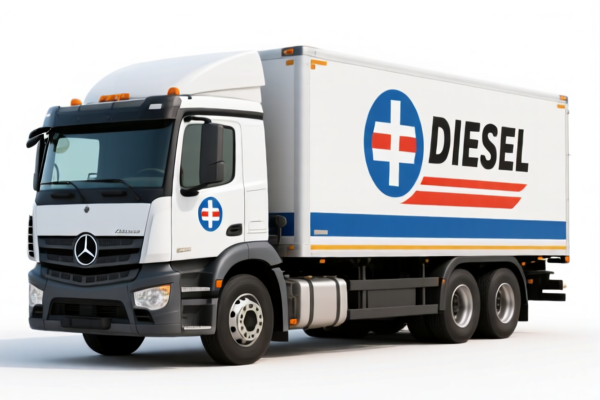
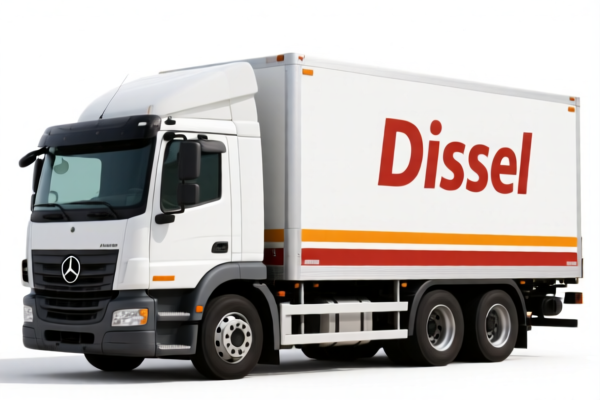
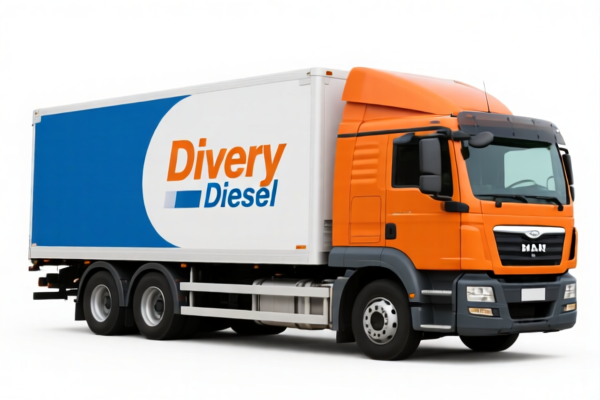
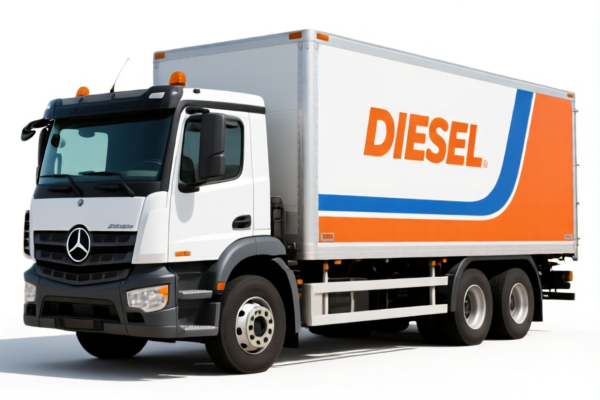
商品图片
AI分析
🚛 Diesel Trucks: HS Code Classification & U.S. Customs Clearance Guide (2026)
🌐 HS Code Reference & Clearance Strategy | 2026 Latest Tariff Analysis | Professional Compliance Guide
📌 I. Product Definition: What Exactly is a "Diesel Truck"?
In international trade, "Diesel Truck" is a broad term that encompasses various types of vehicles. The critical distinction lies in the primary purpose of the vehicle: * Transporting Goods: Vehicles designed primarily for carrying cargo (e.g., semi-trailers, dump trucks, box trucks). * Transporting Persons: Vehicles designed primarily for carrying passengers (e.g., buses, passenger vans with diesel engines).
⚠️ Key Distinction Point:
- If the vehicle is primarily for CARGO → It likely falls under 8704.
- If the vehicle is primarily for PASSENGERS → It likely falls under 8702.
- Engine Type: Both categories require a "Compression-Ignition Internal Combustion Piston Engine" (Diesel).
📦 II. HS Code Classification Details (Based on Provided Data)
Based on the provided dataset, there are two main classification paths for "Diesel Trucks" imported into the U.S.:
| HS Code | Product Description | Application Scenario | Tax Rate (Total) |
|---|---|---|---|
8702.10.61.00 |
Vehicles for transport of persons, with compression-ignition internal combustion piston engine (diesel) | Buses, passenger vans, shuttles primarily designed for people | 37.0% |
8704.21.01.00 |
Vehicles for transport of goods, with compression-ignition internal combustion piston engine (diesel) (Note: Specific weight/subcategory implied) |
Light/Medium-duty cargo trucks, delivery vans primarily for goods | 60.0% |
8704.23.01.00 |
Vehicles for transport of goods, with compression-ignition internal combustion piston engine (diesel) (Note: Specific weight/subcategory implied) |
Heavy-duty trucks, semi-trailers, dump trucks primarily for goods | 60.0% |
🔍 Critical Note from Data:
The dataset lists8704.23.01.00twice with identical summaries and tax rates. This confirms that for Cargo Trucks, the classification consistently points to Section 8704, with a total tax burden of 60.0%.
For Passenger Diesel Vehicles, the classification points to Section 8702, with a total tax burden of 37.0%.
💰 III. 2026 Latest Tariff Rate Breakdown (Detailed Policy Analysis)
✅ Applicable Country: United States (US)
✅ Origin: China (CN) (Implied by "Section 122" and typical 301/IEEPA structure in data)
✅ Effective Time: Current tariffs apply as per data structure
🎯 1. 8702.10.61.00 – Passenger Diesel Vehicles
| Item | Content |
|---|---|
| Base Tariff | 2.0% |
| Section 301 Additional Tariff | 25.0% |
| Section 122 Tariff | 10.0% |
| Total Tax Rate | 37.0% |
| Calculation Basis | CIF Value × 37.0% |
| De Minimis Exemption | ❌ Not Eligible (High duty rates typically exclude Section 321 de minimis) |
📌 Explanation:
- Base 2%: Standard Most Favored Nation (MFN) rate for passenger diesel vehicles.
- 25% (Section 301): Trade war tariffs on Chinese-origin goods.
- 10% (Section 122): Additional national security tariffs (often applied to broader categories).
- Total 37%: A significant cost increase compared to non-Chinese origins or electric vehicles.
🎯 2. 8704.21.01.00 & 8704.23.01.00 – Cargo Diesel Trucks
| Item | Content |
|---|---|
| Base Tariff | 25.0% |
| Section 301 Additional Tariff | 25.0% |
| Section 122 Tariff | 10.0% |
| Total Tax Rate | 60.0% |
| Calculation Basis | CIF Value × 60.0% |
| De Minimis Exemption | ❌ Not Eligible |
📌 Explanation:
- Base 25%: The starting rate for cargo trucks is already much higher than passenger vehicles.
- 25% (Section 301): Same trade war penalty as above.
- 10% (Section 122): Additional national security tariff.
- Total 60%: Extremely High Tariff. This makes importing diesel trucks from China to the U.S. financially challenging without duty mitigation strategies.
🛠️ IV. Customs Clearance Practical Advice (Risk Avoidance Guide)
✅ 1. Essential Documentation Checklist (Non-Negotiable)
| Document | Required | Purpose |
|---|---|---|
| ✅ Vehicle Identification Number (VIN) | ✔️ | Critical for identifying exact make, model, and year. Must match EPA/DOT registration. |
| ✅ Commercial Invoice | ✔️ | Must clearly state: "Diesel Internal Combustion Engine," "New/Used," and CIF value. |
| ✅ Bill of Lading / Air Waybill | ✔️ | Proof of shipment details. |
| ✅ EPA Form 3520-1 | ✔️ | Environmental Protection Agency declaration. Diesel trucks must meet U.S. emission standards. |
| ✅ DOT Safety Compliance Certificate | ✔️ | Department of Transportation certification. Vehicles must meet U.S. safety standards. |
| ✅ Manufacturer’s Declaration | ✔️ | Confirms country of origin (China) and engine type. |
✅ 2. Declaration Tips (Critical Keywords)
🔥 "Be Precise: Engine Type + Purpose = Correct HS Code!"
| Scenario | Correct Declaration | Risk of Misclassification |
|---|---|---|
| Cargo Truck | "Diesel-Powered Cargo Truck, Compression-Ignition, for Goods Transport" | If misdeclared as passenger vehicle → Underpayment of Tariffs (37% vs 60%) → Penalties + Back Duties. |
| Passenger Bus | "Diesel-Powered Passenger Bus, Compression-Ignition, for Person Transport" | If misdeclared as cargo truck → Overpayment (37% vs 60%) or rejection if specs don't match. |
| Hybrid/Dual-Fuel | Specify exact primary fuel source. | If unclear → Customs may assign highest rate or demand lab testing. |
✅ 3. Special Considerations for Diesel Trucks
| Issue | Handling Advice |
|---|---|
| EPA Compliance | Diesel engines imported into the U.S. must be certified by the EPA. Non-compliant engines will be rejected or destroyed. |
| DOT Safety | Vehicles must meet U.S. Federal Motor Vehicle Safety Standards (FMVSS). Modifications for export may not comply. |
| Section 122 (10%) | This tariff is often overlooked. Ensure your broker applies it correctly to avoid underpayment. |
| Origin Labeling | Clearly mark "Made in China" on the vehicle and documentation. Failure to do so can result in seizures. |
🌍 V. Global Market Comparison (2026 Outlook)
| Country/Region | Recommended HS Code | Tariff Impact | Key Requirement |
|---|---|---|---|
| 🇺🇸 USA | 8704.23.01.00 (Cargo) |
60.0% | EPA + DOT Compliance |
| 🇺🇸 USA | 8702.10.61.00 (Passenger) |
37.0% | EPA + DOT Compliance |
| 🇨🇳 China | 8704.23.00.00 |
0% (Export) | Standard Export Documentation |
| 🇪🇺 EU | 8704.23 |
10% (Standard) + Possible Anti-Dumping | Euro 6 Emission Standard |
📌 Conclusion:
- U.S. Market is the Most Expensive for Chinese diesel trucks due to the combination of Base Tariff + Section 301 + Section 122.
- Total Cost Increase: Up to 60% of the CIF value.
- Recommendation: Consider sourcing from non-China origins (e.g., Southeast Asia, Mexico) if available, to mitigate 25% Section 301 tariffs.
📌 VI. Common Mistakes & Pitfalls (Lessons Learned)
❌ Mistake 1: Declaring a Cargo Truck as a Passenger Van to save 23% in tariffs.
👉 Consequence: Customs audit reveals discrepancy → Seizure, Heavy Fines, and Loss of Import Privileges.
❌ Mistake 2: Ignoring EPA/DOT Certification.
👉 Consequence: Goods held at port for 90+ days, then returned or destroyed at importer's expense.
❌ Mistake 3: Not specifying "Compression-Ignition" in the description.
👉 Consequence: Ambiguity leads to classification dispute → Potential higher duty or delay.
❌ Mistake 4: Assuming De Minimis (Section 321) applies.
👉 Consequence: Diesel trucks are high-value and high-duty. Section 321 does not apply to goods subject to Section 301/122 duties.
✅ Correct Approach:
"New Diesel Cargo Truck, Model XYZ, VIN: 1HGCM82633A004352, EPA & DOT Compliant, Country of Origin: China"
🎯 VII. Conclusion: Strategic Sourcing for Diesel Trucks
🎯 Key Takeaways:
🔹 Cargo Trucks: Total Duty = 60% (25% Base + 25% 301 + 10% 122).
🔹 Passenger Diesel Vehicles: Total Duty = 37% (2% Base + 25% 301 + 10% 122).
🔹 Compliance is King: EPA and DOT certifications are mandatory. No shortcuts.
🔹 Cost Optimization: Explore alternative origins to avoid Section 301 tariffs.
📌 Pro Tip:
If you are importing used diesel trucks, additional restrictions may apply (EPA rules for used vehicles are stricter). Ensure the vehicle is not older than 11 model years for most personal import exemptions, but commercial imports may differ. Always consult a licensed customs broker before shipping.
📣 Immediate Action Required:
📞 Contact a Certified Customs Broker to verify EPA/DOT compliance.
🚀 Apply for an Importer Security Filing (ISF) 24 hours before loading.
💡 Budget for 60% duty on cargo trucks to ensure accurate landed cost calculations.
✨ Professional Clearance Starts with Accurate Classification!
💼 Your Bottom Line Depends on Precise Tariff Management!
用户评价
关于 HS 编码归类
协调制度(HS)是由世界海关组织(WCO)制定的国际贸易商品分类标准。全球 200 多个国家采用 HS 系统作为海关关税、贸易统计和进出口监管的基础。
每个 HS 编码遵循以下层级结构:
- 章(2 位)——商品大类(例如:第 84 章:机器和机械设备)
- 品目(4 位)——章内的更具体分类
- 子目(6 位)——国际通用细分,所有 WCO 成员国统一使用
- 本国细分(8-10 位)——各国自行扩展的细分编码,如美国 HTSUS 10 位编码
正确的 HS 编码归类对于顺利通关、准确缴纳关税和遵守贸易法规至关重要。错误归类可能导致海关延误、多缴关税或罚款。
从CN进口到US时,适用的关税税率可能包括:
- 最惠国(MFN)税率——适用于 WTO 成员国的标准关税税率
- 普通税率——适用于无贸易协定国家
- 贸易救济关税——附加关税,如 301 条款(反倾销)、232 条款(国家安全)或反补贴税
本页内容仅供参考。如需正式归类,请咨询当地海关或持牌报关代理。