dispensing machine
CN → US| HS编码 | 关税税率 | 原产国 | 目的国 | 文档 |
|---|---|---|---|---|
| 8476290000 | 35.0% | CN | US | 官方文档 |
| 8476890000 | 17.5% | CN | US | 官方文档 |
| 8543709860 | 37.6% | CN | US | 官方文档 |
| 8543706000 | 35.0% | CN | US | 官方文档 |
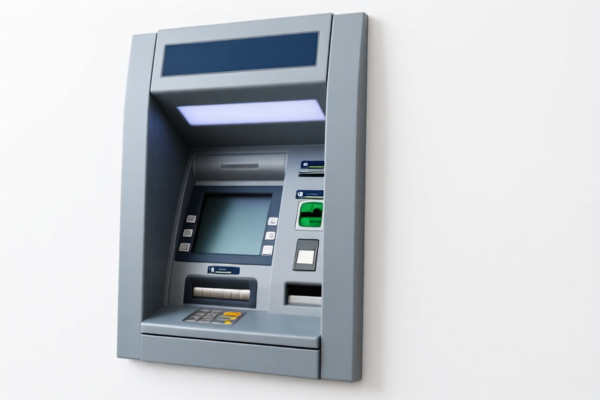
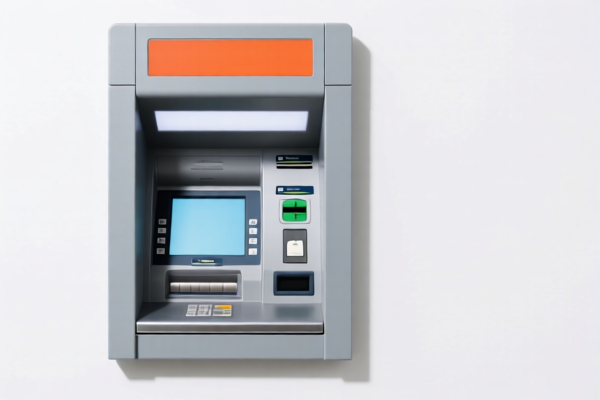
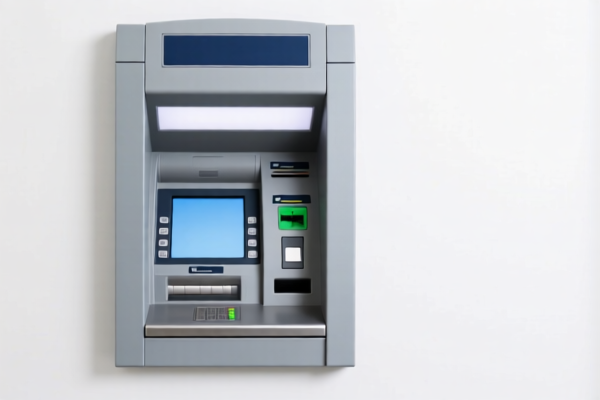
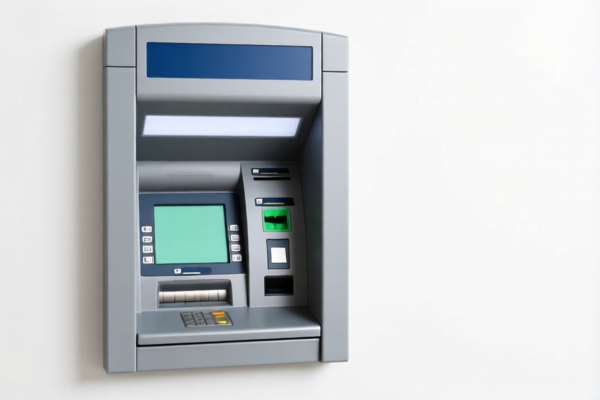
商品图片
AI分析
🏪 Dispensing Machines (Vending Machines)
🌐 HS Code Reference & Customs Clearance Guide | 2026 Latest Tariff Analysis | Professional通关 Strategy
📌 一、Product Definition & Classification: What Exactly is a "Dispensing Machine"?
In international trade, a "Dispensing Machine" (commonly referred to as a Vending Machine) is an electromechanical device that automatically dispenses a product after the user makes a selection and pays the required amount. These machines are categorized based on their primary function, internal structure, and specific application.
The core challenge in classification lies in determining whether the machine is viewed primarily as a mechanical vending device (Heading 8476) or as an electrically controlled appliance/device (Heading 8543). This distinction drastically affects the tariff rate.
⚠️ Key Classification Logic:
- If the machine’s primary function is mechanical dispensing (even if electronically controlled), it often falls under Chapter 84.
- If the machine is considered an independent electrical appliance with significant control modules, it may fall under Chapter 85.
- Note: The specific HS code chosen directly impacts the Total Tax Rate due to different Base Tariffs and Section 301/122 Additional Duties.
📦 二、HS Code Classification Details (2026 Latest Tariff Authority Comparison)
Based on the provided data for Dispensing Machines (Auto Vending Machines), here are the four possible classifications with their tax implications:
| HS Code | Product Description & Summary | Applicable Scenario | Total Tax Rate |
|---|---|---|---|
8476.29.00.00 |
Auto Vending Machine: Falls under "Other" residual category. Function aligns with auto beverage sales. | Generic vending machines for beverages/snacks where specific subheadings don’t apply. | 35.0% |
8476.89.00.00 |
Auto Vending Machine: Name and classification explanation match perfectly. Function matches. | Standard vending machines where the name and function are explicitly aligned with this residual category. | 17.5% |
8543.70.98.60 |
Auto Vending Machine: Independent function machine/device. Falls under "Other" residual category. | Machines treated as independent mechanical/electrical apparatus with significant independent functionality. | 37.6% |
8543.70.60.00 |
Auto Vending Machine: Independent electrical appliance/device. Includes control module. Function matches. | Vending machines with complex control systems, classified as electrical apparatus with control modules. | 35.0% |
🔍 Critical Observation:
-8476.89.00.00offers the lowest tax burden (17.5%) among the options, provided the description matches the classification explanation perfectly.
-8543.70.98.60is the most expensive (37.6%) due to the 2.6% Base Tariff added to the additional duties.
- The choice depends heavily on how the control system and primary function are documented in the commercial invoice and product specifications.
💰 三、2026 Latest Tariff Rate Breakdown (Including Additional Taxes)
✅ Applicable Country: United States (US)
✅ Country of Origin: China (CN)
✅ Effective Date: Current trade policies (Section 301 & 122)
🎯 1. 8476.29.00.00 —— Auto Vending Machine (Residual Category)
| Item | Detail |
|---|---|
| Base Tariff | 0.0% |
| Section 301 Additional Duty | +25.0% |
| Section 122 Duty | +10.0% |
| Total Tax Rate | 35.0% |
| Tax Calculation | CIF Value × 35% |
| De Minimis Exemption | ❌ Not Available (High risk of duty) |
| Legal Basis Path | HTSUS:8476.29.00 → Section 301 Footnote → Section 122 Directive |
📌 Explanation:
- This classification assumes the machine is a "residual" category under Heading 8476.
- Base rate is 0%, but the 35% additional duty makes it costly.
🎯 2. 8476.89.00.00 —— Auto Vending Machine (Perfect Match)
| Item | Detail |
|---|---|
| Base Tariff | 0.0% |
| Section 301 Additional Duty | +7.5% |
| Section 122 Duty | +10.0% |
| Total Tax Rate | 17.5% |
| Tax Calculation | CIF Value × 17.5% |
| De Minimis Exemption | ❌ Not Available |
| Legal Basis Path | HTSUS:8476.89.00 → Section 301 Footnote → Section 122 Directive |
📌 Why is this the best option?
- Lower Section 301 Duty (7.5% vs 25%): This specific subheading benefits from a reduced additional tariff rate compared to other residual categories.
- Total Cost Saving: Saves 17.5% in total tax compared to8476.29.00.00and8543.70.60.00.
- Recommendation: Strive to classify under this code if the product description supports it.
🎯 3. 8543.70.98.60 —— Auto Vending Machine (Independent Device)
| Item | Detail |
|---|---|
| Base Tariff | 2.6% |
| Section 301 Additional Duty | +25.0% |
| Section 122 Duty | +10.0% |
| Total Tax Rate | 37.6% |
| Tax Calculation | CIF Value × 37.6% |
| De Minimis Exemption | ❌ Not Available |
| Legal Basis Path | HTSUS:8543.70.98.60 → Section 301 Footnote → Section 122 Directive |
📌 Warning:
- This is the most expensive classification.
- The 2.6% Base Tariff adds to the burden, and the 25% Section 301 duty is at the maximum rate.
- Avoid this unless the machine is legally defined as an "independent electrical device" distinct from a vending machine.
🎯 4. 8543.70.60.00 —— Auto Vending Machine (Electrical Appliance with Control)
| Item | Detail |
|---|---|
| Base Tariff | 0.0% |
| Section 301 Additional Duty | +25.0% |
| > Section 122 Duty | +10.0% |
| Total Tax Rate | 35.0% |
| Tax Calculation | CIF Value × 35.0% |
| De Minimis Exemption | ❌ Not Available |
| Legal Basis Path | HTSUS:8543.70.60.00 → Section 301 Footnote → Section 122 Directive |
📌 Note:
- Same total rate as8476.29.00.00.
- Classifying as an "electrical appliance" does not offer a tax advantage over the mechanical "vending machine" residual category in this specific scenario.
🛠️ 四、Customs Clearance Practical Advice (Pitfall Avoidance Guide)
✅ 1. Documentation Checklist (Mandatory)
| Document | Required | Notes |
|---|---|---|
| ✅ Product Specification Sheet | ✔️ | Must detail dimensions, voltage, power, dispensing mechanism type. |
| ✅ Control System Diagram | ✔️ | Critical for determining if it falls under 8476 (mechanical) or 8543 (electrical). |
| ✅ Product Photos (with Label) | ✔️ | Clear view of model number, brand, input/output specs. |
| ✅ Commercial Invoice | ✔️ | Must clearly state "Auto Vending Machine" and intended use. |
| ✅ Packing List | ✔️ | List all components to avoid "missing parts" queries. |
| ✅ Certificate of Origin (CO) | ✔️ | To prove origin (China) and apply correct additional duties. |
✅ 2. Declaration Strategy (Key Tips)
🔥 “Match Description to Code, Don’t Overcomplicate!”
| Scenario | Recommended HS Code | Reason |
|---|---|---|
| Standard Vending Machine (Beverages/Snacks) | 8476.89.00.00 |
Lowest Tax (17.5%). Name and function match perfectly. |
| Complex Machine with Advanced AI Control | 8543.70.60.00 |
Only if legally considered an "independent electrical apparatus." Higher tax (35%). |
| Residual Mechanical Vending Machine | 8476.29.00.00 |
If it doesn’t fit 8476.89, but still a vending machine. Higher tax (35%). |
| Highly Electronic Independent Device | 8543.70.98.60 |
Avoid unless necessary. Highest tax (37.6%). |
📌 Critical Rule:
- Do not artificially classify a simple vending machine as an "electrical appliance" (8543) to avoid Chapter 84 scrutiny unless the control system is the primary defining feature.
- However, classifying under8476.89.00.00is financially superior. Ensure your product description aligns with "Auto Vending Machine" and not "Electronic Control Panel."
✅ 3. Special Situations
| Situation | Handling Advice |
|---|---|
| OEM Custom Vending Machines | Provide client order + design drawings. Declare as "Vending Machine for [Specific Product]." |
| Machine with Touch Screen | Still 8476.89.00.00 if primary function is vending. Do not classify as "Touch Screen Device." |
| Machine for Non-US Origin | If shipped from Vietnam/Malaysia, IEEPA Exemptions may apply, reducing taxes significantly. |
| Mixed Shipments (Vending Machine + Parts) | Declare main item as 8476.89.00.00. Declare parts separately if they have distinct HS codes. |
🌍 五、Global Market Comparison (2026 Update)
| Country/Region | Recommended HS Code | Tariff (China Origin) | Certification Requirements | Notes |
|---|---|---|---|---|
| 🇺🇸 USA | 8476.89.00.00 |
17.5% (Best Option) | FCC, UL, CSA | High duty environment. Avoid 8543 if possible. |
| 🇨🇳 China | 8476.89.00.00 |
5% (Import) | CCC (if applicable) | Lower tariff than US. |
| 🇪🇺 EU | 8476.29.00.00 |
~3-5% (Variable) | CE, RoHS | No Section 301/122 duties. |
| 🇯🇵 Japan | 8476.29.00.00 |
3-5% | PSE, METI | No additional punitive duties. |
📌 Conclusion:
- USA is the most complex market due to Section 301 and 122 duties.
- Strategic Goal: Achieve classification under8476.89.00.00to minimize the 35% total tax to 17.5%.
📌 六、Common Mistakes & Pitfalls (Lessons Learned)
❌ Mistake 1: Classifying a simple vending machine as 8543.70.98.60
👉 Consequence: 37.6% Tax instead of 17.5%. Unnecessary cost increase.
❌ Mistake 2: Describing the machine as "Electronic Control Device" instead of "Vending Machine"
👉 Consequence: Risk of being assigned 8476.29.00.00 (35%) or 8543.70.60.00 (35%) if not properly justified as 8476.89.00.00.
❌ Mistake 3: Ignoring Section 122 Duties
👉 Consequence: All these HS codes carry a 10% Section 122 duty. Failing to account for this leads to underpayment and penalties.
❌ Mistake 4: Splitting "Vending Machine" and "Power Supply"
👉 Consequence: Parts may be classified separately, potentially leading to higher combined duties or clearance delays.
✅ Correct Approach:
"Automatic Vending Machine for [Product Name], Model XYZ, 120V, AC/DC, FCC Certified, with Internal Control Module"
HS Code:8476.89.00.00
🎯 七、Conclusion: Optimize Classification, Maximize Profit!
🎯 Key Takeaway:
🔹 “Choose
8476.89.00.00if possible – it’s the cheapest path (17.5%).”
🔹 “Avoid8543.70.98.60– it’s the most expensive (37.6%).”
🔹 “Always include Section 122 (10%) in your cost calculation.”
📌 Pro Tip:
If your vending machines are shipped from a third country (e.g., Vietnam, Mexico, Malaysia) and meet Rules of Origin, you may qualify for IEEPA Exemptions, potentially reducing taxes to 0-5%.
✅ Action:
1. Contact a customs broker.
2. Provide product photos and specs.
3. Request an Advance Ruling if unsure about classification.
4. Optimize supply chain to leverage exemptions.
📣 Immediate Action:
📞 Engage a Professional Customs Broker
📄 Prepare Detailed Product Specifications
🚀 Classify Under8476.89.00.00to Save 17.5% in Taxes!
✨ Smart Classification Starts with Precision!
💼 Every Percent Counts in Global Trade!
用户评价
关于 HS 编码归类
协调制度(HS)是由世界海关组织(WCO)制定的国际贸易商品分类标准。全球 200 多个国家采用 HS 系统作为海关关税、贸易统计和进出口监管的基础。
每个 HS 编码遵循以下层级结构:
- 章(2 位)——商品大类(例如:第 84 章:机器和机械设备)
- 品目(4 位)——章内的更具体分类
- 子目(6 位)——国际通用细分,所有 WCO 成员国统一使用
- 本国细分(8-10 位)——各国自行扩展的细分编码,如美国 HTSUS 10 位编码
正确的 HS 编码归类对于顺利通关、准确缴纳关税和遵守贸易法规至关重要。错误归类可能导致海关延误、多缴关税或罚款。
从CN进口到US时,适用的关税税率可能包括:
- 最惠国(MFN)税率——适用于 WTO 成员国的标准关税税率
- 普通税率——适用于无贸易协定国家
- 贸易救济关税——附加关税,如 301 条款(反倾销)、232 条款(国家安全)或反补贴税
本页内容仅供参考。如需正式归类,请咨询当地海关或持牌报关代理。