doped silicon wafer specific thickness
CN → US| HS编码 | 关税税率 | 原产国 | 目的国 | 文档 |
|---|---|---|---|---|
| 3818000020 | 60.0% | CN | US | 官方文档 |
| 3818000030 | 60.0% | CN | US | 官方文档 |
商品图片
AI分析
🌌 Semiconductors in Disc/Wafer Form: Doped Polycrystalline Silicon & Silicon Carbide
🌐 HS Code Reference & Customs Clearance Guide | 2026 Latest Tariff Analysis | Professional Entry Strategy 📌 I. Product Definition & Classification: What Exactly Are "Doped Wafers"?
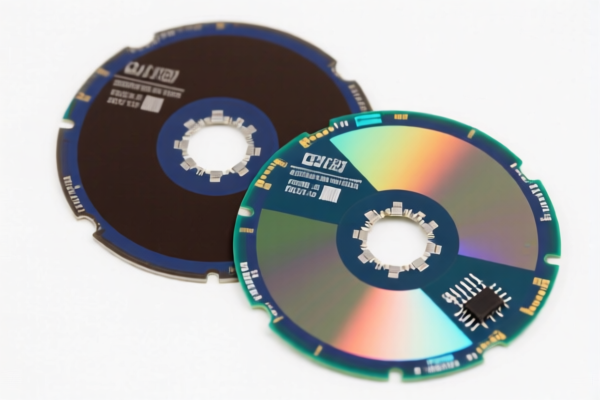
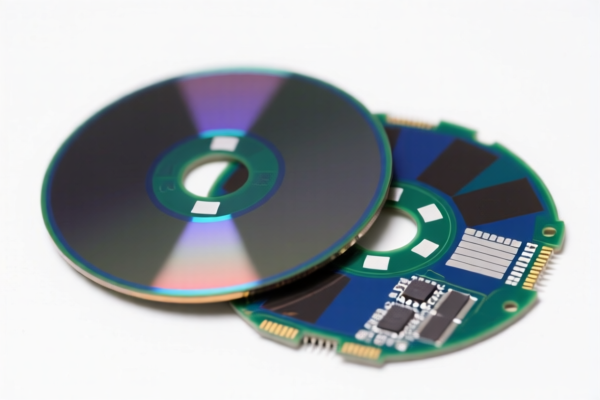
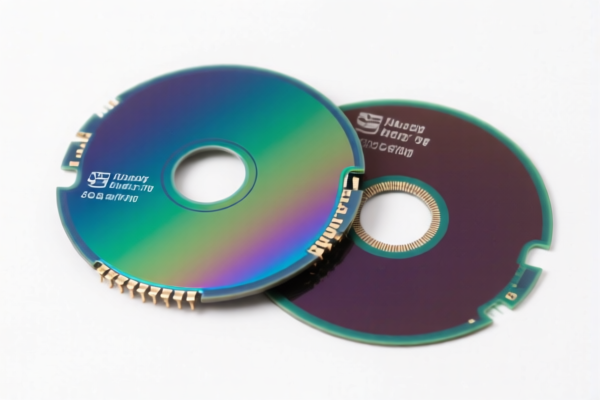
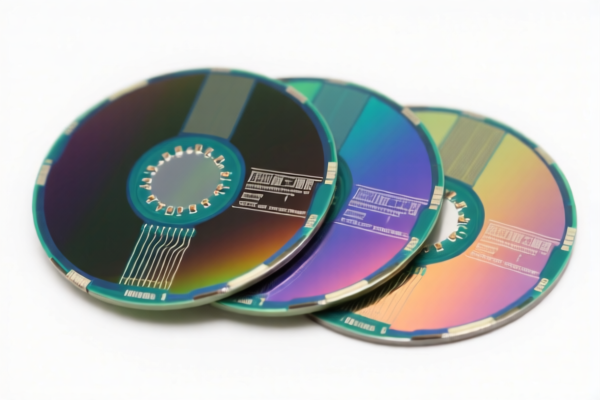
In international trade, doped silicon wafers and silicon carbide (SiC) wafers are not treated as standard raw materials but as specifically prepared articles for electronics use. The key distinction lies in their shape (discs, wafers) and purpose (electronics).
1. Polycrystalline Silicon Wafers, Doped * Definition: Discs or wafers made of polycrystalline silicon that have been chemically doped (e.g., with boron, phosphorus, or arsenic) to modify their electrical properties for electronic applications. * Key Feature: Must be in the form of discs, wafers, or similar shapes. If sold as bulk powder or ingots, they do not belong here.
2. Silicon Carbide Wafers, Doped * Definition: Discs or wafers made of silicon carbide (SiC) that have been doped for electronic use (often for high-power, high-frequency devices). * Key Feature: Also restricted to the form of discs, wafers, or similar forms.
⚠️ Critical Distinction Point: * If the product is a bare wafer/disc used in electronics →归入 3818.00.00 * If the product is a finished circuit or semiconductor device → 归入 Chapter 85 (e.g., 8541) * If the product is undoped or not in wafer/disc form → 归入 Chapter 38 (other codes) or Chapter 28/38 (raw materials)
📦 II. HS Code Classification Details (2026 Latest Authoritative Reference)
| HS Code | Product Description | Application Scenario | Form Required |
|---|---|---|---|
3818.00.00.20 |
Polycrystalline silicon wafers, doped | Semiconductor manufacturing, solar cells, electronic components | ✅ Discs/Wafers |
3818.00.00.30 |
Silicon carbide wafers, doped | High-power electronics, RF devices, EV inverters | ✅ Discs/Wafers |
🔍 Important Note: * Both codes require the product to be "in the form of discs, wafers or similar forms" AND "doped for use in electronics". * If the wafer is undoped, it may fall under a different subheading (e.g., 3818.00.00.10 for monocrystalline silicon, depending on specific national tariff schedules). * Polycrystalline ≠ Monocrystalline. Ensure your documentation clearly states "Polycrystalline" for
.20and "Silicon Carbide" for.30.
💰 III. 2026 Latest Tariff Rate Details (High Tariff Warning!)
✅ Applicable Country: United States (US)
✅ Origin: China (CN)
✅ Effective Date: From November 10, 2025 onwards (including subsequent imports)
🎯 1. 3818.00.00.20 —— Polycrystalline Silicon Wafers, Doped
| Item | Content |
|---|---|
| Base Tariff | 0.0% (ad valorem) |
| Additional Tariff (Section 301 / IEEPA) | +50.0% |
| Total Tax Rate | 50.0% |
| Tax Calculation | CIF Value × 50.0% |
| De Minimis Eligibility | ❌ Not Eligible (High-value industrial goods generally excluded) |
| Legal Basis Path | USITC:3818.00.00.20 → Section 301: 9903.88.01 → IEEPA: 9903.01.24/25 |
📌 Explanation: * The 0% base tariff might mislead you into thinking it's cheap. * However, due to ongoing US trade restrictions on Chinese critical materials and semiconductors, an additional 50% tariff is applied. * Total landed cost impact: 50%. This is a very high tariff, significantly affecting competitiveness.
🎯 2. 3818.00.00.30 —— Silicon Carbide (SiC) Wafers, Doped
| Item | Content |
|---|---|
| Base Tariff | 0.0% (ad valorem) |
| Additional Tariff (Section 301 / IEEPA) | +50.0% |
| Total Tax Rate | 50.0% |
| Tax Calculation | CIF Value × 50.0% |
| De Minimis Eligibility | ❌ Not Eligible |
| Legal Basis Path | USITC:3818.00.00.30 → Section 301: 9903.88.01 → IEEPA: 9903.01.24/25 |
📌 Explanation: * SiC is a strategic material for next-generation power electronics (EVs, 5G, renewable energy). * Like polycrystalline silicon, it faces a flat 50% additional tariff from China. * No offsetting base duty, so the full 50% is payable.
🛠️ IV. Customs Clearance Practical Advice (Avoiding Pitfalls)
✅ 1. Preparation Checklist (Non-negotiable)
| Document | Required? | Notes |
|---|---|---|
| ✅ Product Specification Sheet | ✔️ | Must explicitly state: "Polycrystalline" OR "Silicon Carbide", "Doped", and "Wafer/Disc Form". |
| ✅ Chemical Composition Report | ✔️ | List dopants (e.g., Boron, Phosphorus) and concentration levels. |
| ✅ Product Photos | ✔️ | Show wafers/discs, packaging, and labels. |
| ✅ Commercial Invoice | ✔️ | Description must match HS Code: "Doped Polycrystalline Silicon Wafer" or "Doped SiC Wafer". |
| ✅ Packing List | ✔️ | Detail net/gross weight, dimensions, and quantity. |
| ✅ Certificate of Origin (CO) | ✔️ | If origin is not China, check for potential tariff exemptions. |
✅ 2. Declaration Tips (Key Mnemonics)
🔥 "Form is King: Disc/Wafer Only! Doped for Electronics!"
| Scenario | Correct Declaration | Wrong Practice |
|---|---|---|
| Doped Polycrystalline Silicon Wafer | 3818.00.00.20 |
Misdeclare as "Silicon Ingots" → Different Tariff |
| Doped SiC Wafer | 3818.00.00.30 |
Misdeclare as "Ceramics" → Delay/Reject |
| Undoped Wafer | NOT .20 or .30 |
Must find correct subheading (e.g., for monocrystalline) |
| Finished Semiconductor Device | 8541.xxxx |
Do NOT use 3818 codes |
✅ 3. Special Circumstances
| Situation | Handling Advice |
|---|---|
| Origin is NOT China | If shipped from Vietnam, Thailand, etc., IEEPA/Section 301 tariffs may NOT apply. Verify country of origin carefully! |
| Mixed Shipment | If silicon wafers and SiC wafers are in one box, declare separately with clear quantity breakdowns. |
| Sample Shipment | Even samples are subject to full tariff rules if declared as commercial goods. Use "Sample" only if truly non-commercial and eligible for exemption (rare for high-tariff items). |
🌍 V. Global Market Comparison (2026 Latest)
| Country/Region | Recommended HS Code | Tariff Rate (China Origin) | Certification | Notes |
|---|---|---|---|---|
| 🇺🇸 USA | 3818.00.00.20 / .30 |
50.0% | None specific, but strict origin enforcement | Highest tariff environment |
| 🇨🇳 China | 3818.00.00.20 / .30 |
~0-10% (Check current schedule) | None | Standard import duties |
| 🇪🇺 EU | 3818.00.00 |
Varies (often 0-4%) | REACH Compliance | No additional punitive tariffs |
| 🇬🇧 UK | 3818.00.00 |
Varies | UKCA | Post-Brexit rules apply |
| 🇯🇵 Japan | 3818.00.00 |
0-5% | None | Low tariff barrier |
📌 Conclusion: * USA is the only major market imposing a 50% additional tariff on these specific Chinese-origin electronic materials. * Supply Chain Strategy: Consider sourcing from non-China origins to avoid the 50% tariff. If origin is China, the cost must be absorbed or passed on.
📌 VI. Common Errors & Pitfalls (Lessons Learned)
❌ Error 1: Declaring "Silicon Wafers" without specifying "Polycrystalline" or "Doped" 👉 Consequence: Customs may reject or reclassify, leading to delays and potential fines.
❌ Error 2: Claiming "Wafer" when the product is a "Bulk Powder" 👉 Consequence: Wrong HS Code → Rejection. Powder is not a "wafer/disc".
❌ Error 3: Ignoring the "Doped for Electronics" requirement 👉 Consequence: If not doped for electronics, it may fall under chemical substances (Chapter 28/38 other codes) with different tax implications.
✅ Correct Practice:
"Doped Polycrystalline Silicon Wafer, 100mm diameter, Boron-doped, for semiconductor device fabrication, HS Code 3818.00.00.20"
🎯 VII. Conclusion: Professional Declaration, Risk Mitigation!
🎯 Remember the Rule:
🔹 "Wafer/Form Matters: Only Discs/Wafers qualify for 3818.20/.30"
🔹 "China Origin = 50% Tariff in USA: Plan your supply chain accordingly!"
🔹 "Specify 'Polycrystalline' vs. 'SiC': One digit difference can change everything."
📌 Pro Tip:
If your wafers are not originating from China (e.g., from Malaysia, South Korea, or the US), the 50% additional tariff does NOT apply. Ensure your Certificate of Origin clearly states the country of origin to benefit from lower or zero duties.
🚀 Recommendation: 1. Verify Origin: Is it truly China? 2. Check Form: Is it definitely a wafer/disc? 3. Confirm Purpose: Is it for electronics? 4. Declare Accurately: Use the exact HS Codes provided.
📣 Immediate Action:
📞 Consult with a licensed customs broker.
📄 Prepare detailed product specs.
🌍 Explore supply chain diversification if US market is critical.
✨ Professional Clearance Starts with Accurate Classification!
💼 Every Percentage Point of Tariff Impacts Your Profit!
用户评价
关于 HS 编码归类
协调制度(HS)是由世界海关组织(WCO)制定的国际贸易商品分类标准。全球 200 多个国家采用 HS 系统作为海关关税、贸易统计和进出口监管的基础。
每个 HS 编码遵循以下层级结构:
- 章(2 位)——商品大类(例如:第 84 章:机器和机械设备)
- 品目(4 位)——章内的更具体分类
- 子目(6 位)——国际通用细分,所有 WCO 成员国统一使用
- 本国细分(8-10 位)——各国自行扩展的细分编码,如美国 HTSUS 10 位编码
正确的 HS 编码归类对于顺利通关、准确缴纳关税和遵守贸易法规至关重要。错误归类可能导致海关延误、多缴关税或罚款。
从CN进口到US时,适用的关税税率可能包括:
- 最惠国(MFN)税率——适用于 WTO 成员国的标准关税税率
- 普通税率——适用于无贸易协定国家
- 贸易救济关税——附加关税,如 301 条款(反倾销)、232 条款(国家安全)或反补贴税
本页内容仅供参考。如需正式归类,请咨询当地海关或持牌报关代理。