doped silicon wafers for electronic components
CN → US| HS编码 | 关税税率 | 原产国 | 目的国 | 文档 |
|---|---|---|---|---|
| 3818000020 | 60.0% | CN | US | 官方文档 |
| 2804691000 | 15.3% | CN | US | 官方文档 |
| 2804610000 | 60.0% | CN | US | 官方文档 |
| 8541100040 | 10.0% | CN | US | 官方文档 |
| 8541590040 | 10.0% | CN | US | 官方文档 |
商品图片
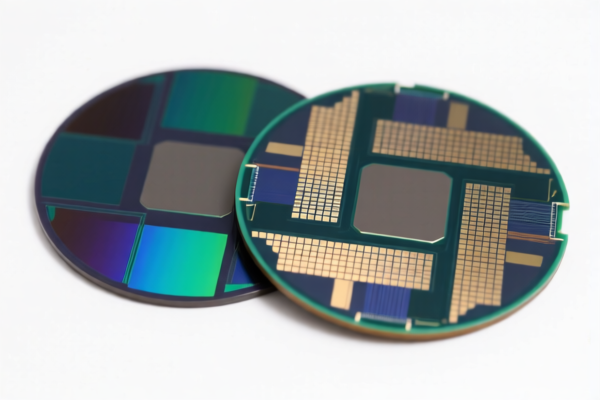
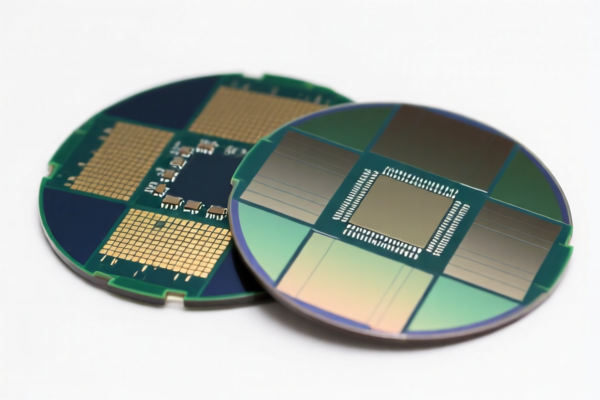
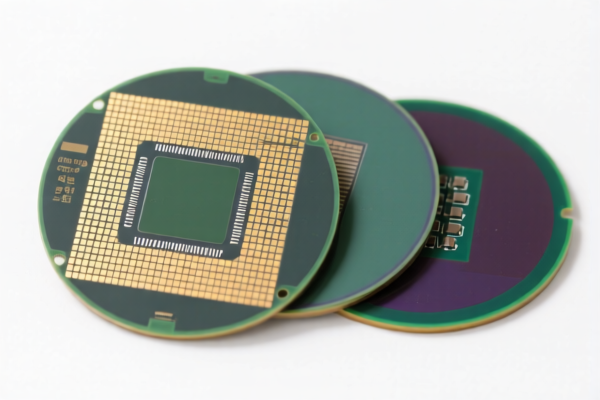
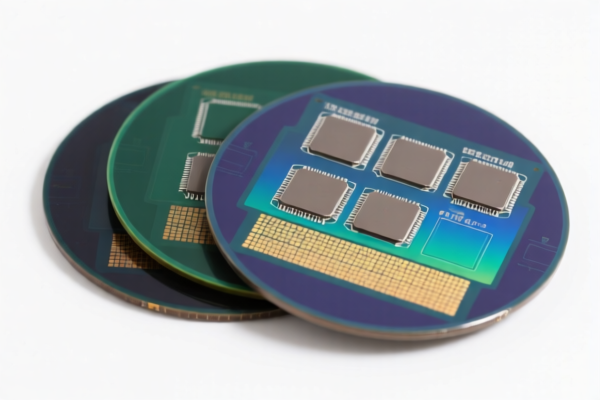
AI分析
⚛️ Doped Silicon Wafers for Electronic Components (Power Devices)
🌐 HS Code Reference & Customs Clearance Guide | 2026 Latest Tariff Analysis | Professional Clearance Strategy
📌 I. Product Definition & Classification: Do You Really Understand "Doped Silicon Wafers"?
Doped silicon wafers are the foundational material for semiconductor manufacturing, particularly for power devices (such as diodes, thyristors, and power transistors). In international trade, these products are classified differently depending on their state of processing, purity, and end-use.
Key Distinctions: * Raw Material (Silicon): If the wafer is considered primarily as a chemical element or basic silicon material (high purity, unprocessed structure), it may fall under Chapter 28. * Semiconductor Device/Component: If the wafer is processed, doped, and shaped specifically for electronic circuits (diodes, transistors), it falls under Chapter 85. * Preparation/Kit: If it is a specific substrate for further industrial processing, it may fall under Chapter 38.
⚠️ Critical Classification Point:
- If the product is viewed as basic silicon material (Chapter 28): High tariffs (60%) due to trade restrictions.
- If the product is viewed as processed electronic material (Chapter 38): Very high tariffs (60%) due to specific trade clauses.
- If the product is viewed as unmounted semiconductor devices (Chapter 85): Lower tariffs (10%), representing the component itself.
📦 II. HS Code Classification Details (2026 Latest Tariff Authority Match)
| HS Code | Product Description | Application Scenario | Tax Rate (Total) |
|---|---|---|---|
3818.00.00.20 |
Silicon Wafers (Doped, for Power Devices): Material is Silicon, Form is Polysilicon Sheets, Usage is Electronic Industry. | Substrate material, industrial silicon wafers. | 60.0% |
2804.69.10.00 |
Silicon Wafers (Doped, for Power Devices): Material is Silicon, Form is Wafer, Purity/Usage falls under "Other". | High-purity silicon elements, basic raw material classification. | 15.3% |
2804.61.00.00 |
Silicon Wafers (Doped, for Power Devices): Material is Silicon, Form is Silicon Sheets, Logic consistent with Silicon classification. | Basic silicon category, often used for bulk material declarations. | 60.0% |
8541.10.00.40 |
Silicon Wafers (Doped, for Power Devices): Form is Wafer, Usage is Diode-related Semiconductor Devices, Material is Silicon. | Doped wafers used directly in diode manufacturing. | 10.0% |
8541.59.00.40 |
Silicon Wafers (Doped, for Power Devices): Material is Silicon, Form is Wafer, Classified as Unmounted Semiconductor Devices. | Generic unmounted semiconductor components/sub-assemblies. | 10.0% |
🔍 Key Reminder:
- Chapter 28 & 38 Codes (2804,3818) attract 60% tariffs due to the combination of Base Tariff (0-5.3%), Additional Tariff (50%), and Section 301/122 Clause Tariffs (10%).
- Chapter 85 Codes (8541) attract only 10% tariffs. This is the most favorable classification if the wafer can be legally defined as an "unmounted semiconductor device" rather than raw material.
- Code2804.69.10.00offers a middle ground at 15.3%, but only if the product strictly fits the "Other Silicon" category without triggering high additional tariffs.
💰 III. 2026 Latest Tariff Rate Details (Including Surcharges & Policy Add-ons)
✅ Applicable Country: United States (US)
✅ Origin: China (CN)
✅ Effective Time: Current Trade Policy (Section 301 & IEEPA)
🎯 1. 3818.00.00.20 & 2804.61.00.00 —— High-Risk Material Classification
| Item | Content |
|---|---|
| Base Tariff | 0.0% (for 3818) / 0.0% (for 2804.61) |
| Additional Tariff (Section 301) | +50.0% |
| Section 122/IEEPA Surcharge | +10.0% |
| Total Tariff | 60.0% |
| Calculation | CIF Value × 60% |
| De Minimis Exemption | ❌ Not Eligible |
| Legal Basis Path | USITC:3818.00.00.20 → FOOTNOTE:Section 301 → IEEPA:Section 122 |
📌 Explanation:
- These codes are often triggered when customs interprets the product as strategic materials or industrial preparations.
- The 50% additional tariff is a heavy penalty for certain chemical/elemental imports from China.
- The 10% surcharge is applied under specific emergency economic powers.
- Result: A 60% tariff significantly erodes margins. Avoid this classification if possible.
🎯 2. 2804.69.10.00 —— "Other" Silicon Classification
| Item | Content |
|---|---|
| Base Tariff | 5.3% |
| Additional Tariff (Section 301) | 0.0% |
| Section 122/IEEPA Surcharge | +10.0% |
| Total Tariff | 15.3% |
| Calculation | CIF Value × 15.3% |
| De Minimis Exemption | ❌ Not Eligible |
| Legal Basis Path | USITC:2804.69.10.00 → IEEPA:Section 122 |
📌 Note:
- This code assumes the product is not subject to the 50% Section 301 surcharge.
- It is cheaper than the 60% codes but still carries the 10% IEEPA surcharge.
- Requires proof that the silicon is classified under "Other" and not as a specific strategic element subject to higher duties.
🎯 3. 8541.10.00.40 & 8541.59.00.40 —— Semiconductor Device Classification (Lowest Risk)
| Item | Content |
|---|---|
| Base Tariff | 0.0% |
| Additional Tariff (Section 301) | 0.0% |
| Section 122/IEEPA Surcharge | +10.0% |
| Total Tariff | 10.0% |
| Calculation | CIF Value × 10.0% |
| De Minimis Exemption | ❌ Not Eligible |
| Legal Basis Path | USITC:8541.10.00.40 / 8541.59.00.40 → IEEPA:Section 122 |
📌 Advantage:
- These codes treat the wafer as a functional semiconductor component (e.g., diode substrate or unmounted device).
- No 50% additional tariff is applied because Chapter 85 (Electrical Machinery/Equipment) is often exempt from the harshest Section 301 penalties applied to raw materials.
- 10% is the minimum surcharge under current IEEPA rules for many electronics.
- Recommendation: This is the most cost-effective classification if technical specifications allow.
🛠️ IV. Customs Clearance Practical Advice (Combat Pitfalls Guide)
✅ 1. Documentation Checklist (Essential)
| Document | Mandatory | Description |
|---|---|---|
| ✅ Product Technical Data Sheet | ✔️ | Must specify: Doping type (N-type/P-type), Resistivity, Orientation, Thickness, Diameter. |
| ✅ Process Flow Diagram | ✔️ | Prove the wafer is doped and processed (supporting Chapter 85 or 38). |
| ✅ Commercial Invoice | ✔️ | Clearly state: "Doped Silicon Wafers for Power Device Manufacturing," not just "Silicon." |
| ✅ Certificate of Origin | ✔️ | Essential for determining origin-based tariffs. |
| ✅ ** packing List** | ✔️ | Detail quantity, weight, and packaging type. |
| ✅ Third-party Test Report | ✔️ | Purity analysis, doping concentration, defect density. |
✅ 2. Declaration Tips (Key Mantra)
🔥 “Define as Component, Not Raw Material; Avoid the 50% Penalty!”
| Scenario | Correct Declaration | Wrong Approach |
|---|---|---|
| Highly processed, doped wafers for diodes | HS 8541.10.00.40 (10% Tax) |
Declare as "Raw Silicon" → 60% Tax |
| Bulk silicon sheets for industrial prep | HS 3818.00.00.20 (60% Tax) |
Try to misdeclare as electronics → Audit Risk |
| Uncertain "Other" silicon | HS 2804.69.10.00 (15.3% Tax) |
Declare without technical specs → Customs Retains |
| Unmounted semiconductor substrates | HS 8541.59.00.40 (10% Tax) |
Declare as "Chemical Element" → 60% Tax |
⚠️ Warning:
- Do not use vague terms like "Silicon" or "Raw Material" if the product is clearly processed for electronics.
- Use precise technical terms: "Doped Silicon Wafer for Power Semiconductor Devices."
✅ 3. Special Circumstances Handling
| Situation | Advice |
|---|---|
| Doping Type Matters | Provide detailed doping concentration (ppm) to support Chapter 85 classification. |
| Wafer Quality | High-defect wafers might be argued as "raw material" (Chapter 28/38). Ensure high quality. |
| Pre-cut Wafers | If already cut and polished for specific device use, strongly argue for Chapter 85. |
| Customs Audit | Be prepared to show the wafer’s role in the final electronic device (e.g., power module). |
🌍 V. Global Market Comparison (2026 Latest)
| Country/Region | Recommended HS Code | Tariff | Notes |
|---|---|---|---|
| 🇺🇸 USA | 8541.10.00.40 |
10.0% | Best for doped wafers. Avoid 3818/2804 (60%). |
| 🇨🇳 China | 8541.10.00.40 |
Varies | Check current FTA/General Rate. Usually lower than US. |
| 🇪🇺 EU | 8541.10.00.40 |
0-4% | Generally favorable for semiconductor components. |
| 🇯🇵 Japan | 8541.10.00.40 |
0% | Often duty-free for semiconductor materials. |
📌 Conclusion:
- USA is the most critical market due to high tariffs on raw materials.
- Classifying as Semiconductor Device (Chapter 85) is the primary strategy to save 50% in duties.
- Ensure all documentation supports the "functional component" argument.
📌 VI. Common Errors & Pitfalls (Lessons Learned)
❌ Error 1: Declaring "Doped Silicon Wafers" as "Raw Silicon" (HS 2804)
👉 Consequence: 60% tariff due to Section 301 + IEEPA surcharges.
❌ Error 2: Using vague HS codes like "Other Chemical Products"
👉 Consequence: Customs audit, delayed clearance, potential penalties.
❌ Error 3: Ignoring the "Doping" specification
👉 Consequence: Customs may reject Chapter 85 classification and default to Chapter 28/38.
❌ Error 4: Failing to provide technical data sheets
👉 Consequence: Inability to prove the product is a "processed semiconductor," leading to higher tariffs.
✅ Correct Approach:
"N-Type Doped Silicon Wafer, 6-inch, Power Device Grade, Polished, For Diode Manufacturing"
→ HS Code:8541.10.00.40
→ Tariff: 10%
🎯 VII. Conclusion: Precision Classification Saves Costs!
🎯 Remember the Mantra:
🔹 "Doped Wafers for Electronics → Chapter 85 → 10% Tax!"
🔹 "Raw Silicon → Chapter 28/38 → 60% Tax!"
🔹 "One Digit Difference in HS Code, Fifty Percent Difference in Cost!"
📌 Pro Tip:
If your wafers are doped and shaped for specific power devices, always provide technical documentation to support the Chapter 85 classification. This is your best defense against the 60% tariff wall.
📣 Immediate Action:
📞 Consult with a customs broker before shipping.
📄 Prepare technical data sheets highlighting doping and use.
🚀 Apply for Advance Ruling if possible to lock in the 10% tariff rate.
✨ Professional Clearance Starts with Accurate Classification!
💼 Every 1% of tariff saved is 1% of your profit margin protected!
用户评价
关于 HS 编码归类
协调制度(HS)是由世界海关组织(WCO)制定的国际贸易商品分类标准。全球 200 多个国家采用 HS 系统作为海关关税、贸易统计和进出口监管的基础。
每个 HS 编码遵循以下层级结构:
- 章(2 位)——商品大类(例如:第 84 章:机器和机械设备)
- 品目(4 位)——章内的更具体分类
- 子目(6 位)——国际通用细分,所有 WCO 成员国统一使用
- 本国细分(8-10 位)——各国自行扩展的细分编码,如美国 HTSUS 10 位编码
正确的 HS 编码归类对于顺利通关、准确缴纳关税和遵守贸易法规至关重要。错误归类可能导致海关延误、多缴关税或罚款。
从CN进口到US时,适用的关税税率可能包括:
- 最惠国(MFN)税率——适用于 WTO 成员国的标准关税税率
- 普通税率——适用于无贸易协定国家
- 贸易救济关税——附加关税,如 301 条款(反倾销)、232 条款(国家安全)或反补贴税
本页内容仅供参考。如需正式归类,请咨询当地海关或持牌报关代理。