double sided tape
CN → US| HS编码 | 关税税率 | 原产国 | 目的国 | 文档 |
|---|---|---|---|---|
| 5603110070 | 35.0% | CN | US | 官方文档 |
| 5603910090 | 35.0% | CN | US | 官方文档 |
| 3919905060 | 40.8% | CN | US | 官方文档 |
| 3926909989 | 22.8% | CN | US | 官方文档 |
| 3919102055 | 40.8% | CN | US | 官方文档 |
商品图片
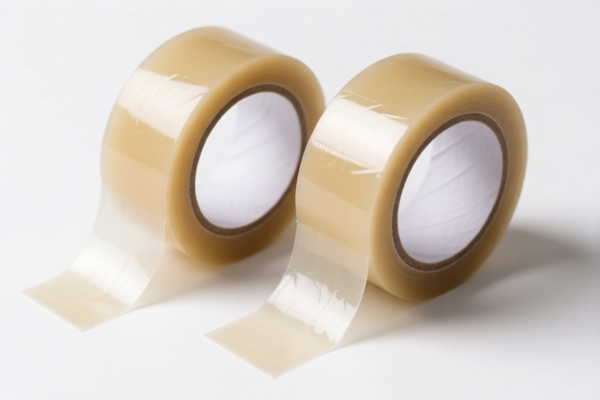
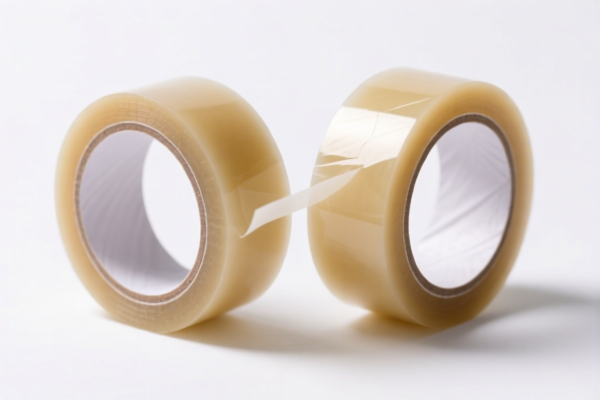
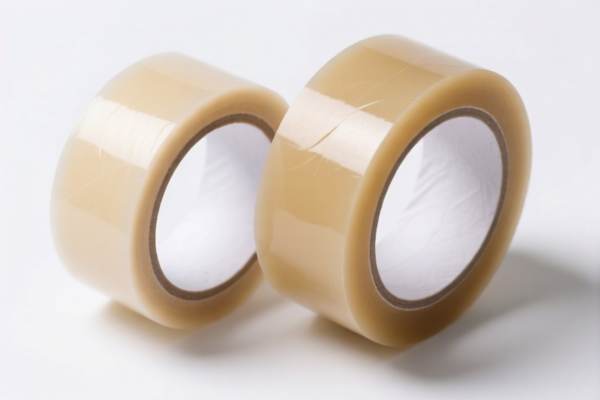
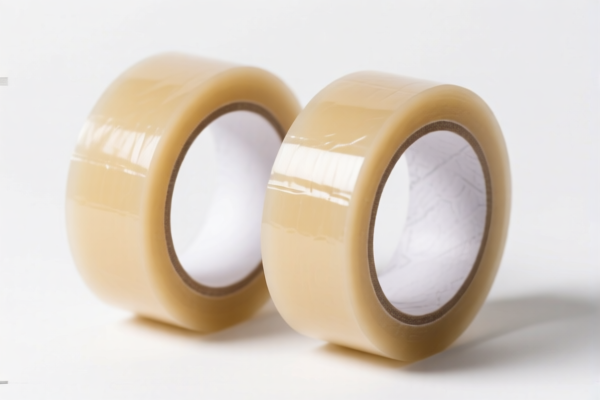
AI分析
🎗️ Double Sided Tape (Adhesive Tapes)
🌐 HS Code Classification & Customs Clearance Guide | 2026 Tariff Analysis | Strategic Trade Compliance
📌 One Product, Five HS Codes: Which One Fits Your Tape?
Double-sided tape is a ubiquitous industrial and consumer product. However, in international trade, its classification is highly sensitive to its基材 (base material) and physical form. Misclassification can lead to severe penalty risks or excessive tariff burdens (up to 40.8%).
⚠️ Critical Distinction Point:
- Is the base Non-woven fabric or Film? → Look at Chapter 56.
- Is the base Plastic/Resin in a flat, self-adhesive form? → Look at Chapter 39.
- Is it a generic plastic article without specific adhesive properties? → Look at 3926.
📦 II. Detailed HS Code Classification (2026 Latest Tariff Schedule)
Based on the core material and structure of the double-sided tape, here are the five primary classification paths.
| HS Code | Product Description & Classification Logic | Base Material Type | Typical Application |
|---|---|---|---|
5603.11.00.70 |
Double-sided tape based on non-woven fabric or related film material | Non-woven / Related Film | Heavy-duty industrial bonding, automotive interior lining, packaging. |
5603.91.00.90 |
Double-sided tape based on other non-woven or film substrates | Non-woven / Other Films | General-purpose tape, consumer packaging, light-duty bonding. |
3919.90.50.60 |
Double-sided tape based on plastic substrate | Plastic (General) | Clear plastic tapes, strong adhesive industrial tapes, general purpose. |
3926.90.99.89 |
Plastic/Resin-based double-sided tape (as a plastic article) | Plastic/Resin (Article) | Tapes considered "other plastic articles," often with specific resin compositions not covered elsewhere. |
3919.10.20.55 |
Plastic self-adhesive flat articles (Tape category) | Plastic (Self-adhesive) | Standard plastic adhesive tapes, rolls of self-adhesive flat plastic strips. |
🔍 Key Insight:
- Non-woven/Film bases fall under HS 5603 (Tariff ~35%).
- Plastic bases fall under HS 3919 (Tariff ~40.8%) or 3926 (Tariff ~22.8%).
- Why the difference? Non-woven materials are often viewed as textile-like technical goods, while plastic tapes are viewed as chemical/plastic products. The specific polymer composition and manufacturing process determine the exact code.
💰 III. 2026 Latest Tariff Rate Breakdown (US Market)
✅ Applicable Country: USA
✅ Origin: China (CN)
✅ Effective Time: Current policies (2024-2026)
🎯 1. 5603.11.00.70 & 5603.91.00.90 — Non-Woven/Film Based Tapes
| Item | Detail |
|---|---|
| Base Tariff | 0.0% (ad valorem) |
| Section 301 Additional Tariff | +25.0% |
| 122 Clause Tariff (IEEPA) | +10.0% |
| Total Tariff Rate | 35.0% |
| Calculation Basis | CIF Value × 35% |
| De Minimis Eligibility | ❌ Denied (Section 301 and IEEPA duties apply regardless of value) |
| Legal Basis Path | USITC:5603.11.00.70 → USITC:5603.91.00.90 → Footnote 301: 25% → IEEPA: 10% |
📌 Explanation:
- These HS codes benefit from 0% base duty, but the 35% total burden comes entirely from trade remedy measures.
- The 25% is standard Section 301 duty on Chinese goods.
- The 10% is the "122 Clause" tariff targeting specific Chinese manufacturing sectors.
🎯 2. 3919.90.50.60 & 3919.10.20.55 — Plastic-Based Tapes (High Tariff)
| Item | Detail |
|---|---|
| Base Tariff | 5.8% (ad valorem) |
| Section 301 Additional Tariff | +25.0% |
| 122 Clause Tariff (IEEPA) | +10.0% |
| Total Tariff Rate | 40.8% |
| Calculation Basis | CIF Value × 40.8% |
| De Minimis Eligibility | ❌ Denied |
| Legal Basis Path | USITC:3919.* → Footnote 301: 25% → IEEPA: 10% |
📌 Explanation:
- These codes have a higher base tariff (5.8%) compared to non-woven tapes.
- Total burden is 40.8%, making them significantly more expensive to import than non-woven alternatives.
- Strategy: If your tape can be technically classified as non-woven/film (5603), it saves 5.8% in base duty.
🎯 3. 3926.90.99.89 — Plastic/Resin Articles (Lowest Tariff Option)
| Item | Detail |
|---|---|
| Base Tariff | 5.3% (ad valorem) |
| Section 301 Additional Tariff | +7.5% |
| 122 Clause Tariff (IEEPA) | +10.0% |
| Total Tariff Rate | 22.8% |
| Calculation Basis | CIF Value × 22.8% |
| De Minimis Eligibility | ❌ Denied (Check specific 122 exclusions) |
| Legal Basis Path | USITC:3926.90.99.89 → Footnote 301: 7.5% → IEEPA: 10% |
📌 Explanation:
- This is the most cost-effective classification if your product qualifies.
- Total tariff is only 22.8%, which is 18% lower than the plastic tape classification (3919).
- Caution: This code is for "other plastic articles." You must prove the tape is not primarily "self-adhesive plastic tape" (which falls under 3919). It often applies to tapes with specific resin formulations or those not meeting the strict definition of "tape" in 3919.
🛠️ IV. Customs Clearance Practical Advice (Avoid Pitfalls)
✅ 1. Pre-shipment Documentation Checklist
| Document | Required? | Purpose |
|---|---|---|
| Product Spec Sheet | ✔️ | Must clearly state Base Material (e.g., "Non-woven fabric," "PET plastic," "PE foam") and Adhesive Type. |
| Structure Diagram | ✔️ | Shows layers: Liner → Adhesive → Base → Adhesive → Liner. |
| Material Safety Data Sheet (MSDS) | ✔️ | Required for chemical components (adhesive resins). |
| Commercial Invoice | ✔️ | Must accurately describe product as "Double Sided Tape" with HS code. |
| Bill of Lading (B/L) | ✔️ | Consistent with invoice. |
| Exclusion Proof (if applicable) | ✔️ | If claiming 122 Clause exclusion, provide valid USTR exclusion number. |
✅ 2. Classification Strategy & Risk Management
| Scenario | Recommended Action | Risk if Misclassified |
|---|---|---|
| Tape Base is Non-Woven | Use 5603.11.00.70 or 5603.91.00.90 |
Avoids higher base tariff of plastic codes. |
| Tape Base is Plastic | Evaluate if it fits 3926 (22.8%) or 3919 (40.8%). |
Misclassifying 3919 as 3926 triggers audits and penalties. |
| Mixed Materials | Classify based on Essential Character. | If non-woven provides structural integrity, prefer 5603. |
| Sample Testing | Provide lab test reports proving material composition. | Customs may doubt self-declared classification. |
✅ 3. Special Considerations for "122 Clause" (10% IEEPA)
- Applicability: The 10% IEEPA tariff applies to most Chinese-origin goods, including all these HS codes.
- Exclusions: Check the latest USTR exclusions list. Some specific plastic articles (
3926) might have temporary exclusions, but general tapes usually do not. - Documentation: Ensure your Certificate of Origin (CO) is clear. Customs may hold shipments for "122 Clause" verification if origin documentation is weak.
🌍 V. Global Market Comparison (2026)
| Market | Primary HS Code | Base Tariff | US-Specific Surcharges | Total Estimate (China Origin) |
|---|---|---|---|---|
| 🇺🇸 USA | 5603 / 3919 / 3926 |
0% - 5.8% | +25% (301) +10% (122) | 22.8% - 40.8% |
| 🇨🇳 China | 5603 / 3919 |
5% - 15% | None | 5% - 15% |
| 🇪🇺 EU | 5603 / 3919 |
2.5% - 4.0% | None (if GSP not applicable) | ~3.5% - 6.0% |
| 🇦🇺 Australia | 5603 / 3919 |
5.0% | None | 5.0% |
| 🇯🇵 Japan | 5603 / 3919 |
3.0% - 5.0% | None | 3.0% - 5.0% |
📌 Conclusion:
- The US market is the most challenging due to cumulative tariffs (Base + 301 + 122).
- Non-woven tapes (5603) are cheaper than standard plastic tapes (3919) in the US.
- Resin-based articles (3926) offer the lowest US tariff (22.8%) if legally justifiable.
📌 VI. Common Errors & Pitfalls
❌ Error 1: Calling all tapes "Plastic Tapes" → 3919 (40.8%)
👉 Solution: If base is non-woven, use 5603 (35%). Saves 5.8%.
❌ Error 2: Misclassifying 3919 (40.8%) as 3926 (22.8%) without justification
👉 Solution: Only use 3926 if the product is an "article" and not primarily a "self-adhesive tape" under 3919. Requires strong technical justification.
❌ Error 3: Ignoring the 122 Clause (10%)
👉 Solution: Always include 10% in cost calculations for US imports from China, regardless of HS code.
❌ Error 4: Vague Description: "Double Sided Tape"
👉 Solution: Use precise descriptions: "Non-woven fabric based double-sided adhesive tape, 12mm width, high strength" for 5603.
🎯 VII. Conclusion: Optimize Your Classification
🎯 Key Takeaway:
🔹 Non-Woven Base →
5603→ 35% Total Tariff
🔹 Plastic Base (Tape) →3919→ 40.8% Total Tariff
🔹 Plastic/Resin Article →3926→ 22.8% Total Tariff (Best Option if Valid)🔹 "Material Defines Code, Code Defines Cost."
📌 Pro Tip:
If your tape uses a foam base or special resin, consult with a customs broker to see if it qualifies for 3926.90.99.89. The 18% savings vs. 3919 can be substantial for high-volume shipments.
✨ Professional Classification, Significant Savings!
💼 Don't let customs codes eat your margin.
📞 Contact a licensed customs broker for a Pre-Ruling if unsure.
用户评价
关于 HS 编码归类
协调制度(HS)是由世界海关组织(WCO)制定的国际贸易商品分类标准。全球 200 多个国家采用 HS 系统作为海关关税、贸易统计和进出口监管的基础。
每个 HS 编码遵循以下层级结构:
- 章(2 位)——商品大类(例如:第 84 章:机器和机械设备)
- 品目(4 位)——章内的更具体分类
- 子目(6 位)——国际通用细分,所有 WCO 成员国统一使用
- 本国细分(8-10 位)——各国自行扩展的细分编码,如美国 HTSUS 10 位编码
正确的 HS 编码归类对于顺利通关、准确缴纳关税和遵守贸易法规至关重要。错误归类可能导致海关延误、多缴关税或罚款。
从CN进口到US时,适用的关税税率可能包括:
- 最惠国(MFN)税率——适用于 WTO 成员国的标准关税税率
- 普通税率——适用于无贸易协定国家
- 贸易救济关税——附加关税,如 301 条款(反倾销)、232 条款(国家安全)或反补贴税
本页内容仅供参考。如需正式归类,请咨询当地海关或持牌报关代理。