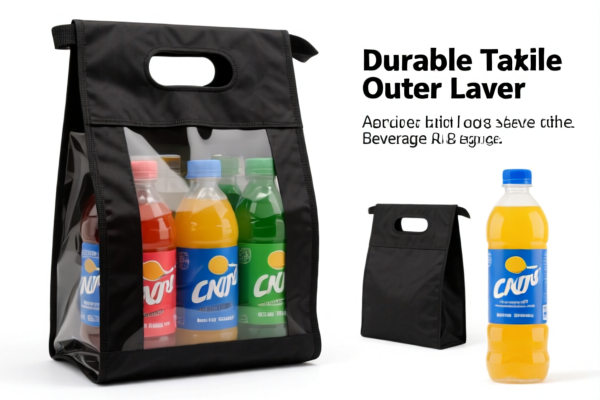
durable textile outer layer beverage bags
CN → US| HS编码 | 关税税率 | 原产国 | 目的国 | 文档 |
|---|---|---|---|---|
| 6307909891 | 24.5% | CN | US | 官方文档 |
| 4202920809 | 42.0% | CN | US | 官方文档 |
| 6305900000 | 23.7% | CN | US | 官方文档 |
| 6305390000 | 25.9% | CN | US | 官方文档 |
| 4202920807 | 42.0% | CN | US | 官方文档 |
商品图片
AI分析
🧳 Durable Textile Outer Layer Beverage Bags (Foldable)
🌐 HS Code Reference & Customs Clearance Guide | 2026 Latest Tariff Analysis | Professional Classification Strategy
📌 I. Product Definition & Classification: Understanding the "Textile Beverage Bag"
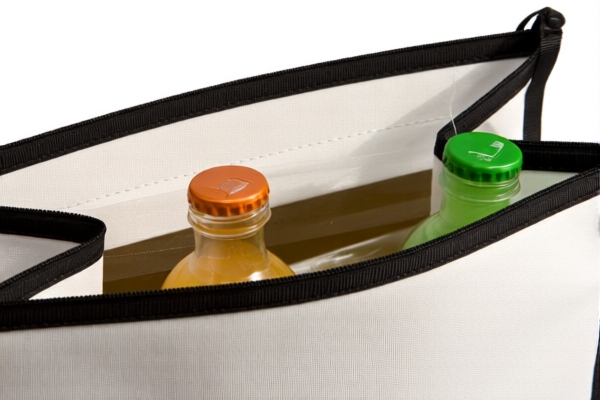
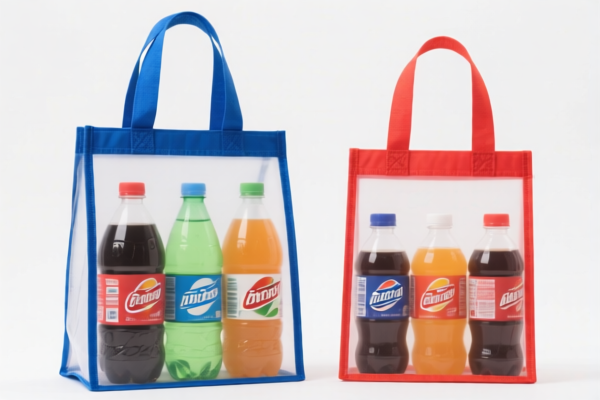
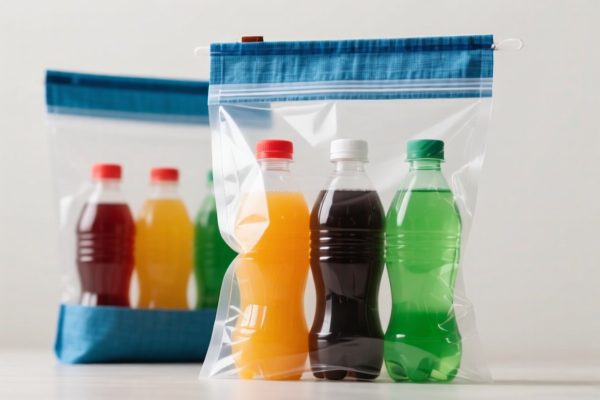
Durable Textile Outer Layer Beverage Bags are specialized containers designed to hold and transport beverages. Key characteristics include: 1. Foldable Design: The structure can be collapsed when not in use, saving storage space. 2. Textile Outer Layer: The exterior material is primarily made of woven or non-woven textiles (e.g., polyester, nylon, cotton blends). 3. Insulation/Protection: While not explicitly stated as "vacuum insulated," the "beverage bag" function implies some level of thermal retention or protective cushioning compared to a simple plastic bag.
In international trade, the classification depends heavily on material composition (natural vs. synthetic textile) and specific function (general packaging vs. specific insulated container).
⚠️ Key Distinction:
- If the bag is considered a general textile article (packaging bag) → Classified under Chapter 63.
- If the bag is considered a specific insulated container (like a thermos bag) with textile exterior → Classified under Chapter 42.
- The choice between Chapters 42 and 63 significantly impacts the Additional Duties (Section 301/122), leading to drastically different total tax rates.
📦 II. HS Code Classification Details (2026 Latest Tariff Authority Comparison)
Based on the provided data, there are 5 potential HS Code classifications, falling into two main categories: Chapter 63 (Miscellaneous Manufactured Articles) and Chapter 42 (Articles of Leather; Saddle Harness; Travel Goods).
| HS Code | Product Description | Applicable Scenario | Tax Rate (Total) | Additional Duty Risk |
|---|---|---|---|---|
| 6307.90.98.91 | Other made-up articles (General textile bag) | General foldable bag, no specific insulation function claimed; "Other" category | 24.5% | Moderate (7.5% Addl.) |
| 6305.90.00.00 | Sacks and bags, of other textile materials | Used for packaging purposes (e.g., carrying multiple cans/bottles as packaging); textile material unspecified but not "saddle leather" | 23.7% | Moderate (7.5% Addl.) |
| 6305.39.00.00 | Sacks and bags, of man-made textile materials | Specifically made of synthetic/man-made fibers (e.g., polyester) for packaging | 25.9% | Moderate (7.5% Addl.) |
| 4202.92.08.09 | Travel goods / Satchels, with outer surface of textile materials | Specific beverage/insulated bag; textile exterior; classified as "food or drink bag" or "thermal bag" | 42.0% | HIGH (25% Addl.) |
| 4202.92.08.07 | Travel goods / Satchels, with outer surface of textile materials | Same as above, but inferred man-made fiber material | 42.0% | HIGH (25% Addl.) |
🔍 Critical Analysis:
- Chapters 6307/6305: Lower total taxes (23.7%–25.9%). These codes treat the item as a general textile bag or packaging sack. This is favorable if the bag is seen as a disposable or semi-disposable packaging item.
- Chapter 4202: Higher total taxes (42.0%). These codes treat the item as a durable travel good or specialized insulated bag. This is the standard for reusable, insulated beverage bags (e.g., like Yeti coolers or lunch boxes with textile shells).
- The 17.5% Difference: The gap between ~25% and 42% is driven by the Additional Duty:
- 7.5% (Section 122/Other) for Chapter 63.
- 25.0% (Section 301) for Chapter 42.
💰 III. 2026 Latest Tariff Rate Breakdown (Detailed Tax Clauses)
✅ Applicable Country: United States (US)
✅ Origin: China (CN)
✅ Effective Date: Current tariffs apply as per 2026 data.
🎯 1. Lower Tax Group: Chapter 63 (Miscellaneous Textile Articles)
📌 Option A: 6305.90.00.00 (Cheapest Option)
| Item | Content |
|---|---|
| Base Tariff | 6.2% (ad valorem) |
| Additional Duty (Sec 301/122) | +7.5% |
| 122 Clause Tariff | +10% |
| Total Effective Rate | 23.7% |
| Tax Calculation | CIF Value × 23.7% |
| De Minimis Exemption | ❌ No (Subject to full duties) |
| Legal Basis | USITC:6305.90.00.00 → Additional:7.5% + 122 Clause:10% |
📌 Explanation:
- This code fits bags used for packaging (carrying goods). If your beverage bag is marketed as a "carrier bag" for multiple drinks, this code may apply.
- The 10% "122 Clause" is a specific U.S. trade remedy duty on certain Chinese textiles/apparel.
- Total: 23.7% is the most cost-effective if customs accepts this classification.
📌 Option B: 6305.39.00.00 (Man-Made Fibers)
| Item | Content |
|---|---|
| Base Tariff | 8.4% |
| Additional Duty | +7.5% |
| 122 Clause Tariff | +10% |
| Total Effective Rate | 25.9% |
| Tax Calculation | CIF Value × 25.9% |
📌 Explanation:
- Specifically for bags made of man-made textiles (polyester, nylon).
- Slightly higher base rate than 6305.90 due to material specificity.
- Total: 25.9%.
📌 Option C: 6307.90.98.91 (Other Made-Up Articles)
| Item | Content |
|---|---|
| Base Tariff | 7.0% |
| Additional Duty | +7.5% |
| 122 Clause Tariff | +10% |
| Total Effective Rate | 24.5% |
| Tax Calculation | CIF Value × 24.5% |
📌 Explanation:
- A "catch-all" for made-up textile articles not elsewhere specified.
- Suitable if the bag doesn't fit the "packaging sack" definition of 6305.
- Total: 24.5%.
🎯 2. Higher Tax Group: Chapter 42 (Travel Goods & Insulated Bags)
📌 Option D: 4202.92.08.09 (Textile Outer, General Beverage Bag)
| Item | Content |
|---|---|
| Base Tariff | 7.0% |
| Additional Duty (Sec 301) | +25.0% |
| 122 Clause Tariff | +10% |
| Total Effective Rate | 42.0% |
| Tax Calculation | CIF Value × 42.0% |
| Legal Basis | USITC:4202.92.08.09 → Sec 301:25% + 122 Clause:10% |
📌 Option E: 4202.92.08.07 (Textile Outer, Man-Made Fiber)
| Item | Content |
|---|---|
| Base Tariff | 7.0% |
| Additional Duty (Sec 301) | +25.0% |
| 122 Clause Tariff | +10% |
| Total Effective Rate | 42.0% |
| Tax Calculation | CIF Value × 42.0% |
📌 Critical Warning:
- 42.0% is the highest rate. This applies if Customs views the item as a durable, reusable insulated bag (like a lunch box or cooler).
- The 25% Section 301 Tariff is the primary driver of this high cost.
- Do not use this code unless the product is explicitly marketed as a "thermal beverage carrier" or "travel drink bag" with durable insulation.
🛠️ IV. Customs Clearance Practical Advice (Avoid Pitfalls)
✅ 1. Preparation Checklist (Must-Haves)
| Document | Required | Explanation |
|---|---|---|
| ✅ Product Photos | ✔️ | Must clearly show the textile outer layer, foldable structure, and insulation lining (if any). |
| ✅ Product Description | ✔️ | Use neutral terms: "Foldable Textile Beverage Carrier" vs. "Insulated Thermal Cooler Bag". |
| ✅ Material Breakdown | ✔️ | Specify fabric type (e.g., "100% Polyester Weave", "Foam Liner"). Critical for 6305 vs. 6305.39. |
| ✅ Commercial Invoice | ✔️ | Must match HS Code description exactly. |
| ✅ Packing List | ✔️ | Show units per carton, weight, dimensions. |
| ✅ Usage Statement | ✔️ | "Used for carrying beverages at picnics/events" (Supports 6307/6305) vs. "Thermal Insulation for Cold Drinks" (Supports 4202). |
✅ 2. Strategic Classification Tips (The "Tax Optimization" Playbook)
🔥 Key Rule: "Function Dictates Chapter, Material Dictates Subheading"
| Scenario | Recommended HS Code | Reasoning |
|---|---|---|
| Bag is primarily for carrying multiple drinks (like a six-pack carrier) | 6305.90.00.00 or 6307.90.98.91 | Customs may view this as a "packaging article" or "general bag," attracting only 7.5% additional duty + 10% 122 clause. |
| Bag is a single-bottle insulator with high-end thermal features | 4202.92.08.09 | Likely classified as "travel good" or "satchel," incurring 25% Section 301 tariff. |
| Bag is made of synthetic fabric (Polyester/Nylon) | 6305.39.00.00 | If using Chapter 63, specify "man-made fiber" to avoid ambiguity. |
| Bag is made of natural fabric (Cotton/Wool) | 6305.90.00.00 | Fits "other textile materials" in Chapter 63. |
📌 Strategic Advice:
- If the bag has minimal insulation (e.g., just a fabric sleeve), argue for Chapter 63 (6307.90.98.91 or 6305.90.00.00) to save ~17.5% in taxes.
- If the bag is heavily insulated (foam/vacuum), Customs will likely insist on Chapter 42 (4202.92.08.09/07), resulting in 42% tax.
- Pre-Ruling Recommendation: Apply for an Import Ruling from U.S. Customs and Border Protection (CBP) before shipping. This locks in the HS Code and prevents post-clearance audits.
✅ 3. Special Case Handling
| Situation | Handling Advice |
|---|---|
| OEM Custom Design | Provide design specs showing foldable hinges, zippers, and textile weave. Prove it's a "bag" not a "cooling device." |
| Combined Packaging | If sold with cans/bottles, declare the bag as a "container" and the drinks as the primary product. The bag may be considered incidental. |
| "Eco-Friendly" Marketing | If marketed as reusable, customs may lean toward Chapter 42. To stay in Chapter 63, emphasize "disposable/reusable carrier" nature. |
🌍 V. Global Market Comparison (2026)
| Country/Region | Recommended HS Code | Estimated Tariff (China Origin) | Notes |
|---|---|---|---|
| 🇺🇸 USA | 6307.90.98.91 or 6305.90.00.00 |
23.7%–24.5% | Avoid Chapter 42 (42%) unless necessary. |
| 🇨🇳 China | 6307.90 or 4202.92 |
5%–10% | No Section 301 or 122 clauses. Chapter 42 may have lower base duty. |
| 🇪🇺 EU | 4202.92 or 6305 |
0%–12% | Check for "Green Deal" exemptions if using sustainable textiles. |
| 🇬🇧 UK | 4202.92 or 6305 |
0%–12% | Post-Brexit rules apply. Check UK Global Tariff. |
📌 Conclusion:
- The USA is the most critical market due to Section 301 (25%) and 122 Clause (10%).
- Strategic Classification in Chapter 63 can save you up to 17.5% in duties.
- Ensure your product description does not over-emphasize "thermal insulation" if you aim for Chapter 63.
📌 VI. Common Errors & Pitfalls (Lessons Learned)
❌ Error 1: Calling it "Insulated Cooler Bag" in the invoice
👉 Result: Customs will classify under 4202.92, applying 42% tax.
👉 Fix: Use terms like "Textile Beverage Carrier" or "Foldable Drink Sleeve."
❌ Error 2: Ignoring the 122 Clause (10%)
👉 Result: Underpayment and penalties.
👉 Fix: All textile bags from China to the US attract the 10% 122 Clause. It applies to both Chapter 63 and 42.
❌ Error 3: Confusing "Packaging Bag" with "Travel Good"
👉 Result: Audit risk if a "packaging bag" is seen as a durable travel item.
👉 Fix: Provide evidence of foldability and lightweight nature to support Chapter 63.
✅ Correct Declaration Example:
"Foldable Beverage Carrier Bag, Outer Layer: 100% Polyester Textile, Inner: Non-Woven Lining, Used for carrying multiple beverage cans during outdoor events."
🎯 VII. Conclusion: Optimize Classification, Maximize Profit!
🎯 Key Takeaway:
🔹 "Chapter 63 is your friend (24%), Chapter 42 is your enemy (42%)."
🔹 Use descriptive terms that emphasize "bag" and "carrier," not "insulated cooler."
🔹 Always account for the 10% 122 Clause on all textile goods from China.
📌 Pro Tip:
If your product is not made in China (e.g., Vietnam, Bangladesh), the Section 301 (25%) and 122 Clause may not apply, reducing taxes to 0–10%.
For US-bound goods, always get an Import Ruling for HS Codes in the 4202 vs. 6307 gray area.
📣 Immediate Action:
📞 Consult a Customs Broker to file for an Import Ruling using the 6307.90.98.91 or 6305.90.00.00 classification.
📄 Update Marketing Materials to avoid "thermal insulation" claims if targeting the lower tax bracket.
🚀 Optimize Your Supply Chain to ensure clear documentation supporting the "textile bag" classification.
✨ Professional Classification Saves Money!
💼 Every percentage point of duty impacts your bottom line.
用户评价
关于 HS 编码归类
协调制度(HS)是由世界海关组织(WCO)制定的国际贸易商品分类标准。全球 200 多个国家采用 HS 系统作为海关关税、贸易统计和进出口监管的基础。
每个 HS 编码遵循以下层级结构:
- 章(2 位)——商品大类(例如:第 84 章:机器和机械设备)
- 品目(4 位)——章内的更具体分类
- 子目(6 位)——国际通用细分,所有 WCO 成员国统一使用
- 本国细分(8-10 位)——各国自行扩展的细分编码,如美国 HTSUS 10 位编码
正确的 HS 编码归类对于顺利通关、准确缴纳关税和遵守贸易法规至关重要。错误归类可能导致海关延误、多缴关税或罚款。
从CN进口到US时,适用的关税税率可能包括:
- 最惠国(MFN)税率——适用于 WTO 成员国的标准关税税率
- 普通税率——适用于无贸易协定国家
- 贸易救济关税——附加关税,如 301 条款(反倾销)、232 条款(国家安全)或反补贴税
本页内容仅供参考。如需正式归类,请咨询当地海关或持牌报关代理。