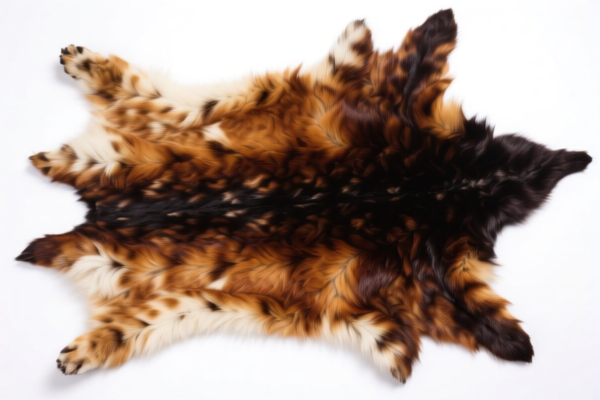
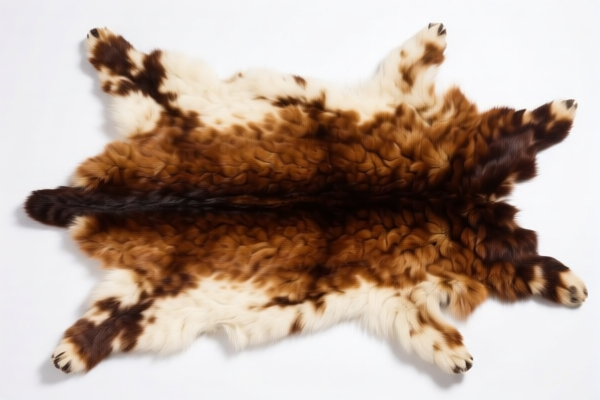
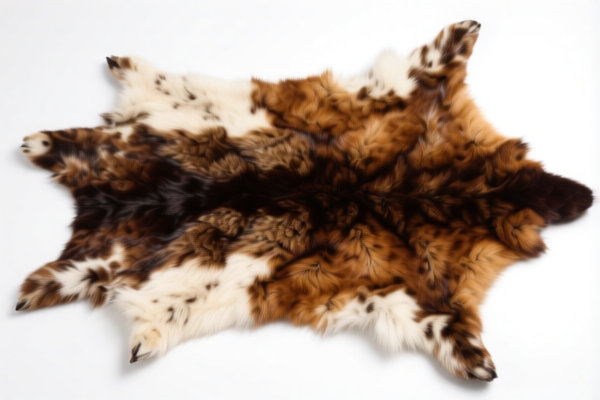
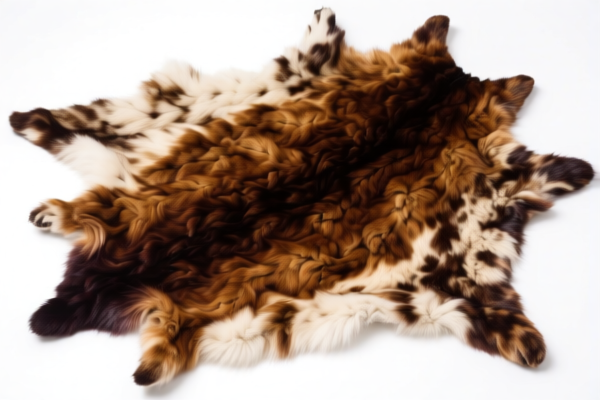
dyed fur skins whole without paws
CN → US| HS编码 | 关税税率 | 原产国 | 目的国 | 文档 |
|---|---|---|---|---|
| 4103901190 | 17.5% | CN | US | 官方文档 |
| 4107113000 | 13.6% | CN | US | 官方文档 |
| 4107198000 | 12.4% | CN | US | 官方文档 |
商品图片
AI分析
🧥 Dyed Fur Skins (Whole, Without Paws)
🌐 HS Code Reference & Customs Clearance Guide | 2026 Latest Tariff Analysis | Professional Level Clearance Strategy
📌 I. Product Definition & Classification: What Exactly Are “Dyed Fur Skins”?
In international trade, "dyed fur skins whole without paws" refer to processed animal hides that have undergone dyeing treatment and are prepared as whole skins, explicitly excluding the head, tail, and paws (claws). This category is distinct from raw hides or tanned leather intended for apparel versus accessories, focusing heavily on the state of preservation (tanned/dyed) and physical integrity (whole but de-pawed).
Key Distinctions: * Raw vs. Processed: Must be tanned and dyed. Raw skins fall under different chapters (usually Chapter 41 but different subheadings). * Whole vs. Cut: "Whole" means the skin is intact in one piece. Cut pieces or scraps do not qualify. * Without Paws: The exclusion of paws is a specific classifier detail. If paws are retained, the HS code may shift to other subheadings for "whole skins."
⚠️ Critical Classification Point:
- If the skin is from sheep/lambs → Often falls under 4107.11 or 4107.19.
- If the skin is from other animals (e.g., fox, mink, rabbit) → Often falls under 4103.90 or other Chapter 41 headings depending on specific animal type.
- Note: The provided data specifically links "Dyed whole fur skin (without head, tail, or paws)" to 4103.90.11.90 and "Dyed whole beast skin (without head)" to 4107.11.30.00 and 4107.19.80.00.
📦 II. HS Code Classification Details (2026 Latest Tariff Authority Comparison)
Based on the provided dataset, the following HS Codes apply to dyed fur skins without paws. Note that the specific animal origin determines the exact subheading within Chapter 41.
| HS Code | Product Description | Applicable Scenario | Tax Rate (Total) |
|---|---|---|---|
4103.90.11.90 |
Dyed whole fur skin (without head, tail, or paws) | General dyed fur skins (non-sheep/lamb specific) | 17.5% |
4107.11.30.00 |
Dyed whole beast skin (without head) | Likely specific sheep/lamb skins (subheading 4107.11) | 13.6% |
4107.19.80.00 |
Dyed whole beast skin (without head) | Other sheep/lamb skins (subheading 4107.19) | 12.4% |
🔍 Key Observation:
- 4103 is often used for skins of animals other than sheep/lambs (e.g., goats, kids, cattle, but also many fur-bearing animals depending on national sub-classification).
- 4107 specifically refers to sheep or lamb skins.
- The term "beast skin" in the data likely refers to sheep/lamb skins under 4107.
- Crucial: You must identify the animal source to choose between 4107 (Sheep/Lamb) and 4103 (Other).
💰 III. 2026 Latest Tariff Rate Breakdown (Including Surcharges & Policy Add-ons)
✅ Applicable Country: USA (US)
✅ Origin: China (CN)
✅ Effective Date: 2025/2026 Tariff Structure (Based on provided tax details)
🎯 1. 4103.90.11.90 —— Dyed Whole Fur Skin (Without Head, Tail, or Paws)
| Item | Content |
|---|---|
| Basic Tariff | 0.0% (Ad Valorem) |
| Section 301 Surcharge | 7.5% |
| 122 Clause Tariff | 10.0% |
| Total Effective Rate | 17.5% |
| Tax Calculation | CIF Value × 17.5% |
| De Minimis Eligibility | ❌ Not Eligible (High tariff rates typically exclude low-value shipments) |
| Legal Basis Path | HTSUS 4103.90.11.90 → Section 301 Footnote → 122 Clause Add-on |
📌 Explanation:
- Base Rate: 0% is common for certain raw/processed hides under Section 301 exclusions or specific chapter rules.
- Section 301 (7.5%): Standard additional duty on Chinese-origin goods.
- 122 Clause (10%): Specific administrative or reciprocal tariff add-on mentioned in the data.
- Total: 17.5% is a significant burden for low-margin fur accessories.
🎯 2. 4107.11.30.00 —— Dyed Whole Beast Skin (Without Head) [Sheep/Lamb Specific]
| Item | Content |
|---|---|
| Basic Tariff | 3.6% |
| Section 301 Surcharge | 0.0% |
| 122 Clause Tariff | 10.0% |
| Total Effective Rate | 13.6% |
| Tax Calculation | CIF Value × 13.6% |
| De Minimis Eligibility | ❌ Not Eligible |
| Legal Basis Path | HTSUS 4107.11.30.00 → 122 Clause Add-on |
📌 Explanation:
- Base Rate: 3.6% is the standard MFN rate for certain sheep/lamb skins.
- Section 301: 0.0% suggests this specific subheading might have an exclusion or is not covered by the 25% Section 301 tariff (note: data says 0.0%, not 25%).
- 122 Clause: 10% applies.
- Total: 13.6% is more favorable than 4103.
🎯 3. 4107.19.80.00 —— Dyed Whole Beast Skin (Without Head) [Other Sheep/Lamb]
| Item | Content |
|---|---|
| Basic Tariff | 2.4% |
| Section 301 Surcharge | 0.0% |
| 122 Clause Tariff | 10.0% |
| Total Effective Rate | 12.4% |
| Tax Calculation | CIF Value × 12.4% |
| De Minimis Eligibility | ❌ Not Eligible |
| Legal Basis Path | HTSUS 4107.19.80.00 → 122 Clause Add-on |
📌 Explanation:
- Base Rate: 2.4% is the lowest base rate in the dataset.
- Section 301: Again, 0.0% applies, which is a critical cost-saving factor.
- 122 Clause: 10% applies.
- Total: 12.4% is the most economical option among the three, IF the product qualifies as a sheep/lamb skin under this specific subheading.
🛠️ IV. Customs Clearance Practical Advice (Battle-Tested Pitfall Guide)
✅ 1. Document Checklist (Mandatory)
| Document | Required | Description |
|---|---|---|
| ✅ Commercial Invoice | ✔️ | Must clearly state: "Dyed Whole Fur Skins, Without Paws, [Animal Type]" |
| ✅ Packing List | ✔️ | Detail number of skins, weight, dimensions. Ensure no paws are listed. |
| ✅ Proof of Tanning/Dyeing | ✔️ | Laboratory report or manufacturer certificate confirming dye process and state. |
| ✅ Animal Origin Declaration | ✔️ | Crucial: Specify if Sheep/Lamb (4107) or Other (4103). Misdeclaration leads to penalties. |
| ✅ Photo Evidence | ✔️ | Clear images showing skins are whole and paws are removed. |
| ✅ Certificate of Origin | ✔️ | For verifying CN origin and applying correct Section 301/122 rates. |
✅ 2. Declaration Tips (Key Mantra)
🔥 “Paws Off, Head Off, Whole Skin, Correct Animal Type!”
| Scenario | Correct Declaration | Wrong Declaration |
|---|---|---|
| Sheep/Lamb Skins | 4107.11.30.00 or 4107.19.80.00 |
4103.90.11.90 → 17.5% vs 12.4% |
| Fox/Mink Skins | 4103.90.11.90 |
4107... → Misclassification Penalty |
| Skins WITH Paws | Not Covered in Data → Likely higher rate or different code | Claiming "without paws" when paws present |
| Raw Skins (Undyed) | Not Covered → Chapter 41 different subheadings | Claiming "dyed" when raw |
✅ 3. Special Situations
| Situation | Handling Advice |
|---|---|
| Mixed Shipments | If a shipment contains both sheep/lamb and other fur skins, they must be declared under their respective HS codes. Do not lump into one. |
| Partial Skins | If any skin is torn or not "whole," it may not qualify for these codes. Check for "pieces" or "scraps" which have different rates. |
| 122 Clause Impact | The 10% 122 Clause applies to all three codes. Factor this into cost calculations. |
| Section 301 Exclusion | For 4107 codes, 0% Section 301 is a major advantage. Verify if your specific product line is excluded. |
🌍 V. Global Market Clearance Comparison (2026 Latest)
| Country/Region | Recommended HS Code | Tariff (Total) | Certification Requirements | Notes |
|---|---|---|---|---|
| 🇺🇸 USA | 4107.19.80.00 |
12.4% | None specific for fur, but CITES may apply for exotic species | Most favorable among provided codes |
| 🇺🇸 USA | 4103.90.11.90 |
17.5% | Same as above | Higher tax due to 7.5% Sec 301 |
| 🇨🇳 China | 4107/4103 |
~2-5% | CCC (if applicable) | No 122 Clause or Sec 301 |
| 🇪🇺 EU | 4107/4103 |
0-5% | CITES (for protected species) | Stricter wildlife trade laws |
| 🇬🇧 UK | 4107/4103 |
0-5% | UKCA (if leather goods) | Post-Brexit rules apply |
📌 Conclusion:
- USA Tariffs are the highest due to Section 301 and 122 Clause.
- Sheep/Lamb skins (4107) are more tax-efficient than other fur skins (4103) in the US due to 0% Section 301.
- Always verify CITES status if dealing with exotic furs (mink, fox, etc.), as this can halt clearance entirely.
📌 VI. Common Mistakes & Pitfall Guide (Lessons from Blood & Tears)
❌ Mistake 1: Misidentifying Animal Type
👉 Consequence: Declaring mink skins as sheep skins (4107) → Fraud/Penalties because Section 301 exemptions don't apply.
❌ Mistake 2: Ignoring "Without Paws" Condition
👉 Consequence: If paws are attached, HS code may change → 17.5% or higher tax, plus potential rejection.
❌ Mistake 3: Not Accounting for 122 Clause
👉 Consequence: Underestimating landed cost by 10% → Profit Margin Erosion.
❌ Mistake 4: Assuming All Fur Skins Are Same
👉 Consequence: Using 4103 for sheep skins → Overpaying 5.1% (17.5% vs 12.4%).
✅ Correct Approach:
"Dyed Whole Sheep Skins, Without Head, Neck, or Paws, Tanned and Dyed, HS: 4107.19.80.00"
🎯 VII. Conclusion: Professional Declaration, Save Money, Clear Faster!
🎯 Remember the Mantra:
🔹 “Sheep/Lamb? Check 4107. Other Fur? Check 4103. No Paws? Verify. 122 Clause? Add 10%.”
🔹 “HS Code determines tax. 5% difference = huge savings on bulk shipments.”
📌 Pro Tip:
- If your fur skins are from exotic animals, check CITES permits before shipping.
- For Sheep/Lamb skins, leverage the 0% Section 301 rate under 4107 codes to reduce costs.
- Always request a Pre-Ruling from CBP if unsure about "whole" or "without paws" status.
📣 Immediate Action:
📞 Consult a licensed customs broker + Provide animal type + Verify paws/head removal
🚀 Ensure smooth clearance, avoid 122/301 pitfalls, maximize profit!
✨ Professional Clearance Starts with Accurate Classification!
💼 Every Percent Saved is Pure Profit!
用户评价
关于 HS 编码归类
协调制度(HS)是由世界海关组织(WCO)制定的国际贸易商品分类标准。全球 200 多个国家采用 HS 系统作为海关关税、贸易统计和进出口监管的基础。
每个 HS 编码遵循以下层级结构:
- 章(2 位)——商品大类(例如:第 84 章:机器和机械设备)
- 品目(4 位)——章内的更具体分类
- 子目(6 位)——国际通用细分,所有 WCO 成员国统一使用
- 本国细分(8-10 位)——各国自行扩展的细分编码,如美国 HTSUS 10 位编码
正确的 HS 编码归类对于顺利通关、准确缴纳关税和遵守贸易法规至关重要。错误归类可能导致海关延误、多缴关税或罚款。
从CN进口到US时,适用的关税税率可能包括:
- 最惠国(MFN)税率——适用于 WTO 成员国的标准关税税率
- 普通税率——适用于无贸易协定国家
- 贸易救济关税——附加关税,如 301 条款(反倾销)、232 条款(国家安全)或反补贴税
本页内容仅供参考。如需正式归类,请咨询当地海关或持牌报关代理。