electronic grade ethyl chloride mixture
CN → US| HS编码 | 关税税率 | 原产国 | 目的国 | 文档 |
|---|---|---|---|---|
| 2903110020 | 40.5% | CN | US | 官方文档 |
| 2902909000 | 35.0% | CN | US | 官方文档 |
| 3824995500 | 38.7% | CN | US | 官方文档 |
| 2902903050 | 35.0% | CN | US | 官方文档 |
商品图片
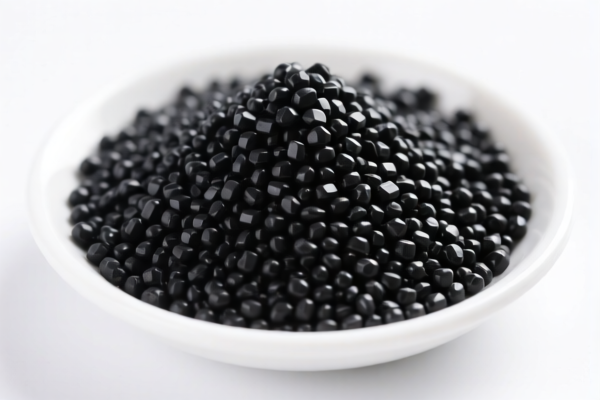
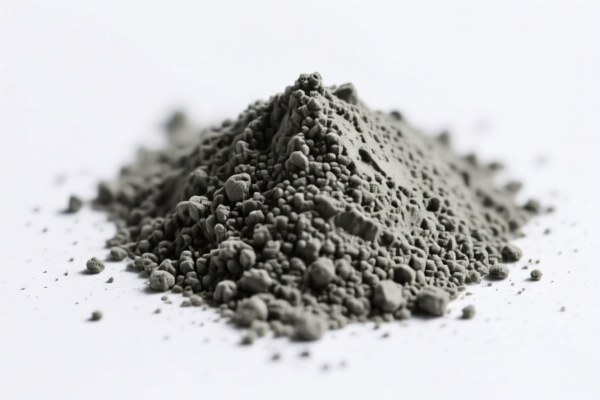
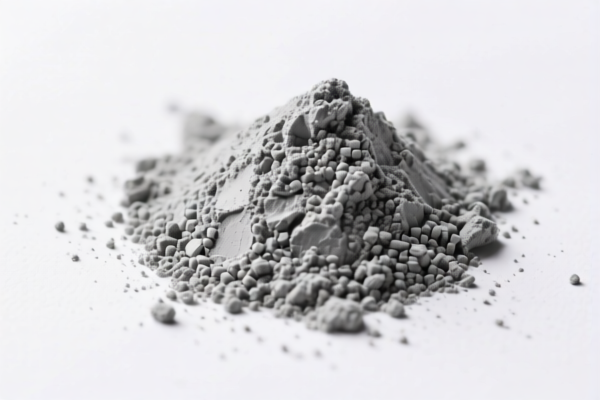
AI分析
🧪 Electronic Grade Ethyl Chloride Mixture
🌐 HS Code Reference & Customs Clearance Guide | 2026 Latest Tariff Analysis | Professional Clearance Strategy
📌 I. Product Definition & Classification: Do You Truly Understand "Ethyl Chloride Mixture"?
Ethyl Chloride Mixture, particularly in Electronic Grade, is a critical chemical intermediate used in semiconductor manufacturing, photovoltaic cell production, and high-purity organic synthesis. It is not a simple single compound but a complex mixture of chlorinated hydrocarbons, primarily involving ethane derivatives.
In international trade, the classification of this mixture is highly contested due to its ambiguous status between specific organic halides and general chemical mixtures. The core material attribute is defined as a chlorinated ethane derivative, but its mixture nature often triggers different regulatory interpretations under Chapter 29 (Organic Chemicals) and Chapter 38 (Miscellaneous Chemical Products).
⚠️ Key Distinction Point:
- If the mixture is dominated by a specific saturated non-cyclic hydrocarbon chloride (e.g., Chloroethane/Ethyl Chloride specific isomers), it may fall under 2903.
- If it is considered a general mixture of organic halogenated hydrocarbons without a single dominant specific component definition, it may fall under 2902 (Other Hydrocarbons) or 3824 (Miscellaneous Chemical Products).
- Electronic Grade implies higher purity but does not automatically change the HS Code; it affects the value and documentation requirements, not necessarily the tariff heading unless a specific "pure substance" code exists and is exclusively applicable.
📦 II. HS Code Classification Details (2026 Latest Tariff Authority Comparison)
| HS Code | Product Description | Applicable Scenario | Material Attribute Conflict? |
|---|---|---|---|
2903.11.00.20 |
Saturated Non-cyclic Hydrocarbon Chlorides (Ethyl Chloride Derivatives) | Mixture where the core material is explicitly defined as chlorinated ethane derivatives. | ✅ No Conflict – Core attribute matches "Saturated Non-cyclic Hydrocarbon Chlorides". |
2902.90.90.00 |
Other Hydrocarbons (Cyclic or Other) | Mixture classified as an organic chemical falling under "Other Hydrocarbons" due to complex cyclic/other hydrocarbon background. | ⚠️ Potential Conflict – Ethyl Chloride is an halide, not a pure hydrocarbon. Risk of misclassification. |
3824.99.55.00 |
Halogenated Hydrocarbon Mixtures (Miscellaneous) | Mixture categorized as a halogenated hydrocarbon mixture without a specific single-component code, falling into "Other". | ✅ No Conflict – Fits "Miscellaneous" category for halogenated mixtures. |
2902.90.30.50 |
Organic Chemicals (Chloroalkanes) - Catch-all | Mixture treated as chloroalkanes under a catch-all provision for organic chemicals, no material conflict. | ⚠️ Low Risk – "Catch-all" but less precise than 2903. |
🔍 Critical Reminder:
-2903.11.00.20is often preferred if the mixture can be proven to be primarily Ethyl Chloride (Chloroethane), as it is a specific saturated non-cyclic hydrocarbon chloride.
-3824.99.55.00is a safer "fallback" if the mixture contains multiple chlorinated hydrocarbons that do not fit cleanly into Chapter 29 specific headings.
-2902.90.90.00and2902.90.30.50carry higher risk because Ethyl Chloride is a halide, and Chapter 29 generally separates Halides (Ch 29) from Hydrocarbons (Ch 29.02). Misclassification here can lead to penalties.
💰 III. 2026 Latest Tariff Rate Breakdown (Including Surcharges, Policy Surcharges)
✅ Applicable Country: United States (US)
✅ Country of Origin: China (CN)
✅ Effective Date: From November 10, 2025 (Including subsequent imports)
🎯 1. 2903.11.00.20 —— Saturated Non-cyclic Hydrocarbon Chlorides (Core: Ethyl Chloride Derivatives)
| Item | Content |
|---|---|
| Basic Tariff | 5.5% (ad valorem) |
| Section 301 Tariff (USITC) | +25.0% (Additional Tariff on Chinese Goods) |
| Section 122 Tariff (IEEPA) | +10.0% (Additional Tariff on Specific Chinese Chemicals) |
| Total Tariff Rate | 40.5% |
| Tax Calculation | CIF Value × 40.5% |
| De Minimis Exemption | ❌ Not Eligible (High-value chemical goods usually excluded) |
| Legal Basis Path | USITC:2903.11.00.20 → USITC:Footnote 9903.88.01 (301 Tariff) → IEEPA:9903.01.25 (122 Tariff) |
📌 Explanation:
- This code is considered more "precise" for Ethyl Chloride, hence a higher Basic Tariff (5.5%) compared to other codes.
- However, it is fully subject to both the 25% Section 301 and 10% Section 122 surcharges.
- Total 40.5% is significant but may be lower than other misclassification risks if penalties apply.
🎯 2. 2902.90.90.00 —— Other Hydrocarbons (Organic Chemicals)
| Item | Content |
|---|---|
| Basic Tariff | 0.0% |
| Section 301 Tariff (USITC) | +25.0% |
| Section 122 Tariff (IEEPA) | +10.0% |
| Total Tariff Rate | 35.0% |
| Tax Calculation | CIF Value × 35.0% |
| De Minimis Exemption | ❌ Not Eligible |
| Legal Basis Path | USITC:2902.90.90.00 → USITC:Footnote 9903.88.01 → IEEPA:9903.01.24 |
📌 Note:
- This code is high-risk because Ethyl Chloride is a halide, not a pure hydrocarbon.
- While the total rate (35.0%) is lower, the risk of audit and reclassification is extremely high. If Customs determines the product is misclassified, you may face back taxes + penalties calculated at the correct rate (40.5% or higher).
🎯 3. 3824.99.55.00 —— Halogenated Hydrocarbon Mixtures (Miscellaneous)
| Item | Content |
|---|---|
| Basic Tariff | 3.7% |
| Section 301 Tariff (USITC) | +25.0% |
| Section 122 Tariff (IEEPA) | +10.0% |
| Total Tariff Rate | 38.7% |
| Tax Calculation | CIF Value × 38.7% |
| De Minimis Exemption | ❌ Not Eligible |
| Legal Basis Path | USITC:3824.99.55.00 → USITC:Footnote 9903.88.01 → IEEPA:9903.01.25 |
📌 Explanation:
- This is a safer "middle-ground" if the mixture is complex and doesn't fit cleanly into 2903.
- Total 38.7% is slightly higher than2902.90.90.00but lower than2903.11.00.20.
- Recommended if product composition is variable or contains multiple chlorinated compounds.
🎯 4. 2902.90.30.50 —— Organic Chemicals (Chloroalkanes) - Catch-all
| Item | Content |
|---|---|
| Basic Tariff | 0.0% |
| Section 301 Tariff (USITC) | +25.0% |
| Section 122 Tariff (IEEPA) | +10.0% |
| Total Tariff Rate | 35.0% |
| Tax Calculation | CIF Value × 35.0% |
| De Minimis Exemption | ❌ Not Eligible |
| Legal Basis Path | USITC:2902.90.30.50 → USITC:Footnote 9903.88.01 → IEEPA:9903.01.24 |
📌 Note:
- Similar to2902.90.90.00, this is a catch-all with 0% basic tariff.
- Same high audit risk as2902.90.90.00. Use only if legal counsel confirms no specific "chloride" heading applies.
🛠️ IV. Customs Clearance Practical Advice (Combat Pitfall Guide)
✅ 1. Required Documentation Checklist (All Mandatory)
| Document | Mandatory? | Description |
|---|---|---|
| ✅ Technical Data Sheet (TDS) | ✔️ | Must specify purity, chemical composition (list all components and percentages), grade (Electronic Grade). |
| ✅ Material Safety Data Sheet (MSDS/SDS) | ✔️ | Required for hazardous materials. Must classify under UN 1887 (Ethyl Chloride) or UN 1017 (Hydrogen Chloride, if applicable). |
| ✅ Composition Certificate | ✔️ | Crucial for HS Code determination. Proves whether the product is a "mixture" or a "single substance". |
| ✅ Commercial Invoice | ✔️ | Must clearly state: "Electronic Grade Ethyl Chloride Mixture – For Semiconductor Use". Do not use vague terms like "Chemical". |
| ✅ Packing List | ✔️ | Detail net/gross weight, volume, and packaging type (e.g., steel cylinder, tank container). |
| ✅ Certificate of Origin | ✔️ | Essential for determining applicability of 301/122 tariffs. |
✅ 2. Declaration Tips (Key Mnemonics)
🔥 "Purity Matters, Composition Defines, Hazardous Handling, Code Selection Critical!"
| Scenario | Correct Declaration | Wrong Practice |
|---|---|---|
| High Purity (>99.9%) | Declare as 2903.11.00.20 if primarily Chloroethane. |
Declare as 3824.99.55.00 to save taxes → Audit Risk. |
| Complex Mixture | Declare as 3824.99.55.00 with full composition list. |
Declare as 2902.90.90.00 (Hydrocarbon) → Misclassification. |
| Hazardous Goods | Must include UN Number, Proper Shipping Name, Hazard Class. | Omit hazard info → Shipment Hold/Return. |
| Electronic Grade | Highlight in invoice description to justify value and specific use. | Ignore grade → Potential under/over-valuation issues. |
✅ 3. Special Handling
| Situation | Handling Advice |
|---|---|
| OEM Custom Mixture | Provide R&D formulation sheet to Customs if audited. Proves "Mixture" nature. |
| Hazardous Transport | Ensure packaging meets DOT/UN standards. Inspectors will check for leaks. |
| Environmental Compliance | Be prepared for EPA/TSCA documentation. Ethyl Chloride is regulated. |
| Free Trade Agreements (FTAs) | Check if any FTA applies (e.g., USMCA). However, 301/122 tariffs usually override FTA benefits for Chinese goods. |
🌍 V. Global Market Clearance Comparison (2026 Latest)
| Country/Region | Recommended HS Code | Tariff (China Origin) | Certification Requirements | Notes |
|---|---|---|---|---|
| 🇺🇸 United States | 2903.11.00.20 or 3824.99.55.00 |
38.7% - 40.5% | TSCA + DOT HazMat | High Tariff + High Audit Risk |
| 🇨🇳 China | 2903.11.00.00 |
5.5% | None (Domestic) | Lower rate, no 301/122 |
| 🇪🇺 European Union | 2903.11.00 |
6.5% | REACH + CLP | No additional surcharges like US |
| 🇦🇺 Australia | 2903.11.00 |
5.0% | NICNAS/AIIC | Moderate rate |
| 🇯🇵 Japan | 2903.11.00 |
6.0% | PRTR Law | Standard rate |
📌 Conclusion:
- The US is the most challenging market due to the combination of Base Tariff + 301 (25%) + 122 (10%).
- Total Tariff ranges from 35% to 40.5% depending on precise classification.
- China-origin goods face the highest barrier. Consider supply chain diversification if tariffs impact profitability.
📌 VI. Common Errors & Pitfall Guide (Lessons Learned)
❌ Error 1: Declaring Ethyl Chloride Mixture as "Non-Hazardous Organic Liquid"
👉 Consequence: Hazardous goods misclassification → Shipment Rejected + Fines + Retesting.
❌ Error 2: Using 2902.90.90.00 (Hydrocarbon) for a Chlorinated Product
👉 Consequence: Customs audits classify as 2903 → Back Taxes + Interest + Penalties.
❌ Error 3: Omitting Composition Details for a Mixture
👉 Consequence: Customs cannot determine correct HS Code → Delay in Clearance + Storage Fees.
❌ Error 4: Ignoring IEEPA Section 122 Tariff
👉 Consequence: Underpayment of 10% → Penalty for Undervaluation.
✅ Correct Approach:
"Electronic Grade Ethyl Chloride Mixture (Composition: 98% Chloroethane, 2% Impurities), UN 1887, HazClass 2.1, Net Weight: 50kg, For Semiconductor Manufacturing, TSCA Compliant."
🎯 VII. Conclusion: Precision Classification Saves Costs!
🎯 Remember the Mnemonic:
🔹 "Chloride is Not Hydrocarbon, Mixture Needs Composition List, 301+122 is Non-Negotiable, Electronic Grade Means High Value!"
🔹 "HS Code Dictates Destiny, 5% Difference is Huge, Misclassification Costs Thousands!"
📌 Pro Tip:
If your Electronic Grade Ethyl Chloride Mixture is originating from Vietnam, Mexico, or Thailand, you may be exempt from IEEPA Section 122 tariffs (10%). The total tariff could drop to 25%-35%.
Recommendation:
1. Apply for a Pre-Ruling from CBP to confirm HS Code.
2. Verify Supply Chain Origin to see if non-China sources are viable.
3. Maintain Rigorous Documentation for hazardous and chemical compliance.
📣 Immediate Action:
📞 Contact a licensed customs broker + Provide MSDS + TDS + Apply for CBP Pre-Ruling
🚀 Ensure Ethyl Chloride Mixture clears customs smoothly, legally, and cost-effectively!
✨ Professional Clearance Starts with Accurate Classification!
💼 Every Percent of Tariff Matters in Chemical Trade!
用户评价
关于 HS 编码归类
协调制度(HS)是由世界海关组织(WCO)制定的国际贸易商品分类标准。全球 200 多个国家采用 HS 系统作为海关关税、贸易统计和进出口监管的基础。
每个 HS 编码遵循以下层级结构:
- 章(2 位)——商品大类(例如:第 84 章:机器和机械设备)
- 品目(4 位)——章内的更具体分类
- 子目(6 位)——国际通用细分,所有 WCO 成员国统一使用
- 本国细分(8-10 位)——各国自行扩展的细分编码,如美国 HTSUS 10 位编码
正确的 HS 编码归类对于顺利通关、准确缴纳关税和遵守贸易法规至关重要。错误归类可能导致海关延误、多缴关税或罚款。
从CN进口到US时,适用的关税税率可能包括:
- 最惠国(MFN)税率——适用于 WTO 成员国的标准关税税率
- 普通税率——适用于无贸易协定国家
- 贸易救济关税——附加关税,如 301 条款(反倾销)、232 条款(国家安全)或反补贴税
本页内容仅供参考。如需正式归类,请咨询当地海关或持牌报关代理。