electronic module
CN → US| HS编码 | 关税税率 | 原产国 | 目的国 | 文档 |
|---|---|---|---|---|
| 8542390090 | 60.0% | CN | US | 官方文档 |
| 8543709860 | 37.6% | CN | US | 官方文档 |
| 8543906800 | 35.0% | CN | US | 官方文档 |
| 8504409540 | 35.0% | CN | US | 官方文档 |
| 8504409580 | 35.0% | CN | US | 官方文档 |
| 8542900000 | 60.0% | CN | US | 官方文档 |
商品图片
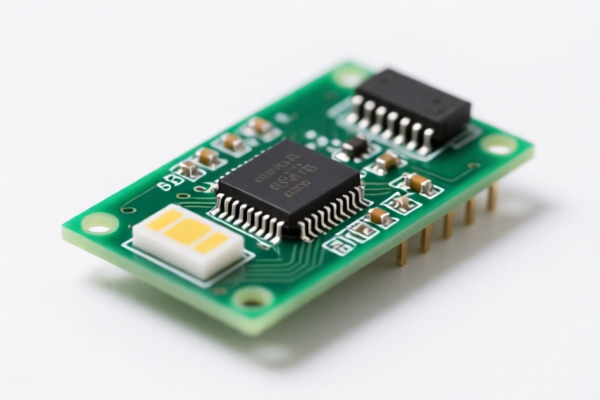
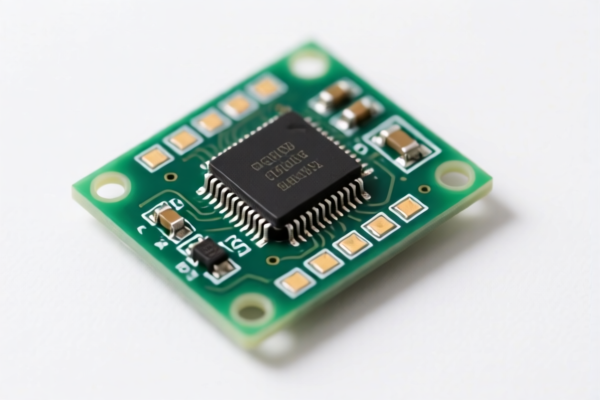
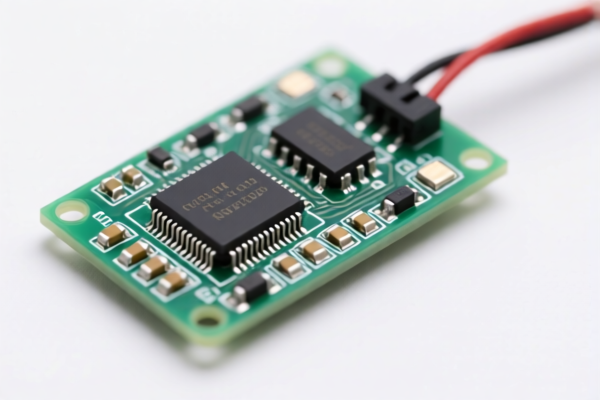
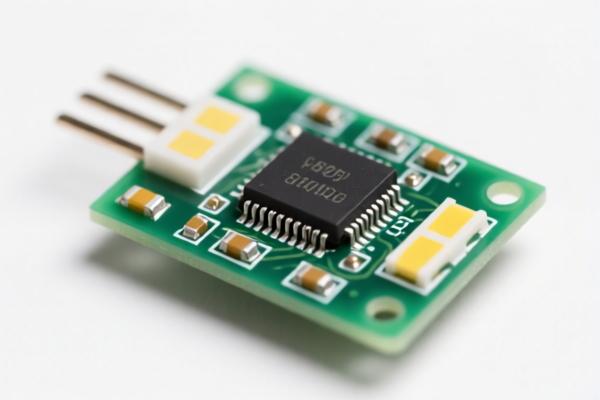
AI分析
⚡ Electronic Module (Power Module / IC Component)
🌐 HS Code Reference & Customs Clearance Guide | 2026 Updated Tariff Analysis | Strategic Clearance Strategy
📌 I. Product Definition & Classification: Do You Truly Understand "Electronic Modules"?
Electronic Modules, specifically Power Modules, are critical components in modern electronics, ranging from consumer appliances to industrial machinery and communication systems. In international trade, their classification depends heavily on functionality and structure:
- Integrated Circuit (IC) Components: Modules that function as part of a larger semiconductor assembly, lacking independent power conversion capability on their own.
- Independent Electrical Devices: Modules that perform a specific function (like voltage conversion) independently, often including circuitry to control the power flow.
- Printed Circuit Assemblies (PCBs): Modules identified primarily by their circuit board structure rather than their final electrical function.
⚠️ Critical Distinction Point:
- If the module is primarily a semiconductor component inside a larger system → Likely 8542 (ICs).
- If the module is a standalone power converter (AC/DC or DC/DC) → Likely 8504.
- If the module is a printed circuit board assembly with no specific function other than housing circuits → Likely 8543.
- Misclassification Risk: Declaring a standalone power converter as an "IC part" can lead to 60% tariffs instead of 35%.
📦 II. HS Code Classification Details (2026 Authoritative Tariff Reference)
| HS Code | Product Description (Based on Data) | Function Category | Total Tax Rate |
|---|---|---|---|
| 8542.39.00.90 | Electronic Integrated Circuit Components ("Other" category) | IC Component / Part | 60.0% |
| 8543.70.98.60 | Electrical Device with Independent Function ("Other Machines & Devices") | Independent Device | 37.6% |
| 8543.90.68.00 | Component of Independent Electrical Device ("Printed Circuit Components") | PCB Assembly | 35.0% |
| 8504.40.95.40 | Static Converters (Power Supplies) ("Other" category) | Power Converter | 35.0% |
| 8504.40.95.80 | Static Converters (Power Supplies) - Bottom-line Logic | Power Converter | 35.0% |
| 8542.90.00.00 | Parts of Integrated Circuits (Used as IC Component) | IC Part | 60.0% |
🔍 Key Insight:
- The 8542 codes (IC Parts) carry the highest risk with a 60% total tax rate due to heavy supplementary duties. - The 8504 and 8543 codes are strategically lower at 35%~37.6% if the module can be proven to be an independent converter or a printed circuit assembly. - Strategy: Proving the device is a "Static Converter" (8504) or "Independent Device" (8543) can save 25% in taxes compared to "IC Parts" (8542).
💰 III. 2026 Latest Tariff Rate Breakdown (Including Surcharges & Policy Add-ons)
✅ Applicable Market: United States (US)
✅ Country of Origin: China (CN)
✅ Effective Date: Current 2025-2026 Import Regulations (Includes 122 Clause)
🎯 1. "IC Part" Scenarios (High Risk: 60.0%)
Codes: 8542.39.00.90 / 8542.90.00.00
Summary: Classified as Electronic Integrated Circuit Components or Parts.
| Item | Content |
|---|---|
| Base Duty | 0.0% (General Rate) |
| Section 301 / "Add-on" Duty | +50.0% (Aggressive surcharge on Chinese tech goods) |
| Section 122 Tariff | +10.0% (Specific trade remedy clause) |
| Total Tax Rate | 60.0% |
| Calculation | CIF Value × 60% |
| De Minimis Exemption | ❌ Not Applicable |
| Legal Path | Base (0%) → 301 (50%) → 122 Clause (10%) |
📌 Explanation:
These codes treat the power module as a semiconductor part of a larger IC. This triggers the 50% Section 301 surcharge (a key US protectionist measure) plus the 10% Section 122 duty, resulting in a crushing 60% total.
🎯 2. "Independent Device / PCB / Converter" Scenarios (Lower Risk: 35.0% - 37.6%)
Codes: 8543.70.98.60 / 8543.90.68.00 / 8504.40.95.40 / 8504.40.95.80
Summary: Classified as Independent Electrical Devices, PCB Assemblies, or Static Converters.
| Item | Content |
|---|---|
| Base Duty | 0.0% to 2.6% |
| Section 301 / "Add-on" Duty | +25.0% (Standard surcharge for these categories) |
| Section 122 Tariff | +10.0% (Uniform on most tech hardware) |
| Total Tax Rate | 35.0% to 37.6% |
| Calculation | CIF Value × (35%~37.6%) |
| De Minimis Exemption | ❌ Not Applicable |
| Legal Path | Base (0/2.6%) → 301 (25%) → 122 Clause (10%) |
📌 Explanation:
- 8504.40 (Static Converters): If the module is defined as a power supply/converter doing a specific electrical function, it falls here. Base duty is 0%, add-on is 25%, 122 is 10% = 35%. - 8543.70/90 (Independent Devices/PCBs): If defined as a device with independent function or a PCB assembly, Base duty may be 2.6%, add-on 25%, 122 is 10% = 37.6%. - Savings: Choosing the correct classification here saves 22.4% to 25% compared to the 60% IC part rate.
🛠️ IV. Customs Clearance Practical Advice (Action Plan)
✅ 1. Essential Documentation Checklist (Non-Negotiable)
| Document | Requirement | Purpose |
|---|---|---|
| Technical Datasheet | ✔️ Must Include | Must specify "Static Converter" or "Independent Function" to avoid 60% IC rate. |
| Circuit Diagram / Schematic | ✔️ Critical | Proves the device is not just a passive IC part but has active power conversion (8504 logic). |
| Product Photos (Label & Ports) | ✔️ Required | Shows input/output ports (AC/DC), proving it acts as a power supply (8504). |
| Bill of Materials (BOM) | ✔️ Highly Recommended | Shows it is a Printed Circuit Assembly (8543) rather than a raw IC chip (8542). |
| Commercial Invoice | ✔️ Accurate Description | Use "Power Supply Unit" or "Static Converter" in description, NOT "IC Part". |
✅ 2. Declaration Strategy (The "Golden Rule")
🔥 Golden Rule: "Function Over Form: Prove it's a Converter, not a Part!"
| Scenario | Recommended HS Code | Why? |
|---|---|---|
| Module converts AC to DC | 8504.40.95.40 / 8504.40.95.80 |
It is a Static Converter. Lowest tax (35%). |
| Module has a PCB with logic | 8543.90.68.00 |
It is a Printed Circuit Assembly. Low tax (35%). |
| Module has specific independent function | 8543.70.98.60 |
It is an Independent Device. Low tax (37.6%). |
| Module is just a chip inside a system | 8542.39.00.90 / 8542.90.00.00 |
WARNING: If declared as "IC Part", Tax is 60%. Avoid unless necessary. |
✅ 3. Special Handling for High-Value Imports
| Situation | Actionable Advice |
|---|---|
| "Part of a larger system" | If the power module is sold as a replacement part for a specific machine, be prepared for the 60% rate (8542). |
| "Stand-alone Power Supply" | If sold as a standalone box with input/output wires, always claim 8504 to save 25%. |
| "OEM Custom Module" | Provide the original design intent. If the design intent was a converter, claim 8504/8543. |
| "Unclear Function" | If function is ambiguous, Customs may default to the highest tax (60%). Clarify in specs first. |
🌍 V. Global Market Comparison (2026 Outlook)
| Region | Preferred HS Code | Base Duty | Surcharge | Total Est. | Notes |
|---|---|---|---|---|---|
| 🇺🇸 USA | 8504.40.95.40 |
0% | +35% | 35.0% | Critical: Avoid 8542 (60%)! |
| 🇪🇺 EU | 8504.40 |
0% | N/A | 0%~5% | No 122 clause, generally lower. |
| 🇨🇳 China | 8504.40 |
0% | N/A | 0% | Export from China to others? |
| 🇯🇵 Japan | 8504.40 |
0% | N/A | 0% | No Section 301 type taxes. |
📌 Conclusion: The 60% tariff is unique to the US Section 301 and Section 122 combination on "IC Parts" (8542). Other markets do not impose this punitive rate on the same goods if reclassified.
📌 VI. Common Pitfalls & How to Avoid Them
❌ Pitfall 1: Calling it "Electronic Component" or "IC" on the invoice.
👉 Result: Customs auto-classifies as 8542 → 60% Tax.
✅ Fix: Call it "Power Supply Unit", "DC/DC Converter", or "Power Module".
❌ Pitfall 2: Failing to show input/output terminals in photos.
👉 Result: Appears as a passive component (IC) rather than a converter.
✅ Fix: Provide clear photos showing Input (AC) and Output (DC) ports.
❌ Pitfall 3: Declaring "Power Module" without specifying function.
👉 Result: Ambiguity leads to worst-case scenario (60%).
✅ Fix: Specify "Static Converter with independent function" in the description.
🎯 VII. Final Verdict: Strategic Recommendation
🎯 Action Plan for Importers:
1. Audit Your Tech Specs: Does your module actually convert power? If yes, it is an 8504 Static Converter, not an 8542 IC part.
2. Reclassify: Shift from 8542.39.00.90 / 8542.90.00.00 (60%) to 8504.40.95.40 (35%) or 8543.90.68.00 (35%).
3. Documentation: Ensure your Datasheet explicitly states "Function: Power Conversion" or "Independent Device".
4. Cost Benefit: A switch from 60% to 35% saves 25% on your total landed cost. On a $100,000 shipment, that is $25,000 in savings.
🚀 Pro Tip: If the module is a Printed Circuit Board (PCB) with a power function,
8543.90.68.00is your safest, lowest-tax bet (35%).
✨ Professional Customs Clearance Starts with the Right HS Code!
💼 Don't pay 60% if you can pay 35%!
📞 Consult your broker today to update your HS Code strategy.
用户评价
关于 HS 编码归类
协调制度(HS)是由世界海关组织(WCO)制定的国际贸易商品分类标准。全球 200 多个国家采用 HS 系统作为海关关税、贸易统计和进出口监管的基础。
每个 HS 编码遵循以下层级结构:
- 章(2 位)——商品大类(例如:第 84 章:机器和机械设备)
- 品目(4 位)——章内的更具体分类
- 子目(6 位)——国际通用细分,所有 WCO 成员国统一使用
- 本国细分(8-10 位)——各国自行扩展的细分编码,如美国 HTSUS 10 位编码
正确的 HS 编码归类对于顺利通关、准确缴纳关税和遵守贸易法规至关重要。错误归类可能导致海关延误、多缴关税或罚款。
从CN进口到US时,适用的关税税率可能包括:
- 最惠国(MFN)税率——适用于 WTO 成员国的标准关税税率
- 普通税率——适用于无贸易协定国家
- 贸易救济关税——附加关税,如 301 条款(反倾销)、232 条款(国家安全)或反补贴税
本页内容仅供参考。如需正式归类,请咨询当地海关或持牌报关代理。