environmental disinfectant
CN → US| HS编码 | 关税税率 | 原产国 | 目的国 | 文档 |
|---|---|---|---|---|
| 3808594000 | 40.0% | CN | US | 官方文档 |
| 3809935000 | 41.0% | CN | US | 官方文档 |
| 3809925000 | 41.0% | CN | US | 官方文档 |
| 3808945095 | 40.0% | CN | US | 官方文档 |
| 3402505100 | 35.0% | CN | US | 官方文档 |
商品图片
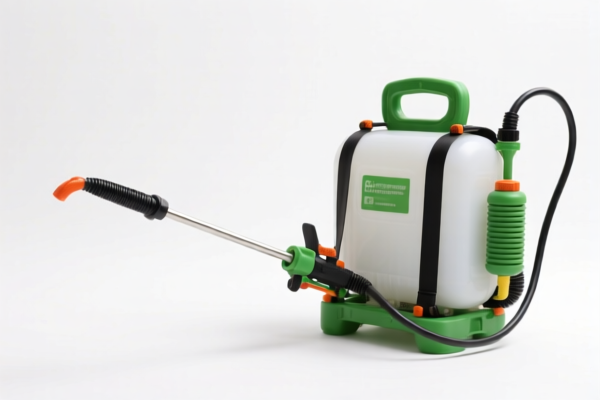
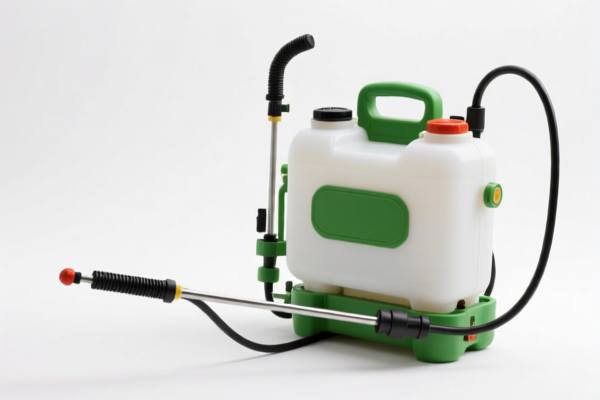
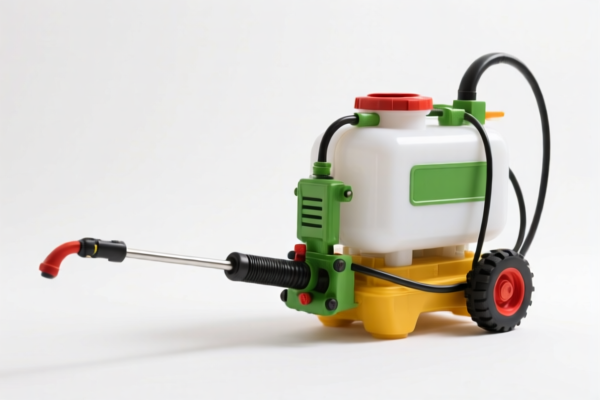

AI分析
🧴 Environmental Disinfectant (Eco-Friendly Cleaning Agents)
🌐 HS Code Reference & Customs Clearance Guide | 2026 Latest Tariff Analysis | Professional Compliance Strategy
📌 1. Product Definition & Classification: What is an "Environmental Disinfectant"?
Environmental disinfectants, often referred to as eco-friendly or green cleaning agents, are chemical preparations designed to kill or inhibit microorganisms on surfaces. In international trade, their classification is complex because it depends on the primary function and chemical composition.
Key Distinction: * Chemical Disinfectants: If the primary purpose is killing pathogens (bacteria, viruses) and it contains specific active chemical ingredients (like quaternary ammonium compounds, though "eco" variants exist), it often falls under Chapter 38 (Miscellaneous Chemical Products). * Cleaning/Surfactant Preparations: If the product is primarily a cleaning agent that also has disinfecting properties due to its surfactant nature, or if it is marketed as a "cleaner" with mild sanitizing effects, it may fall under Chapter 34 (Soap, Organic Surface-Active Agents, Washing Preparations).
⚠️ Critical Classification Point:
- If the product is explicitly labeled, tested, and sold as a "Disinfectant" with specific biocidal claims → Likely Chapter 38 (3808.59, 3808.94).
- If the product is primarily a "Surface Cleaner" or "Laundry Detergent" with general cleaning/sanitizing action due to surfactants → Likely Chapter 34 (3402.50, 3402.90).
📦 2. HS Code Classification Details (2026 Latest Tariff Alignment)
| HS Code | Product Description | Application Scenario | Tax Rate (US Import from CN) |
|---|---|---|---|
3808.59.40.00 |
Other disinfectants (Not insecticides/fungicides) | Household/Industrial surface disinfectants, sanitizers | 40.0% |
3809.93.50.00 |
Chemical preparations for finishing, etc. (Other) | Chemical agents used in industrial cleaning/finishing that have disinfecting properties | 41.0% |
3809.92.50.00 |
Chemical preparations for textile/leather finishing (Other) | Industrial chemical agents used in processing | 41.0% |
3808.94.50.95 |
Other disinfectants (Specific sub-category) | Alternative disinfectant formulations | 40.0% |
3402.50.51.00 |
Organic surface-active agents & preparations | Eco-friendly cleaners, surfactant-based sanitizers, non-ionic detergents with cleaning/sanitizing use | 35.0% |
3402.90.50.30 |
Other organic surface-active agents & preparations | General cleaning preparations with mild disinfecting action | 38.7% |
🔍 Key Observation:
- Chapter 38 (Disinfectants) generally attracts higher tariffs (40-41%) due to specific "Section 301" and "IEEPA"附加 taxes.
- Chapter 34 (Cleaners/Surfactants) generally attracts lower tariffs (35-38.7%) because they are viewed as general consumer goods rather than specialized biocidal chemicals.
- Strategy: If your "Environmental Disinfectant" is primarily a cleaner with sanitizing properties, Chapter 34 may offer a cost advantage. However, if it is explicitly registered as a pesticide/disinfectant by the EPA, Chapter 38 is more accurate.
💰 3. 2026 Latest Tariff Rate Breakdown (Including Additional Taxes)
✅ Applicable Country: United States (US)
✅ Country of Origin: China (CN)
✅ Effective Time: From November 10, 2025 (and subsequent imports)
🎯 1. 3808.59.40.00 / 3808.94.50.95 —— Disinfectants (Chapter 38)
| Item | Details |
|---|---|
| Base Tariff | 5.0% (Ad valorem) |
| Section 301 Tariff | +25.0% (USITC Footnote related to Chinese goods) |
| IEEPA Tariff (Section 122) | +10.0% (Additional tariff on Chinese imports) |
| Total Tariff | 40.0% |
| Tax Calculation | CIF Value × 40% |
| De Minimis Exemption | ❌ Not Eligible (Higher threshold applies or denied for this category) |
| Legal Basis Path | USITC:3808.59.40.00 → SECTION_301 → IEEPA:122 |
📌 Explanation:
- Disinfectants are classified as "miscellaneous chemical products" with specific uses.
- The 25% is the standard Section 301 penalty on many Chinese chemical imports.
- The 10% is an additional IEEPA surcharge often applied to Chinese goods under recent trade measures.
- Total 40% is a significant cost burden.
🎯 2. 3809.93.50.00 / 3809.92.50.00 —— Chemical Preparations for Finishing/Industrial Use
| Item | Details |
|---|---|
| Base Tariff | 6.0% |
| Section 301 Tariff | +25.0% |
| IEEPA Tariff (Section 122) | +10.0% |
| Total Tariff | 41.0% |
| Tax Calculation | CIF Value × 41% |
| De Minimis Exemption | ❌ Not Eligible |
| Legal Basis Path | USITC:3809.93.50.00 → SECTION_301 → IEEPA:122 |
📌 Note:
- These codes are for "other chemical preparations." If your disinfectant is used in industrial finishing or textile processing, these codes apply.
- This is the highest tariff bracket (41%) in the provided data. Avoid this if possible unless the product is specifically for industrial finishing.
🎯 3. 3402.50.51.00 / 3402.90.50.30 —— Surface-Active Agents & Cleaning Preparations (Chapter 34)
| Item | Details |
|---|---|
| Base Tariff | 0.0% (3402.50) or 3.7% (3402.90) |
| Section 301 Tariff | +25.0% |
| IEEPA Tariff (Section 122) | +10.0% |
| Total Tariff | 35.0% (3402.50) or 38.7% (3402.90) |
| Tax Calculation | CIF Value × 35% / 38.7% |
| De Minimis Exemption | ❌ Not Eligible |
| Legal Basis Path | USITC:3402.50.51.00 → SECTION_301 → IEEPA:122 |
📌 Advantage:
- Lower Base Rate: If the product is classified as a surfactant/cleaner, the base rate is 0% or 3.7%, leading to a lower total tariff.
- Cost Savings:3402.50.51.00is the most cost-effective option (35.0% total), saving 5% compared to Chapter 38 disinfectants.
- Condition: The product must be primarily a cleaning/surfactant agent, not a regulated biocide.
🛠️ 4. Customs Clearance Practical Advice (Pitfall Avoidance Guide)
✅ 1. Required Documentation Checklist (Essential)
| Document | Mandatory? | Description |
|---|---|---|
| ✅ Product Specification Sheet | ✔️ | Must detail ingredients, active concentrations, and primary use (Cleaning vs. Disinfection). |
| ✅ EPA Registration (If applicable) | ✔️ | If marketed as a disinfectant, EPA registration is required in the US. Provide copy if available. |
| ✅ SDS (Safety Data Sheet) | ✔️ | Crucial for customs and CBP to determine hazardous nature and correct HS Code. |
| ✅ Commercial Invoice | ✔️ | Clearly state "Environmental Cleaning Disinfectant" or "Surfactant-Based Cleaner." Avoid ambiguous terms. |
| ✅ Certificate of Origin (CO) | ✔️ | To prove Chinese origin (triggering additional taxes). |
| ✅ Photos of Product & Label | ✔️ | Must show usage instructions. If label says "Kills 99.9% of Viruses," expect Chapter 38 classification. |
✅ 2. Declaration Strategy (Key Mnemonic)
🔥 “Cleaner vs. Disinfectant: Label Defines Tax!”
| Scenario | Correct HS Code | Risk |
|---|---|---|
| Product labeled "Surface Cleaner" with mild sanitizing claims | 3402.50.51.00 |
✅ Lowest Tax (35%) |
| Product labeled "Disinfectant" or "Sanitizer" with biocidal claims | 3808.59.40.00 |
⚠️ Higher Tax (40%) |
| Industrial chemical for textile finishing | 3809.93.50.00 |
❌ Highest Tax (41%) |
| General household cleaner with no specific disinfecting claim | 3402.90.50.30 |
⚠️ Medium Tax (38.7%) |
Important: Do not split shipments. If a product is both a cleaner and a disinfectant, CBP will classify it based on its principal use. If the principal use is disinfection, Chapter 38 applies regardless of cleaner ingredients.
✅ 3. Special Case Handling
| Situation | Recommendation |
|---|---|
| "Green" or "Biodegradable" Disinfectants | Still classified under Chapter 38 if they are regulated biocides. Marketing terms do not change HS Code. |
| EPA-Registered vs. Non-Registered | If EPA-registered, Chapter 38 is highly likely. If non-registered (general cleaner), Chapter 34 is possible. |
| Bulk Chemical vs. Retail Product | Bulk chemicals may fall under different sub-codes. Ensure the 8-digit code matches the end-use. |
| Origin Marking | Ensure "Made in China" is clearly marked on the product and packaging to avoid penalties. |
🌍 5. Global Market Comparison (2026 Update)
| Country/Region | Recommended HS Code | Tariff (China Origin) | Certification | Notes |
|---|---|---|---|---|
| 🇺🇸 USA | 3402.50.51.00 (Preferred) |
35.0% | EPA (if disinfectant) | Avoid Chapter 38 if possible due to higher tariffs. |
| 🇨🇳 China | 3402.50.51.00 |
~0-6% | CCC (if applicable) | Lower import duties for entry. |
| 🇪🇺 EU | 3402.50.00 |
0% | CLP, REACH | No additional tariffs if compliant. |
| 🇬🇧 UK | 3402.50.00 |
0% | GB CLP | Post-Brexit standards apply. |
📌 Conclusion:
- The US market is the most challenging due to high Section 301 and IEEPA tariffs.
- Chapter 34 (35.0%) is significantly cheaper than Chapter 38 (40.0%).
- Strategy: Formulate or market the product as a "Surface Cleaner with Sanitizing Properties" rather than a pure "Disinfectant" to qualify for Chapter 34, provided it complies with US labeling laws (FTC/FDA guidelines).
📌 6. Common Errors & Pitfalls (Lessons Learned)
❌ Error 1: Mislabeling a regulated disinfectant as a "Cleaner" to avoid taxes.
👉 Consequence: CBP audit, fines, and forced payment of back taxes + penalties.
❌ Error 2: Using vague terms like "Hygiene Spray" without specifying function.
👉 Consequence: Customs detention for classification uncertainty.
❌ Error 3: Ignoring the EPA angle.
👉 Consequence: If the product makes health claims, it is regulated by EPA. Failure to register can lead to seizure.
❌ Error 4: Assuming "Eco-friendly" means lower tariffs.
👉 Consequence: Tariffs are based on HS Code, not environmental impact.
✅ Correct Practice:
"Multi-Surface Cleaner, Biodegradable Formula, Sanitizes Surfaces, Model XYZ, EPA Est. No. 12345 (if applicable)"
🎯 7. Conclusion: Smart Classification, Smart Savings!
🎯 Key Takeaway:
🔹 "Disinfectant" = Chapter 38 = ~40% Tax
🔹 "Surfactant/Cleaner" = Chapter 34 = ~35% Tax
🔹 Difference: 5% Savings!🔹 Action Step: Review your product’s labeling and EPA status. If it can be legally marketed as a cleaner with general sanitizing benefits, opt for 3402.50.51.00. If it is a dedicated, regulated disinfectant, you must accept the 40% tariff.
📌 Pro Tip:
Consider applying for a Binding Ruling from U.S. Customs and Border Protection (CBP) before shipment to secure the correct HS Code and avoid surprise duties.
📣 Immediate Action:
📞 Consult with a licensed customs broker.
📄 Ensure your SDS and Product Label align with your chosen HS Code.
🚀 Minimize costs, maximize compliance, and clear customs smoothly!
✨ Professional Customs Clearance Starts with Precise Classification!
💼 Every percent saved in tariffs is pure profit!
用户评价
关于 HS 编码归类
协调制度(HS)是由世界海关组织(WCO)制定的国际贸易商品分类标准。全球 200 多个国家采用 HS 系统作为海关关税、贸易统计和进出口监管的基础。
每个 HS 编码遵循以下层级结构:
- 章(2 位)——商品大类(例如:第 84 章:机器和机械设备)
- 品目(4 位)——章内的更具体分类
- 子目(6 位)——国际通用细分,所有 WCO 成员国统一使用
- 本国细分(8-10 位)——各国自行扩展的细分编码,如美国 HTSUS 10 位编码
正确的 HS 编码归类对于顺利通关、准确缴纳关税和遵守贸易法规至关重要。错误归类可能导致海关延误、多缴关税或罚款。
从CN进口到US时,适用的关税税率可能包括:
- 最惠国(MFN)税率——适用于 WTO 成员国的标准关税税率
- 普通税率——适用于无贸易协定国家
- 贸易救济关税——附加关税,如 301 条款(反倾销)、232 条款(国家安全)或反补贴税
本页内容仅供参考。如需正式归类,请咨询当地海关或持牌报关代理。