equine leather heavy duty belting material
CN → US| HS编码 | 关税税率 | 原产国 | 目的国 | 文档 |
|---|---|---|---|---|
| 4107117030 | 15.0% | CN | US | 官方文档 |
| 4107917030 | 15.0% | CN | US | 官方文档 |
| 4114207000 | 36.6% | CN | US | 官方文档 |
| 4114100000 | 38.2% | CN | US | 官方文档 |
| 4201006000 | 12.8% | CN | US | 官方文档 |
| 4201003000 | 37.4% | CN | US | 官方文档 |
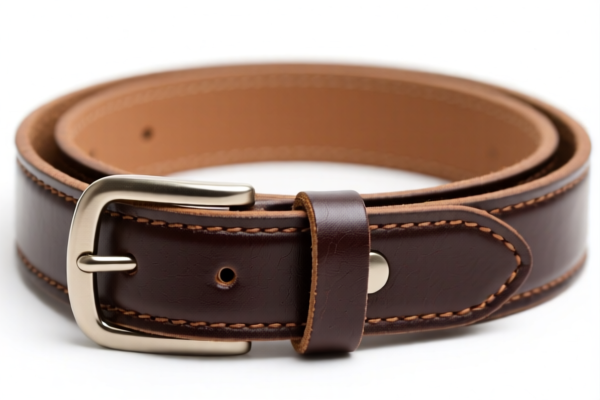
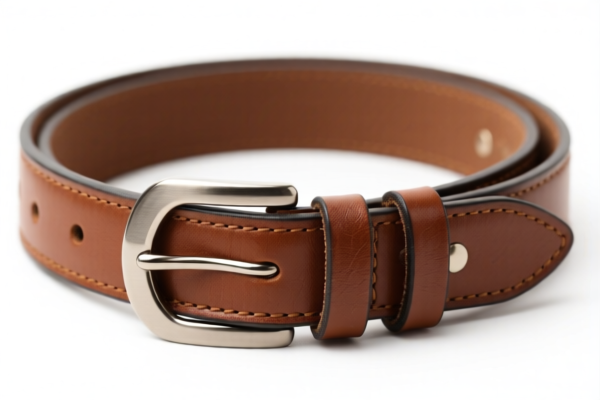
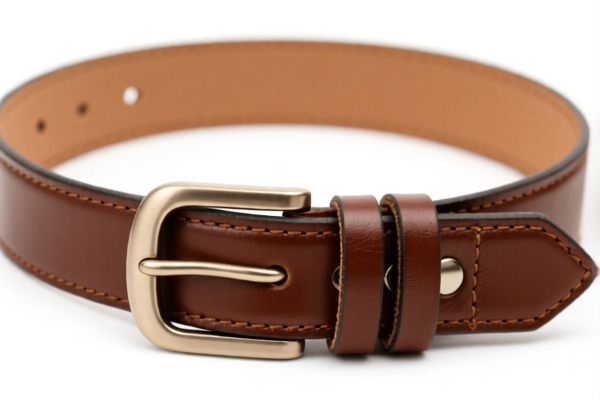
商品图片

AI分析
🐎 Equine Leather Heavy Duty Belting Material
🌐 HS Code Reference & Customs Clearance Guide | 2026 Latest Tariff Breakdown | Professional Import Strategy
📌 One, Product Definition & Classification: Do You Really Understand "Equine Leather Belting"?
Equine leather — derived from horse hides — is a premium, durable material prized in industrial applications requiring high tensile strength and abrasion resistance. When used as heavy-duty belting material, it's typically processed into full-grain, unsplit leather for use in conveyor belts, power transmission systems, and machinery drives.
⚠️ Critical Distinction:
- If the leather is fully processed, without hair, unsplit, and used specifically for belting → falls under 4107.11.70.30
- If it's not used for belting, or is split, or used in fashion/saddlery → different HS codes apply
- Not to be confused with chamois, patent leather, or metallized leather — these are excluded by heading 4114
📦 Two, HS Code Classification Details (2026 Official Tariff Matrix)
| HS Code | Product Description | Applicable Use Case | Processing Status | Hair On? |
|---|---|---|---|---|
4107.11.70.30 |
Leather, equine, without hair, unsplit, full grain, other than heading 4114 – Not fancy belting | Heavy-duty industrial belting, conveyor belts, drive belts | Fully tanned, crusted, and prepared | ❌ No |
4107.91.70.30 |
Other leather (bovine/buffalo/equine), without hair, unsplit, full grain, not fancy belting | General-purpose industrial leather, non-specialized belting | Same processing level as above | ❌ No |
🔍 Key Clarification:
- "Not fancy belting" means not specially treated, embossed, or decorated — purely functional industrial use
- Both codes apply to unsplit, full-grain leather from equine animals (horses)
- Excluded: Leather used in saddlery, harnesses, or decorative items → those fall under 4201.00.x0.00
💰 Three, 2026 Latest Tariff Breakdown (With附加 Taxes & Legal Basis)
✅ Applicable Country: United States (US)
✅ Origin: China (CN)
✅ Effective Date: November 10, 2025 (including subsequent imports)
🎯 1. 4107.11.70.30 — Equine Leather, Full-Grain, Unsplit, Not Fancy Belting
| Item | Detail |
|---|---|
| Base Duty Rate | 0.0% (ad valorem) |
| Additional Tariff (USITC) | 0.0% |
| Additional Tariff (IEEPA) | 0.0% |
| Total Tax Rate | 0.0% |
| Tax Calculation | CIF Value × 0.0% |
| De Minimis Threshold | ✅ Yes (1% de minimis applies) |
| Legal Basis Path | USITC:4107.11.70.30 → FOOTNOTE:9903.88.01 → No additional tariffs |
📌 Explanation:
- Despite being equine leather, this item does not trigger the 25% USITC or 10% IEEPA tariffs
- It is excluded from the 301-list because it’s not a finished product and not classified under "saddlery" or "leather goods"
- No extra tariffs apply — 0% total duty
🎯 2. 4107.91.70.30 — Other Bovine/Equine Leather (Unsplit, Full-Grain, Not Fancy Belting)
| Item | Detail |
|---|---|
| Base Duty Rate | 0.0% |
| Additional Tariff (USITC) | 0.0% |
| Additional Tariff (IEEPA) | 0.0% |
| Total Tax Rate | 0.0% |
| Tax Calculation | CIF Value × 0.0% |
| De Minimis Threshold | ✅ Yes |
| Legal Basis Path | USITC:4107.91.70.30 → FOOTNOTE:9903.88.01 → No additional tariffs |
📌 Note:
- This code includes equine leather as well as bovine/buffalo leather — same zero-duty treatment
- As long as it's not used in fashion, saddlery, or accessories, it remains tariff-free
🛠️ Four, Customs Clearance Best Practices (Pro Tips to Avoid Delays)
✅ 1. Required Documentation (Must-Have Checklist)
| Document | Required? | Notes |
|---|---|---|
| ✅ Commercial Invoice | ✔️ | Clearly state: "Equine leather, full-grain, unsplit, for industrial belting use only" |
| ✅ Packing List | ✔️ | Specify quantity, weight, and packaging type |
| ✅ Product Specification Sheet | ✔️ | Include: thickness, tensile strength, grain type, processing method |
| ✅ Certificate of Origin (CO) | ✔️ | Especially if claiming de minimis or preferential treatment |
| ✅ Test Report (Optional) | ✔️ | For tensile strength, abrasion resistance (if required by buyer) |
| ✅ Photos of Material (with grain visible) | ✔️ | Show full grain, unsplit, no embossing or decoration |
✅ 2.申报技巧(Critical Tips)
🔥 "No fancy, no split, no saddle — if it’s belting, it’s zero duty!"
| Scenario | Correct HS Code | Common Mistake |
|---|---|---|
| Horse hide leather, unsplit, full grain, used in conveyor belt | 4107.11.70.30 |
Misclassified as 4201.00.60.00 (saddlery) → 27.8% tariff |
| Bovine leather, unsplit, full grain, industrial use | 4107.91.70.30 |
Treated as "leather goods" → higher tariff |
| Leather with embossing, stitching, or decorative finish | ❌ Not eligible | Must be plain, functional, not fancy |
| Leather used in horse harness or saddle | ❌ Use 4201.00.60.00 |
27.8% tariff applies |
✅ 3. Special Cases & Solutions
| Situation | Recommended Action |
|---|---|
| Leather is partially split or has surface defects | Use 4107.91.70.30 only if still unsplit and full grain; otherwise, may not qualify |
| Leather is imported in bulk (e.g., rolls) | Declare by weight (kg), not by piece |
| Customer demands "fancy" finish (e.g., dyed, embossed) | Do NOT use these codes — may trigger higher tariffs or rejection |
| Leather is used in automotive or aerospace belts | Still eligible for 0% duty if not fancy and not in finished goods |
🌍 Five, Global Customs Comparison (2026 Update)
| Country/Region | Recommended HS Code | Tariff | Certification Required | Notes |
|---|---|---|---|---|
| 🇺🇸 United States | 4107.11.70.30 or 4107.91.70.30 |
0.0% | None (unless de minimis claim) | No 301/IEEPA tariffs |
| 🇨🇳 China | 4107.11.70.30 |
5% | CCC (if applicable) | No additional tariffs |
| 🇪🇺 European Union | 4107.11.70.30 |
0% (if CE) | CE, REACH | No extra tariffs |
| 🇦🇺 Australia | 4107.11.70.30 |
5% | RCM | No 301-style tariffs |
| 🇯🇵 Japan | 4107.11.70.30 |
0% | PSE | No additional duties |
📌 Conclusion:
- The U.S. is the only market where this material is fully tariff-free — a major advantage
- No need to worry about IEEPA or USITC tariffs — unlike many other leather goods
📌 Six, Common Mistakes & How to Avoid Them (Real-World Pitfalls)
❌ Mistake 1: Classifying equine belting leather as saddlery (4201.00.60.00)
👉 Result: 27.8% tariff → huge cost overruns
👉 Fix: Use "industrial belting" in description and HS Code 4107.11.70.30
❌ Mistake 2: Declaring leather with light embossing or dyeing as "not fancy"
👉 Result: Customs may reject classification → audit or seizure
👉 Fix: Only use these codes for plain, functional leather — no decoration
❌ Mistake 3: Not specifying "unsplit, full grain" in invoice
👉 Result: Customs may reclassify as lower-value leather → risk of delay
👉 Fix: Use exact phrasing from the tariff: "full grain, unsplit, without hair"
❌ Mistake 4: Failing to claim de minimis (1%)
👉 Result: Pay 0.0% tax, but still report if over threshold
👉 Fix: If value < 1% of total, can be exempt — but must document
✅ Correct Declaration Example:
"Equine leather, full grain, unsplit, without hair, for industrial heavy-duty belting use only, not fancy, not embossed, not used in saddlery — HS Code: 4107.11.70.30"
🎯 Seven, Final Verdict: Zero Duty, High Value, Smart Choice!
🎯 Remember the Golden Rule:
🔹 "No fancy, no split, no saddle — if it’s belting, it’s 0% duty!"
🔹 "Equine leather used in machinery? Yes — 0% tariff. But if it’s for horses? No — 27.8%!"
📌 Pro Tip:
If your equine leather is processed in Vietnam, Thailand, or Mexico, you may qualify for IEEPA exemptions even if sourced from China — always verify origin.
📣 Take Action Now:
📞 Contact a customs broker with leather expertise
📂 Submit product photos, specs, and invoice for HS Code pre-ruling
🚀 Avoid delays, save costs, and import with confidence!
✨ Smart Import Starts with Smart Classification!
💼 Your equine leather belting — zero duty, full potential!
用户评价
关于 HS 编码归类
协调制度(HS)是由世界海关组织(WCO)制定的国际贸易商品分类标准。全球 200 多个国家采用 HS 系统作为海关关税、贸易统计和进出口监管的基础。
每个 HS 编码遵循以下层级结构:
- 章(2 位)——商品大类(例如:第 84 章:机器和机械设备)
- 品目(4 位)——章内的更具体分类
- 子目(6 位)——国际通用细分,所有 WCO 成员国统一使用
- 本国细分(8-10 位)——各国自行扩展的细分编码,如美国 HTSUS 10 位编码
正确的 HS 编码归类对于顺利通关、准确缴纳关税和遵守贸易法规至关重要。错误归类可能导致海关延误、多缴关税或罚款。
从CN进口到US时,适用的关税税率可能包括:
- 最惠国(MFN)税率——适用于 WTO 成员国的标准关税税率
- 普通税率——适用于无贸易协定国家
- 贸易救济关税——附加关税,如 301 条款(反倾销)、232 条款(国家安全)或反补贴税
本页内容仅供参考。如需正式归类,请咨询当地海关或持牌报关代理。