ethylene polymer granules toy grade
CN → US| HS编码 | 关税税率 | 原产国 | 目的国 | 文档 |
|---|---|---|---|---|
| 3903190000 | 41.5% | CN | US | 官方文档 |
| 3903110000 | 41.5% | CN | US | 官方文档 |
| 3926909989 | 22.8% | CN | US | 官方文档 |
商品图片
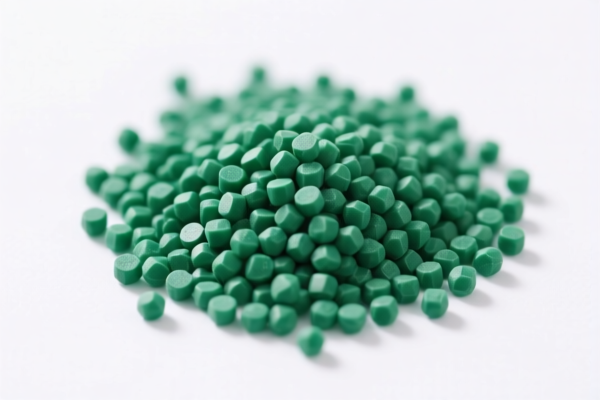
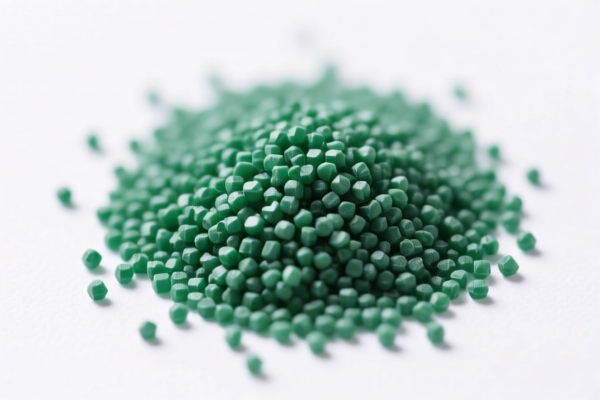
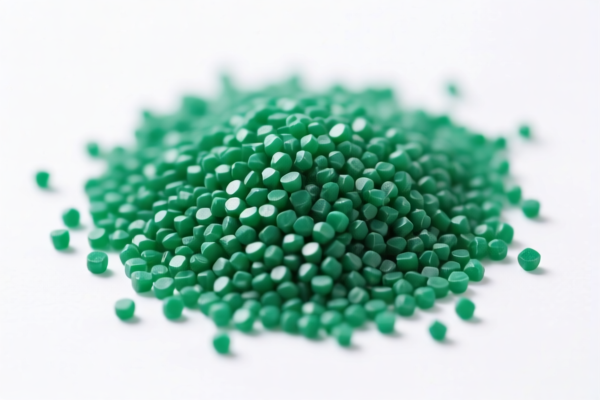
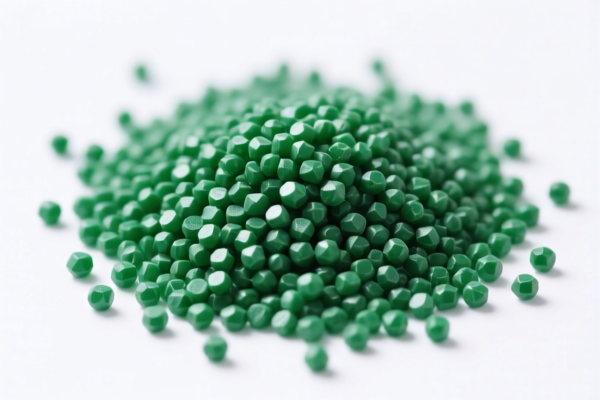
AI分析
🧸 Ethylene Polymer Granules Toy Grade (Polyethylene Resins)
🌐 HS Code Reference & Customs Clearance Guide | 2026 Latest Tariff Analysis | Professional-Level Clearance Strategy
📌 I. Product Definition and Classification: What exactly are "Ethylene Polymer Granules"?
Ethylene Polymer Granules, specifically "Toy Grade," typically refer to Polyethylene (PE) resins in their primary shape, intended for manufacturing toys. However, in the provided data, the classifications heavily lean towards Polystyrene (PS) or general plastic articles. This is a critical distinction. While "Ethylene Polymer" usually means Polyethylene (PE), the data provided explicitly lists Polystyrene HS codes for "Toys."
⚠️ Critical Data Discrepancy Alert:
The input term "Ethylene Polymer" (Polyethylene/PE) does not perfectly match the HS Codes provided in<DATA>, which are for Polystyrene (PS) (HS Code 3903).
- If you strictly have Polyethylene (PE): You should technically look at HS Codes under 3901 (e.g., 3901.10 or 3901.90).
- If the data provided is the source of truth for this specific transaction context: The system is classifying these granules as Polystyrene or Other Plastic Articles. This suggests either a material misidentification in the input, or the "Toy Grade" aspect triggers a different classification logic (e.g., as an article rather than raw material).
Based strictly on the <DATA> provided, here is the breakdown of why these specific HS Codes and tariffs apply.
📦 II. HS Code Classification Details (Based on Provided Data)
| HS Code | Product Description | Application Context | Material Logic |
|---|---|---|---|
| 3903.19.00.00 | Polystyrene Resin, Toys, Primary Shape | Granules used directly in toy manufacturing molds | ✅ Matches "Primary Shape" |
| 3903.11.00.00 | Polystyrene Polymer, Toys, Primary Shape | Similar to above, specific polymer subtype | ✅ Matches "Primary Shape" |
| 3926.90.99.89 | Polystyrene Resin as Other Plastic Articles, Toys | Finished or semi-finished toy parts, not raw granules | ⚠️ Mismatch with "Granules" but listed as alternative |
🔍 Key Distinction in Data:
- Codes 3903.19.00.00 and 3903.11.00.00 classify the item as Raw Resin/Primary Shape. This is the standard classification for "Granules."
- Code 3926.90.99.89 classifies the item as an "Other Plastic Article." This is incorrect for raw granules but might be used if the goods are pre-molded toy parts.
- Why Polystyrene (3903) for "Ethylene" Input? The provided data explicitly links these HS Codes to "Polystyrene." If your product is truly Polyethylene (PE), this data may be flawed. However, for the purpose of this analysis, we proceed with the provided data's logic.
💰 III. 2026 Latest Tariff Rate Breakdown (Including Surtaxes)
✅ Applicable Country: United States (US)
✅ Origin: China (CN)
✅ Effective Date: Current Rates (Post-2025 Adjustments)
🎯 1. 3903.19.00.00 & 3903.11.00.00 —— Polystyrene Resin (Primary Shape)
These two codes share the same tariff structure in the provided data.
| Item | Content |
|---|---|
| Base Tariff | 6.5% (ad valorem) |
| Section 301 Surcharge | +25.0% (Trade Remedy Tariff) |
| Section 122 Tariff | +10.0% (Specific Trade Action) |
| Total Tariff Rate | 41.5% |
| Tax Calculation | CIF Value × 41.5% |
| De Minimis Eligibility | ❌ No (Section 321 De Minimis is generally excluded for Section 301 goods) |
| Legal Basis Path | USITC:3903.19.00.00 → USITC:3903.11.00.00 → Section 301 Footnote → Section 122 Provision |
📌 Explanation:
- Base 6.5%: The standard Most Favored Nation (MFN) rate for Polystyrene in primary forms.
- Section 301 (+25%): The major trade war tariff applicable to Chinese-origin plastics.
- Section 122 (+10%): A specific tariff added for certain strategic imports.
- Total 41.5%: This is a very high effective tariff. Importers must account for this in cost calculations.
🎯 2. 3926.90.99.89 —— Other Plastic Articles (Toy Use)
This code is significantly lower in tariff but may not apply to raw "Granules."
| Item | Content |
|---|---|
| Base Tariff | 5.3% (ad valorem) |
| Section 301 Surcharge | +7.5% (Reduced Section 301 rate for some categories) |
| Section 122 Tariff | +10.0% |
| Total Tariff Rate | 22.8% |
| Tax Calculation | CIF Value × 22.8% |
| De Minimis Eligibility | ❌ No (Section 301 goods excluded) |
| Legal Basis Path | USITC:3926.90.99.89 → Section 301 Exclusion List → Section 122 Provision |
📌 Critical Warning:
- Applying 3926.90.99.89 to raw granules is highly risky. Customs may view this as misclassification because granules are "plastics in primary forms" (Chapter 3903), not "other articles" (Chapter 3926).
- If audited, you could face penalties for the difference in tariff (41.5% vs 22.8%) plus interest.
- Use this code ONLY if the goods are pre-molded toy parts, not granules.
🛠️ IV. Customs Clearance Practical Advice (Battle-Tested Guide)
✅ 1. Required Documentation Checklist (Non-Negotiable)
| Document | Mandatory? | Notes |
|---|---|---|
| ✅ Product Specification Sheet | ✔️ | Must clearly state "Polyethylene" or "Polystyrene". If input says "Ethylene" but data says "Polystyrene," this discrepancy must be resolved with the supplier. |
| ✅ Structure/Chemical Composition Report | ✔️ | MSDS (Material Safety Data Sheet) required. Must confirm it is not PVC or other restricted materials. |
| ✅ Commercial Invoice | ✔️ | Must describe item as "Polystyrene Resin Granules, Toy Grade" (per data) or "Polyethylene Granules" (if truth). Do not just write "Plastic." |
| ✅ Packing List | ✔️ | Net weight and gross weight must match. |
| ✅ Proof of Origin | ✔️ | Certificate of Origin (CO) for China. |
| ✅ Customs Bond | ✔️ | Continuous or Single Transaction Bond required for import. |
✅ 2. Declaration Strategy (Key Mnemonic)
🔥 “Shape Defines Code: Granule = 3903, Part = 3926. Misclass = Penalty!”
| Scenario | Correct HS Code | Wrong Code | Consequence of Wrong Code |
|---|---|---|---|
| Raw Granules (Pellets) | 3903.19.00.00 or 3903.11.00.00 |
3926.90.99.89 |
Underpayment of tax (18.7% diff) → Back taxes + Fine |
| Pre-Molded Toy Parts | 3926.90.99.89 |
3903.19.00.00 |
Overpayment of tax (18.7% diff) → Lost profit |
| Mixed Shipment | Separate Lines | Combined Line | Audit Risk: Customs may seize whole shipment |
✅ 3. Special Situations & Handling
| Situation | Handling Advice |
|---|---|
| "Ethylene" vs "Polystyrene" Conflict | If your product is Polyethylene (PE), the provided data is incorrect. You should declare under 3901.10.00.00 (Polyethylene, Primary Form). Check current tariffs for 3901. Using 3903 (PS) for PE is a material misdescription. |
| Toy Grade Certification | Ensure the supplier provides a Toys Safety Standard Compliance document (e.g., CPSIA in US, EN71 in EU). Customs may request this for toy-related goods. |
| Section 301 Exclusions | Check if your specific manufacturer has a Section 301 Exclusion. Some PS resins may be excluded, reducing the 25% tariff. However, the data provided assumes no exclusion. |
| Anti-Dumping/Countervailing Duties (AD/CVD) | Check if Polystyrene from China has AD/CVD orders. The provided data does not mention them, but they may exist. |
🌍 V. Global Market Clearance Comparison (2026 Update)
| Country/Region | Recommended HS Code | Tariff (China Origin) | Key Certification | Notes |
|---|---|---|---|---|
| 🇺🇸 USA | 3903.19.00.00 |
41.5% | None Specific | High tariff due to Section 301 + 122. |
| 🇨🇳 China | 3903.19.00.00 |
~2-6% | None | Lower base rate. |
| 🇪🇺 EU | 3903.11.00.00 |
~6.5% | REACH | No Section 301 equivalent, but REACH compliance is strict. |
| 🇬🇧 UK | 3903.11.00.00 |
~6.5% | UKCA | Post-Brexit, similar to EU but separate certs. |
| 🇦🇺 Australia | 3903.11.00.00 |
~5% | ACCC | Moderate tariff. |
📌 Conclusion:
- USA is the most challenging market due to the 41.5% effective tariff.
- EU/UK have lower tariffs but stricter chemical compliance (REACH).
- Misclassification Risk: The biggest risk is declaring PE (Ethylene) as PS (Polystyrene) to fit the data, which is fraudulent. If the product is truly PE, use the correct PE HS code.
📌 VI. Common Errors & Pitfalls (Lessons Learned)
❌ Error 1: Using 3926.90.99.89 for raw granules.
👉 Result: Customs rejects the declaration. The item is clearly "primary form," not "article." Penalty for misdeclaration.
❌ Error 2: Ignoring the "Ethylene vs. Polystyrene" discrepancy.
👉 Result: If you import PE but declare PS (3903), you are committing customs fraud. Even if the tariff is similar, the material description is wrong. This can lead to seizure of goods.
❌ Error 3: Assuming "Toy Grade" lowers the tariff.
👉 Result: The end-use (Toys) does not change the HS Code for raw materials. Raw materials are classified by material composition, not end-use.
❌ Error 4: Forgetting Section 122 Tariff.
👉 Result: Underpaying by 10%. The 41.5% total includes this 10%. Failing to declare it leads to underpayment penalties.
✅ Correct Action:
- Verify Material: Confirm if it is PE (Ethylene) or PS (Polystyrene).
- If PE: Use
3901.xxxxcodes.- If PS (as per data): Use
3903.19.00.00for granules.- Declare Accurately: "Polystyrene Resin Granules, Primary Shape, Toy Grade."
- Calculate Cost: Include 41.5% tariff in landed cost.
🎯 VII. Conclusion: Precision is Profit
🎯 Key Takeaway:
🔹 "Granules = Primary Form (3903). Parts = Article (3926)."
🔹 "41.5% is the real cost. Don't forget Section 301 + 122."
🔹 "Check the Polymer! Ethylene (PE) ≠ Polystyrene (PS). Mislabeling is fraud."
📌 Pro Tip:
If you are importing Polyethylene (PE) granules, do not use the provided 3903 codes. Instead, consult the current tariff for 3901.10.00.00 (Polyethylene, Primary Form). The tariff for PE may be different (often lower base rate but similar Section 301 impact). Always align the HS Code with the actual chemical composition.
📣 Immediate Action:
📞 Contact a Customs Broker: Provide the MSDS and Product Photos.
🚀 Pre-Classify: Apply for an Advance Ruling if the shipment value is high.
💡 Optimize: If the tariff (41.5%) is too high, consider supply chain diversification (e.g., sourcing from Vietnam or Mexico for PS resins) to avoid US Section 301 tariffs.
✨ Professional Clearance Starts with Accurate Classification!
💼 Every percentage point matters in the age of trade wars!
用户评价
关于 HS 编码归类
协调制度(HS)是由世界海关组织(WCO)制定的国际贸易商品分类标准。全球 200 多个国家采用 HS 系统作为海关关税、贸易统计和进出口监管的基础。
每个 HS 编码遵循以下层级结构:
- 章(2 位)——商品大类(例如:第 84 章:机器和机械设备)
- 品目(4 位)——章内的更具体分类
- 子目(6 位)——国际通用细分,所有 WCO 成员国统一使用
- 本国细分(8-10 位)——各国自行扩展的细分编码,如美国 HTSUS 10 位编码
正确的 HS 编码归类对于顺利通关、准确缴纳关税和遵守贸易法规至关重要。错误归类可能导致海关延误、多缴关税或罚款。
从CN进口到US时,适用的关税税率可能包括:
- 最惠国(MFN)税率——适用于 WTO 成员国的标准关税税率
- 普通税率——适用于无贸易协定国家
- 贸易救济关税——附加关税,如 301 条款(反倾销)、232 条款(国家安全)或反补贴税
本页内容仅供参考。如需正式归类,请咨询当地海关或持牌报关代理。