extension cable
CN → US| HS编码 | 关税税率 | 原产国 | 目的国 | 文档 |
|---|---|---|---|---|
| 8544429010 | 87.6% | CN | US | 官方文档 |
| 8536904000 | 35.0% | CN | US | 官方文档 |
| 8543906800 | 35.0% | CN | US | 官方文档 |
| 8543706000 | 35.0% | CN | US | 官方文档 |
| 8536698000 | 37.7% | CN | US | 官方文档 |
商品图片
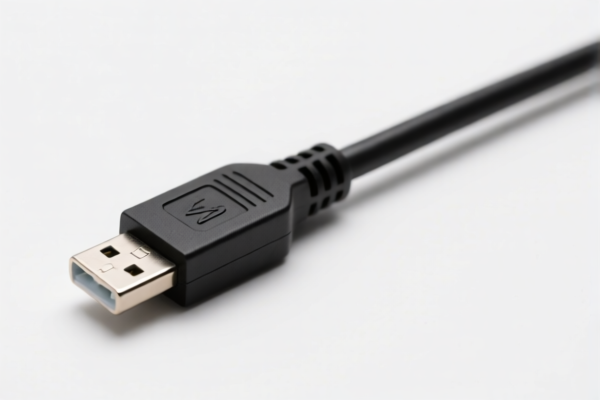
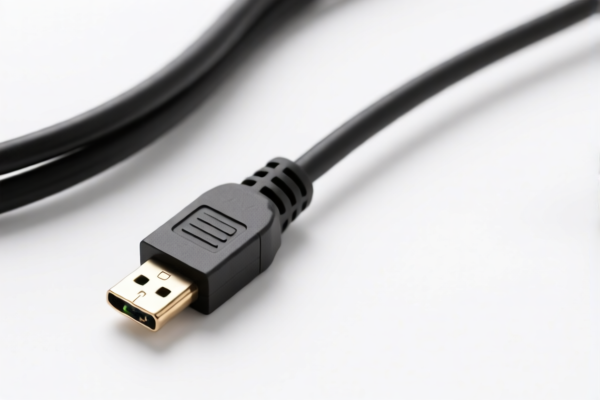
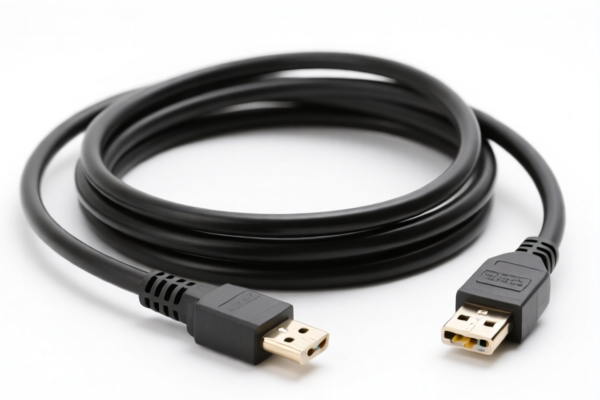
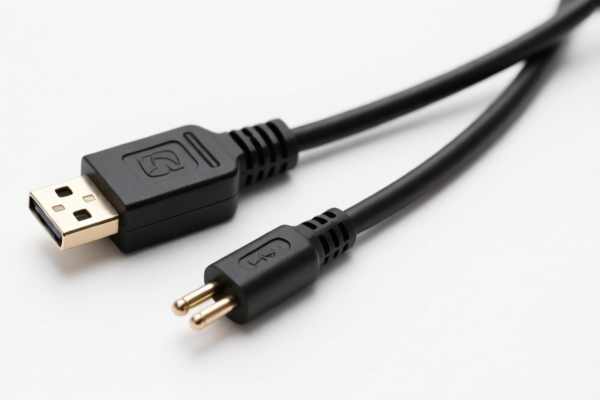
AI分析
🔌 Extension Cables & Power Strips (Cord Sets)
🌐 HS Code Reference & Customs Clearance Guide | 2026 Latest Tariff Analysis | Professional通关 Strategy
📌 I. Product Definition & Classification: Do You Really Understand "Extension Cables"?
Extension cables (often referred to as cord sets, power strips, or surge protectors in trade contexts) are essential electrical accessories used to extend the reach of power outlets. In international trade, the HS Code classification depends heavily on physical composition, functionality, and specific component materials (e.g., steel, aluminum, copper).
Key Distinctions: - Standard Electrical Cord Sets: Flexible wires with plugs/sockets, primarily used for general power distribution. - Material-Specific Items: If the cable housing or connectors contain significant amounts of steel, aluminum, or copper subject to specific trade restrictions, higher tariffs may apply.
⚠️ Critical Classification Point:
- If the item is a simple wire/cord with no complex electronic regulation → 8536 (Electrical Apparatus).
- If the item involves specific conductive materials triggering Section 232 (Steel/Aluminum/Copper) tariffs → 8544 or higher tax brackets.
- If it is considered an "electrical machine/appliance" component due to specific construction → 8543 (Electrical Machines).
📦 II. HS Code Classification Details (2026 Latest Tariff Authority Comparison)
| HS Code | Product Description | Application Scenario | Material/Structure Key |
|---|---|---|---|
8544.42.90.10 |
Extension/Socket Cables (Steel/Al/Copper Triggered) | High-tax scenarios; cables where material restrictions apply | ⚠️ High Risk: Subject to Steel/Al/Copper tariffs |
8536.90.40.00 |
Electrical Connection Devices (General) | Standard plugs, sockets, and connectors for connecting circuits | ✅ Standard: Basic electrical connection |
8543.90.68.00 |
Other Electrical Machines/Components (兜底/Residual) | Components that don't fit neatly into specific plug/socket codes but are part of an electrical system | ✅ Residual: "Other" category fallback |
8543.70.60.00 |
Electrical Connection Equipment (Network/Device) | Devices designed for connecting network or specific equipment, no material conflict | ✅ Specific: Network/Device focused |
8536.69.80.00 |
Switches, Plugs, Sockets (Metal/Plastic Composite) | Connectors combining conductive metal and insulating plastic | ✅ Hybrid: Common physical structure for plugs |
🔍 Key Reminder:
- The classification shifts significantly based on whether the CBP (Customs and Border Protection) views the item primarily as a wire/conductor (8544) or an electrical connection device (8536/8543).
- The presence of Steel, Aluminum, or Copper components is the primary driver for the massive tariff jump to 87.6%.
💰 III. 2026 Latest Tariff Rate Details (Including Surcharges & Policy Add-ons)
✅ Applicable Country: United States (US)
✅ Country of Origin: China (CN)
✅ Effective Time: 2025/2026 Period (Post-Trade War Adjustments)
🎯 1. 8544.42.90.10 —— Extension/Socket Cables (High Tax Trigger)
| Item | Content |
|---|---|
| Base Rate | 2.6% (ad valorem) |
| Retaliatory/Surcharges | +25.0% (Section 301) |
| Section 232/Tariff 122 | +10% + 50% (Specific tariffs for Steel, Aluminum, Copper products) |
| Total Rate | 87.6% |
| Tax Calculation | CIF Value × 87.6% |
| De Minimis Exemption | ❌ Not Eligible (deny_de_minimis) |
| Legal Basis Path | USITC:8544.42.90.10 → FOOTNOTE:Steel/Al/Copper → Section 232 |
📌 Explanation:
- This is the worst-case scenario for extension cables. It applies if the goods are classified as conductors specifically subject to material-based tariffs.
- The 50% tariff for Steel/Aluminum/Copper products is the dominant cost driver.
- Total tax of 87.6% makes this category economically unviable for most imports without significant duty drawback programs.
🎯 2. 8536.90.40.00 —— Electrical Connection Devices (Standard)
| Item | Content |
|---|---|
| Base Rate | 0.0% |
| Section 301 Surcharge | +25.0% |
| IEEPA Surcharge | +10% (China-specific) |
| Total Rate | 35.0% |
| Tax Calculation | CIF Value × 35.0% |
| De Minimis Exemption | ❌ Not Eligible |
| Legal Basis Path | IEEPA:9903.01.24 → USITC:8536.90.40.00 → FOOTNOTE:301 |
📌 Note:
- This is a common classification for plugs, sockets, and connectors.
- While still high at 35%, it is significantly lower than the 87.6% category.
- Applies to devices "for connecting a circuit" (electrical connection equipment).
🎯 3. 8543.90.68.00 & 8543.70.60.00 —— Electrical Machines/Components (Residual/Specific)
| Item | Content |
|---|---|
| Base Rate | 0.0% |
| Section 301 Surcharge | +25.0% |
| IEEPA Surcharge | +10% |
| Total Rate | 35.0% |
| Tax Calculation | CIF Value × 35.0% |
| De Minimis Exemption | ❌ Not Eligible |
| Legal Basis Path | IEEPA:9903.01.24 → USITC:8543.90.68.00 / 8543.70.60.00 |
📌 Note:
-8543.90.68.00: "Other" machines/appliances (fallback category).
-8543.70.60.00: Electrical connection equipment for network/devices.
- Both share the same 35% effective rate, assuming no material-specific triggers.
🎯 4. 8536.69.80.00 —— Switches, Plugs, Sockets (Material Composite)
| Item | Content |
|---|---|
| Base Rate | 2.7% |
| Section 301 Surcharge | +25.0% |
| IEEPA Surcharge | +10% |
| Total Rate | 37.7% |
| Tax Calculation | CIF Value × 37.7% |
| De Minimis Exemption | ❌ Not Eligible |
| Legal Basis Path | IEEPA:9903.01.24 → USITC:8536.69.80.00 |
📌 Note:
- This code covers switches, plugs, and sockets, often made of conductive metal and insulating plastic.
- The 2.7% base rate slightly increases the total to 37.7%, making it marginally more expensive than the 0% base rate codes.
🛠️ IV. Customs Clearance Practical Advice (Battle-Tested Pitfall Avoidance)
✅ 1. Required Documentation Checklist (No Compromise)
| Document | Mandatory? | Description |
|---|---|---|
| ✅ Product Specification Sheet | ✔️ | Must detail: Voltage, Amps, Wire Gauge, Plug Type, Country of Origin. |
| ✅ Material Breakdown | ✔️ | Crucial: Specify percentages of Copper, Aluminum, Steel, Plastic. This determines if you get hit with the 50% tariff. |
| ✅ Product Photos (Clear Labels) | ✔️ | Show the plug, socket, cable texture, and any safety certifications (UL, ETL, CE). |
| ✅ Circuit/Structure Diagram | ✔️ | If claiming 8543 (Machine), you must prove it's not just a simple wire. |
| ✅ Commercial Invoice | ✔️ | Clearly state "Extension Cable" or "Power Strip," not generic "Wire." |
| ✅ Bill of Lading/Air Waybill | ✔️ | Ensure weight and dimensions match the commercial invoice. |
✅ 2. Declaration Tips (Key Mnemonic)
🔥 "Know Your Metal, Choose Your Code!"
| Scenario | Correct Declaration | Wrong Practice |
|---|---|---|
| Standard Power Strip (Plastic/Metal mix) | 8536.90.40.00 or 8536.69.80.00 |
❌ Claiming 8544 → 87.6% |
| Cable with High Copper/Steel Content | 8544.42.90.10 (If applicable) |
❌ Hiding material content → Penalty + Back Tax |
| Network/Device Connection Cable | 8543.70.60.00 |
❌ Calling it "General Power Wire" |
| Simple Extension Cord | 8536.90.40.00 |
❌ Over-complicating with 8543 without proof |
✅ 3. Special Cases Handling
| Situation | Handling Advice |
|---|---|
| OEM Extension Cables | Provide client PO + design specs. Ensure material specs match the declared HS Code. |
| Surge Protectors | Often classified under 8536 or 8543. If they have electronic components, lean towards 8543. If just a plug+socket, use 8536. |
| Low-Value Shipments | ❌ No De Minimis: Extension cables from China are not eligible for the $800 de minimis exemption. Do not attempt to split shipments to avoid tax. |
| Material Source | If copper is sourced from non-China countries (e.g., Vietnam, Mexico), document the substantial transformation. This might allow IEEPA exemption, but Section 301 may still apply depending on the final assembly location. |
🌍 V. Global Market Comparison (2026 Latest)
| Country/Region | Recommended HS Code | Effective Tax Rate (CN Origin) | Certification Requirements | Notes |
|---|---|---|---|---|
| 🇺🇸 USA | 8536.90.40.00 |
35.0% | UL/ETL, FCC (if electronic) | High risk of 87.6% if misclassified as 8544 with metals. |
| 🇨🇳 China | 8536.90.40.00 |
5% (Import) | CCC | Low entry barrier. |
| 🇪🇺 EU | 8536.69 / 8544.42 |
0-4% (If CE Marked) | CE, RoHS, REACH | No US-style surcharges. Focus on safety standards. |
| 🇬🇧 UK | 8536.69 |
4% | UKCA | Post-Brexit standards apply. |
📌 Conclusion:
- USA is the most challenging market due to the layered tariffs (Base + 301 + IEEPA + Section 232).
- Misclassification as8544.42.90.10is the most common and costly error, leading to an 87.6% tax burden.
- Accurate material declaration is the single most important factor in determining whether you pay 35% or 87.6%.
📌 VI. Common Errors & Pitfalls (Blood & Tears Lessons)
❌ Error 1: Classifying all cables as 8544 (Wires) to avoid "plug" scrutiny.
👉 Consequence: If the cable contains steel/aluminum/copper components subject to Section 232, you face 87.6% instead of 35%.
❌ Error 2: Ignoring IEEPA (10%) and Section 301 (25%) in cost calculations.
👉 Consequence: Profit margins are wiped out by unexpected 35% total taxes.
❌ Error 3: Assuming De Minimis ($800) applies.
👉 Consequence: CBP will seize shipments or demand immediate payment of duties + penalties. Extension cables from China are strictly excluded.
✅ Correct Approach:
"Extension Cable, 10A, 125V, 6ft, 3-Prong NEMA 5-15P, Copper Wire, PVC Insulation, UL Listed, Made in China"
Recommended HS Code:8536.90.40.00(Unless specific material triggers8544.42.90.10).
🎯 VII. Conclusion: Professional Declaration Saves Money!
🎯 Remember the Mantra:
🔹 "Metal Content Dictates the Rate; 35% is Good, 87% is Blood!"
🔹 "HS Code Choice is Critical; One Digit Change, Thousands of Dollars!"
📌 Pro Tip:
If your extension cables are assembled in Vietnam, Mexico, or Malaysia (and not just simple assembly in China), you may qualify for IEEPA exemptions. However, Section 301 (25%) and potential Section 232 tariffs may still apply depending on the origin of raw materials.
Recommendation: Apply for a Pre-Ruling (Advance Ruling) from CBP to confirm the HS Code and tax liability before shipping.
📣 Immediate Action:
📞 Contact a licensed customs broker + Provide detailed material specs + Request HS Code Pre-Ruling
🚀 Ensure your extension cables pass smoothly, comply with regulations, and protect your profit margins!
✨ Professional Customs Clearance Starts with Precise Classification!
💼 Every penny of duty you save is pure profit!
用户评价
关于 HS 编码归类
协调制度(HS)是由世界海关组织(WCO)制定的国际贸易商品分类标准。全球 200 多个国家采用 HS 系统作为海关关税、贸易统计和进出口监管的基础。
每个 HS 编码遵循以下层级结构:
- 章(2 位)——商品大类(例如:第 84 章:机器和机械设备)
- 品目(4 位)——章内的更具体分类
- 子目(6 位)——国际通用细分,所有 WCO 成员国统一使用
- 本国细分(8-10 位)——各国自行扩展的细分编码,如美国 HTSUS 10 位编码
正确的 HS 编码归类对于顺利通关、准确缴纳关税和遵守贸易法规至关重要。错误归类可能导致海关延误、多缴关税或罚款。
从CN进口到US时,适用的关税税率可能包括:
- 最惠国(MFN)税率——适用于 WTO 成员国的标准关税税率
- 普通税率——适用于无贸易协定国家
- 贸易救济关税——附加关税,如 301 条款(反倾销)、232 条款(国家安全)或反补贴税
本页内容仅供参考。如需正式归类,请咨询当地海关或持牌报关代理。