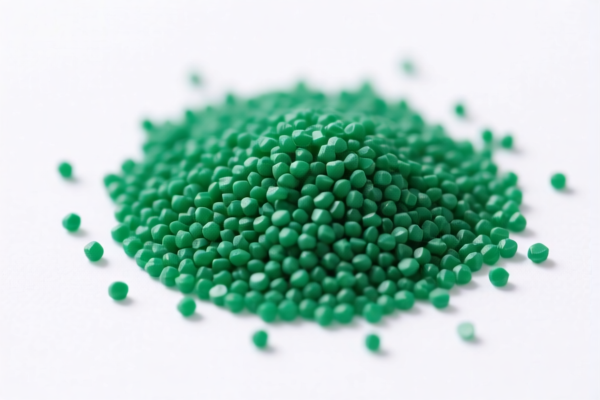
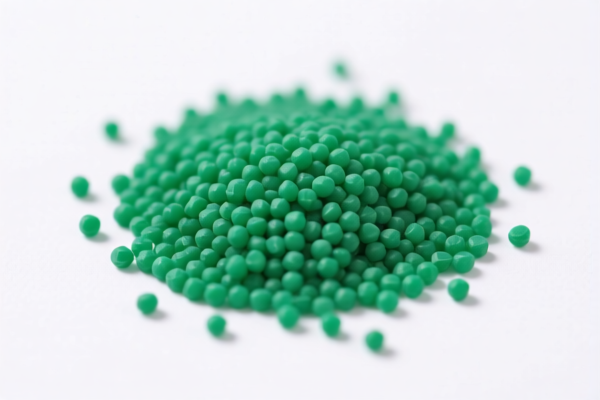
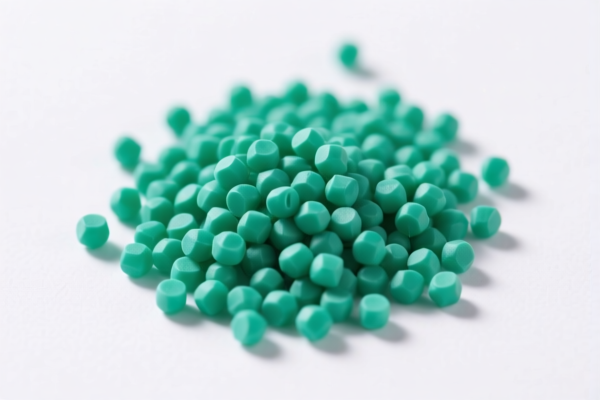
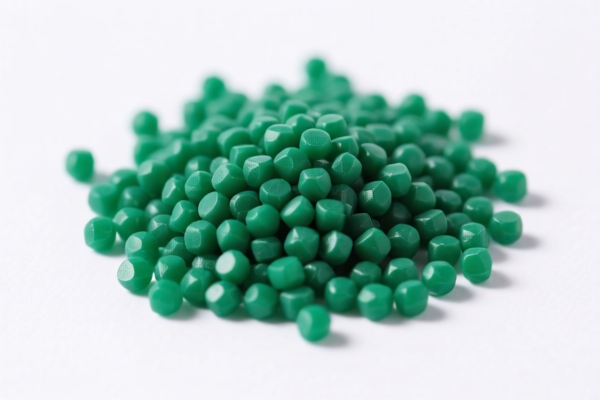
filled ptfe granules
CN → US| HS编码 | 关税税率 | 原产国 | 目的国 | 文档 |
|---|---|---|---|---|
| 3914002000 | 35.0% | CN | US | 官方文档 |
| 3914006000 | 38.9% | CN | US | 官方文档 |
| 3904610010 | 40.8% | CN | US | 官方文档 |
| 3926909989 | 22.8% | CN | US | 官方文档 |
| 3904610090 | 40.8% | CN | US | 官方文档 |
商品图片
AI分析
🏭 Filled PTFE Granules (Polished Plastic Particles)
🌐 HS Code Reference & Customs Clearance Guide | 2026 Latest Tariff Analysis | Professional-Level Clearance Strategy
📌 I. Product Definition & Classification: What Exactly Are "Filled PTFE Granules"?
Filled PTFE Granules are semi-finished plastic materials used primarily in the manufacturing of bearings, seals, bushings, and gaskets via compression molding or extrusion. Unlike pure Polytetrafluoroethylene (PTFE), these granules contain reinforcing fillers (such as glass fiber, carbon fiber, graphite, bronze, or PEEK) to enhance mechanical strength, wear resistance, and thermal conductivity.
⚠️ Key Classification Distinction:
- If classified under Chapter 39 (Plastics), it is treated as a raw material (primary form).
- The specific HS code depends on whether the product is considered "PTFE in primary forms" (3904) or "Articles of Plastics" (3926), and how the "filler" impacts the fundamental character of the polymer.
- Crucial Note: Customs authorities often scrutinize "filled" PTFE to determine if it retains the essential character of PTFE (3904) or has become a general plastic article (3926) due to high filler content.
📦 II. HS Code Classification Details (2026 Latest Tariff Authority Comparison)
Based on the provided data, here are the 5 potential HS Codes and their corresponding tariff structures for Filled PTFE Granules importing into the US from China.
| HS Code | Product Description (Summary) | Total Tax Rate | Tax Breakdown |
|---|---|---|---|
| 3914.00.20.00 | PTFE Injection Molding Granules, Polymer Material, Particle Form, Fits Primary Form Description | 35.0% | Base: 0.0% Add-on: 25.0% Section 122: 10% |
| 3914.00.60.00 | PTFE Injection Molding Granules, Ch. 39 Polymer Material, Particle Form, Fits Primary Form Characteristics | 38.9% | Base: 3.9% Add-on: 25.0% Section 122: 10% |
| 3904.61.00.10 | PTFE Injection Molding Granules, Material is PTFE, Particle Form, Fits Classification Explanation Requirements | 40.8% | Base: 5.8% Add-on: 25.0% Section 122: 10% |
| 3926.90.99.89 | PTFE Injection Molding Granules, Material is Plastic, Particle Form, Fits Plastic Product Category | 22.8% | Base: 5.3% Add-on: 7.5% Section 122: 10% |
| 3904.61.00.90 | PTFE Injection Grade Granules, Material is PTFE, Particle Form, Fits Other Category Requirements | 40.8% | Base: 5.8% Add-on: 25.0% Section 122: 10% |
🔍 Critical Analysis:
- 3914.00 covers "Polymers of tetrafluoroethylene in primary forms." This is the most technically accurate category for pure or filler-modified PTFE granules intended for molding.
- 3904.61 covers "Polytetrafluoroethylene" specifically. The distinction between 3914 and 3904 can be subtle but affects the Base Tariff (0% vs 5.8%).
- 3926.90.99.89 is the "Others" category for plastic articles. Using this code significantly lowers the Add-on Tax (7.5% vs 25.0%), resulting in the lowest total tax (22.8%). However, customs may challenge this if the product is clearly a raw polymer granule rather than a finished "article."
💰 III. 2026 Latest Tariff Rate Details (Including Surcharges & Policy Add-ons)
✅ Applicable Country: United States (US)
✅ Country of Origin: China (CN)
✅ Effective Time: 2025/2026 (Current Trade War Context)
🎯 1. 3926.90.99.89 —— Lowest Tax Option (If Applicable)
| Item | Content |
|---|---|
| Base Rate | 5.3% |
| USITC Add-on Tax | +7.5% (Lower tier for certain plastic articles) |
| Section 122 Tax | +10% (Targeted China-specific surcharge) |
| Total Rate | 22.8% |
| Tax Calculation | CIF Value × 22.8% |
| De Minimis Eligibility | ❌ No (Value exceeds $800 threshold usually, and Section 122 applies) |
| Legal Basis Path | USITC:3926.90.99.89 → Section 122: 10% |
📌 Explanation:
- This code offers the most favorable tax rate (22.8%) among all options.
- Risk: Customs may classify filled PTFE granules as "primary forms" (3904/3914) rather than "articles" (3926). If reclassified, the Add-on Tax jumps from 7.5% to 25.0%.
- Strategy: Only use this if the filler content is so high that the product no longer retains the primary characteristic of PTFE resin, or if you have a prior ruling supporting this classification.
🎯 2. 3914.00.20.00 —— Standard PTFE Primary Form (No Base Tax)
| Item | Content |
|---|---|
| Base Rate | 0.0% |
| USITC Add-on Tax | +25.0% (Standard Section 301 tariff) |
| Section 122 Tax | +10% |
| Total Rate | 35.0% |
| Tax Calculation | CIF Value × 35.0% |
| De Minimis Eligibility | ❌ No |
| Legal Basis Path | USITC:3914.00.20.00 → Section 301: 25% → Section 122: 10% |
📌 Explanation:
- This is a common classification for PTFE in primary forms.
- The 0% Base Rate helps, but the 25% Add-on Tax is punitive.
- Recommendation: Verify if your specific PTFE grade qualifies for 3914. If it does, this is safer than 3926 but more expensive than 3926 if 3926 is accepted.
🎯 3. 3904.61.00.10 & 3904.61.00.90 —— Specific PTFE Codes (Highest Tax)
| Item | Content |
|---|---|
| Base Rate | 5.8% |
| USITC Add-on Tax | +25.0% |
| Section 122 Tax | +10% |
| Total Rate | 40.8% |
| Tax Calculation | CIF Value × 40.8% |
| De Minimis Eligibility | ❌ No |
📌 Explanation:
- These codes have the highest total tax burden (40.8%).
- They apply to specific sub-categories of PTFE. Unless you have a specific technical reason to choose these over 3914, they are not recommended for cost optimization.
🛠️ IV. Customs Clearance Practical Advice (Battle-Tested Pitfall Guide)
✅ 1. Documentation Checklist (Non-Negotiable)
| Document | Required | Explanation |
|---|---|---|
| ✅ Product Specification Sheet | ✔️ | Must detail: Base resin (PTFE), Filler type (Glass/Carbon/etc.), Filler %, Melt Flow Index (MFI), Density. |
| ✅ Technical Data Sheet (TDS) | ✔️ | Proves the product is in "primary form" (granules/powder) and not a pre-molded part. |
| ✅ Commercial Invoice | ✔️ | Clearly state: "Filled PTFE Granules, Primary Form, Not Finished Articles." |
| ✅ Packing List | ✔️ | List net/gross weight, number of bags. |
| ✅ Certificate of Origin (CO) | ✔️ | Required for Section 122 determination. |
| ✅ Structure Diagram (Optional) | ✔️ | If disputed, show molecular structure or processing method to prove it's a resin. |
✅ 2. Declaration Tips (Key Mantras)
🔥 “Granules are Primary, Articles are Finished. Name Precisely, Avoid 40% Tax!”
| Scenario | Correct Declaration | Wrong Practice |
|---|---|---|
| Pure/Filled PTFE Granules | 3904.61.00 or 3914.00.20 |
Declaring as "Plastic Parts" → Triggers 3926 audit |
| Filled PTFE Pellets | Emphasize "Primary Form" | Declaring as "Plastic Products" → May accept 22.8% but risky |
| Pre-molded Bushings | 3926.90.99.89 |
Declaring as Granules → Smuggling/Undervaluation Risk |
| High Filler Content (>50%) | Argue for 3926.90.99.89 |
Using PTFE codes if character is lost → Rejection |
✅ 3. Special Handling Strategies
| Situation | Handling Advice |
|---|---|
| Dispute on Classification | If Customs challenges 3926.90.99.89 (22.8%) vs 3914.00 (35%), provide GRI 1 analysis: Does the product retain the essential character of PTFE? If yes, it’s 3914/3904. If no (e.g., mostly carbon fiber composite), argue for 3926. |
| Section 122 Impact | All codes listed above include a +10% Section 122 tax. This is non-negotiable for China-origin goods. No duty-free exemption available. |
| Advance Ruling | Highly Recommended. Given the 22.8% vs 40.8% difference, apply for a Binding Tariff Ruling with CBP before shipment. |
| Filler Type Disclosure | Be transparent about filler type. Some fillers (like carbon) may trigger different regulatory checks (e.g., carbon fiber restrictions), though PTFE itself is generally safe. |
🌍 V. Global Market Comparison (2026 Latest)
| Country/Region | Recommended HS Code | Estimated Tax | Certification | Notes |
|---|---|---|---|---|
| 🇺🇸 USA | 3926.90.99.89 (if accepted) |
22.8% | No special cert | Highest risk of classification audit. |
| 🇺🇸 USA | 3914.00.20.00 (Safe) |
35.0% | No special cert | Standard for PTFE granules. |
| 🇨🇳 China | 3904.61.00 |
5% (Export) | N/A | Export duty is low. |
| 🇪🇺 EU | 3904.61.00 |
6.5% | REACH Compliance | No "Section 122" equivalent, but anti-dumping may apply. |
| 🇮🇳 India | 3904.61.00 |
~10-15% | BIS Certification | Higher duties, check local exemptions. |
📌 Conclusion:
- The US market is the most complex due to the layered tariff structure (Base + 25% + 10%).
- Cost Optimization Strategy: Attempt to classify under 3926.90.99.89 for 22.8% tax, but be prepared for scrutiny. If rejected, fall back to 3914.00.20.00 at 35.0%.
- Avoid3904.61.00.x0(40.8%) unless technically required, as it is the most expensive option.
📌 VI. Common Errors & Pitfalls (Blood Lessons)
❌ Error 1: Declaring "PTFE Granules" under 3904.61.00.90 (40.8%) without justification
👉 Consequence: Overpaying 5.8% in base tax.
✅ Fix: Check if 3914.00.20.00 (35.0%) or 3926.90.99.89 (22.8%) applies.
❌ Error 2: Using 3926.90.99.89 for pure PTFE granules
👉 Consequence: Customs reclassifies to 3914 or 3904, charging 35-40.8% + penalties.
✅ Fix: Ensure filler content justifies "Plastic Article" status, or accept the higher tax for 3914.
❌ Error 3: Ignoring the 10% Section 122 Tax
👉 Consequence: Underpayment of duties, leading to detention and fines.
✅ Fix: Always include the 10% surcharge in cost calculations for China-origin goods.
❌ Error 4: Ambiguous Product Name
👉 Consequence: Customs cannot determine primary form vs. article.
✅ Fix: Use clear names: "Filled PTFE Injection Molding Granules, Primary Form, 20% Glass Fiber."
🎯 VII. Conclusion: Precise Classification Saves Money!
🎯 Remember the Mantra:
🔹 "Granules = Primary Form (3914/3904), Parts = Articles (3926)."
🔹 "3926 is cheapest (22.8%) but risky; 3914 is safe (35.0%); 3904 is expensive (40.8%)."
🔹 "Section 122 adds 10% to all. Never forget it!"
📌 Pro Tip:
If your product is high-filler PTFE (e.g., >50% carbon/bronze), aggressively pursue 3926.90.99.89 with technical documentation. If it's low-filler or pure PTFE, stick to 3914.00.20.00 to avoid audits, accepting the 35.0% rate.
📣 Immediate Action:
📞 Contact a Licensed Customs Broker + Provide Technical Data Sheet + Request Pre-Ruling for
3926vs3914classification.
🚀 Optimize Your Supply Chain with accurate HS Codes to maximize profit margins in the US market.
✨ Professional Clearance Starts with Accurate Classification!
💼 Every Percent of Duty Counts!
用户评价
关于 HS 编码归类
协调制度(HS)是由世界海关组织(WCO)制定的国际贸易商品分类标准。全球 200 多个国家采用 HS 系统作为海关关税、贸易统计和进出口监管的基础。
每个 HS 编码遵循以下层级结构:
- 章(2 位)——商品大类(例如:第 84 章:机器和机械设备)
- 品目(4 位)——章内的更具体分类
- 子目(6 位)——国际通用细分,所有 WCO 成员国统一使用
- 本国细分(8-10 位)——各国自行扩展的细分编码,如美国 HTSUS 10 位编码
正确的 HS 编码归类对于顺利通关、准确缴纳关税和遵守贸易法规至关重要。错误归类可能导致海关延误、多缴关税或罚款。
从CN进口到US时,适用的关税税率可能包括:
- 最惠国(MFN)税率——适用于 WTO 成员国的标准关税税率
- 普通税率——适用于无贸易协定国家
- 贸易救济关税——附加关税,如 301 条款(反倾销)、232 条款(国家安全)或反补贴税
本页内容仅供参考。如需正式归类,请咨询当地海关或持牌报关代理。