finished equine leather
CN → US| HS编码 | 关税税率 | 原产国 | 目的国 | 文档 |
|---|---|---|---|---|
| 4202213000 | 40.3% | CN | US | 官方文档 |
| 4202313000 | 38.7% | CN | US | 官方文档 |
| 4107113000 | 13.6% | CN | US | 官方文档 |
| 4107112000 | 37.4% | CN | US | 官方文档 |
商品图片
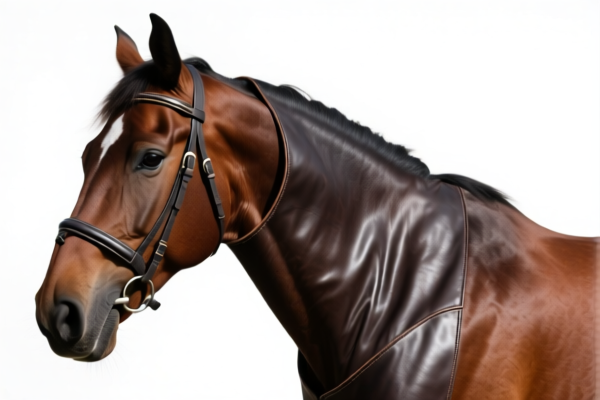
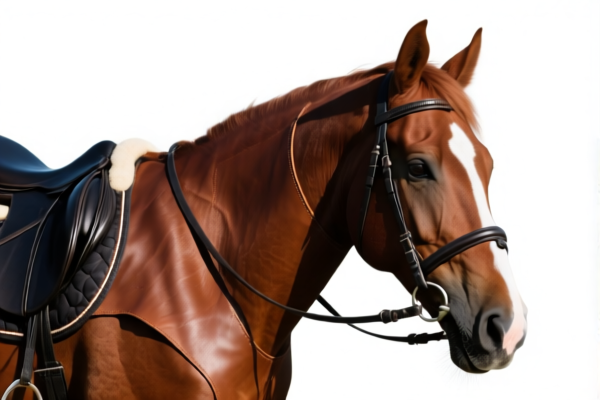
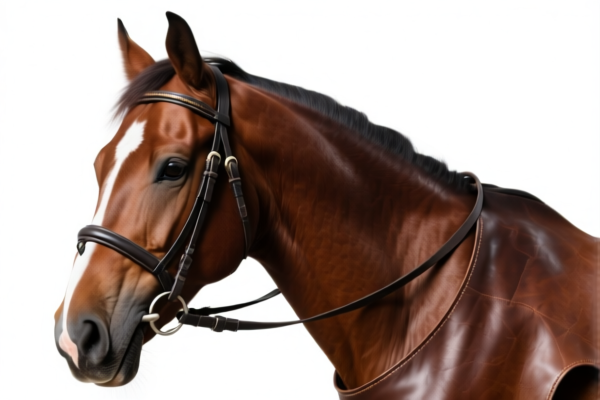
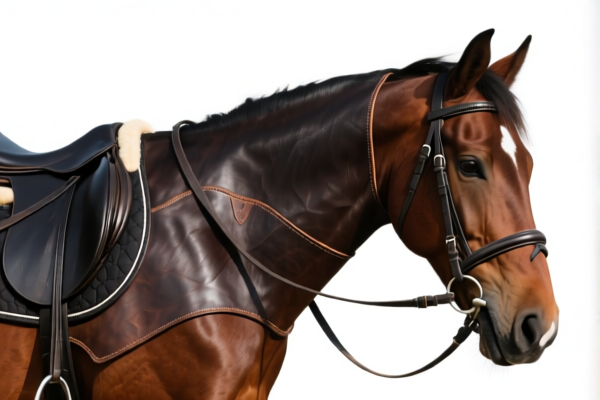
AI分析
🐴 Finished Equine Leather (Post-Tanning Prepared)
🌐 HS Code Reference & Customs Clearance Guide | 2026 Latest Tariff Analysis | Professional Clearance Strategy
📌 I. Product Definition & Classification: Do You Really Understand "Equine Leather"?
Finished equine leather refers to leather from horses or other equine animals that has undergone tanning or crust processing. In international trade, specifically for the US market (as per the provided data), the classification hinges on two critical factors:
1. Hair-on vs. Hair-off: The leather must be without hair on (e.g., for upholstery, gloves, apparel).
2. Surface Area & Grain Status: Whether it is whole hides/skins, full grain, unsplit, and under 28 sq. ft. (2.6 m²).
⚠️ Key Distinction:
- If the leather is with hair (fur/shearling) → Goes to 4102 or 4103.
- If the leather is tanned but not further prepared (crust) → Goes to 4104/4105.
- If the leather is finished (parchment-dressed or further prepared) → Goes to 4107.
📦 II. HS Code Classification Details (2026 Latest Tariff Authority Match)
Based on the provided data, the relevant HS Codes for Finished Equine Leather (Hair-off) fall under Heading 4107. Specifically, for bovine/equine full grain unsplit hides/skins ≤ 28 sq. ft.:
| HS Code | Product Description | Surface Area | Grain/Type | Tax Detail (Base + Additional) |
|---|---|---|---|---|
4107.11.30.00 |
Fancy Finished Equine Leather | ≤ 28 sq. ft. (2.6 m²) | Full Grain, Unsplit | Base: 3.6% Additional: 0.0% Total: 3.6% |
4107.11.20.00 |
Not Fancy Finished Equine Leather | ≤ 28 sq. ft. (2.6 m²) | Full Grain, Unsplit | Base: 2.4% Additional: 25.0% Total: 27.4% |
🔍 Critical Note:
- The term "Fancy" generally refers to leathers with special finishes, colors, or textures (e.g., embossed, dyed, or coated for high-end goods).
- "Not Fancy" refers to standard, plain, or natural finishes.
- Both codes apply to bovine (including buffalo) OR equine animals. The data does not distinguish between horse and cow in this specific subheading; it groups them under "Of bovines, and of a unit surface area not exceeding 28 square feet."
💰 III. 2026 Latest Tariff Rate Breakdown (Including Surcharges)
✅ Applicable Country: United States (US)
✅ Origin: China (CN) (Implied by the 25% additional tax structure typical of US-China trade)
✅ Effective Time: 2025/2026 Tariff Schedule
🎯 1. 4107.11.30.00 — Fancy Finished Equine Leather
| Item | Content |
|---|---|
| Base Tariff | 3.6% |
| Section 301 Additional Tariff | 0.0% |
| Total Effective Rate | 3.6% |
| Tax Calculation | CIF Value × 3.6% |
| De Minimis Exemption | ❌ Not Applicable (Generally, leather is not eligible for de minimis if valued high, but specifically, this rate is low). |
| Legal Basis Path | HTSUS:4107.11.30.00 → Section 301: Footnote 9903.88.01 (Exempt for this specific subheading) |
📌 Explanation:
- "Fancy" leathers often enjoy lower or zero additional tariffs under certain trade frameworks because they are considered less competitive with US domestic production compared to commodity leathers.
- Total Cost Impact: Very low. This is a cost-effective classification for high-value, finished equine leathers.
🎯 2. 4107.11.20.00 — Not Fancy Finished Equine Leather
| Item | Content |
|---|---|
| Base Tariff | 2.4% |
| Section 301 Additional Tariff | +25.0% |
| Total Effective Rate | 27.4% |
| Tax Calculation | CIF Value × 27.4% |
| De Minimis Exemption | ❌ Not Applicable (Deny de minimis due to high tariff) |
| Legal Basis Path | HTSUS:4107.11.20.00 → USITC:9903.88.01 (Subject to Section 301) |
📌 Explanation:
- "Not Fancy" leathers are subject to the 25% Section 301 tariff because they are viewed as commodity goods competing with US tanneries.
- Total Cost Impact: High. The 27.4% rate significantly increases landed cost.
- Warning: Misclassifying "Not Fancy" as "Fancy" is a major audit risk. Customs requires proof of "fancy" characteristics (e.g., specific embossing, color lists, finishing process reports).
🛠️ IV. Customs Clearance Practical Advice (Battle-Tested Pitfall Avoidance)
✅ 1. Preparation Checklist (Non-Negotiable)
| Document | Required | Purpose |
|---|---|---|
| ✅ Technical Data Sheet | ✔️ | Details tanning process, dyeing, finishing (embossing/coating). |
| ✅ Photos of Leather | ✔️ | Show surface texture. Essential to prove "Fancy" vs. "Not Fancy." |
| ✅ Commercial Invoice | ✔️ | Clearly state: "Finished Equine Leather, Hair-Off, Full Grain, Unsplit." |
| ✅ Packing List | ✔️ | Confirm hide/skin count and total surface area. |
| ✅ Origin Certificate | ✔️ | Proof of Chinese origin (to apply 301 tariffs correctly). |
| ✅ Finishing Process Description | ✔️ | CRITICAL: Explain why it is "Fancy" (e.g., "Nappa finish," "Embossed calfskin pattern on horse leather"). |
✅ 2. Declaration Strategy (Key Mantra)
🔥 “Classify by Finish, Not Just Animal. Fancy = Low Tax, Not Fancy = High Tax. Proof is King!”
| Scenario | Correct Classification | Common Mistake | Consequence |
|---|---|---|---|
| Standard Horse Leather (Plain, natural) | 4107.11.20.00 |
Try to declare as "Fancy" | 27.4% Tax. If caught, back taxes + penalties. |
| Embossed/Dyed Horse Leather (Special look) | 4107.11.30.00 |
Declare as "Not Fancy" | 3.6% Tax. Missed opportunity to save 23.8%. |
| Leather with Hair On | 4102 or 4103 |
Declare as 4107 |
Wrong HS Code. Goods held, reclassified, fined. |
| Split Leather (No top grain) | 4107.21 or 4107.31 |
Declare as 4107.11 |
Under/Over-tax. Split leather has different rates. |
✅ 3. Special Handling Tips
| Situation | Recommendation |
|---|---|
| Mixed Shipments (Fancy & Not Fancy) | Separate Bills of Lading. Do not mix. Mixed shipments lead to customs scrutiny of the entire shipment, often resulting in the higher rate (27.4%) being applied to all goods. |
| Proof of "Fancy" Status | Provide color standards, embossing plates, or third-party lab reports showing the finishing process. Customs may request this if the value is high. |
| Surface Area Check | Ensure each hide is < 28 sq. ft. If any hide exceeds this, it may fall under a different subheading (e.g., 4107.12 for larger skins). |
| Equine vs. Bovine | While both fall under 4107.11, if the leather is clearly buffalo (bovine) vs. horse (equine), describe accurately. The tariff is the same, but misdescription can delay clearance. |
🌍 V. Global Market Comparison (2026 Outlook)
| Market | HS Code (Example) | Tariff Rate | Notes |
|---|---|---|---|
| 🇺🇸 USA | 4107.11.30.00 |
3.6% | Lowest cost for "Fancy" leather. |
| 🇨🇳 China | 4107.11.30.00 |
~8-10% | Import duties for finished leather into China. |
| 🇪🇺 EU | 4107.21.50 |
0-6.5% | Varies by type. No 301-style surcharge. |
| 🇬🇧 UK | 4107.21 |
0-6.5% | Post-Brexit, UK rates differ slightly from EU. |
📌 Key Takeaway:
- The US market is highly differentiated by "Fancy" vs. "Not Fancy."
- European markets are generally more uniform in taxation for finished leather.
- Chinese manufacturers exporting to the US must optimize classification to avoid the 25% surcharge.
📌 VI. Common Errors & Pitfalls (Lessons Learned)
❌ Error 1: Declaring all horse leather as "Not Fancy" to simplify paperwork.
👉 Result: Paying 27.4% instead of 3.6%. Loss of 23.8% profit margin.
❌ Error 2: Mixing "Fancy" and "Not Fancy" leathers in one container without separate declarations.
👉 Result: Customs may inspect all goods, apply the higher 27.4% rate to the entire shipment, or seize goods for misdeclaration.
❌ Error 3: Forgetting to specify "Hair-Off."
👉 Result: If hair is present, it’s fur leather (Heading 4102/4103), which has different tariffs. Misclassification leads to duties + penalties.
❌ Error 4: Ignoring surface area.
👉 Result: Hides > 28 sq. ft. fall under 4107.12. Wrong code = Customs Hold.
✅ Correct Practice:
“Finished Equine Leather, Hair-Off, Full Grain, Unsplit, Surface Area < 28 sq. ft., Embossed Pattern (Fancy), Model XYZ”
🎯 VII. Conclusion: Strategic Classification for Profit Maximization
🎯 Remember the Mantra:
🔹 “Fancy is Gold (3.6%), Not Fancy is Lead (27.4%).”
🔹 “Prove the Finish, Save the Tax.”
🔹 “Separate Mixed Shipments to Avoid Audit Traps.”
📌 Pro Tip:
If you produce embossed, dyed, or coated equine leather, always claim HS Code 4107.11.30.00. Ensure your factory has documented finishing processes (color recipes, embossing records) to support the "Fancy" claim during customs audits.
📣 Immediate Action:
📞 Consult a Customs Broker to review your leather finishing process.
📄 Request a Pre-Ruling from US CBP if your product is borderline "Fancy" vs. "Not Fancy."
🚀 Avoid the 25% Surchage by accurate classification. Your bottom line depends on it!
✨ Professional Clearance Starts with Accurate Classification!
💼 Every percentage point in tariff is a percentage point in profit.
用户评价
关于 HS 编码归类
协调制度(HS)是由世界海关组织(WCO)制定的国际贸易商品分类标准。全球 200 多个国家采用 HS 系统作为海关关税、贸易统计和进出口监管的基础。
每个 HS 编码遵循以下层级结构:
- 章(2 位)——商品大类(例如:第 84 章:机器和机械设备)
- 品目(4 位)——章内的更具体分类
- 子目(6 位)——国际通用细分,所有 WCO 成员国统一使用
- 本国细分(8-10 位)——各国自行扩展的细分编码,如美国 HTSUS 10 位编码
正确的 HS 编码归类对于顺利通关、准确缴纳关税和遵守贸易法规至关重要。错误归类可能导致海关延误、多缴关税或罚款。
从CN进口到US时,适用的关税税率可能包括:
- 最惠国(MFN)税率——适用于 WTO 成员国的标准关税税率
- 普通税率——适用于无贸易协定国家
- 贸易救济关税——附加关税,如 301 条款(反倾销)、232 条款(国家安全)或反补贴税
本页内容仅供参考。如需正式归类,请咨询当地海关或持牌报关代理。