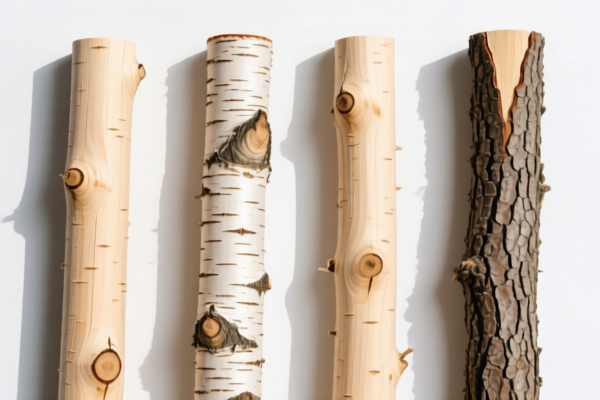
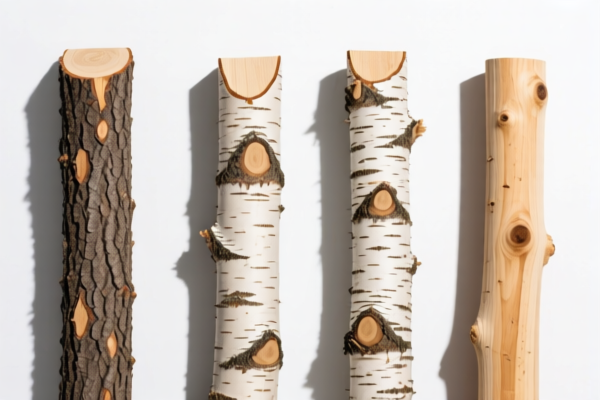
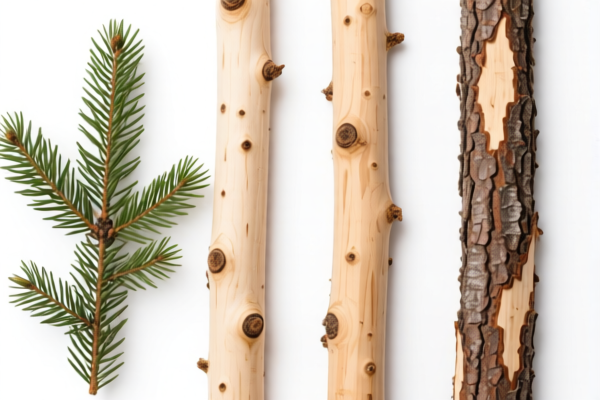
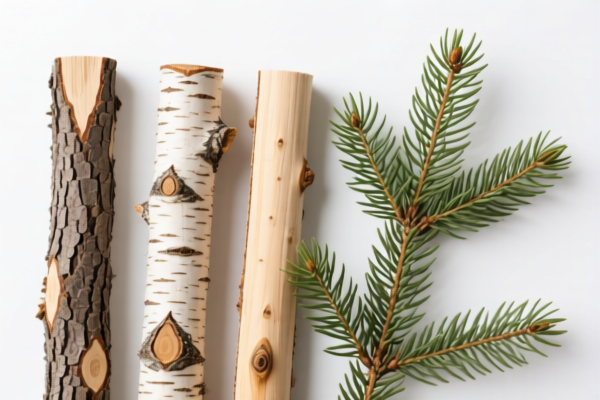
fir wood cross section
CN → US| HS编码 | 关税税率 | 原产国 | 目的国 | 文档 |
|---|---|---|---|---|
| 4407120058 | 35.0% | CN | US | 官方文档 |
| 4407120059 | 35.0% | CN | US | 官方文档 |
| 4408100125 | 35.0% | CN | US | 官方文档 |
| 4408100145 | 35.0% | CN | US | 官方文档 |
商品图片
AI分析
🌲 Fir Wood Cross Section (Technical Analysis & Classification)
🌐 HS Code Reference & Customs Clearance Guide | 2026 Latest Tariff Analysis | Professional Level Strategy
📌 I. Product Definition & Classification: Do You Truly Understand "Fir Wood"?
Fir wood, specifically referring to species within the genus Abies, is a premium coniferous timber widely used in construction, veneer, and plywood manufacturing. In international trade, "Fir Wood Cross Section" is not a single HS code but depends entirely on the processing state and thickness of the material.
Key Distinctions: * Veneer Sheets (≤ 6mm): If the wood is sliced, peeled, or sawn into thin sheets for veneering or plywood, it falls under Chapter 44.08. * Sawn Wood (> 6mm): If the wood is sawn lengthwise with a thickness exceeding 6mm, it falls under Chapter 44.07.
⚠️ Critical Classification Point:
- If the product is a thin sheet (≤ 6mm) intended for veneering or laminating → Go to 4408.10.xxxx
- If the product is a solid plank/board (> 6mm), whether rough or planed → Go to 4407.12.xxxx
📦 II. HS Code Classification Details (2026 Latest Tariff Authority Alignment)
Based strictly on the provided data , here are the applicable HS Codes for Fir Wood (Abies spp.) and Coniferous Wood.
| HS Code | Product Description | Application Scenario | Processing State |
|---|---|---|---|
4408.10.01.25 |
Sheets for veneering (incl. slicing laminated wood), for plywood/similar laminated wood, other wood... of a thickness not exceeding 6 mm: Coniferous Douglas Fir | Thin veneer sheets, plywood cores, decorative surfaces | ≤ 6mm, Sliced/Peeling/Sawing |
4408.10.01.45 |
Sheets for veneering (incl. slicing laminated wood), for plywood/similar laminated wood, other wood... of a thickness not exceeding 6 mm: Coniferous Other | General coniferous veneer sheets (non-Douglas) | ≤ 6mm, Sliced/Peeling/Sawing |
4407.12.00.58 |
Wood sawn/chipped lengthwise, sliced/peeled... thickness exceeding 6 mm: Coniferous: Of fir (Abies) and spruce (Picea)... Rough | Rough-cut planks, beams, structural lumber | > 6mm, Not Planed/Sanded |
4407.12.00.59 |
Wood sawn/chipped lengthwise, sliced/peeled... thickness exceeding 6 mm: Coniferous: Of fir (Abies) and spruce (Picea)... Other | Planed, sanded, spliced, or end-jointed planks | > 6mm, Finished/Processed |
🔍 Key Reminder:
- "Rough" (4407.12.00.58) means the wood has only been sawn/chipped and is not further processed (e.g., no planing or sanding).
- "Other" (4407.12.00.59) covers all fir wood > 6mm that has undergone additional processing (planing, sanding, splicing, etc.).
- Veneer (4408) is strictly defined by its thickness ≤ 6mm. If the "cross section" is a solid block > 6mm, it is NOT veneer.
💰 III. 2026 Latest Tariff Rate Details (Including Surcharge Tariffs)
✅ Applicable Country: United States (US)
✅ Origin: China (CN)
✅ Effective Date: As per provided data (Current Surcharge Applies)
🎯 1. 4408.10.01.25 & 4408.10.01.45 —— Veneer Sheets (≤ 6mm)
| Item | Content |
|---|---|
| Base Tariff | 0.0% (ad valorem) |
| Additional Surcharge Tariff (Section 301) | +25.0% |
| Total Tariff Rate | 25.0% |
| Tax Calculation | CIF Value × 25% |
| Legal Basis | Based on provided data: 基础关税: 0.0%, 加征关税: 25.0% |
📌 Explanation:
- These HS codes represent thin veneer sheets.
- While the base MFN tariff is 0%, the 25% Section 301 surcharge applies to all wood products from China.
- Total Cost Impact: You must pay 25% of the declared value as customs duties.
🎯 2. 4407.12.00.58 & 4407.12.00.59 —— Sawn Fir Wood (> 6mm)
| Item | Content |
|---|---|
| Base Tariff | 0.0% (ad valorem) |
| Additional Surcharge Tariff (Section 301) | +25.0% |
| Total Tariff Rate | 25.0% |
| Tax Calculation | CIF Value × 25% |
| Legal Basis | Based on provided data: 基础关税: 0.0%, 加征关税: 25.0% |
📌 Explanation:
- These HS codes represent solid fir wood planks or beams.
- Like veneer, the base tariff is 0%, but the 25% Section 301 surcharge is fully applicable.
- Total Cost Impact: 25% duty on the CIF value.⚠️ Important Note on "Total Tax":
The provided data explicitly statestotal_tax: "25.0%". This means no additional IEEPA 10% tax is listed in this specific dataset for these wood products. The total burden is flat 25%. Do not assume additional taxes unless confirmed by updated USITC rulings.
🛠️ IV. Customs Clearance Practical Advice (Avoid Pitfalls)
✅ 1. Essential Documentation Checklist
| Document | Required? | Purpose |
|---|---|---|
| ✅ Commercial Invoice | ✔️ | Must clearly state: "Fir Wood (Abies spp.)", HS Code, and Thickness. |
| ✅ Packing List | ✔️ | Specify if goods are "Veneer Sheets" or "Sawn Lumber". |
| ✅ Processing Certificate | ✔️ | Confirm if wood is "Rough" or "Planed/Sanded" to distinguish between 58 and 59. |
| ✅ Fumigation Certificate (ISPM 15) | ✔️ | Mandatory for all wood products entering the US to prevent pest invasion. |
| ✅ Product Photos | ✔️ | Show cross-section and thickness measurement to prove ≤ 6mm (Veneer) or > 6mm (Sawn). |
✅ 2. Declaration Tips (Crucial!)
🔥 "Thickness Defines Category, Species Defines Code"
| Scenario | Correct HS Code | Wrong Declaration | Consequence |
|---|---|---|---|
| Thin sheets (< 6mm) for plywood | 4408.10.01.25 or .45 |
Declare as "Sawn Wood" | May be reclassified, causing delays. |
| Planks (> 6mm), rough cut | 4407.12.00.58 |
Declare as "Planed Wood" | Incorrect description, potential penalty. |
| Planks (> 6mm), planed/sanded | 4407.12.00.59 |
Declare as "Rough" | Under-declares processing, risk of audit. |
| Non-Fir Coniferous Wood | 4408.10.01.45 or 4407.xxxx |
Declare as "Fir" | Misdeclaration → Heavy penalties. |
✅ 3. Special Handling for "Cross Section" Descriptions
- If "Cross Section" means a slice for examination:
- If the slice is ≤ 6mm and intended for use → HS 4408.
- If it is just a sample for analysis → It may be classified as a "sample" and potentially duty-free, but must be clearly marked as "Non-commercial Sample" and not exceed value thresholds.
- If "Cross Section" means a transverse cut of a log/plank:
- This is still Sawn Wood. Ensure thickness > 6mm is stated. Use HS 4407.12.00.58/59.
🌍 V. Global Market Clearance Comparison (2026)
| Country/Region | Recommended HS Code | Tariff Rate (China Origin) | Key Requirement | Notes |
|---|---|---|---|---|
| 🇺🇸 USA | 4408.10.01.x5 or 4407.12.00.58/59 |
25% (Surcharge) | ISPM 15 Fumigation | High compliance with Section 301. |
| 🇨🇳 China | 4408.10.01.x5 or 4407.12.00.58/59 |
0-5% (Depending on Treaty) | Phytosanitary Certificate | No Section 301 surcharge for exports from China. |
| 🇪🇺 EU | 4408.10.10 or 4407.12.00 |
0% (Most FTA Partners) | Timber Regulation (EUTR) | Strict due diligence required for legality. |
| 🇯🇵 Japan | 4408.10.000 or 4407.12.000 |
0-3% | Phytosanitary Certificate | Low tariffs, high quality standards. |
📌 Conclusion:
- The US market imposes a flat 25% surcharge on all Chinese-origin fir wood (veneer or sawn).
- Ensure ISPM 15 compliance is flawless; any pest violation leads to rejection.
📌 VI. Common Mistakes & Pitfall Guide (Lessons Learned)
❌ Mistake 1: Confusing Veneer (≤ 6mm) with Sawn Wood (> 6mm)
👉 Consequence: If you declare a 5mm sheet as sawn wood, customs may still classify it as veneer but question the thickness. If you declare 7mm as veneer, it is rejected as misclassification.
✅ Fix: Measure thickness precisely. Use "Not exceeding 6mm" for 4408.
❌ Mistake 2: Not specifying "Rough" vs. "Other" for Sawn Wood
👉 Consequence: 4407.12.00.58 (Rough) and .59 (Other) have the same tax rate in this data, but wrong description can lead to inspections or delays.
✅ Fix: Clearly state "Rough Sawn" or "Planed and Sanded" in the commercial invoice.
❌ Mistake 3: Ignoring Fumigation Certificate
👉 Consequence: US CBP will detain the cargo for phytosanitary checks. Storage fees accrue daily.
✅ Fix: Ensure the wooden packaging and the wood itself are treated and certified under ISPM 15.
🎯 VII. Conclusion: Precise Classification Saves Money!
🎯 Remember the Golden Rule:
🔹 "Thickness is King: ≤ 6mm is Veneer (4408), > 6mm is Sawn (4407)."
🔹 "Species Matters: Abies is Fir, Picea is Spruce."
🔹 "Tax is Flat 25%: Base is 0%, Surcharge is 25%. Total = 25%."
📌 Pro Tip:
If your "Fir Wood Cross Section" is a small sample for testing purposes, consider declaring it as a "Non-Commercial Sample" to potentially avoid duties, provided it meets the value and quantity limits. Always consult a licensed customs broker for pre-ruling.
📣 Immediate Action:
📞 Verify the exact thickness of your wood products.
📄 Ensure ISPM 15 fumigation certificates are attached to the shipment.
📝 Declare accurately: "Fir Wood (Abies spp.), Sawn, [Rough/Planed], Thickness [X] mm".
✨ Professional Clearance Starts with Accurate Classification!
💼 Every detail in your declaration protects your profit margin!
用户评价
关于 HS 编码归类
协调制度(HS)是由世界海关组织(WCO)制定的国际贸易商品分类标准。全球 200 多个国家采用 HS 系统作为海关关税、贸易统计和进出口监管的基础。
每个 HS 编码遵循以下层级结构:
- 章(2 位)——商品大类(例如:第 84 章:机器和机械设备)
- 品目(4 位)——章内的更具体分类
- 子目(6 位)——国际通用细分,所有 WCO 成员国统一使用
- 本国细分(8-10 位)——各国自行扩展的细分编码,如美国 HTSUS 10 位编码
正确的 HS 编码归类对于顺利通关、准确缴纳关税和遵守贸易法规至关重要。错误归类可能导致海关延误、多缴关税或罚款。
从CN进口到US时,适用的关税税率可能包括:
- 最惠国(MFN)税率——适用于 WTO 成员国的标准关税税率
- 普通税率——适用于无贸易协定国家
- 贸易救济关税——附加关税,如 301 条款(反倾销)、232 条款(国家安全)或反补贴税
本页内容仅供参考。如需正式归类,请咨询当地海关或持牌报关代理。