fireproof mortar intumescent
CN → US| HS编码 | 关税税率 | 原产国 | 目的国 | 文档 |
|---|---|---|---|---|
| 2530908050 | 10.0% | CN | US | 官方文档 |
| 6810990080 | 35.0% | CN | US | 官方文档 |
| 6815994110 | 35.0% | CN | US | 官方文档 |
| 3214100020 | 38.7% | CN | US | 官方文档 |
商品图片
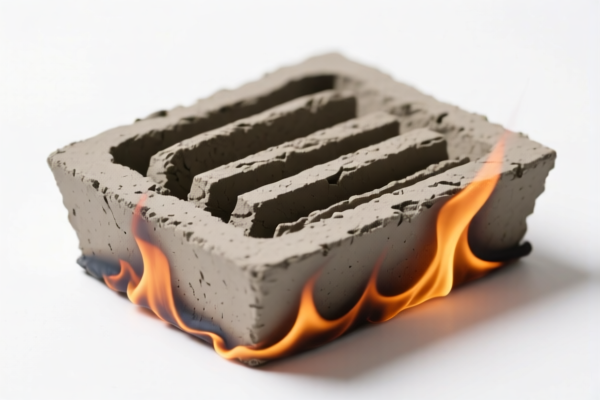
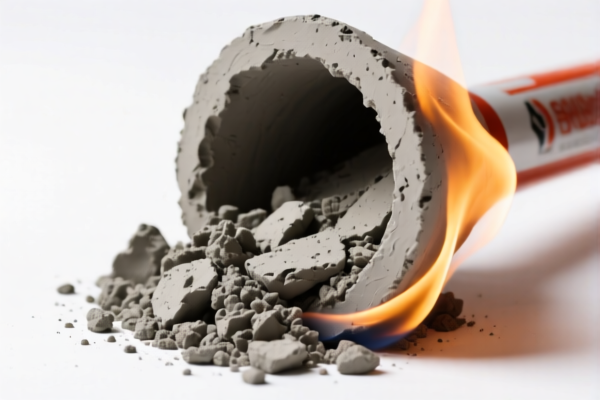
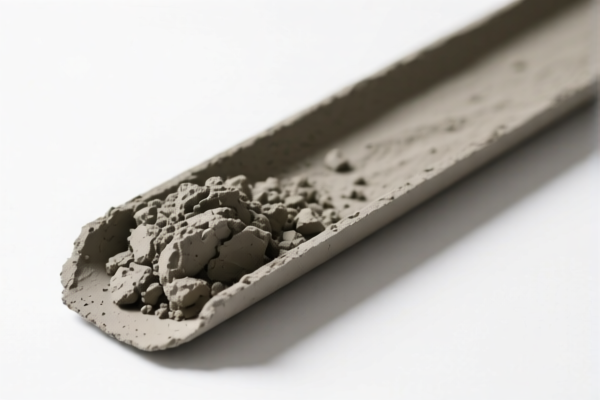

AI分析
🧱 Fireproof Mortar & Intumescent Sealants: HS Code Classification & Customs Clearance Guide
🌐 HS Code Reference & Customs Clearance Guide | 2026 Latest Tariff Analysis | Professional Entry Strategy
📌 I. Product Definition & Classification: Do You Really Understand "Fireproof Mortar"?
Fireproof mortar and intumescent sealants are critical passive fire protection materials used in construction, industrial pipelines, and structural steel protection. In international trade, they are classified based on their chemical composition, physical state, and primary function.
Key Distinction: * Fireproof Mortar (Cementitious/Mineral-based): Rigid, paste-like, or powder mixtures used for coating structures. Classified under mineral products or cementitious goods. * Intumescent Sealant/Gou (Polymer/Composite-based): Flexible, rubbery, or putty-like substances that expand upon heating. Classified as prepared binders, adhesives, or composite materials.
⚠️ Critical Classification Point:
- If the product is primarily cementitious/mineral and used as a coating → It may fall under Chapter 68 or Chapter 25.
- If the product is primarily chemical/polymers used as a sealant/gou → It falls under Chapter 32 (Chemical Products).
- Misclassification Risk: Declaring an intumescent sealant as "mortar" can lead to severe underpayment of duties due to different tax rates.
📦 II. HS Code Classification Matrix (Based on Provided Data)
The following classification is strictly derived from the provided data set. Note that the "Total Tax" reflects the cumulative impact of Base Duties, Section 301/Additional Duties, and "122 Clause" tariffs (likely referring to specific US trade action provisions).
| HS Code | Product Description & Logic | Total Tax Rate | Tax Breakdown |
|---|---|---|---|
2530.90.80.50 |
Mineral-Based Fireproof Material Classification: Based on refractory properties, classified as "Other prepared binders for foundry molds/core" or other unlisted mineral products. |
10.0% | Base: 0.0% Additional: 0.0% 122 Clause: 10% |
6810.99.00.80 |
Cementitious/Concrete Fireproof Product Classification: Based on cement, concrete, or similar artificial stone materials, classified as "Other articles." |
35.0% | Base: 0.0% Additional: 25.0% 122 Clause: 10% |
6815.99.41.10 |
Mineral Product Article Classification: Based on mineral product attributes, classified as "Other mineral products." |
35.0% | Base: 0.0% Additional: 25.0% 122 Clause: 10% |
3214.10.00.20 |
Intumescent Sealant/Gou (Composite) Classification: Based on sealant/gou category, classified as "Prepared binders for foundry molds/core" or similar composite filler materials. |
38.7% | Base: 3.7% Additional: 25.0% 122 Clause: 10% |
🔍 Key Observation:
- The chemical/polymer-based sealant (3214) has the highest total tax (38.7%) due to the 3.7% base duty.
- Mineral/cement-based products (6810/6815) have 35.0% tax but 0% base duty.
- The refractory mineral product (2530) has the lowest tax (10.0%), but only applies if the product is strictly classified under this specific refractory subheading.
💰 III. 2026 Tariff Rate Detailed Explanation (Including Surcharges & Policy Add-ons)
✅ Jurisdiction: United States (US)
✅ Origin: China (CN)
✅ Effective Date: Current Trade Actions (Section 301 & Related Clauses)
🎯 1. 3214.10.00.20 – Intumescent Sealant/Gou (Highest Tax Risk)
| Item | Detail |
|---|---|
| Base Duty | 3.7% (Standard for prepared binders/sealants) |
| Additional Duty (Section 301) | +25.0% (Targeting Chinese chemical products) |
| 122 Clause Duty | +10.0% (Specific additional levy on Chinese imports) |
| Total Effective Rate | 38.7% |
| Calculation | CIF Value × 38.7% |
| De Minimis Exemption? | ❌ No (High-value chemical imports are excluded) |
📌 Explanation:
- This code applies to polymer-based, rubbery, or putty-like intumescent materials.
- The 3.7% base duty makes this the most expensive category.
- Common Mistake: Importers often try to classify these as "cement" to avoid the 3.7% base, but customs officers will reject this if the product is flexible or polymer-based.
🎯 2. 6810.99.00.80 & 6815.99.41.10 – Cementitious/Mineral Fireproof Products
| Item | Detail |
|---|---|
| Base Duty | 0.0% (No base duty for many mineral/cement articles) |
| Additional Duty (Section 301) | +25.0% |
| 122 Clause Duty | +10.0% |
| Total Effective Rate | 35.0% |
| Calculation | CIF Value × 35.0% |
| De Minimis Exemption? | ❌ No |
📌 Explanation:
- These codes apply to rigid, cement-based fireproof mortars.
- Although the rate is lower than3214, it is still significantly higher than standard industrial goods.
- Distinction: If the mortar is pre-mixed powder vs. ready-to-use paste, classification may vary, but both fall under Chapter 68 in this dataset.
🎯 3. 2530.90.80.50 – Refractory Mineral Product (Lowest Tax)
| Item | Detail |
|---|---|
| Base Duty | 0.0% |
| Additional Duty (Section 301) | 0.0% |
| 122 Clause Duty | +10.0% |
| Total Effective Rate | 10.0% |
| Calculation | CIF Value × 10.0% |
| De Minimis Exemption? | ❌ No |
📌 Explanation:
- This is a highly specific classification for refractory materials.
- Warning: This classification is only valid if the product is purely mineral-based and meets the "refractory" definition (high heat resistance without chemical binding agents like polymers).
- Many "fireproof mortars" contain polymers for flexibility, which disqualifies them from this code.
🛠️ IV. Customs Clearance Operational Advice (Practical Pitfall Avoidance Guide)
✅ 1. Document Preparation Checklist (Non-Negotiable)
| Document | Required? | Notes |
|---|---|---|
| Product Spec Sheet | ✔️ | Must detail chemical composition (e.g., % cement, % polymer, % intumescent agent). |
| Material Safety Data Sheet (MSDS) | ✔️ | Critical for determining if the product is "chemical" (Ch. 32) or "mineral" (Ch. 25/68). |
| Application Photos | ✔️ | Show if the product is rigid (mortar) or flexible (sealant). |
| Commercial Invoice | ✔️ | Clear description: "Intumescent Fireproof Sealant" or "Cementitious Fireproof Mortar." |
| Origin Certificate | ✔️ | Essential for proving Chinese origin (to apply correct surcharges). |
| Third-Party Test Report | ✔️ | Fire-resistance test report (e.g., UL, FM, Intertek) to confirm fireproof function. |
✅ 2. Classification Strategy (Key Mantras)
🔥 "Check the Base: Polymer = 3214, Cement = 6810/6815, Pure Mineral = 2530."
| Scenario | Correct HS Code | Incorrect Action | Consequence |
|---|---|---|---|
| Flexible, rubbery intumescent sealant | 3214.10.00.20 |
Declare as "cement" | Penalty + Back Taxes (38.7% vs 0-35%) |
| Rigid, cement-based fireproof coating | 6810.99.00.80 or 6815.99.41.10 |
Declare as "polymer sealant" | Overpayment (35% vs 38.7%) |
| High-temp refractory mortar (no polymer) | 2530.90.80.50 |
Declare as "cementitious" | Savings (10% vs 35%) |
⚠️ Critical Warning:
- Do not use generic terms like "Fireproof Paste."
- Explicitly state: "Polymer-Intumescent Sealant" for3214or "Cementitious Fireproof Mortar" for6810/6815.
✅ 3. Special Handling for Intumescent Products
| Issue | Solution |
|---|---|
| Is it a "Chemical" or "Construction Material"? | If it expands (intumesces) due to heat, it is often classified under 3214 (prepared binders/sealants) if polymer-based. Cement-based intumescent mortars may go to 6810. |
| Packaging | Ensure packaging is labeled with fire-resistance ratings (e.g., "1-Hour Fire Rating"). Customs may inspect for compliance. |
| Bulk vs. Retail | Bulk industrial shipments are scrutinized more heavily for misclassification. Provide detailed usage instructions. |
🌍 V. Global Market Comparison (2026 Latest)
| Region | Recommended HS Code | Est. Total Tax (China Origin) | Notes |
|---|---|---|---|
| 🇺🇸 USA | 3214.10.00.20 (Sealant)6810.99.00.80 (Mortar) |
35.0% - 38.7% | High tariffs due to Section 301 + 122 Clause. |
| 🇨🇳 China | 3214.10.00.206810.99.00.80 |
Varies (Export) | No import duty on exports, but VAT refund applies. |
| 🇪🇺 EU | 3214.10.906810.99.90 |
0% - 6.5% | No Section 301 tariffs. Standard EU duty applies. |
| 🇬🇧 UK | 3214.10.906810.99.90 |
0% - 5% | Post-Brexit tariffs may apply, but no US-style surcharges. |
📌 Conclusion:
- The USA imposes the highest barriers due to the 122 Clause and Section 301 tariffs.
- EU/UK tariffs are significantly lower, but certification (CE/UKCA) is required.
📌 VI. Common Mistakes & Pitfall Guide (Lessons from the Field)
❌ Mistake 1: Classifying intumescent sealant (polymer) as "Cement Mortar" to avoid the 3.7% base duty.
👉 Result: Customs will reject the declaration based on MSDS and physical properties. Back taxes + penalties.
❌ Mistake 2: Declaring "Fireproof Mortar" without specifying if it is cement-based or chemical-based.
👉 Result: Uncertainty leads to higher default duties or audits.
❌ Mistake 3: Ignoring the "122 Clause" (10%).
👉 Result: Underpayment of duties. This clause applies to many Chinese industrial inputs.
✅ Correct Practice:
"Polymer-Based Intumescent Fireproof Sealant, 20kg Bucket, Model XYZ, UL Listed" →
3214.10.00.20
"Cement-Based Fireproof Mortar, 25kg Bag, Model ABC, Non-Combustible" →6810.99.00.80
🎯 VII. Conclusion: Precision in Classification Saves Money!
🎯 Remember the Mantra:
🔹 "Polymer = 3214 (38.7%), Cement = 6810 (35.0%), Pure Mineral = 2530 (10.0%)."
🔹 "One percentage point difference is thousands of dollars in savings!"
🔹 "Always provide MSDS and Spec Sheets to prove composition!"
📌 Pro Tip:
If your product is cement-based but contains small amounts of polymers for flexibility, consult a customs broker immediately. Misclassification can lead to seizure of goods.
For high-volume imports, consider applying for a Binding Ruling from US Customs to secure the correct HS Code and tax rate in advance.
📣 Immediate Action:
📞 Contact a Licensed Customs Broker
📄 Provide MSDS + Product Photos
🚀 Secure the Correct HS Code Before Shipment!
✨ Professional Clearance Starts with Accurate Classification!
💼 Every Duty Saved is Profit Earned!
用户评价
关于 HS 编码归类
协调制度(HS)是由世界海关组织(WCO)制定的国际贸易商品分类标准。全球 200 多个国家采用 HS 系统作为海关关税、贸易统计和进出口监管的基础。
每个 HS 编码遵循以下层级结构:
- 章(2 位)——商品大类(例如:第 84 章:机器和机械设备)
- 品目(4 位)——章内的更具体分类
- 子目(6 位)——国际通用细分,所有 WCO 成员国统一使用
- 本国细分(8-10 位)——各国自行扩展的细分编码,如美国 HTSUS 10 位编码
正确的 HS 编码归类对于顺利通关、准确缴纳关税和遵守贸易法规至关重要。错误归类可能导致海关延误、多缴关税或罚款。
从CN进口到US时,适用的关税税率可能包括:
- 最惠国(MFN)税率——适用于 WTO 成员国的标准关税税率
- 普通税率——适用于无贸易协定国家
- 贸易救济关税——附加关税,如 301 条款(反倾销)、232 条款(国家安全)或反补贴税
本页内容仅供参考。如需正式归类,请咨询当地海关或持牌报关代理。