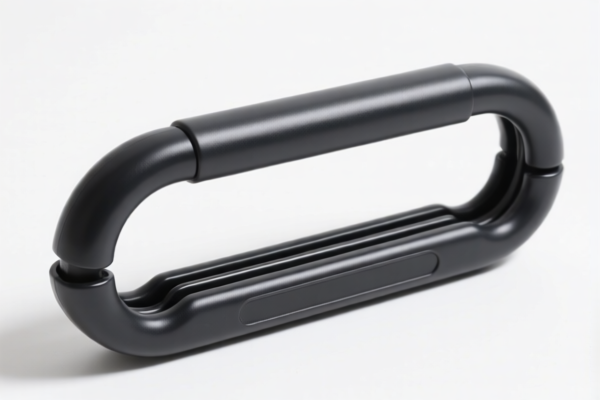
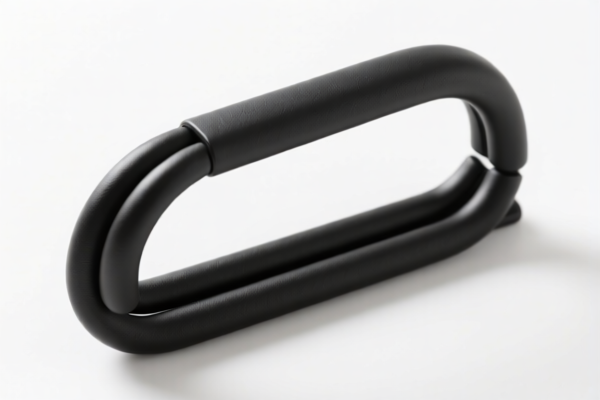
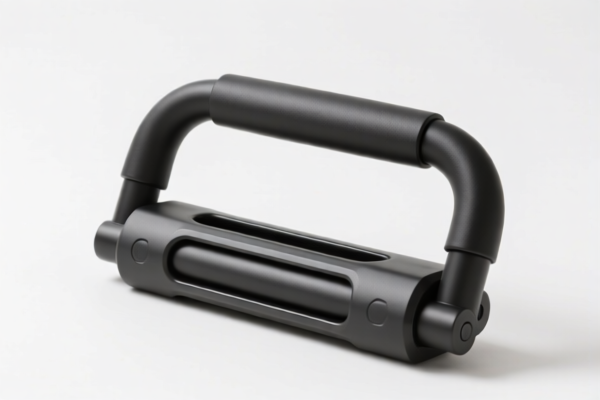
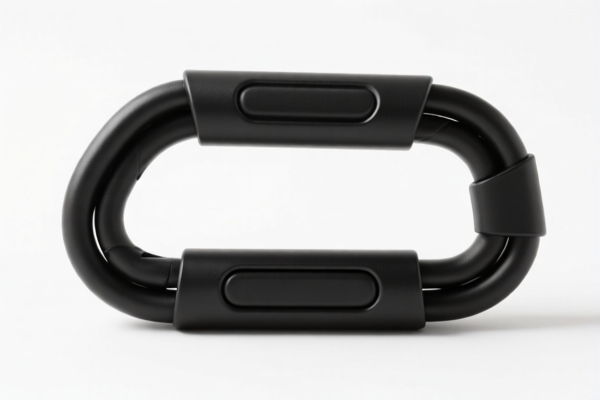
fitness pull up bar handle
CN → US| HS编码 | 关税税率 | 原产国 | 目的国 | 文档 |
|---|---|---|---|---|
| 3926909989 | 22.8% | CN | US | 官方文档 |
| 3926909930 | 22.8% | CN | US | 官方文档 |
| 3926906090 | 39.2% | CN | US | 官方文档 |
| 9506996080 | 21.5% | CN | US | 官方文档 |
| 9506910030 | 22.1% | CN | US | 官方文档 |
商品图片
AI分析
🏋️♂️ Fitness Pull-Up Bar Handle
🌐 HS Code Reference & Customs Clearance Guide | 2026 Latest Tariff Full Analysis | Professional Clearance Strategy
📌 Part 1: Product Definition and Classification: Do You Really Understand "Pull-Up Bar Handles"?
A fitness pull-up bar handle is a core component of home and commercial gym equipment, used to provide grip and leverage for upper-body strength training. In international trade, its classification depends heavily on material composition and functional interpretation. It is broadly categorized into two main types:
Plastic/Composite Handles: Handles made primarily of plastic, rubber, or non-metal composite materials, often with foam or textured grips. These are classified under "Other Articles of Plastics" or "Other Articles of Other Materials of Chapter 39".
Metal/Specialized Handles: Handles made of steel, aluminum, or copper, or those specifically designed as interchangeable parts for sports goods. These may fall under "Sports Goods Parts and Accessories" (Chapter 95) or specific metal categories if they have a distinct functional identity separate from the frame.
⚠️ Key Distinction Point:
- If the handle is plastic/rubber/composite and treated as a general accessory → It leans towards Chapter 39 (Plastics) or Chapter 95 (Sports Goods) depending on specific material rules.
- If the handle is metal (steel/aluminum/copper) → It faces significant Section 122 / Additional Tariffs (up to 50% for steel/aluminum), pushing classification towards Chapter 95 (Sports Parts) to mitigate some base rates, or Chapter 73/76 if viewed as generic metal parts.
- Crucial Note: Misclassifying metal handles as "plastic accessories" can lead to severe penalties and back-tariffs.
📦 Part 2: HS Code Classification Details (2026 Latest Tariff Authority Comparison)
Based on the provided data, here are the five most relevant HS Codes for Fitness Pull-Up Bar Handles:
| HS Code | Product Description | Material/Feature Assumption | Primary Classification Logic |
|---|---|---|---|
3926.90.99.89 |
Other articles of plastics: Other | Plastic or Composite | Classified as a general plastic article; pull-up handle is seen as a plastic accessory. |
3926.90.99.30 |
Other articles of plastics: Other | Plastic or Non-Metal Composite | "Catch-all" category for plastic/non-metal composite sports accessories. |
3926.90.60.90 |
Other articles of plastics: Other | Plastic/Composite (High Tariff Path) | Default tendency for accessories in plastics; High additional tariffs apply. |
9506.99.60.80 |
Articles and equipment for general physical exercise: Other | Metal (Steel/Aluminum/Copper) or Plastic | Classified as a part/accessory of sports equipment. |
9506.91.00.30 |
Articles and equipment for gymnastics: Other | Metal or Plastic (Sports Part) | Classified as a part/accessory of gymnastics/exercise apparatus. |
🔍 Key Reminder:
-3926codes (Plastics): Lower base duties but subject to Section 122 tariffs (10% + potential anti-dumping).
-9506codes (Sports Goods): Generally lower base duties but CRITICAL: If made of Steel, Aluminum, or Copper, Section 122 tariffs add 50% on top!
- Choice Strategy: For plastic handles,9506.99.60.80(21.5%) is often better than3926.90.60.90(39.2%). For metal handles,9506.91.00.30(22.1%) or9506.99.60.80(21.5%) are the only viable options despite the 50% steel/aluminum surcharge base.
💰 Part 3: 2026 Latest Tariff Rate Breakdown (Including Additional Duties & Policy Surcharges)
✅ Applicable Country: United States (US)
✅ Origin: China (CN)
✅ Effective Date: Current (Based on Section 122 and Trade Act provisions)
🎯 1. 3926.90.99.89 & 3926.90.99.30 —— Plastic/Composite Handles (General Articles)
| Item | Content |
|---|---|
| Base Duty Rate | 5.3% (ad valorem) |
| Section 122 / Retaliatory Duty | +7.5% (Trade Act Section 301 related) |
| Section 122 Specific Tariff | +10% (Targeted Chinese imports) |
| Total Effective Rate | 22.8% |
| Tax Calculation | CIF Value × 22.8% |
| De Minimis Eligibility | ❌ No (De minimis typically applies to <$800, but high tariffs often trigger stricter scrutiny; however, the rate itself is the main barrier). |
📌 Explanation:
- This classification assumes the handle is primarily plastic.
- The total 22.8% is a combination of standard MFN duty, Section 301 additional duty, and Section 122 retaliatory tariffs.
- Advantage: No 50% metal surcharge applies.
- Disadvantage: Higher than some sports goods base rates, but safer for non-metal materials.
🎯 2. 3926.90.60.90 —— Plastic/Composite Handles (High Tariff Path)
| Item | Content |
|---|---|
| Base Duty Rate | 4.2% |
| Section 301 Additional Duty | +25.0% |
| Section 122 Specific Tariff | +10% |
| Total Effective Rate | 39.2% |
| Tax Calculation | CIF Value × 39.2% |
| De Minimis Eligibility | ❌ No |
📌 Warning:
- This specific sub-heading (60.90) attracts a 25% Section 301 tariff, making it much more expensive than99.89or99.30.
- Avoid this code unless specifically required by your supplier’s invoice for other regulatory reasons. It is not cost-effective.
🎯 3. 9506.99.60.80 —— Sports Equipment Parts/Accessories (Metal or Plastic)
| Item | Content |
|---|---|
| Base Duty Rate | 4.0% |
| Section 301 Additional Duty | +7.5% |
| Section 122 Specific Tariff | +10% |
| Steel/Aluminum/Copper Surcharge | +50% (ONLY IF made of these metals) |
| Total Effective Rate (Plastic) | 21.5% |
| Total Effective Rate (Steel/Alum) | 71.5% (4.0% + 7.5% + 10% + 50%) |
| Tax Calculation | CIF × Rate |
📌 Critical Insight:
- If your handle is Plastic/Rubber: This is a strong candidate at 21.5%.
- If your handle is Steel/Aluminum: The 50% metal surcharge makes this code extremely expensive (71.5%).
- Strategy: Do NOT use9506codes for metal handles unless you have verified the surcharge does not apply (e.g., specific alloy exemptions, which are rare).
🎯 4. 9506.91.00.30 —— Gymnastics/Exercise Apparatus Parts
| Item | Content |
|---|---|
| Base Duty Rate | 4.6% |
| Section 301 Additional Duty | +7.5% |
| Section 122 Specific Tariff | +10% |
| Steel/Aluminum/Copper Surcharge | +50% (ONLY IF made of these metals) |
| Total Effective Rate (Plastic) | 22.1% |
| Total Effective Rate (Steel/Alum) | 72.1% |
| Tax Calculation | CIF × Rate |
📌 Comparison:
- Slightly higher base rate (9506.91.00.30) than9506.99.60.80(4.6% vs 4.0%).
- Same risks for metal.
- Verdict: Prefer9506.99.60.80over9506.91.00.30for plastic handles due to lower base rate.
🛠️ Part 4: Customs Clearance Practical Advice (Real-World Pitfall Guide)
✅ 1. Preparation Checklist (Mandatory)
| Document | Required? | Purpose |
|---|---|---|
| ✅ Product Composition Certificate | ✔️ | Crucial! Must explicitly state material % (e.g., "70% TPR, 30% Foam, 0% Metal"). Proves non-metal status for 3926 or avoids 50% surcharge for 9506 if misdeclared. |
| ✅ High-Resolution Photos | ✔️ | Show handle alone, with grip texture, and attached to pull-up bar. |
| ✅ Commercial Invoice | ✔️ | Clearly describe as: "Fitness Pull-Up Handle, Plastic/TPR Grip, Sports Accessory, Model XYZ". |
| ✅ Packing List | ✔️ | Confirm quantity and weight. |
| ✅ Material Safety Data Sheet (MSDS) | ✔️ | If foam/rubber contains chemicals, required for safety compliance. |
✅ 2. Declaration Tips (Golden Rules)
🔥 “Material First, Function Second, Metal Surcharge Avoidance!”
| Scenario | Recommended HS Code | Avoid |
|---|---|---|
| 100% Plastic/TPR/Rubber | 9506.99.60.80 (21.5%) or 3926.90.99.89 (22.8%) |
3926.90.60.90 (39.2%) |
| Plastic with Metal Insert | 9506.99.60.80 |
Classify as pure plastic → Risk of 50% surcharge retroactively applied |
| Steel/Aluminum Handle | 9506.99.60.80 (71.5%) or 9506.91.00.30 (72.1%) |
Any 3926 code → Fraud Risk, severe penalties |
| Composite (Foam + Plastic) | 3926.90.99.30 (22.8%) |
Overcomplicating as separate items |
📌 Key Strategy:
- For Plastic Handles:9506.99.60.80(21.5%) is the lowest cost option. It classifies the item as a sports accessory, benefiting from lower base duties and avoiding the high 25% Section 301 duty seen in some plastic categories.
- For Metal Handles: You are stuck with high tariffs. Ensure the declaration clearly states the material to avoid "misclassification" penalties, but expect ~71.5% duty.
✅ 3. Special Case Handling
| Situation | Handling Advice |
|---|---|
| OEM/White Label | Ensure the supplier’s invoice matches your declaration exactly. Discrepancies in material % trigger audits. |
| Mixed Materials | If >50% plastic, argue for 3926 or 9506 plastic classification. If metal core dominates, accept the 50% surcharge under 9506. |
| De Minimis ($800) | Even if value < $800, high tariff rates (like 50%) may trigger informal entry requirements or additional documentation. Do not assume total duty-free status. |
| Anti-Dumping | Check if your specific supplier is on the UFLPA or Anti-Dumping lists for plastics or metals. |
🌍 Part 5: Global Market Clearance Comparison (2026 Update)
| Country/Region | Recommended HS Code (Plastic Handle) | Est. Duty Rate | Certification Requirements | Notes |
|---|---|---|---|---|
| 🇺🇸 USA | 9506.99.60.80 |
21.5% | CPSIA (if for kids), ASTM F403 | Avoid 3926.90.60.90 (39.2%) |
| 🇨🇳 China | 9506.99.60.80 |
8.5% (Import) | CCC (if applicable) | Lower base duties globally for sports goods |
| 🇪🇺 EU | 9506.99.90 |
4.7% | CE (if applicable), REACH | No Section 122 equivalent |
| 🇬🇧 UK | 9506.99.90 |
4.7% | UKCA | Post-Brexit alignment with EU |
| 🇦🇺 Australia | 9506.99.90 |
5.0% | SAA | No major surcharges |
📌 Conclusion:
- The USA is the most complex market due to Section 122 and Section 301 tariffs.
- For Plastic Handles,9506.99.60.80offers the best balance of low base duty and manageable additional tariffs (21.5%).
- For Metal Handles, the USA imposes penalty-level tariffs (~71.5%). Consider supply chain diversification (e.g., Vietnam, Mexico) for metal components to mitigate costs.
📌 Part 6: Common Errors & Pitfall Guide (Lessons Learned)
❌ Error 1: Declaring a Steel Handle as "Plastic Accessory" under 3926.90.99.89 (22.8%)
👉 Consequence: Customs audit reveals metal content → Back-tariffs of 50% + penalties + potential fraud charges.
❌ Error 2: Using 3926.90.60.90 for plastic handles
👉 Consequence: Unnecessary 39.2% tariff instead of 21.5% → 17.7% extra cost per unit.
❌ Error 3: Mixing "Handle" and "Bar" in one shipment without clear separation
👉 Consequence: Customs may classify the entire shipment under the highest duty item. Always ship separately or clearly detail line items.
❌ Error 4: Ignoring the 50% Steel/Aluminum Surcharge in 9506 codes
👉 Consequence: Underestimating landed cost by 50% on metal goods.
✅ Correct Approach:
"Pull-Up Handle, 100% TPR Rubber & Foam, No Metal Parts, Sports Accessory, Model ABC, Certified to ASTM F403"
🎯 Part 7: Conclusion: Professional Declaration, Cost Savings, Efficiency!
🎯 Remember the Mantras:
🔹 “Plastic Handle? Go for
9506.99.60.80(21.5%)!”
🔹 “Metal Handle? Brace for9506+ 50% Surcharge (~71.5%)!”
🔹 “Avoid3926.90.60.90(39.2%) – It’s a Trap!”
🔹 “Material Declaration is King – Prove it’s Plastic!”
📌 Pro Tip:
If you have high-volume imports of plastic handles, consider applying for an Exclusion from Section 301 tariffs if available (though rare for sports accessories). Always verify the exact material composition with your supplier. For metal handles, explore duty drawback programs if you re-export the finished equipment.
📣 Immediate Action:
📞 Consult a licensed customs broker with product samples for pre-classification.
🚀 Optimize your supply chain to minimize metal content in handles if exporting to the USA.
💼 Your profit margin depends on accurate classification!
✨ Professional Clearance Starts with Precise Classification!
💼 Every Percentage Point of Duty Saved is Pure Profit!
用户评价
关于 HS 编码归类
协调制度(HS)是由世界海关组织(WCO)制定的国际贸易商品分类标准。全球 200 多个国家采用 HS 系统作为海关关税、贸易统计和进出口监管的基础。
每个 HS 编码遵循以下层级结构:
- 章(2 位)——商品大类(例如:第 84 章:机器和机械设备)
- 品目(4 位)——章内的更具体分类
- 子目(6 位)——国际通用细分,所有 WCO 成员国统一使用
- 本国细分(8-10 位)——各国自行扩展的细分编码,如美国 HTSUS 10 位编码
正确的 HS 编码归类对于顺利通关、准确缴纳关税和遵守贸易法规至关重要。错误归类可能导致海关延误、多缴关税或罚款。
从CN进口到US时,适用的关税税率可能包括:
- 最惠国(MFN)税率——适用于 WTO 成员国的标准关税税率
- 普通税率——适用于无贸易协定国家
- 贸易救济关税——附加关税,如 301 条款(反倾销)、232 条款(国家安全)或反补贴税
本页内容仅供参考。如需正式归类,请咨询当地海关或持牌报关代理。