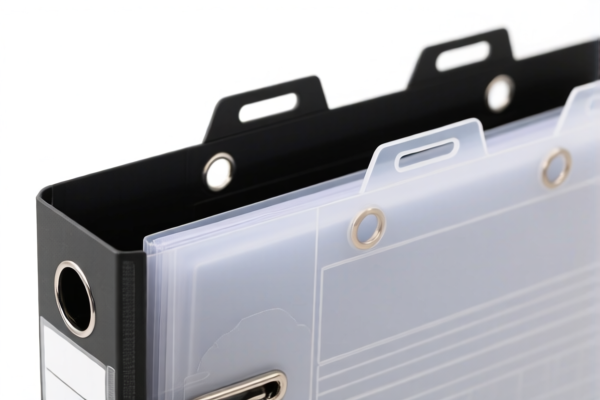
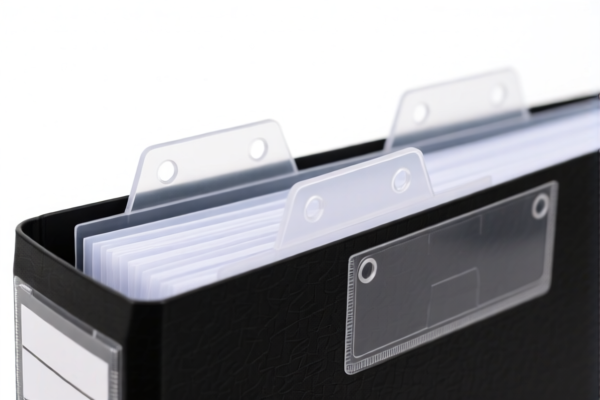
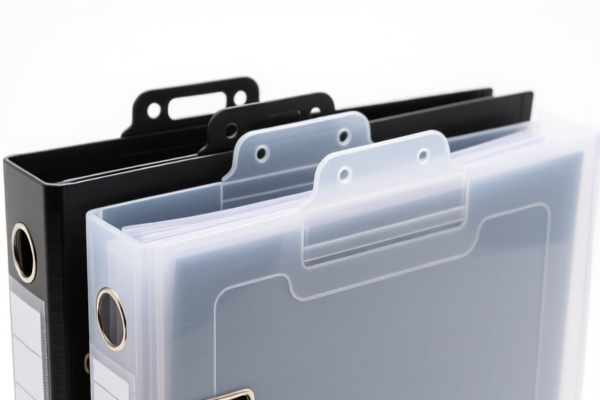
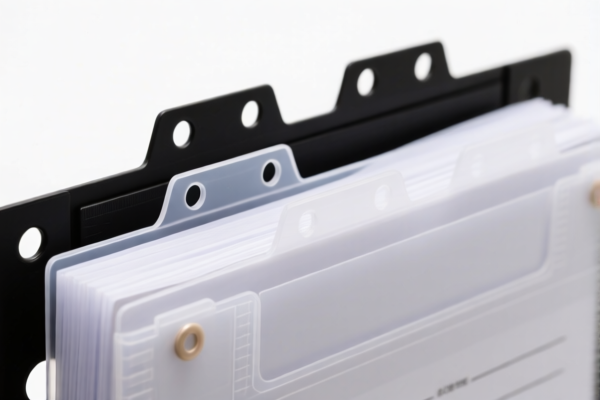
flat plastic document binders with tabs
CN → US| HS编码 | 关税税率 | 原产国 | 目的国 | 文档 |
|---|---|---|---|---|
| 3926908700 | 40.3% | CN | US | 官方文档 |
| 4820300020 | 35.0% | CN | US | 官方文档 |
| 3926909989 | 22.8% | CN | US | 官方文档 |
| 3926100000 | 15.3% | CN | US | 官方文档 |
商品图片
AI分析
📂 Flat Plastic Document Binders with Tabs: HS Code & Tax Deep Dive (2026 Analysis)
🌐 HS Code Reference & Customs Clearance Guide | 2026 Latest Tariff Rates | Professional Clearance Strategy
📌 I. Product Definition & Classification: Do You Really Understand "Plastic Binders"?
"Flat Plastic Document Binders with Tabs" are office supplies used for organizing, binding, and storing documents. In international trade, their classification depends heavily on material composition, physical form, and specific functional design. They are not a single monolithic category but split between Plastic Articles (Chapter 39) and Paper/Bookbinding Products (Chapter 48).
Key Distinction Criteria: * Plastic Binders (Chapter 39): Made primarily of plastic (e.g., polypropylene, PVC). Even if they have paper inserts or tabs, if the structural integrity comes from plastic, they fall here. * Paper-Based Binders (Chapter 48): If the binder is structurally a paper notebook/binder with plastic accessories (like clear plastic pockets or plastic rings), it may fall under Chapter 48. However, pure "plastic binders" are almost exclusively Chapter 39.
⚠️ Critical Clarification:
- If the product is a standalone plastic folder/binder → Chapter 39.
- If it is a paper-bound book/folder with plastic covers → Chapter 48.
- Note on "Tabs": The presence of tabs does not change the material-based classification. Tabs are considered part of the binder's structure.
📦 II. HS Code Classification Details (2026 Official Tariff对照)
Based on the provided data, here are the possible HS Codes for "Flat Plastic Document Binders with Tabs," along with their specific tax implications.
| HS Code | Product Description & Logic | Applicability | Total Tax Rate |
|---|---|---|---|
3926.90.87.00 |
Plastic Binder/Folder: Made of plastic, used for document binding. This is the most common classification for standard plastic ring binders or lever-arch files. | Standard plastic binders with metal/plastic rings or clips. | 40.3% |
4820.30.00.20 |
Plastic Binder (Functional Equivalent): Classified under paper products because it functions like a paper binder (e.g., a plastic-covered notebook or a folder with paper inserts where the paper is the primary structural element). | Used when the product is considered a "paper-based binder" despite having plastic components. | 35.0% |
3926.90.99.89 |
Other Plastic Articles: A residual category for plastic binders that don't fit more specific subheadings in 3926.10 or 3926.90.87. | Less common, used for unique plastic binding mechanisms. | 22.8% |
3926.10.00.00 |
Plastic Office Accessories: Specifically for "Plastic folders with labels" or similar office supplies made of plastic. | Simple plastic wallets, label holders, or basic flat folders without complex binding rings. | 15.3% |
🔍 Key Insight:
-3926.90.87.00(40.3%) is the most likely classification for standard plastic ring binders or lever-arch binders.
-3926.10.00.00(15.3%) applies if the product is a simple plastic folder (no rings, no complex binding mechanism) with labels.
-4820.30.00.20(35.0%) is a potential alternative if customs views the product as a "paper-based" item due to paper inserts or covers.
💰 III. 2026 Latest Tariff Rate Breakdown (Including Additional Taxes)
✅ Applicable Country: United States (US)
✅ Origin: China (CN)
✅ Effective Date: 2025-11-10 onwards (including subsequent imports)
🎯 1. 3926.90.87.00 – Plastic Binders (Most Common)
| Item | Detail |
|---|---|
| Base Tariff | 5.3% (Most Favored Nation Rate) |
| Section 301 Tariff | +25.0% (Trade Remedies Act) |
| Section 122 Tariff | +10.0% (Specific to certain plastic goods/China) |
| Total Tax Rate | 40.3% |
| Tax Calculation | CIF Value × 40.3% |
| De Minimis Exemption | ❌ Not Eligible (Deemed high-risk/high-value addition) |
| Legal Basis Path | IEEPA:9903.01.24 → USITC:3926.90.87.00 → FOOTNOTE:9903.88.01 |
📌 Explanation:
- The 25% Section 301 is the primary additional tariff on Chinese manufactured goods.
- The 10% Section 122 is a specific tariff for certain plastic products from China.
- Total 40.3% is a significant cost increase. Proper classification is crucial to avoid overpayment.
🎯 2. 4820.30.00.20 – Paper-Based Binder with Plastic Features
| Item | Detail |
|---|---|
| Base Tariff | 0.0% |
| Section 301 Tariff | +25.0% |
| Section 122 Tariff | +10.0% |
| Total Tax Rate | 35.0% |
| Tax Calculation | CIF Value × 35.0% |
| De Minimis Exemption | ❌ Not Eligible |
| Legal Basis Path | IEEPA:9903.01.24 → USITC:4820.30.00.20 → FOOTNOTE:9903.88.01 |
📌 Note:
- Although the base tariff is 0%, the 35% total is still high due to additional taxes.
- This classification is riskier because customs may reclassify as3926.90.87.00if the plastic component is dominant.
🎯 3. 3926.90.99.89 – Other Plastic Articles
| Item | Detail |
|---|---|
| Base Tariff | 5.3% |
| Section 301 Tariff | +7.5% (Reduced for some residual categories) |
| Section 122 Tariff | +10.0% |
| Total Tax Rate | 22.8% |
| Tax Calculation | CIF Value × 22.8% |
| De Minimis Exemption | ❌ Not Eligible |
| Legal Basis Path | IEEPA:9901.25 → USITC:3926.90.99.89 → FOOTNOTE:9903.88.01 |
📌 Note:
- This is the lowest tax rate in the list, but it applies only if the product doesn't fit more specific categories like3926.90.87.00.
- Using this code for a standard binder may trigger a customs audit.
🎯 4. 3926.10.00.00 – Plastic Office Accessories (Folders with Labels)
| Item | Detail |
|---|---|
| Base Tariff | 5.3% |
| Section 301 Tariff | 0.0% (Exempt or lower rate for this subheading) |
| Section 122 Tariff | +10.0% |
| Total Tax Rate | 15.3% |
| Tax Calculation | CIF Value × 15.3% |
| De Minimis Exemption | ❌ Not Eligible |
| Legal Basis Path | IEEPA:9903.01.24 → USITC:3926.10.00.00 → FOOTNOTE:9903.88.01 |
📌 Note:
- This is the most favorable rate (15.3%).
- Critical Condition: The product must be a simple plastic folder (e.g., a wallet-style folder, label holder, or non-ring binder) and not a complex ring binder.
- If your product has rings, clips, or lever-arch mechanisms, it likely does NOT qualify for this code.
🛠️ IV. Customs Clearance Practical Advice (Real-World Pitfall Guide)
✅ 1. Required Documentation Checklist (Non-Negotiable)
| Document | Mandatory? | Purpose |
|---|---|---|
| ✅ Product Specification Sheet | ✔️ | Detail material (PP/PVC/ABS), dimensions, binding type (rings, clips, none). |
| ✅ High-Resolution Photos | ✔️ | Front, back, inside, and close-up of the binding mechanism (rings, clips, etc.). |
| ✅ Commercial Invoice | ✔️ | Clearly state "Plastic Document Binder" or "Plastic Folder with Tabs". Avoid vague terms like "Office Supply." |
| ✅ Packing List | ✔️ | Show net/gross weight and quantity. |
| ✅ Material Declaration | ✔️ | Confirm % of plastic vs. paper/metal. |
| ✅ Certificate of Origin | ✔️ | Essential for origin verification (China). |
✅ 2. Declaration Strategy (Key Mnemonics)
🔥 "Plastic Dominates, Chapter 39; Paper Dominates, Chapter 48. Simple Folder, Lower Rate. Complex Binder, Higher Rate."
| Scenario | Recommended HS Code | Tax Rate | Risk Level |
|---|---|---|---|
| Standard Ring Binder (Plastic cover + plastic/metal rings) | 3926.90.87.00 |
40.3% | Medium (Common) |
| Simple Plastic Wallet/Folder (No rings, just a fold) | 3926.10.00.00 |
15.3% | Low (Best Rate) |
| Binder with Paper Inserts (Paper is main structure) | 4820.30.00.20 |
35.0% | High (Customs may dispute) |
| Unique Plastic Binding Mechanism | 3926.90.99.89 |
22.8% | High (May be rejected if standard binder) |
✅ 3. Special Handling & Risk Mitigation
| Situation | Recommendation |
|---|---|
| Product has both plastic and metal rings | Declare as Plastic Binder (3926.90.87.00). Metal parts are considered accessories. |
| Product is a "plastic-covered notebook" | Consider 4820.30.00.20, but be prepared to justify why it's not a plastic article. |
| Product is a "label holder" | Use 3926.10.00.00 for the lowest tax (15.3%), but ensure it's not a binder. |
| High-Value Shipments | Apply for a Pre-Ruling (Advance Ruling) from US Customs to confirm the HS Code and tax rate. |
🌍 V. Global Market Comparison (2026)
| Country/Region | Recommended HS Code | Tariff (China Origin) | Notes |
|---|---|---|---|
| 🇺🇸 USA | 3926.90.87.00 |
40.3% | High due to Section 301 & 122. |
| 🇨🇳 China | 3926.90.87.00 |
~6.5% | Lower base rate, no additional US tariffs. |
| 🇪🇺 EU | 3926.90.99 |
~4.5% | No Section 301 equivalent. |
| 🇬🇧 UK | 3926.90.99 |
~4.5% | Post-Brexit alignment with EU. |
| 🇨🇦 Canada | 3926.90.99 |
~5.25% | No significant additional tariffs. |
📌 Conclusion:
- USA is the most expensive market due to additional tariffs.
- Cost optimization strategy: If your product can be designed as a simple plastic folder (no rings), you can save 25% in tariffs (15.3% vs. 40.3%).
- Alternative sourcing: Consider manufacturing in Vietnam or Mexico to avoid Section 301 tariffs (check rules of origin).
📌 VI. Common Mistakes & Pitfalls (Lessons Learned)
❌ Mistake 1: Declaring a ring binder as a "Plastic Folder" (3926.10.00.00)
👉 Consequence: Customs rejects the declaration, reclassifies to 3926.90.87.00, and charges 40.3%. Plus penalties!
❌ Mistake 2: Using "Office Supply" as the product name
👉 Consequence: Ambiguity leads to customs audit, delays, and potential misclassification.
❌ Mistake 3: Ignoring the Section 122 Tariff
👉 Consequence: Underestimating total cost. The 10% is specific and often overlooked.
✅ Correct Approach:
"Plastic Document Binder with Metal Rings, Model XYZ, PP Material, 100% Plastic Cover, China Origin"
🎯 VII. Conclusion: Smart Classification, Lower Costs!
🎯 Remember the Key Takeaway:
🔹 "Ring Binder = Plastic Chapter 39 (40.3%)"
🔹 "Simple Folder = Plastic Chapter 39 (15.3%)"
🔹 "Paper Notebook + Plastic Cover = Chapter 48 (35%)"
📌 Pro Tip:
- If your product is a standard ring binder, expect 40.3% tax.
- If you can redesign to a simple plastic wallet/folder, you can save 25% in taxes.
- Always get a pre-ruling if the value is high.
📣 Action Plan:
📞 Consult a Customs Broker: Provide photos and specs.
📝 Draft Invoice Carefully: Use precise HS Code descriptions.
📉 Evaluate Cost: Compare 15.3% vs. 40.3% impact on your profit margin.
✨ Professional Clearance Starts with Accurate Classification!
💼 Every percentage point saved is pure profit!
用户评价
关于 HS 编码归类
协调制度(HS)是由世界海关组织(WCO)制定的国际贸易商品分类标准。全球 200 多个国家采用 HS 系统作为海关关税、贸易统计和进出口监管的基础。
每个 HS 编码遵循以下层级结构:
- 章(2 位)——商品大类(例如:第 84 章:机器和机械设备)
- 品目(4 位)——章内的更具体分类
- 子目(6 位)——国际通用细分,所有 WCO 成员国统一使用
- 本国细分(8-10 位)——各国自行扩展的细分编码,如美国 HTSUS 10 位编码
正确的 HS 编码归类对于顺利通关、准确缴纳关税和遵守贸易法规至关重要。错误归类可能导致海关延误、多缴关税或罚款。
从CN进口到US时,适用的关税税率可能包括:
- 最惠国(MFN)税率——适用于 WTO 成员国的标准关税税率
- 普通税率——适用于无贸易协定国家
- 贸易救济关税——附加关税,如 301 条款(反倾销)、232 条款(国家安全)或反补贴税
本页内容仅供参考。如需正式归类,请咨询当地海关或持牌报关代理。