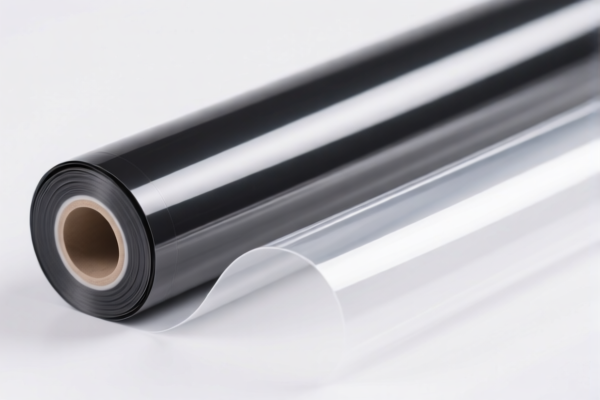
flexible plastic composite film
CN → US| HS编码 | 关税税率 | 原产国 | 目的国 | 文档 |
|---|---|---|---|---|
| 3920591000 | 41.0% | CN | US | 官方文档 |
| 3919905060 | 40.8% | CN | US | 官方文档 |
| 3919905040 | 40.8% | CN | US | 官方文档 |
| 3920992000 | 39.2% | CN | US | 官方文档 |
商品图片



AI分析
📦 Flexible Plastic Composite Film (Anti-UV Functional Film)
🌐 HS Code Reference & Customs Clearance Guide | 2026 Latest Tariff Analysis | Professional Compliance Strategy
📌 I. Product Definition & Classification: What Exactly Is This "Flexible Plastic Film"?
Flexible plastic composite films, specifically those with anti-UV (ultraviolet protection) functionality, are widely used in packaging, construction, automotive glazing, and agricultural applications. In international trade, the classification depends heavily on material composition, physical form (sheet/film vs. foam), and whether it is self-adhesive.
The key distinction lies in: * Non-foamed vs. Foam: Anti-UV films are typically non-foamed plastic sheets/films. * Adhesive Property: Is it self-adhesive (sticky backing) or non-adhesive? * Base Material: Usually polymers like PET, PE, or PP, often co-extruded or laminated.
⚠️ Critical Classification Logic:
- If it is a flexible, non-foamed, non-adhesive plastic film/strip → Likely Chapter 39 (Plastics), specifically 3920 (Other plates, sheets, film, foil, and strip).
- If it is self-adhesive (even if flexible) → It may fall under 3919 (Self-adhesive plates, sheets, film, foil, tape, strip, and other flat shapes).
- Anti-UV feature is generally considered a "functional characteristic" that does not change the fundamental plastic nature, but it reinforces the need for precise chemical/material description in documentation.
📊 II. HS Code Classification Details (Based on Provided Data)
The following 4 HS Codes are identified for "Flexible Plastic Anti-UV Film". Each has a slightly different tax burden due to variations in base duty rates.
| HS Code | Product Description Summary | Key Characteristics | Total Tax Rate (China Origin → US) |
|---|---|---|---|
| 3920.59.10.00 | Flexible plastic anti-UV film; plastic material; film form; non-foamed; non-reinforced; classified under "Flexible & Others" | Fits "Non-foamed & Unreinforced" plastic sheets/films. Non-adhesive implied by chapter 3920 distinction. | 41.0% |
| 3919.90.50.60 | Flexible plastic anti-UV film; matches "Self-adhesive plastic flat shapes" in material and form. | Self-adhesive or pressure-sensitive backing. Chapter 3919 applies to self-adhesive products. | 40.8% |
| 3919.90.50.40 | Flexible plastic anti-UV film; matches "Plastic flat shapes (films)"; no material conflict. | Similar to above; self-adhesive flat shape. Slightly different sub-code than .60, same tax rate. | 40.8% |
| 3920.99.20.00 | Flexible plastic anti-UV film; name includes plastic material & film form; flexible strip/strip & sheet characteristics. | Non-adhesive, other plastic films (not specifically enumerated elsewhere in 3920). | 39.2% |
🔍 Key Distinction:
- Chapter 3920 Codes (.59.10, .99.20): Generally non-adhesive plastic films.
- Chapter 3919 Codes (.90.50.60, .90.50.40): Self-adhesive plastic films.
- Tax Implication: The self-adhesive codes (3919) have a base duty of ~5.8%, while the non-adhesive codes vary (6.0% vs 4.2%). The non-adhesive 3920.99.20.00 offers the lowest total tax rate (39.2%).
💰 III. 2026 Latest Tariff Rate Breakdown (Including Add-ons)
✅ Applicable Country: United States (US)
✅ Country of Origin: China (CN)
✅ Effective Date: Ongoing (Section 301 & IEEPA tariffs active)
All four HS Codes are subject to the same additional tariffs: * Section 301 Tariff: +25% (USITC Footnote) * IEEPA Tariff: +10% (Targeting China-origin goods)
🎯 1. 3920.59.10.00 —— Non-foamed, Non-reinforced Plastic Film
| Item | Content |
|---|---|
| Base Duty | 6.0% |
| Section 301 Add-on | +25.0% |
| IEEPA Add-on | +10.0% |
| Total Rate | 41.0% |
| Tax Calculation | CIF Value × 41.0% |
| De Minimis Exemption | ❌ Not Eligible (Deny De Minimis) |
| Legal Basis | IEEPA:9903.01.25 → USITC:3920.59.10.00 → FOOTNOTE:301 |
📌 Explanation:
- Base 6% is the Most Favored Nation (MFN) rate.
- The 35% surcharge (25% + 10%) is mandatory for China-origin goods.
- This code is suitable if the film is rigid enough to be classified as a "sheet/film" under 3920 and is not self-adhesive.
🎯 2. 3919.90.50.60 & 3919.90.50.40 —— Self-Adhesive Plastic Film
| Item | Content |
|---|---|
| Base Duty | 5.8% |
| Section 301 Add-on | +25.0% |
| IEEPA Add-on | +10.0% |
| Total Rate | 40.8% |
| Tax Calculation | CIF Value × 40.8% |
| De Minimis Exemption | ❌ Not Eligible |
| Legal Basis | IEEPA:9903.01.25 → USITC:3919.90.50.xx → FOOTNOTE:301 |
📌 Note:
- These two codes are nearly identical in tax treatment.
- The difference lies in specific sub-classification within "Other self-adhesive plastics."
- If your film has an adhesive backing (even if weak), you must use Chapter 3919. Misclassifying as 3920 can lead to customs penalties.
🎯 3. 3920.99.20.00 —— Other Plastic Films (Non-adhesive)
| Item | Content |
|---|---|
| Base Duty | 4.2% |
| Section 301 Add-on | +25.0% |
| IEEPA Add-on | +10.0% |
| Total Rate | 39.2% |
| Tax Calculation | CIF Value × 39.2% |
| De Minimis Exemption | ❌ Not Eligible |
| Legal Basis | IEEPA:9903.01.25 → USITC:3920.99.20.00 → FOOTNOTE:301 |
📌 Advantage:
- This is the most cost-effective option among the four, saving 1.8% compared to 3920.59.10.00.
- Use this if the film is non-adhesive, flexible, and does not fit more specific descriptions in 3920.59.
🛠️ IV. Customs Clearance Practical Advice (Pitfall Avoidance Guide)
✅ 1. Required Documentation Checklist
| Document | Required? | Explanation |
|---|---|---|
| ✅ Product Specification Sheet | ✔️ | Must specify: Material (e.g., PET, PE), Thickness, Width, Length, Anti-UV % protection, Adhesive type (if any). |
| ✅ Commercial Invoice | ✔️ | Clearly state "Flexible Plastic Anti-UV Film" and HS Code. Avoid vague terms like "Plastic Wrap." |
| ✅ Packing List | ✔️ | Detail roll dimensions, core size, and weight per roll. |
| ✅ Certificate of Origin (CO) | ✔️ | Essential for proving China origin (and thus confirming additional tariffs apply). |
| ✅ Technical Data Sheet (TDS) | ✔️ | Proves the "Anti-UV" feature is a functional additive, not a separate material layer that might change classification. |
✅ 2. Declaration Tips (Key Mnemonics)
🔥 "Adhesive = 3919, Non-Adhesive = 3920; Be Specific, Avoid 'Composite' Ambiguity!"
| Scenario | Correct Declaration | Incorrect Practice |
|---|---|---|
| Film has sticky backing | Use 3919.90.50.60 or .40; describe as "Self-Adhesive Plastic Film" | Declare as 3920 → Misclassification Penalty |
| Film is non-sticky, multi-layer | Use 3920.99.20.00 or .59.10; describe as "Co-extruded Plastic Film" | Use "Composite" without material breakdown → Customs Query |
| Anti-UV is just a coating | Emphasize base plastic material in description | Claim "Textile" or "Rubber" by mistake → Major Delay |
| Rolls vs. Sheets | Specify "Rolls" for film; "Sheets" for cut pieces | Inconsistent unit of measure → Valuation Issues |
✅ 3. Special Considerations for "Composite" Nature
- Multi-layer Films: If the anti-UV layer is a separate laminate (e.g., PET + Aluminum + PE), customs may scrutinize the "Principal Character" test. However, for thin films, the plastic base usually dominates.
- Avoid "Textile" or "Paper" Claims: Even if the film has a fabric-like texture, if it is primarily plastic, it must go to Chapter 39.
- Pre-Ruling Recommendation: Given the high tariffs (40%+), it is highly advisable to file for an Advance Ruling with U.S. Customs and Border Protection (CBP) if the exact classification (3919 vs. 3920) is ambiguous in your specific product design.
🌍 V. Global Market Comparison (2026 Outlook)
| Market | Recommended HS Code | Est. Total Tariff (China Origin) | Key Requirement |
|---|---|---|---|
| 🇺🇸 USA | 3920.99.20.00 |
39.2% | Detailed TDS, FCC/UL not required but recommended for quality proof. |
| 🇪🇺 EU | 3920.49.00 (Ex.) |
~5% + VAT | REACH compliance for plasticizers/additives. No Section 301. |
| 🇨🇳 China | 3920.59.10.00 |
~5% (Import Duty) | CCC certification not typically required for raw film. |
| 🇬🇧 UK | 3920.49.00 |
~5% + VAT | UKCA marking if for specific regulated uses. |
📌 Conclusion:
- The US market is the most expensive due to layered tariffs (Base + 301 + IEEPA).
- EU/UK/Asia do not impose these punitive add-ons, making them more cost-effective destinations for Chinese-origin plastic films.
📌 VI. Common Errors & Pitfalls (Lessons Learned)
❌ Error 1: Misclassifying self-adhesive film as non-adhesive (3920).
👉 Consequence: Customs may reclassify to 3919, or impose penalties for inaccurate declaration.
👉 Fix: Check for adhesive backing. If present, use 3919.
❌ Error 2: Using vague terms like "Plastic Sheet" without specifying Adhesive or Non-Adhesive.
👉 Consequence: Customs may assign the highest default duty rate or hold the shipment for further review.
👉 Fix: Explicitly state "Non-Adhesive" or "Self-Adhesive" in the product name.
❌ Error 3: Ignoring the IEEPA 10% surcharge in cost calculations.
👉 Consequence: Profit margins eroded unexpectedly.
👉 Fix: Include the full 40%+ tariff in landed cost models for US imports.
🎯 VII. Conclusion: Precision in Classification Saves Money!
🎯 Remember the Rule:
🔹 "Adhesive? Go 3919 (40.8%). Non-Adhesive? Go 3920. Best Rate? 3920.99.20.00 (39.2%)."
🔹 "Anti-UV is a function, not a material. Stick to Plastic Chapter 39."
📌 Pro Tip:
If your product is a multi-layer laminate (e.g., plastic + metalized layer), ensure the plastic content is substantial enough to remain in Chapter 39. If metal content dominates, it might shift to Chapter 76 (Aluminum) or 74 (Copper), which have different tariff structures.
📣 Action Plan:
1. Verify Adhesiveness: Does it stick? Yes → 3919. No → 3920.
2. Select Best Rate: For non-adhesive, choose 3920.99.20.00 (39.2%) if it fits.
3. Prepare Docs: Ensure TDS explicitly mentions "Plastic Base" and "Anti-UV Additive."
4. Calculate Landed Cost: Include ~40% tariff in your pricing for US imports.
✨ Professional clearance starts with accurate classification!
💼 Every percentage point of tariff saves is pure profit!
用户评价
关于 HS 编码归类
协调制度(HS)是由世界海关组织(WCO)制定的国际贸易商品分类标准。全球 200 多个国家采用 HS 系统作为海关关税、贸易统计和进出口监管的基础。
每个 HS 编码遵循以下层级结构:
- 章(2 位)——商品大类(例如:第 84 章:机器和机械设备)
- 品目(4 位)——章内的更具体分类
- 子目(6 位)——国际通用细分,所有 WCO 成员国统一使用
- 本国细分(8-10 位)——各国自行扩展的细分编码,如美国 HTSUS 10 位编码
正确的 HS 编码归类对于顺利通关、准确缴纳关税和遵守贸易法规至关重要。错误归类可能导致海关延误、多缴关税或罚款。
从CN进口到US时,适用的关税税率可能包括:
- 最惠国(MFN)税率——适用于 WTO 成员国的标准关税税率
- 普通税率——适用于无贸易协定国家
- 贸易救济关税——附加关税,如 301 条款(反倾销)、232 条款(国家安全)或反补贴税
本页内容仅供参考。如需正式归类,请咨询当地海关或持牌报关代理。