fly trap special adhesive paper
CN → US| HS编码 | 关税税率 | 原产国 | 目的国 | 文档 |
|---|---|---|---|---|
| 3926909989 | 22.8% | CN | US | 官方文档 |
| 3808911000 | 37.8% | CN | US | 官方文档 |
| 3926909905 | 22.8% | CN | US | 官方文档 |
| 3808915001 | 40.0% | CN | US | 官方文档 |
| 3808915001 | 40.0% | CN | US | 官方文档 |
商品图片
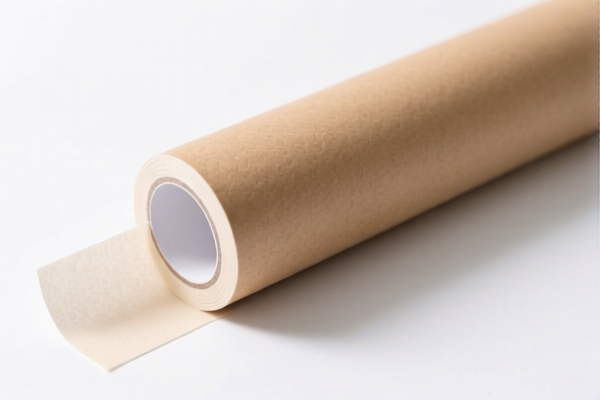

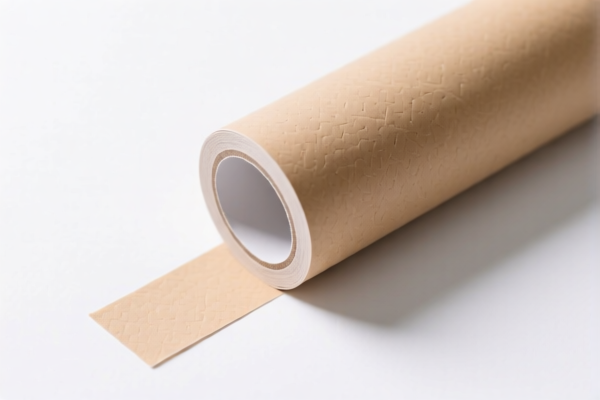
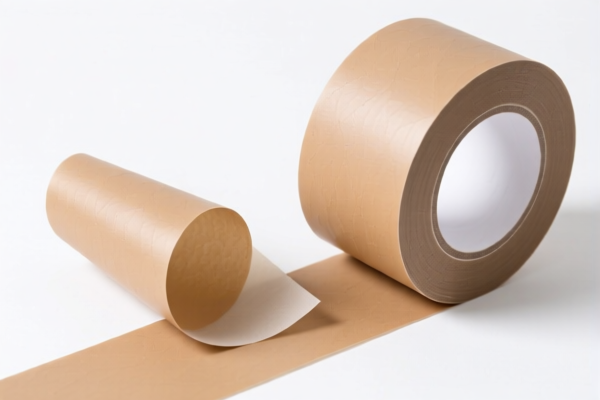
AI分析
🕸️ Fly Trap Special Adhesive Paper (Sticky Traps)
🌐 HS Code Classification & Customs Clearance Guide | 2026 Taxation Analysis | Strategic Import Strategy
📌 I. Product Definition: What Exactly Are We Importing?
"Fly Trap Special Adhesive Paper" generally refers to sticky traps used for pest control. However, in international trade customs classification, the HS Code is NOT determined solely by the name "Fly Trap." It depends entirely on the material composition and the primary function of the product.
There are two primary classification paths for this product: 1. As a Plastic/Product Article: If the paper/plastic is merely a substrate coated with adhesive, and the primary characteristic is the plastic/resin material itself. 2. As a Pesticide/Pest Control Product: If the product is specifically designed for insect control and contains active insecticidal properties or is classified strictly under pesticide regulations.
⚠️ Critical Distinction:
- If the item is plain sticky paper (mechanical trapping only, no chemical kill) but made of plastic/resin films → It often falls under Plastics (Chapter 39).
- If the item is insecticidal strips or specifically classified as pesticide formulations/consumables → It falls under Pesticides (Chapter 38).
- Note: Customs authorities may scrutinize the "insecticidal" claim. If it contains chemicals, Chapter 38 is almost mandatory. If it is purely mechanical, Chapter 39 is possible but risky if deemed "pest control equipment."
📦 II. HS Code Classification Details (Based on Provided Data)
The following HS Codes are derived strictly from the provided dataset. Each code reflects a different interpretation of the product's material or function.
| HS Code | Product Summary & Classification Logic | Total Tax Rate | Tax Breakdown |
|---|---|---|---|
3926.90.99.89 |
Plastic/Resin Based: Based on material being plastic or resin-based products, form is roll-shaped. Classified under "Other articles of plastics and articles of other materials." | 22.8% | Base: 5.3% Section 301: 7.5% Section 301 (122): 10% |
3808.91.10.00 |
Pesticide (Insecticide) Based: Based on use as insecticide, form is roll-shaped, material contains adhesive paper or film. Classified under "Insecticides." | 37.8% | Base: 2.8% Section 301: 25.0% Section 301 (122): 10% |
3926.90.99.05 |
Plastic with Coating for Trapping: Based on material being plastic/resin coated, form is roll-shaped, purpose is insect trapping. Classified under "Plastic products." | 22.8% | Base: 5.3% Section 301: 7.5% Section 301 (122): 10% |
3808.91.50.01 |
Other Pesticide Formulation: Based on use as insecticide or rodenticide, form is formulation or consumable. Classified under "Other insecticides." | 40.0% | Base: 5.0% Section 301: 25.0% Section 301 (122): 10% |
3808.91.50.01 |
Other Insecticide Preparation: Based on use as insecticide product, material is paper or adhesive. Classified under "Other insecticide preparations." | 40.0% | Base: 5.0% Section 301: 25.0% Section 301 (122): 10% |
🔍 Key Observation:
- Cheapest Option:3926.90.99.89and3926.90.99.05at 22.8% total tax. These rely on classifying the item primarily as a plastic product. - Most Expensive Option:3808.91.50.01at 40.0% total tax. This applies if the product is strictly classified as an insecticide preparation. - Middle Ground:3808.91.10.00at 37.8%. This is for insecticides where the form is explicitly noted as roll-shaped with adhesive.
💰 III. 2026 Latest Tariff Rate Details (Detailed Breakdown)
✅ Applicable Market: United States (US)
✅ Origin: China (CN) (Implied by Section 301/122 tariffs)
✅ Effective Date: Current enforcement period (2025-2026)
🎯 1. Path A: Classified as Plastic/Resin Product (Lower Tax)
HS Codes: 3926.90.99.89 / 3926.90.99.05
| Item | Content |
|---|---|
| Base Duty Rate | 5.3% (Ad Valorem) |
| USITC Additional Duty (Section 301) | +7.5% |
| IEEPA Additional Duty (Section 301/122) | +10% |
| Total Duty Rate | 22.8% |
| Tax Calculation | CIF Value × 22.8% |
| De Minimis Eligibility | ❌ No (Deny De Minimis for Section 301 goods) |
| Legal Basis Path | USITC:3926.90.99.89 → FOOTNOTE:Section 301 → IEEPA:122 |
📌 Explanation:
- This classification assumes the adhesive paper is primarily a plastic/resin article used for trapping.
- The 7.5% is the standard Section 301 additional duty for this subheading.
- The 10% is the additional Section 301 duty under the 122 clause.
- Total 22.8% is significantly lower than the pesticide classification.
🎯 2. Path B: Classified as Insecticide (Strip/Preparation) (Higher Tax)
HS Code: 3808.91.10.00
| Item | Content |
|---|---|
| Base Duty Rate | 2.8% (Ad Valorem) |
| USITC Additional Duty (Section 301) | +25.0% |
| IEEPA Additional Duty (Section 301/122) | +10% |
| Total Duty Rate | 37.8% |
| Tax Calculation | CIF Value × 37.8% |
| De Minimis Eligibility | ❌ No |
| Legal Basis Path | USITC:3808.91.10.00 → FOOTNOTE:Section 301 → IEEPA:122 |
📌 Explanation:
- This classification applies if the product is deemed an insecticide in roll form with adhesive.
- The 25% Section 301 duty is much higher than the 7.5% for plastics.
- Even though the base duty is low (2.8%), the additional duties push the total to 37.8%.
🎯 3. Path C: Classified as Other Insecticide Formulation (Highest Tax)
HS Code: 3808.91.50.01
| Item | Content |
|---|---|
| Base Duty Rate | 5.0% (Ad Valorem) |
| USITC Additional Duty (Section 301) | +25.0% |
| IEEPA Additional Duty (Section 301/122) | +10% |
| Total Duty Rate | 40.0% |
| Tax Calculation | CIF Value × 40.0% |
| De Minimis Eligibility | ❌ No |
| Legal Basis Path | USITC:3808.91.50.01 → FOOTNOTE:Section 301 → IEEPA:122 |
📌 Explanation:
- This is the "catch-all" for other insecticide preparations or consumables.
- If customs determines your "special adhesive paper" is an insecticidal formulation (even if the kill mechanism is sticky, if it's regulated as a pesticide product), this high rate applies.
- 40.0% is the maximum liability in this dataset.
🛠️ IV. Customs Clearance Practical Advice (Real-World Pitfalls)
✅ 1. Preparation Checklist (Non-Negotiable)
| Document | Required? | Explanation |
|---|---|---|
| ✅ Product Specification Sheet | YES | Must detail: Material (PP/PE/Paper?), Adhesive Type, Dimensions, Roll Length. |
| ✅ Ingredient Declaration | YES | Critical! State if the adhesive contains any insecticidal chemicals (e.g., imidacloprid). If NO chemicals → Lean towards HS 3926. If YES → Must use HS 3808. |
| ✅ Product Photos | YES | Clear images of the roll, packaging, and any labeling (e.g., "Fly Trap," "Sticky Roll"). |
| ✅ Third-Party Report | YES | If claiming "Non-Pesticide," a lab test confirming no active pesticidal ingredients is highly recommended to support HS 3926. |
| ✅ Commercial Invoice | YES | Description must match the HS Code logic. Avoid ambiguous terms like "Chemical-free pest control" if using HS 3926. |
| ✅ Packing List | YES | Detail net/gross weight and dimensions per roll. |
✅ 2. Declaration Strategy (Key Mnemonic)
🔥 "Material First, Function Second; Chemicals Mean Chapter 38!"
| Scenario | Recommended HS Code | Tax Rate | Risk Level |
|---|---|---|---|
| Pure Sticky Paper/Plastic (No insecticides, mechanical trapping only) | 3926.90.99.89 or 3926.90.99.05 |
22.8% | Medium (Customs may still challenge if labeled "Pest Control") |
| Sticky Roll Labeled as "Insecticide" or contains attractants | 3808.91.10.00 |
37.8% | Low (Accurate, but expensive) |
| Insecticidal Strip/Consumable (Active kill chemicals) | 3808.91.50.01 |
40.0% | Low (Strictly regulated) |
📌 Critical Tip:
- If you use HS 3926, ensure the product name on the invoice does not highlight "Insecticide" or "Pesticide" prominently. Use terms like "Adhesive Roll," "Plastic Sticky Mat," or "Industrial Trapping Tape."
- If the product contains any chemical designed to kill or repel insects, you MUST use HS3808. Misdeclaration can lead to fines, seizures, and FDA/EPA violations.
✅ 3. Special Situations
| Situation | Handling Advice |
|---|---|
| OEM Custom Rolls | Provide design files and material specs. If the customer is a pest control company, customs may assume pesticide use. |
| Rolls with Attractants | If coated with food-based attractants (non-chemical), still aim for HS 3926, but provide a lab certificate proving no pesticidal activity. |
| Packaging as "Pest Control Kit" | If sold as a kit with traps + bait, the trap itself may still be HS 3926, but the kit might be evaluated differently. Clear separation in invoicing is key. |
🌍 V. Global Market Comparison (2026 Latest)
| Country/Region | Recommended HS Code | Duty Rate | Notes |
|---|---|---|---|
| 🇺🇸 USA | 3926.90.99.89 (If non-chemical) |
22.8% | Lowest cost option. Requires strong proof of non-pesticide nature. |
| 🇺🇸 USA | 3808.91.50.01 (If chemical) |
40.0% | Mandatory if EPA registration is required. |
| 🇨🇳 China | 3926.90.99 / 3808.91 |
5-10% | No Section 301 taxes. |
| 🇪🇺 EU | 3926.90 / 3808.91 |
0-6% | Varies by country. No Section 301. |
| 🇬🇧 UK | 3926.90 / 3808.91 |
0-6% | Post-Brexit rules apply. |
📌 Conclusion:
- The US market is the most complex due to Section 301 and Section 122 tariffs.
- Classification accuracy is critical because the difference between 22.8% and 40.0% is 17.2% of the product value.
- For a $10,000 shipment, this difference is $1,720.
📌 VI. Common Mistakes & Pitfalls (Lessons Learned)
❌ Mistake 1: Calling it "Fly Trap Paper" in the invoice while declaring HS 3926
👉 Consequence: Customs officer suspects pesticide use → Audit → Potential reclassification to 3808 + Penalties.
✅ Fix: Use neutral terms like "Adhesive Roll for Industrial Use" or "Plastic Sticky Sheet" if applicable.
❌ Mistake 2: Assuming all sticky traps are pesticides
👉 Consequence: Overpaying 17.2% in duties if the product is purely mechanical.
✅ Fix: If no chemicals are used, argue for HS 3926 with material evidence.
❌ Mistake 3: Ignoring the "122 Clause" (Section 301 Part 4)
👉 Consequence: Underestimating total tax. Many traders forget the additional 10% on top of the 7.5% or 25%.
✅ Fix: Always calculate Base + Section 301 (7.5/25) + Section 301 Part 4 (10).
🎯 VII. Conclusion: Strategic Recommendation
🎯 Final Advice:
1. Audit Your Product: Does it contain any active pesticidal ingredients?
- YES → Declare as 3808.91.50.01 (40.0%) or 3808.91.10.00 (37.8%). Do not try to hide this; EPA compliance is serious.
- NO → Declare as 3926.90.99.89 (22.8%). This is the optimal cost-saving strategy.
-
Documentation is Key: For HS
3926, have a lab report ready that certifies the absence of insecticidal chemicals. -
Consult a Broker: Given the ambiguity between "plastic article" and "pesticide consumable," a pre-shipment consultation with a US customs broker is highly recommended to avoid delays at the port of entry.
📌 Pro Tip:
"Plastic vs. Pesticide: The line is thin. Materials define the code, chemicals define the risk. Pay attention, save 17.2%!"
📣 Immediate Action:
📞 Contact a Customs Broker with your product's Material Safety Data Sheet (MSDS) and Ingredient List.
🚀 Secure your HS Code before shipping to ensure predictable landed costs.
✨ Professional Clearance Starts with Precise Classification!
💼 Every Percent Counts in Global Trade!
用户评价
关于 HS 编码归类
协调制度(HS)是由世界海关组织(WCO)制定的国际贸易商品分类标准。全球 200 多个国家采用 HS 系统作为海关关税、贸易统计和进出口监管的基础。
每个 HS 编码遵循以下层级结构:
- 章(2 位)——商品大类(例如:第 84 章:机器和机械设备)
- 品目(4 位)——章内的更具体分类
- 子目(6 位)——国际通用细分,所有 WCO 成员国统一使用
- 本国细分(8-10 位)——各国自行扩展的细分编码,如美国 HTSUS 10 位编码
正确的 HS 编码归类对于顺利通关、准确缴纳关税和遵守贸易法规至关重要。错误归类可能导致海关延误、多缴关税或罚款。
从CN进口到US时,适用的关税税率可能包括:
- 最惠国(MFN)税率——适用于 WTO 成员国的标准关税税率
- 普通税率——适用于无贸易协定国家
- 贸易救济关税——附加关税,如 301 条款(反倾销)、232 条款(国家安全)或反补贴税
本页内容仅供参考。如需正式归类,请咨询当地海关或持牌报关代理。