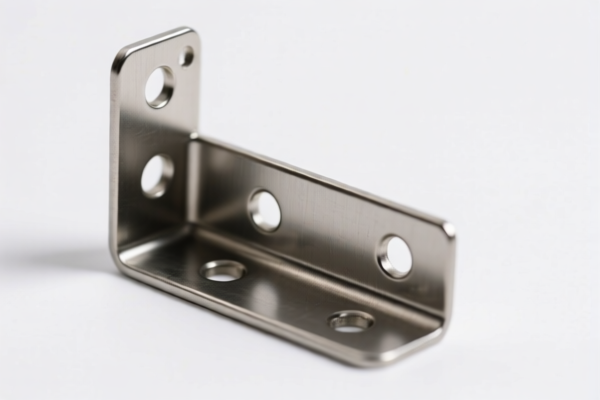
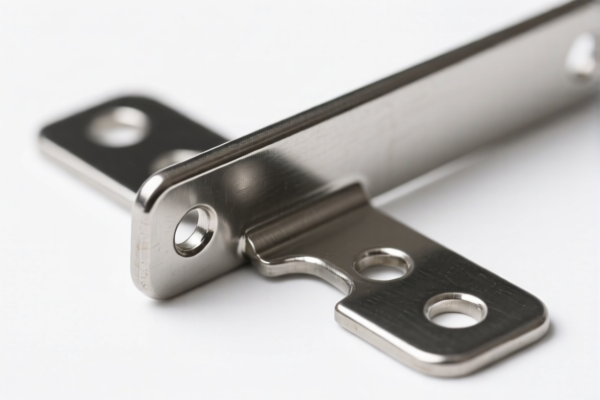
frame mounting bracket
CN → US| HS编码 | 关税税率 | 原产国 | 目的国 | 文档 |
|---|---|---|---|---|
| 8487900080 | 88.9% | CN | US | 官方文档 |
| 8487900040 | 38.9% | CN | US | 官方文档 |
| 7326908630 | 87.9% | CN | US | 官方文档 |
| 7326908688 | 87.9% | CN | US | 官方文档 |
| 9403999045 | 85.0% | CN | US | 官方文档 |
商品图片


AI分析
🔩 Frame Mounting Bracket (框架安装座)
🌐 HS Code Reference & Customs Clearance Guide | 2024 Latest Tariff Analysis | Professional Clearance Strategy
📌 I. Product Definition & Classification: What is a "Frame Mounting Bracket"?
The Frame Mounting Bracket is a critical mechanical component used to support, secure, and position structures in industrial, commercial, or furniture applications. In international trade, its classification depends heavily on its material composition and functional end-use.
It is generally categorized into two main groups: 1. Mechanical/Structural Parts: If the bracket is a general-purpose support for machinery or equipment (non-furniture). 2. Furniture Parts: If the bracket is specifically designed as a part of a furniture frame (e.g., shelving units, display racks).
⚠️ Key Distinction Point:
- If it is a metal bracket used for general mechanical support, it falls under Chapters 73 or 84.
- If it is a part of furniture, it falls under Chapter 94.
- Material Matters: Most brackets are steel/iron, triggering higher "Section 232" tariffs on steel/aluminum products if not properly classified under specific mechanical sub-headings that might offer slight nuances (though US tariffs are aggressive on steel).
📦 II. HS Code Classification Details (Based on Provided Data)
| HS Code | Product Description | Applicable Scenario | Material/Feature | Total Tax Rate (US Imports from China) |
|---|---|---|---|---|
8487.90.00.80 |
Other mechanical parts (Supports) | General mechanical structure support | Steel/Aluminum/Metal | 88.9% |
8487.90.00.40 |
Other mechanical parts (Default) | General mechanical structure component | Steel/Aluminum/Metal | 38.9% |
7326.90.86.30 |
Other articles of iron/steel (Supports) | Bracket-like support structures | Steel/Aluminum/Copper | 87.9% |
7326.90.86.88 |
Other articles of iron/steel | General metal制品 | Steel/Aluminum/Copper | 87.9% |
9403.99.90.45 |
Furniture Parts (Metal) | Parts of furniture frames (e.g., shelving) | Metal | 85.0% |
🔍 Critical Analysis:
- High Tariff Alert: All listed HS codes carry very high total tax rates (ranging from 38.9% to 88.9%) due to the combination of Base Tariff + Section 301 Tariffs + Section 232 Tariffs (if applicable to steel/aluminum).
- Best Case Scenario:8487.90.00.40offers the lowest rate at 38.9%, but this depends on convincing customs that it is a "general mechanical part" rather than a "steel article."
- Worst Case Scenario:8487.90.00.80and steel-specific codes (7326...) hit ~88%, effectively making the product unprofitable unless priced significantly higher.
💰 III. Detailed Tariff Breakdown (2024 US Import Regulations)
✅ Applicable Country: United States (US)
✅ Origin: China (CN)
✅ Effective Time: Current (Section 301 & 232 Tariffs Active)
🎯 1. 8487.90.00.80 – Mechanical Parts (High Risk Steel)
| Item | Detail |
|---|---|
| Base Tariff | 3.9% |
| Section 301 Tariff | +25.0% |
| Section 232 Tariff | +50.0% (Steel/Aluminum/Copper products) |
| Total Tax Rate | 88.9% |
| De Minimis Exemption | ❌ Denied (Section 301 and 232 tariffs apply to all shipments, including de minimis) |
| Legal Basis | USITC:8487.90.00.80 + IEEPA:9903.01.25 + USITC:7326/8487 Steel Provisions |
📌 Explanation:
- The 50% Section 232 tariff applies because brackets are typically made of steel or aluminum. This is the highest barrier.
- Even if classified as a "mechanical part" (8487), if the material is steel, the 232 tariff often stacks on top.
🎯 2. 8487.90.00.40 – Mechanical Parts (Lower Risk Classification)
| Item | Detail |
|---|---|
| Base Tariff | 3.9% |
| Section 301 Tariff | +25.0% |
| Section 232 Tariff | Not Applicable (Assumed non-steel or exempt mechanical classification) |
| Total Tax Rate | 38.9% |
| De Minimis Exemption | ❌ Denied |
| Legal Basis | USITC:8487.90.00.40 + IEEPA:9903.01.25 |
📌 Explanation:
- This is the most cost-effective option provided in the data.
- To use this, you must prove the bracket is a mechanical component of a machine, not just a piece of metal. It must not be subject to Section 232 steel tariffs.
- Strategy: Emphasize "Function" (Mechanical Support) over "Material" (Steel) in documentation.
🎯 3. 7326.90.86.30 & 7326.90.86.88 – Steel Articles
| Item | Detail |
|---|---|
| Base Tariff | 2.9% |
| Section 301 Tariff | +25.0% |
| Section 232 Tariff | +50.0% (Steel/Aluminum/Copper) |
| Total Tax Rate | 87.9% |
| De Minimis Exemption | ❌ Denied |
| Legal Basis | USITC:7326.90.86.xx + Section 232 |
📌 Explanation:
- These codes explicitly classify the product as an article of iron/steel.
- The 50% Section 232 tariff is unavoidable here.
- Only use if the product cannot be classified under Chapter 84 (Mechanical Parts).
🎯 4. 9403.99.90.45 – Furniture Parts
| Item | Detail |
|---|---|
| Base Tariff | 0.0% |
| Section 301 Tariff | +25.0% |
| Section 232 Tariff | +50.0% (If steel) |
| Total Tax Rate | 85.0% |
| De Minimis Exemption | ❌ Denied |
| Legal Basis | USITC:9403.99.90.45 + Section 301/232 |
📌 Explanation:
- If the bracket is part of a furniture item (e.g., a metal shelving unit), it falls under Chapter 94.
- Base tariff is 0%, but Section 301 (25%) and Section 232 (50%) still apply if made of steel.
- Total: 85.0%.
🛠️ IV. Customs Clearance Practical Advice (Avoid Pitfalls)
✅ 1. Documentation Checklist (Mandatory)
| Document | Required | Purpose |
|---|---|---|
| ✅ Product Specification Sheet | ✔️ | Detail dimensions, load capacity, and exact application (e.g., "Support for CNC Machine" vs. "Support for Bookshelf"). |
| ✅ Material Certificates | ✔️ | Prove alloy composition. If possible, show it’s not standard steel to argue against Section 232 (difficult but possible for specialized alloys). |
| ✅ Technical Drawings | ✔️ | Highlight mechanical function (bolts, slots, interfaces) to support Chapter 84 classification. |
| ✅ Commercial Invoice | ✔️ | Clearly state "Frame Mounting Bracket" and its end-use. |
| ✅ Bill of Lading | ✔️ | Ensure packaging matches declared goods. |
| ✅ Proof of Origin | ✔️ | Crucial: If shipped from a non-China country (e.g., Vietnam, Mexico), you may avoid Section 301/232 tariffs. |
✅ 2. Declaration Strategy (Key Tips)
🔥 "Function over Material, Origin over Product!"
| Scenario | Correct Declaration | Incorrect Declaration | Consequence |
|---|---|---|---|
| Industrial Bracket | 8487.90.00.40 (Mechanical Part) |
7326.90.86.88 (Steel Article) |
Saves 49% tax (38.9% vs 87.9%) |
| Furniture Bracket | 9403.99.90.45 |
8487.90.00.80 |
Avoids steel tariff if not clearly mechanical. |
| Non-China Origin | Declare Origin as Vietnam/Mexico | Declare Origin as China | 0% Section 301/232 (if rules of origin met). |
✅ 3. Special Considerations
| Situation | Recommendation |
|---|---|
| Steel/Aluminum Content | If >50% steel/aluminum, expect Section 232 tariffs. Try to classify under 8487.90.00.40 to avoid the 50% surcharge. |
| Small Samples | No De Minimis Exemption: Section 301 and 232 tariffs apply even to packages under $800. Do not rely on $800 exemption for Chinese steel/brackets. |
| Furniture Kits | If sold as part of a furniture set, classify the entire set under Chapter 94, not the bracket alone. |
🌍 V. Global Market Comparison (2024)
| Country/Region | Recommended HS Code | Approx. Tariff | Notes |
|---|---|---|---|
| 🇺🇸 USA | 8487.90.00.40 |
38.9% | Best case. 7326 codes hit ~88%. |
| 🇨🇳 China | 7326.90.86.88 |
2.9% | Low tariff, but US faces high barriers. |
| 🇪🇺 EU | 7326.90.98 |
4.5% + Duty | No Section 301/232, but anti-dumping may apply. |
| 🇬🇧 UK | 7326.90.98 |
4.5% | Post-Brexit rules apply. |
| 🇻🇳 Vietnam | 7326.90.98 |
0% (FTA) | Best Alternative: Manufacture in Vietnam to avoid US tariffs. |
📌 Conclusion:
- USA is the most hostile market for Chinese steel brackets due to stacked tariffs.
- Vietnam/Mexico manufacturing is the only viable way to reduce costs to near 0%.
📌 VI. Common Mistakes & Pitfalls (Learn from Others)
❌ Mistake 1: Classifying a steel bracket as 8487.90.00.80
👉 Result: 88.9% tax.
👉 Fix: Argue for 8487.90.00.40 (38.9%) by emphasizing mechanical function.
❌ Mistake 2: Using De Minimis ($800 exemption) for Chinese brackets
👉 Result: Confiscation or Back Taxes. Section 301/232 tariffs do not apply to de minimis.
👉 Fix: Always declare and pay tariffs for shipments under $800.
❌ Mistake 3: Misdeclaring Origin
👉 Result: Customs fraud charges, severe penalties.
👉 Fix: If produced in Vietnam, ensure Substantial Transformation (not just assembly) to claim Vietnamese origin.
🎯 VII. Final Recommendation
🚀 Strategic Action Plan:
-
Re-evaluate Classification:
- Can you prove the bracket is a mechanical part (
8487.90.00.40)? - If yes, you save ~50% in taxes (38.9% vs 88.9%).
- Can you prove the bracket is a mechanical part (
-
Supply Chain Diversification:
- Shift production to Vietnam or Mexico to avoid all Section 301/232 tariffs.
- This is the only way to compete on price in the US market.
-
Pre-Ruling Request:
- File an Advance Ruling with US CBP to confirm classification under
8487.90.00.40. - This provides legal certainty and protects against future audits.
- File an Advance Ruling with US CBP to confirm classification under
📌 Pro Tip:
"In 2024, location is tax. A bracket made in China costs 3x more in duties than one made in Vietnam. Don’t just ship; strategize."
📣 Immediate Next Steps:
📞 Contact a Customs Broker: Request a classification review for
8487.90.00.40.
📦 Audit Your Supply Chain: Assess feasibility of shifting production to ASEAN countries.
📄 Prepare Documentation: Update specs to highlight mechanical function over material.
✨ Professional Clearance Starts with Precise Classification!
💼 Every percentage point saved is pure profit!
用户评价
关于 HS 编码归类
协调制度(HS)是由世界海关组织(WCO)制定的国际贸易商品分类标准。全球 200 多个国家采用 HS 系统作为海关关税、贸易统计和进出口监管的基础。
每个 HS 编码遵循以下层级结构:
- 章(2 位)——商品大类(例如:第 84 章:机器和机械设备)
- 品目(4 位)——章内的更具体分类
- 子目(6 位)——国际通用细分,所有 WCO 成员国统一使用
- 本国细分(8-10 位)——各国自行扩展的细分编码,如美国 HTSUS 10 位编码
正确的 HS 编码归类对于顺利通关、准确缴纳关税和遵守贸易法规至关重要。错误归类可能导致海关延误、多缴关税或罚款。
从CN进口到US时,适用的关税税率可能包括:
- 最惠国(MFN)税率——适用于 WTO 成员国的标准关税税率
- 普通税率——适用于无贸易协定国家
- 贸易救济关税——附加关税,如 301 条款(反倾销)、232 条款(国家安全)或反补贴税
本页内容仅供参考。如需正式归类,请咨询当地海关或持牌报关代理。