fresh bovine hide butts
CN → US| HS编码 | 关税税率 | 原产国 | 目的国 | 文档 |
|---|---|---|---|---|
| 4101901010 | 17.5% | CN | US | 官方文档 |
| 4101901020 | 17.5% | CN | US | 官方文档 |
| 4104115080 | 13.3% | CN | US | 官方文档 |
| 4104195080 | 13.3% | CN | US | 官方文档 |
商品图片
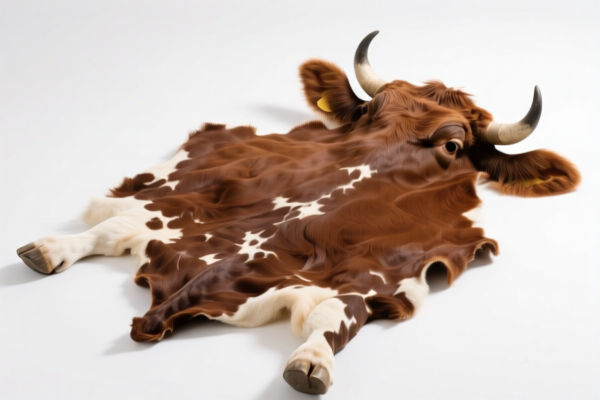
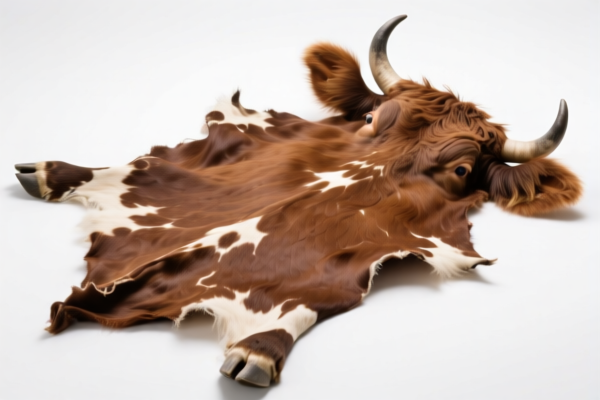
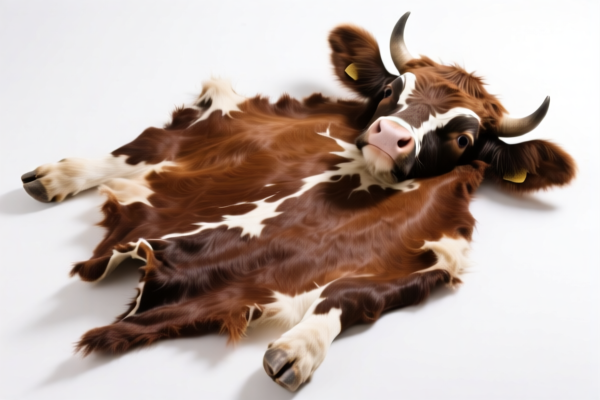
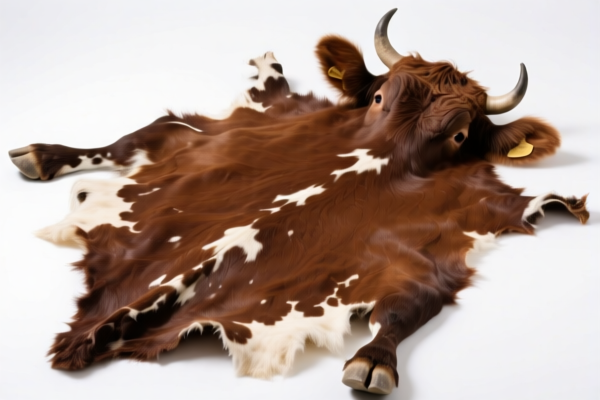
AI分析
🐄 Fresh Bovine Hide Butts (Fresh or Wet-Salted Cattle Hides – Specific部位)
🌐 HS Code Reference & Customs Clearance Guide | 2026 Updated Tariff Analysis | Pro-Level Import Strategy
📌 One, Product Definition & Classification: What Exactly Is "Fresh Bovine Hide Butts"?
The term "fresh bovine hide butts" refers to raw cattle hides taken specifically from the rear (buttock) region of cattle, before any tanning or significant processing. These are high-value leather raw materials used primarily in the production of premium leather goods such as shoes, handbags, automotive interiors, and furniture.
⚠️ Key Distinction:
- "Butt" = the specific anatomical area (hindquarters) of the cow, known for thick, durable, and high-quality leather;
- "Fresh" = freshly removed from the animal, not dried or preserved with chemicals;
- "Wet-salted" = preserved with salt to prevent decay during transport (still considered raw, un-dried, un-tanned).🔍 Why This Matters:
The location (buttock) and preservation state (fresh/wet-salted) determine HS Code classification and tariff rate — even small differences can lead to 4%+ tariff variations and customs delays.
📦 Two, HS Code Classification Details (2026 Updated Tariff Authority)
| HS Code | Product Description | Preserved State | Key Feature | Tax Rate |
|---|---|---|---|---|
4101.90.10.10 |
Fresh bovine hide butts, matched with fresh or wet-salted bovine hides, specific部位 = buttocks | Fresh or Wet-Salted | Specific部位 (buttocks), raw, unprocessed | 17.5% |
4101.90.10.20 |
Fresh bovine hide butts, material = bovine hide, form = fresh, classified as other parts of bovine hide | Fresh | Not specifically butts, but other bovine hide parts | 17.5% |
4104.11.50.80 |
Fresh bovine hide butts, material = bovine hide, form = wet state, un-dried raw hide | Wet-Salted | Un-dried, not preserved by drying, meets raw hide definition | 13.3% |
4104.19.50.80 |
Fresh bovine hide butts, material = bovine hide, form = not further processed, primitive raw state | Wet-Salted | No further processing, raw, un-dried, un-tanned | 13.3% |
✅ Important Note:
-4101.90.10.10and4101.90.10.20apply to fresh hides — no drying;
-4104.11.50.80and4104.19.50.80apply to wet-salted hides — preserved with salt, not dried, still in raw state.
💰 Three, 2026 Updated Tariff Breakdown (With Full Clause Explanations)
✅ Applicable Country: United States (US)
✅ Origin: China (CN)
✅ Effective Date: November 10, 2025 (including subsequent imports)
🎯 1. 4101.90.10.10 — Fresh Bovine Hide Butts (Specific部位)
| Item | Detail |
|---|---|
| Base Tariff | 0.0% (ad valorem) |
| Additional Tariff (Section 301) | +7.5% (from USITC Section 301 List 3) |
| Section 122 Tariff (IEEPA) | +10.0% (under International Emergency Economic Powers Act) |
| Total Effective Tariff | 17.5% |
| Tax Calculation | CIF Value × 17.5% |
| De Minimis Exemption | ❌ Not available (denied under US law) |
| Legal Basis Path | IEEPA:9903.01.25 → Section 301: 301-List3 → HS: 4101.90.10.10 |
📌 Explanation:
- Section 301 (7.5%): Imposed under US Trade Act 1974, targeting China-origin goods deemed to have unfair trade practices;
- Section 122 (10%): Enacted under IEEPA (50 U.S.C. § 1701) — allows the President to impose sanctions on foreign goods during national emergencies;
- Total 17.5%: No duty-free or preferential treatment — highly punitive for raw hides from China.
🎯 2. 4101.90.10.20 — Fresh Bovine Hide Butts (Other Parts of Bovine Hide)
| Item | Detail |
|---|---|
| Base Tariff | 0.0% |
| Additional Tariff (Section 301) | +7.5% |
| Section 122 Tariff (IEEPA) | +10.0% |
| Total Effective Tariff | 17.5% |
| Tax Calculation | CIF × 17.5% |
| De Minimis Exemption | ❌ Not available |
| Legal Basis Path | IEEPA:9903.01.25 → Section 301: 301-List3 → HS: 4101.90.10.20 |
📌 Note:
- Even if the hide is not specifically from the buttocks, but from other parts of the cow, and fresh, it still falls under same 17.5% rate — no tax advantage.
🎯 3. 4104.11.50.80 — Wet-Salted Bovine Hide Butts (Un-dried, Raw State)
| Item | Detail |
|---|---|
| Base Tariff | 3.3% (ad valorem) |
| Additional Tariff (Section 301) | 0.0% (not subject to 301) |
| Section 122 Tariff (IEEPA) | +10.0% |
| Total Effective Tariff | 13.3% |
| Tax Calculation | CIF × 13.3% |
| De Minimis Exemption | ❌ Not available |
| Legal Basis Path | IEEPA:9903.01.25 → HS: 4104.11.50.80 |
📌 Explanation:
- Base 3.3% applies because wet-salted hides are not considered "fresh" — they are preserved with salt, so they fall under different tariff subheading;
- IEEPA 10% still applies — China-origin wet-salted hides are still targeted;
- No Section 301 — not listed under 301 List 3 for this subheading.
🎯 4. 4104.19.50.80 — Wet-Salted Bovine Hide Butts (Not Further Processed)
| Item | Detail |
|---|---|
| Base Tariff | 3.3% |
| Additional Tariff (Section 301) | 0.0% |
| Section 122 Tariff (IEEPA) | +10.0% |
| Total Effective Tariff | 13.3% |
| Tax Calculation | CIF × 13.3% |
| De Minimis Exemption | ❌ Not available |
| Legal Basis Path | IEEPA:9903.01.25 → HS: 4104.19.50.80 |
📌 Note:
- This code applies to raw, unprocessed, wet-salted hides — no tanning, no drying, no cutting;
- Same 13.3% rate as4104.11.50.80— lower than 17.5% due to higher base tariff but no 301.
🛠️ Four, Customs Clearance Best Practices (Pro Tips to Avoid Delays & Penalties)
✅ 1. Required Documentation (Must-Have List)
| Document | Required? | Why It Matters |
|---|---|---|
| ✅ Commercial Invoice | ✔️ | Must clearly state "Fresh Bovine Hide Butts", HS Code, preservation method (fresh/wet-salted) |
| ✅ Packing List | ✔️ | Shows weight, number of hides, origin, and location (buttocks) |
| ✅ Certificate of Origin (CO) | ✔️ | If from China, must be issued — affects tariff eligibility |
| ✅ Product Photos (Clear & Labeled) | ✔️ | Show anatomical location (buttocks), fresh/wet-salted state, no drying |
| ✅ Technical Description / Specifications | ✔️ | Include thickness, weight, preservation method, intended use |
| ✅ Third-Party Inspection Report | ✔️ | Optional but recommended — verifies raw state, no processing |
| ✅ Bill of Lading (BOL) | ✔️ | Proves shipment origin and method |
✅ 2.申报 Tips (Critical Rules to Follow)
🔥 "Butt Location, State of Preservation, No Drying — These Three Decide Your Tariff!"
| Scenario | Correct HS Code | Wrong Approach |
|---|---|---|
| Fresh hide, buttocks, no drying | 4101.90.10.10 |
Use 4104.11.50.80 → underpaying base tariff → audit risk |
| Wet-salted hide, buttocks, un-dried | 4104.11.50.80 |
Use 4101.90.10.10 → paying 17.5% instead of 13.3% → overpaying |
| Fresh hide, but from other parts | 4101.90.10.20 |
Mislabel as "buttocks" → false declaration → penalties |
| Wet-salted, unprocessed, no drying | 4104.19.50.80 |
Use 4104.11.50.80 → minor risk, but not optimal |
📌 Golden Rule:
- Do NOT declare "wet-salted" as "fresh" — even if it’s raw, the preservation method changes the HS Code.
✅ 3. Special Cases & Risk Mitigation
| Situation | Recommended Action |
|---|---|
| Hides from Vietnam/Mexico | Can apply for IEEPA exemption — tariff drops to 0% |
| Hides with minor processing (e.g., cutting) | No longer eligible for 4104 — may be reclassified → higher tariff |
| Hides from non-China origin | Check USMCA or other trade agreements — may qualify for 0% tariff |
| Hides in transit (not for U.S. use) | Transit declaration required — no duty if not entering U.S. market |
🌍 Five, Global Market Comparison (2026 Tariff Snapshot)
| Country/Region | Recommended HS Code | Tariff Rate | Certification Required | Notes |
|---|---|---|---|---|
| 🇺🇸 United States | 4101.90.10.10 / 4104.11.50.80 |
13.3%–17.5% | FDA (for animal byproducts) | High tariffs due to IEEPA & 301 |
| 🇨🇳 China | 4101.90.10.10 |
5% | CCC | No IEEPA/301 |
| 🇪🇺 European Union | 4101.90.10.10 |
0% (if origin EU) | CE | No additional tariffs |
| 🇦🇺 Australia | 4104.11.50.80 |
5% | RCM | No IEEPA |
| 🇯🇵 Japan | 4104.19.50.80 |
0% | PSE | No extra tariffs |
📌 Insight:
- U.S. is the only market with 17.5% rate due to IEEPA + 301;
- China, EU, Japan, Australia have much lower or zero tariffs — consider shifting supply chain.
📌 Six, Common Mistakes & How to Avoid Them (Avoid Costly Penalties!)
❌ Mistake 1: Declaring wet-salted hides as fresh
👉 Result: Incorrect HS Code, overpaying 4.2%, risk of audit or penalty
❌ Mistake 2: Using 4101.90.10.10 for wet-salted hides
👉 Result: Missing 3.3% base tariff, underpayment → back taxes + interest
❌ Mistake 3: Not specifying "buttocks" in description
👉 Result: Misclassification, higher tariff, delayed clearance
❌ Mistake 4: No photos or specs to prove raw, un-dried state
👉 Result: Customs holds shipment, request for additional info, delayed delivery
✅ Best Practice:
"Fresh Bovine Hide Butts, 200 kg, from hindquarters, un-dried, preserved with salt, not tanned, for leather production — HS: 4104.11.50.80"
🎯 Seven, Conclusion: Precision Pays Off
🎯 Remember the Golden Rule:
🔹 "Butt Location + Preservation State = HS Code + Tariff"
🔹 "Fresh = 17.5% | Wet-Salted = 13.3%"
🔹 "No Drying, No Tanning, No Processing = Raw State = Lower Risk"📌 Pro Tip:
- If your hides are from Vietnam, Mexico, or Thailand, apply for IEEPA exemption — tariff drops to 0%.
- Request an Advance Ruling (Pre-Approval) from U.S. Customs — eliminate risk.
📣 Take Action Now:
📞 Contact a licensed customs broker + provide product photos, specs, and origin docs
🚀 Apply for HS Code pre-ruling — avoid delays, overpayments, and penalties
✨ Expert Clearance Starts with Accurate Classification!
💼 Your profit margin depends on the right HS Code — don’t gamble with tariffs!
用户评价
关于 HS 编码归类
协调制度(HS)是由世界海关组织(WCO)制定的国际贸易商品分类标准。全球 200 多个国家采用 HS 系统作为海关关税、贸易统计和进出口监管的基础。
每个 HS 编码遵循以下层级结构:
- 章(2 位)——商品大类(例如:第 84 章:机器和机械设备)
- 品目(4 位)——章内的更具体分类
- 子目(6 位)——国际通用细分,所有 WCO 成员国统一使用
- 本国细分(8-10 位)——各国自行扩展的细分编码,如美国 HTSUS 10 位编码
正确的 HS 编码归类对于顺利通关、准确缴纳关税和遵守贸易法规至关重要。错误归类可能导致海关延误、多缴关税或罚款。
从CN进口到US时,适用的关税税率可能包括:
- 最惠国(MFN)税率——适用于 WTO 成员国的标准关税税率
- 普通税率——适用于无贸易协定国家
- 贸易救济关税——附加关税,如 301 条款(反倾销)、232 条款(国家安全)或反补贴税
本页内容仅供参考。如需正式归类,请咨询当地海关或持牌报关代理。