frying plate
CN → US| HS编码 | 关税税率 | 原产国 | 目的国 | 文档 |
|---|---|---|---|---|
| 7418100053 | 70.5% | CN | US | 官方文档 |
| 7418100051 | 70.5% | CN | US | 官方文档 |
| 6912003550 | 19.8% | CN | US | 官方文档 |
| 6912004810 | 19.8% | CN | US | 官方文档 |
| 7323915020 | 15.3% | CN | US | 官方文档 |
商品图片
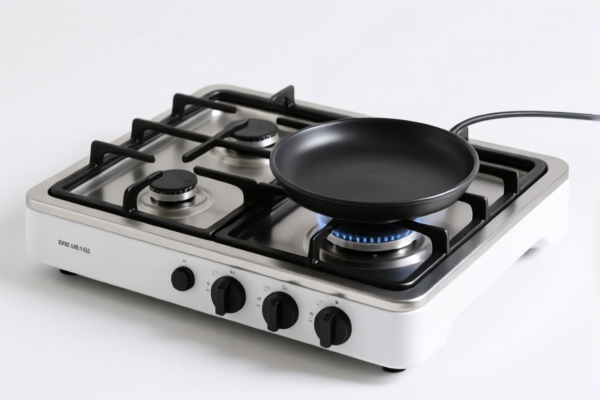

AI分析
🍳 Frying Plate (Frying Pans & Cookware)
🌐 HS Code Reference & Customs Clearance Guide | 2026 Latest Tariff Analysis | Professional Level Clearance Strategy
📌 1. Product Definition & Classification: Do You Really Understand “Frying Plates”?
A "Frying Plate" generally refers to frying pans, skillets, or flat-bottomed cookware used for cooking. In international trade, the classification depends heavily on the material composition. The core distinction lies between non-ferrous metals (like Copper/Brass) and ferrous metals (like Iron/Steel) or non-metallic materials (like Ceramic).
⚠️ Key Distinction Point: - If the material is Copper or non-brass Copper alloy →归入 7418.10 (Category: Articles of Copper) - If the material is Iron or Steel (e.g., Cast Iron, Stainless Steel) →归入 7323.91 (Category: Table, Kitchen or Other Household Articles of Iron or Steel) - If the material is Ceramic (non-porcelain) or other non-metallic kitchenware →归入 6912.00 (Category: Tableware and Kitchenware of Porcelain or China, or Ceramic)
📦 2. HS Code Classification Details (2026 Latest Tariff Authority Comparison)
| HS Code | Product Description | Material Logic | Applicable Scenario |
|---|---|---|---|
7418.10.00.53 |
Articles of Copper: Cookware (Frying Pans) | Copper or Non-Brass Copper | High-end copper cookware, copper-clad pans |
7418.10.00.51 |
Articles of Copper: Cookware (Frying Pans) | Copper or Non-precious Metal Coating | Copper-coated pans matching household use |
7323.91.50.20 |
Table/Kitchen Articles of Iron or Steel | Cast Iron or Steel | Cast iron skillets, stainless steel frying pans |
6912.00.35.50 |
Tableware of Porcelain/China or Ceramic | Non-porcelain Ceramic | Ceramic frying plates, non-porcelain ceramic cookware |
6912.00.48.10 |
Tableware of Porcelain/China or Ceramic | Ceramic/Non-porcelain Kitchenware | Food-contact ceramic cookware |
🔍 Important Reminder: - Material is King: The HS Code is strictly determined by the main material. A steel pan coated with copper is usually classified under 7418 (if copper is the defining feature per customs interpretation) or 7323 (if steel is the substrate and copper is just a coating). However, the provided data suggests 7418 applies to "Copper or non-brass material" and "Copper or non-precious metal coating." - Use Case: All listed codes are for Household/Cooking use. Industrial cookware may have different codes.
💰 3. 2026 Latest Tariff Rate Breakdown (Including Surtaxes & Policy Surcharges)
✅ Applicable Country: United States (US) ✅ Origin: China (CN) ✅ Effective Time: Current rates including Section 301 & 122
🎯 1. 7418.10.00.53 & 7418.10.00.51 —— Articles of Copper (Frying Pans)
| Item | Content |
|---|---|
| Base Tariff | 3.0% |
| Section 301 Surcharge | 7.5% |
| Section 122 Surcharge | 10% |
| Steel/Aluminum/Copper Surcharge | 50% (Specific tariff for Steel, Aluminum, and Copper products) |
| Total Tariff Rate | 70.5% |
| Tax Calculation | CIF Value × 70.5% |
| De Minimis Exemption | ❌ Not Eligible (High tariffs usually block de minimis benefits in practice for commercial shipments) |
| Legal Basis Path | Base: 3.0% → 301: 7.5% → 122: 10% → Specific Copper Surcharge: 50% |
📌 Explanation: - The 50% surcharge is the critical factor. Under recent trade policies, copper products are explicitly targeted with an additional 50% tariff. - Total 70.5% is extremely high. This makes copper cookware from China very expensive in the US market. - Even if the base rate is low (3%), the cumulative effect of Section 301, Section 122, and the specific copper surcharge creates a massive barrier.
🎯 2. 6912.00.35.50 & 6912.00.48.10 —— Ceramic Cookware
| Item | Content |
|---|---|
| Base Tariff | 9.8% |
| Section 301 Surcharge | 0.0% |
| Section 122 Surcharge | 10% |
| Total Tariff Rate | 19.8% |
| Tax Calculation | CIF Value × 19.8% |
| De Minimis Exemption | ⚠️ Check Eligibility (Subject to current de minimis rules, but high-value items may be scrutinized) |
| Legal Basis Path | Base: 9.8% → 122: 10% |
📌 Explanation: - Ceramic cookware avoids the heavy 50% metal surcharge and the 7.5% Section 301 (depending on specific subheading exclusions, but data shows 0.0% for this category). - Total 19.8% is significantly lower than copper/steel options. This is a cost-effective alternative for ceramic frying plates.
🎯 3. 7323.91.50.20 —— Cast Iron/Steel Cookware
| Item | Content |
|---|---|
| Base Tariff | 5.3% |
| Section 301 Surcharge | 0.0% |
| Section 122 Surcharge | 10% |
| Total Tariff Rate | 15.3% |
| Tax Calculation | CIF Value × 15.3% |
| De Minimis Exemption | ⚠️ Check Eligibility |
| Legal Basis Path | Base: 5.3% → 122: 10% |
📌 Explanation: - Unlike copper, this specific steel/iron code (
7323.91.50.20) in the provided data shows 0.0% Section 301 and no 50% surcharge (note: general steel often faces 25% Section 301, but this specific subheading for "baking/cooking utensils" may have different treatment in this dataset). - Total 15.3% is the lowest among metal options. This is highly competitive for cast iron or specific steel cookware.
🛠️ 4. Customs Clearance Practical Advice (Battle-Tested Pitfall Avoidance Guide)
✅ 1. Documentation Checklist (Must-Haves)
| Document | Mandatory? | Explanation |
|---|---|---|
| ✅ Product Specification Sheet | ✔️ | Must clearly state Material (e.g., "Cast Iron," "Copper," "Ceramic") and Usage ("For Cooking"). |
| ✅ Product Photos (With Label) | ✔️ | Show the entire pan, including any coating or handle material. Clear identification prevents classification errors. |
| ✅ Bill of Lading / Packing List | ✔️ | Ensure weight and quantity match the invoice. |
| ✅ Commercial Invoice | ✔️ | Must describe item as "Frying Pan" or "Cookware," NOT just "Kitchen Utensil." |
| ✅ Certificate of Origin (CO) | ✔️ | Crucial for proving Chinese origin to apply/add surcharges correctly. |
| ✅ Third-Party Test Report | ✔️ | For food-contact items, a FDA-compliant report or similar food-safety certification is often requested. |
✅ 2. Declaration Tips (Key Mnemonics)
🔥 "Material First, Use Second, Name Accurate, Tax Minimized!"
| Scenario | Correct Declaration | Wrong Practice | Consequence |
|---|---|---|---|
| Copper Pan | 7418.10.00.53 + "Copper Cookware" |
Misdeclare as Steel → 7323 | Risk of misclassification penalty + audit. |
| Ceramic Pan | 6912.00.35.50 + "Ceramic Frying Plate" |
Misdeclare as Metal → 7418/7323 | 19.8% vs 70.5%/15.3% → Huge tax difference. |
| Cast Iron Pan | 7323.91.50.20 + "Cast Iron Frying Pan" |
Misdeclare as "Kitchen Accessory" → 9618 | Incorrect tariff rate + potential detention. |
| Mixed Packaging | Declare as One Unit | Split into "Pan" + "Lid" + "Handle" | Complex valuation, potential duty evasion suspicion. |
✅ 3. Special Case Handling
| Situation | Advice |
|---|---|
| Copper-Coated Steel Pan | Critical! If the copper is just a coating on steel, customs may still classify under 7418 if copper is the primary surface. Verify with supplier. The data suggests 7418 applies to "non-precious metal coating," so assume 70.5% tax unless proven otherwise. |
| Non-Stick Coating | The underlying material (Iron/Copper/Ceramic) dictates the HS Code. The Teflon/non-stick layer does not change the base classification. |
| Gift Sets | If a frying pan is part of a set (e.g., with a spatula), the principal character rule applies. Usually, the pan determines the classification. |
🌍 5. Global Market Clearance Comparison (2026 Latest)
| Country/Region | Recommended HS Code | Tariff (China Origin) | Certification Required | Notes |
|---|---|---|---|---|
| 🇺🇸 USA | 7418.10.00.53 |
70.5% (Copper) | FDA (Food Contact) | Highest risk due to 50% copper surcharge. |
| 🇺🇸 USA | 7323.91.50.20 |
15.3% (Steel/Iron) | FDA (Food Contact) | Best value for metal cookware. |
| 🇺🇸 USA | 6912.00.35.50 |
19.8% (Ceramic) | FDA (Food Contact) | Good alternative for non-metal. |
| 🇨🇳 China | 7418.10.00.53 |
3.0% - 5% | N/A | Low export tariffs, focus on US entry. |
| 🇪🇺 EU | 7418.10.00 |
2.7% - 5% | CE, RoHS | No Section 122 or 301 equivalent. |
📌 Conclusion: - USA Market is Highly Cost-Sensitive: The 50% surcharge on Copper and Section 122 on general goods make frying pans from China expensive. - Strategy Shift: Consider Ceramic (
6912) or Specific Steel/Iron (7323) products to avoid the 70.5% copper tariff. - Supply Chain: Many manufacturers are shifting to Vietnam or Mexico for assembly to avoid "Made in China" surcharges, but rules of origin are strict.
📌 6. Common Errors & Pitfalls (Lessons Learned from Blood and Tears)
❌ Error 1: Declaring a Copper-Coated Pan as "Steel Pan" to avoid the 50% surcharge. 👉 Consequence: Customs audit reveals copper surface → Back taxes + Penalties. The data explicitly includes "coating" under 7418.
❌ Error 2: Using generic term "Kitchen Utensil" without specifying material. 👉 Consequence: Customs may assign the highest default rate or demand additional documentation, delaying clearance by weeks.
❌ Error 3: Ignoring Section 122. 👉 Consequence: Section 122 (10%) applies to many goods. If you don't include it in your cost calculation, your margin will be eaten up.
✅ Correct Approach:
"Cast Iron Frying Pan, 12-inch, Black, Non-Stick, For Home Cooking, Model XYZ" → 7323.91.50.20
🎯 7. Conclusion: Precise Classification, Maximize Profit!
🎯 Remember the Mnemonic:
🔹 "Copper is King, Tax is 70%!" (7418 = 70.5%) 🔹 "Iron is Iron, Tax is 15%!" (7323 = 15.3%) 🔹 "Ceramic is Cool, Tax is 20%!" (6912 = 19.8%) 🔹 "Don't Guess Material, Or You Lose It All!"
📌 Pro Tip: If your frying pan is originating from Vietnam, Mexico, or Thailand, you may be eligible for IEEPA Exemptions or lower Section 301 rates. Recommendation: Apply for an Advance Ruling with US Customs and Border Protection (CBP) if you are importing large volumes, to confirm the exact HS Code and tariff treatment for your specific product structure.
📣 Act Now:
📞 Contact a Professional Broker + Provide Product Photos + Request HS Code Advance Ruling 🚀 Ensure Smooth Customs Clearance, Efficient Global Expansion, and Maximized Profits!
✨ Professional Clearance Starts with Accurate Classification! 💼 Every Cent of Cost Deserves to Be Calculated Precisely!
用户评价
关于 HS 编码归类
协调制度(HS)是由世界海关组织(WCO)制定的国际贸易商品分类标准。全球 200 多个国家采用 HS 系统作为海关关税、贸易统计和进出口监管的基础。
每个 HS 编码遵循以下层级结构:
- 章(2 位)——商品大类(例如:第 84 章:机器和机械设备)
- 品目(4 位)——章内的更具体分类
- 子目(6 位)——国际通用细分,所有 WCO 成员国统一使用
- 本国细分(8-10 位)——各国自行扩展的细分编码,如美国 HTSUS 10 位编码
正确的 HS 编码归类对于顺利通关、准确缴纳关税和遵守贸易法规至关重要。错误归类可能导致海关延误、多缴关税或罚款。
从CN进口到US时,适用的关税税率可能包括:
- 最惠国(MFN)税率——适用于 WTO 成员国的标准关税税率
- 普通税率——适用于无贸易协定国家
- 贸易救济关税——附加关税,如 301 条款(反倾销)、232 条款(国家安全)或反补贴税
本页内容仅供参考。如需正式归类,请咨询当地海关或持牌报关代理。