gear shift boot dust cover
CN → US| HS编码 | 关税税率 | 原产国 | 目的国 | 文档 |
|---|---|---|---|---|
| 4016996010 | 37.5% | CN | US | 官方文档 |
| 4016931050 | 37.5% | CN | US | 官方文档 |
| 3926305000 | 22.8% | CN | US | 官方文档 |
| 8708407580 | 37.5% | CN | US | 官方文档 |
| 3926909989 | 22.8% | CN | US | 官方文档 |
商品图片

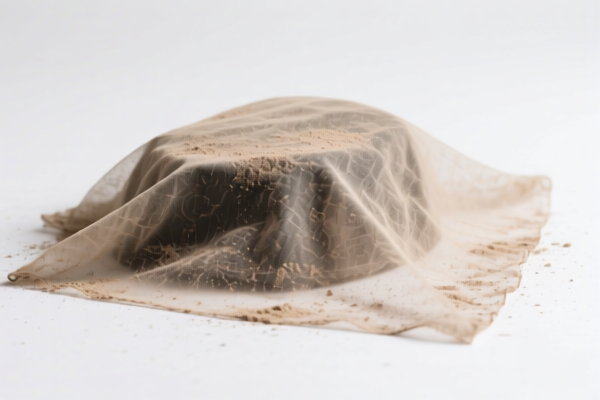
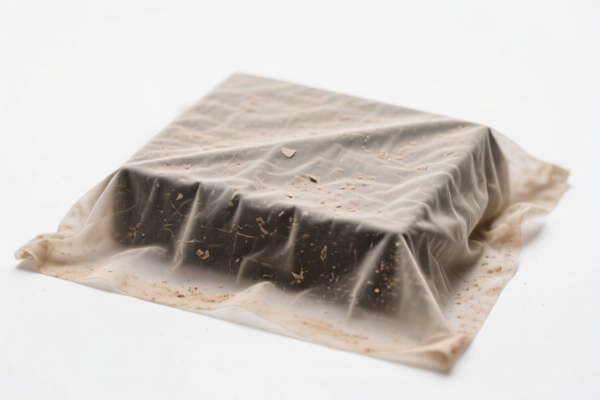
AI分析
🛠️ Gear Shift Boot Dust Cover (Automotive Accessories)
🌐 HS Code Reference & Customs Clearance Guide | 2026 Latest Tariff Analysis | Professional Transit Strategy
📌 I. Product Definition & Classification: Do You Really Understand the "Gear Shift Boot"?
The Gear Shift Boot Dust Cover (also known as a Shift Knob Boot, Gear Lever Gaiter, or Stick Shift Cover) is a critical automotive interior accessory. Its primary function is to protect the vehicle’s transmission linkage (linkage rods, cables, or manual shifter mechanisms) from dust, debris, moisture, and oil splashes, while also providing aesthetic finishing and comfort.
In international trade, its classification depends heavily on material composition and structural form:
Rubber/Silicone Components: Typically made of vulcanized rubber, EPDM, or silicone. These are flexible, durable, and often classified under Chapter 40 (Rubber).
Plastic/PU Components: Made from Polyurethane (PU), PVC, or ABS. These might be structured or semi-structured, often classified under Chapter 39 (Plastics).
Transmission Parts: In rare cases, if it is considered an integral part of the transmission system (e.g., a heavy-duty metallic sleeve, though rare for "boots"), it might fall under Chapter 87 (Vehicles).
⚠️ Key Distinction Point:
- If it is a flexible, elastic sleeve made of rubber/plastic → Chapter 40 or 39.
- If it is a rigid mechanical component of the gearbox itself → Chapter 87.
- Most commercial "Dust Covers" are flexible boots → Therefore, they are usually classified under 4016 (Other rubber goods) or 3926 (Other plastic articles).
📦 II. HS Code Classification Details (Based on Provided Data 2026)
| HS Code | Product Description | Applicable Scenario | Material Inference |
|---|---|---|---|
4016.99.60.10 |
Other rubber articles; Parts/accessories for machinery; Vulcanized Rubber Parts | Flexible, vulcanized rubber boots for automotive mechanical parts. | ✅ Vulcanized Rubber |
4016.93.10.50 |
Other rubber articles; Sealing/Protective articles | Rubber or plastic seals/protective covers for automotive parts. | ✅ Rubber/Plastic (Sealing type) |
3926.30.50.00 |
Other plastic articles; Connectors/Coated accessories | Plastic covers, connectors, or coated accessories. | ✅ Plastic |
8708.40.75.80 |
Parts and accessories of motor vehicles; Transmission parts | Gear shift sleeves/shifter knobs (non-forged steel). | ✅ Non-metallic Transmission Part |
3926.90.99.89 |
Other plastic articles; Other plastic articles | General plastic parts falling under residual categories. | ✅ Plastic (General) |
🔍 Key Takeaway:
- The most common classification for flexible Rubber boots is4016.99.60.10.
- For Plastic or PU boots,3926.30.50.00or3926.90.99.89are appropriate.
-8708.40.75.80is a potential "catch-all" for vehicle parts if customs considers the boot an integral transmission component, but this is less common for simple flexible boots.
💰 III. 2026 Latest Tariff Rate Breakdown (Including Surcharges & Policy Add-ons)
✅ Applicable Country: United States (US)
✅ Origin: China (CN)
✅ Effective Date: 2025/2026 (Subject to 301 & IEEPA tariffs)
🎯 1. 4016.99.60.10 —— Vulcanized Rubber Parts (Automotive)
| Item | Content |
|---|---|
| Base Tariff | 2.5% |
| Section 301 Surcharge | +25.0% |
| 122 Provision Surcharge | +10.0% |
| Total Rate | 37.5% |
| Calculation | CIF Value × 37.5% |
| De Minimis Exemption | ❌ Not Applicable (High tariff rates usually exclude de minimis benefits for China origin) |
| Legal Basis | Base Tariff → Section 301 (USITC) → IEEPA 122 Provisions |
📌 Explanation:
- Rubber automotive parts from China face significant duties due to trade tensions.
- The 37.5% rate is high and must be factored into cost calculations.
🎯 2. 4016.93.10.50 —— Rubber Sealing/Protective Articles
| Item | Content |
|---|---|
| Base Tariff | 2.5% |
| Section 301 Surcharge | +25.0% |
| 122 Provision Surcharge | +10.0% |
| Total Rate | 37.5% |
| Calculation | CIF Value × 37.5% |
| De Minimis Exemption | ❌ Not Applicable |
| Legal Basis | Base Tariff → Section 301 → IEEPA 122 Provisions |
📌 Note:
- If customs classifies the boot as a "sealing" article (common for rubber gaiters), the rate is identical to general rubber parts.
🎯 3. 3926.30.50.00 —— Plastic Connectors/Accessories
| Item | Content |
|---|---|
| Base Tariff | 5.3% |
| Section 301 Surcharge | +7.5% |
| 122 Provision Surcharge | +10.0% |
| Total Rate | 22.8% |
| Calculation | CIF Value × 22.8% |
| De Minimis Exemption | ❌ Not Applicable (Check specific IEEPA footnotes for de minimis eligibility, but usually limited) |
| Legal Basis | Base Tariff → Section 301 (Lower bracket for plastics) → IEEPA 122 Provisions |
📌 Advantage:
- Plastic parts (3926) generally face lower additional tariffs (7.5%) compared to rubber parts (25%).
- Total rate of 22.8% is significantly more cost-effective than rubber’s 37.5%.
🎯 4. 8708.40.75.80 —— Transmission Parts (Vehicle Accessories)
| Item | Content |
|---|---|
| Base Tariff | 2.5% |
| Section 301 Surcharge | +25.0% |
| 122 Provision Surcharge | +10.0% |
| Total Rate | 37.5% |
| Calculation | CIF Value × 37.5% |
| De Minimis Exemption | ❌ Not Applicable |
| Legal Basis | Base Tariff → Section 301 → IEEPA 122 Provisions |
📌 Caution:
- While it falls under "Vehicle Parts," the additional tariffs are high.
- Customs may challenge this classification if the item is clearly a "rubber/plastic accessory" rather than a "mechanical transmission part."
🎯 5. 3926.90.99.89 —— Other Plastic Articles (Residual)
| Item | Content |
|---|---|
| Base Tariff | 5.3% |
| Section 301 Surcharge | +7.5% |
| 122 Provision Surcharge | +10.0% |
| Total Rate | 22.8% |
| Calculation | CIF Value × 22.8% |
| De Minimis Exemption | ❌ Not Applicable |
| Legal Basis | Base Tariff → Section 301 → IEEPA 122 Provisions |
📌 Note:
- This is a "catch-all" for plastic parts not specifically listed elsewhere.
- Same favorable rate as3926.30.50.00.
🛠️ IV. Customs Clearance Practical Advice (Avoid Pitfalls)
✅ 1. Documentation Checklist (Essential)
| Document | Required | Notes |
|---|---|---|
| ✅ Product Specification Sheet | ✔️ | Must specify material (Rubber/Plastic), dimensions, and intended use (Automotive Gear Shift). |
| ✅ Material Declaration | ✔️ | Crucial for distinguishing between HS 4016 (Rubber) and 3926 (Plastic). |
| ✅ Product Photos | ✔️ | Show flexibility, texture, and installation view. |
| ✅ Commercial Invoice | ✔️ | Describe as "Gear Shift Boot Dust Cover, Automotive Part, [Material]". |
| ✅ Packing List | ✔️ | Standard format. |
| ✅ Certificate of Origin (CO) | ✔️ | Required to apply for/verify tariff treatments. |
✅ 2. Classification Strategy (Key Tips)
🔥 "Material Dictates HS, Function Confirms It!"
| Scenario | Recommended HS Code | Reason |
|---|---|---|
| Rubber/Silicone Boot | 4016.99.60.10 |
Most accurate for vulcanized rubber automotive parts. |
| PU/Plastic Boot | 3926.30.50.00 |
Lower tariff rate (22.8%) vs. Rubber (37.5%). |
| Resin/Hard Plastic Housing | 3926.90.99.89 |
If not a connector/coating, use residual plastic category. |
| Misclassification Risk | 8708.40.75.80 |
Only use if customs insists it's a "transmission part," but expect high scrutiny. |
📌 Pro Tip:
- If you manufacture PU (Polyurethane) boots, declare them as Plastic under3926to benefit from the lower 7.5% Section 301 tariff instead of the 25% rubber rate.
- Clearly state "Polyurethane" or "Plastic" in the description, not just "Rubber-like."
✅ 3. Special Cases
| Case | Handling Advice |
|---|---|
| Mixed Materials (e.g., Rubber cover + Plastic insert) | Classify based on essential character. If rubber dominates, use 4016. If plastic insert is structural, argue for 3926. |
| Custom/Embroidered Boots | Still classified as 4016 or 3926. Embroidery does not change material classification. |
| OEM vs. Aftermarket | Both are treated similarly. Provide OEM part numbers if available to prove automotive use. |
🌍 V. Global Market Comparison (2026)
| Country/Region | Recommended HS Code | Tariff (China Origin) | Notes |
|---|---|---|---|
| 🇺🇸 USA | 4016.99.60.10 / 3926.30.50.00 |
37.5% (Rubber) / 22.8% (Plastic) | High surcharges due to 301 & 122 provisions. |
| 🇨🇳 China | 4016.99.60.10 / 3926.30.50.00 |
~2-5% | Low import duties; no additional surcharges. |
| 🇪🇺 EU | 4016.93.10 / 3926.90.90 |
4-6.5% | No Section 301 equivalent. |
| 🇯🇵 Japan | 4016.99.00 / 3926.90.90 |
~3-6% | No major surcharges for China. |
📌 Conclusion:
- The US market is the most challenging due to the 37.5% maximum tariff for rubber parts.
- Plastic alternatives (3926) offer a 14.7% tariff advantage in the US market.
📌 VI. Common Mistakes & Pitfalls (Lessons Learned)
❌ Mistake 1: Classifying Rubber Boots as 8708 (Vehicle Parts) to avoid Chapter 40 tariffs.
👉 Consequence: Customs may reject it as "not a mechanical part" and revert to 4016, causing delays and potential penalties.
❌ Mistake 2: Describing PU (Polyurethane) as "Rubber" without clarification.
👉 Consequence: Applied 37.5% tariff instead of the eligible 22.8% for plastics. Overpaid by ~15%!
❌ Mistake 3: Using vague terms like "Auto Accessory" in invoices.
👉 Consequence: Customs cannot determine material → Examination delays → Demurrage charges.
✅ Correct Declaration Example:
"Automotive Gear Shift Boot Dust Cover, Made of Polyurethane (Plastic), for Use in [Brand] Vehicles. HS: 3926.30.50.00."
🎯 VII. Conclusion: Strategic Classification for Cost Efficiency
🎯 Key Takeaway:
🔹 "Material Matters: Plastic Saves You 15% in the US!"
🔹 "Rubber = 37.5% | Plastic = 22.8% | Choose Wisely!"
📌 Recommendation:
- If possible, source or manufacture PU/Plastic boots instead of traditional rubber to benefit from lower Section 301 tariffs.
- Always provide material-specific declarations to support your HS Code choice.
- Apply for Advance Rulings from US Customs if importing large volumes, to lock in the correct tariff classification.
📣 Immediate Action:
📞 Consult with a licensed customs broker to confirm material composition.
📝 Update invoices to clearly state "Polyurethane" or "Rubber" as applicable.
🚀 Optimize your supply chain to minimize duty liabilities.
✨ Professional Customs Clearance Starts with Precise Classification!
💼 Every Percent Saved is Pure Profit!
用户评价
关于 HS 编码归类
协调制度(HS)是由世界海关组织(WCO)制定的国际贸易商品分类标准。全球 200 多个国家采用 HS 系统作为海关关税、贸易统计和进出口监管的基础。
每个 HS 编码遵循以下层级结构:
- 章(2 位)——商品大类(例如:第 84 章:机器和机械设备)
- 品目(4 位)——章内的更具体分类
- 子目(6 位)——国际通用细分,所有 WCO 成员国统一使用
- 本国细分(8-10 位)——各国自行扩展的细分编码,如美国 HTSUS 10 位编码
正确的 HS 编码归类对于顺利通关、准确缴纳关税和遵守贸易法规至关重要。错误归类可能导致海关延误、多缴关税或罚款。
从CN进口到US时,适用的关税税率可能包括:
- 最惠国(MFN)税率——适用于 WTO 成员国的标准关税税率
- 普通税率——适用于无贸易协定国家
- 贸易救济关税——附加关税,如 301 条款(反倾销)、232 条款(国家安全)或反补贴税
本页内容仅供参考。如需正式归类,请咨询当地海关或持牌报关代理。