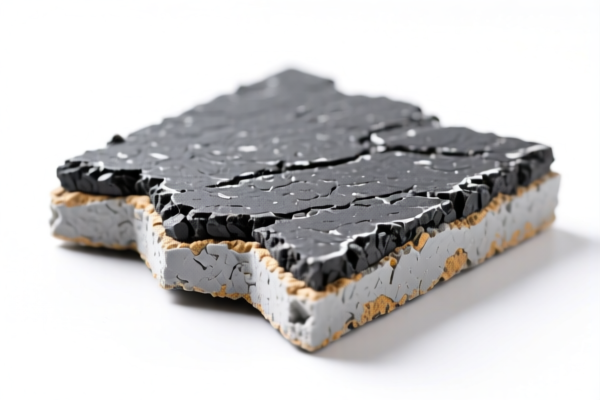
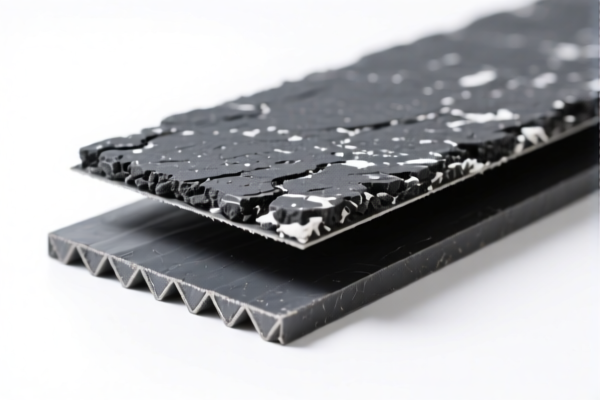
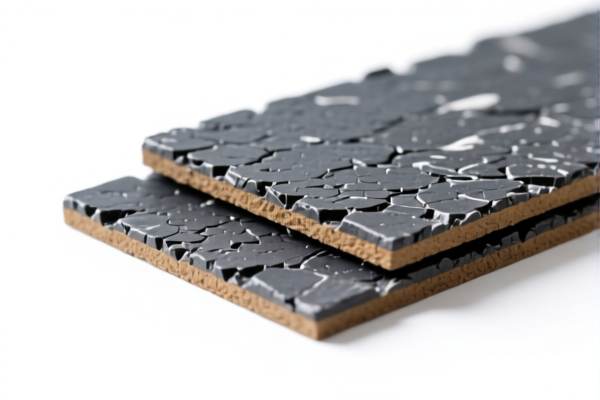
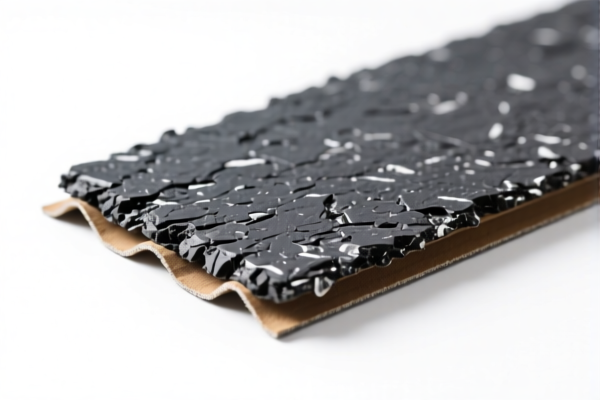
graphite based corrosion resistant material
CN → US| HS编码 | 关税税率 | 原产国 | 目的国 | 文档 |
|---|---|---|---|---|
| 6815110000 | 35.0% | CN | US | 官方文档 |
| 3801105010 | 35.0% | CN | US | 官方文档 |
| 3801105090 | 35.0% | CN | US | 官方文档 |
| 6909195095 | 39.0% | CN | US | 官方文档 |
| 6815190000 | 35.0% | CN | US | 官方文档 |
商品图片
AI分析
🧪 Graphite Based Corrosion Resistant Materials: The Ultimate 2026 US Import Guide
🌐 HS Code Classification & Customs Clearance Strategy | High-Tariff Warning | Professional Logistics Solution
📌 Product Overview: What Are We Dealing With?
Graphite-based corrosion-resistant materials are high-performance industrial components used in chemical processing, metallurgy, and power generation. These materials withstand extreme acidity, alkalinity, and high temperatures.
However, in US customs classification, "Graphite" is a tricky keyword. Depending on the precise material composition (natural vs. synthetic) and physical form (block, sheet, ceramic composite), these goods fall into drastically different HS codes with varying tax implications.
⚠️ CRITICAL WARNING:
All HS Codes listed below are subject to Section 301 Tariffs (+25%) and Section 122/IEEPA Tariffs (+10%) for products originating from China.
Total Additional Duty Load: 35% on top of base duty.
Misclassification can lead to severe penalties, cargo detention, or retroactive tax assessments.
📦 1. HS Code Classification Matrix (Based on Provided Data)
Below is the authoritative breakdown of the 5 HS Codes derived from the specific product descriptions. Note the nuances between "Graphite Products," "Synthetic Graphite," and "Ceramic-based Graphite."
| HS Code | Product Description & Logic | Material Focus | Base Duty | Add. Tariffs | Total Effective Rate |
|---|---|---|---|---|---|
| 6815.11.00.00 | Graphite Articles: Non-electrical graphite/carbon articles. Matches "Graphite-based corrosion resistant material" as a general graphite product. | General Graphite (Natural or Processed) |
0.0% | 35.0% (25% Sec 301 + 10% Sec 122) |
35.0% |
| 6815.19.00.00 | Graphite Articles: Other non-electrical graphite articles. Fits when the material is explicitly defined as graphite but doesn't fit the "block/plate" specificity of .11. | Explicit Graphite (Various Forms) |
0.0% | 35.0% (25% Sec 301 + 10% Sec 122) |
35.0% |
| 3801.10.50.10 | Colloidal & Semi-Colloidal Graphite: Synthetic graphite, unspecified form. Matches "Synthetic Graphite" where specific morphology is unclear, falling into "Other" categories. | Synthetic Graphite (Unspecified Form) |
0.0% | 35.0% (25% Sec 301 + 10% Sec 122) |
35.0% |
| 3801.10.50.90 | Colloidal & Semi-Colloidal Graphite: Synthetic graphite,兜底 (Catch-all) category. Used when the form is not specified, following the logic of other unspecified synthetic graphite items. | Synthetic Graphite (Catch-all/Other) |
0.0% | 35.0% (25% Sec 301 + 10% Sec 122) |
35.0% |
| 6909.19.50.95 | Ceramic Ware: Inferred as "Ceramic-based" due to corrosion resistance properties. Fits chemical/technical ceramic articles. | Ceramic Composite (Graphite-Ceramic Mix) |
4.0% | 35.0% (25% Sec 301 + 10% Sec 122) |
39.0% |
💰 2. Detailed Tariff Breakdown & Legal Basis
✅ Applicable Country: United States (US)
✅ Origin: China (CN)
✅ Effective Timeline: 2025–2026 (Current Trade War Period)
🎯 Group A: The "Pure/Semi-Graphite" Cluster (HS: 6815.11, 6815.19, 3801.10)
HS Codes: 6815.11.00.00, 6815.19.00.00, 3801.10.50.10, 3801.10.50.90
| Item | Details |
|---|---|
| Base Tariff (MFN) | 0.0% Graphite articles and certain synthetic graphite forms often enjoy duty-free entry under normal MFN rates. |
| Section 301 Tariff | +25.0% Applied to all Chinese-origin goods under USITC Footnote 9903.88.01 (and specific subheadings). This is the standard trade war tariff. |
| Section 122 / IEEPA Tariff | +10.0% Additional duty levied under the International Emergency Economic Powers Act (IEEPA) or related executive orders targeting specific strategic materials. |
| Total Landed Cost Impact | 35.0% Calculation: $ \text{Duty} = \text{CIF Value} \times 35\% $ |
| De Minimis Exemption | ❌ NOT APPLICABLE Section 301 and IEEPA tariffs cannot be waived under the $800 de minimis rule (Section 321). Every shipment is taxed. |
| Legal Path | USITC:6815.11/6815.19 or USITC:3801.10 → FOOTNOTE:9903.88.01 → IEEPA:9903.01.25 |
📌 Why This Matters:
Even though the base duty is 0%, the 35% additional tax makes this a high-cost import. You must budget for this in your landed cost model.
🎯 Group B: The "Ceramic-Inferred" Cluster (HS: 6909.19)
HS Code: 6909.19.50.95
| Item | Details |
|---|---|
| Base Tariff (MFN) | 4.0% Ceramic ware generally carries a small base duty. |
| Section 301 Tariff | +25.0% Same Section 301 applicability as above. |
| Section 122 / IEEPA Tariff | +10.0% Same IEEPA applicability. |
| Total Landed Cost Impact | 39.0% Calculation: $ \text{Duty} = \text{CIF Value} \times 39\% $ |
| De Minimis Exemption | ❌ NOT APPLICABLE |
| Legal Path | USITC:6909.19 → FOOTNOTE:9903.88.01 → IEEPA:9903.01.25 |
📌 Strategic Note:
If your product is technically a graphite-ceramic composite, US Customs might classify it under Chapter 69 (Ceramics) rather than Chapter 68 (Graphite). This results in a 4% higher total duty (39% vs 35%). Always provide technical datasheets to argue for Chapter 68 if the primary material is graphite.
🛠️ 3. Customs Clearance Strategy & Risk Mitigation
✅ 1. Documentation Checklist (Non-Negotiable)
| Document | Requirement | Purpose |
|---|---|---|
| Technical Data Sheet (TDS) | ✔️ Mandatory | Must explicitly state material composition (e.g., "99% Synthetic Graphite" vs. "Graphite-Ceramic Composite"). This determines the HS Code. |
| Material Safety Data Sheet (MSDS) | ✔️ Mandatory | Confirms chemical stability and safety handling. |
| Commercial Invoice | ✔️ Mandatory | Must clearly describe the item as "Graphite-Based Corrosion Resistant Component" and specify Country of Origin: China. |
| Packing List | ✔️ Mandatory | Detail net/gross weights. Graphite is dense; accurate weight is crucial for freight calculation. |
| Statement of Composition | ✔️ Recommended | A signed letter from the manufacturer detailing whether the product is Natural, Synthetic, or Composite. |
✅ 2. Classification Decision Tree (Do This Before Shipping)
- Is it a pure graphite block/plate?
- Yes → Use 6815.11.00.00 (Safest, 35% Total).
- Is it synthetic graphite powder/paste/unspecified form?
- Yes → Use 3801.10.50.10 or 3801.10.50.90 (35% Total).
- Is it a graphite-ceramic mix (e.g., Impregnated Ceramic)?
- Yes → Risk of 6909.19.50.95 (39% Total). Try to argue for 6815 if graphite is the functional component.
✅ 3. Common Pitfalls & "Blood and Tears" Lessons
❌ Pitfall 1: Vague Description
Mistake: Shipping as "Industrial Parts" or "Corrosion Resistors."
Result: CBP issues a Request for Information (RFI), delaying clearance by 2-4 weeks. If they classify it themselves, they may choose the highest duty rate.
Fix: Always use the exact technical name: "Graphite-Based Corrosion Resistant Seal/Gasket/Block."
❌ Pitfall 2: Ignoring the "Ceramic" Trap
Mistake: Assuming all corrosion-resistant graphite is Chapter 68.
Result: If the product has a ceramic matrix, CBP may reclassify to 6909, adding 4% extra duty plus potential penalties for misdeclaration.
Fix: Provide a lab report showing the matrix material.
❌ Pitfall 3: Underestimating Section 122
Mistake: Calculating duty based only on Section 301 (25%).
Result: Unexpected 10% IEEPA bill at the port of entry.
Fix: Budget for 35% (or 39%) total duty, not just 25%.
✅ 4. Pro-Tips for Smooth Clearance
- Advance Ruling: If importing large volumes, apply for a US Customs Binding Ruling in advance. This provides legal certainty on whether your specific graphite-ceramic mix falls under 6815 or 6909.
- Country of Origin Marking: Every package must clearly state "Made in China." Failure to do so results in fines and potential seizure.
- Anti-Dumping Checks: While graphite typically doesn't face AD/CVD like steel or solar panels, verify if any specific synthetic graphite anti-dumping duties apply to your manufacturer’s specific facility. (Check the US ITC database).
🌍 4. Global Context & Alternative Markets
| Market | HS Code Trend | Duty Rate (China Origin) | Notes |
|---|---|---|---|
| 🇺🇸 USA | 6815 or 6909 |
35% - 39% | High Barrier. Section 301 + IEEPA apply. |
| 🇪🇺 EU | 6815 or 6909 |
0% - 4% | No Section 301. Standard MFN rates apply. |
| 🇨🇳 China | 6815 |
0% - 5% | Import duty low. VAT 13% applies. |
| 🇻🇳 Vietnam | 6815 |
0% | If re-exported to US, must prove substantial transformation to avoid US duties. |
💡 Strategic Insight:
For the US market, the 35% duty is a fixed cost. To mitigate this, some companies consider re-packaging or minor processing in non-China countries (e.g., Vietnam, Thailand). However, this is risky. If US Customs determines the "essence" is still Chinese graphite, they will still apply the 301/122 tariffs. Only substantial manufacturing transformation (e.g., turning graphite blocks into complex ceramic-graphite implants) might change the origin rule.
📌 5. Final Checklist for Importers
- [ ] Confirm Material: Is it Natural, Synthetic, or Ceramic-Composite?
- [ ] Select HS Code:
- Graphite →
6815.11/6815.19(35% Total) - Synthetic Unspecified →
3801.10(35% Total) - Ceramic-Composite →
6909.19(39% Total)
- Graphite →
- [ ] Calculate Landed Cost: CIF Value × (1 + 0.35 or 0.39) + Freight + Insurance + Port Fees.
- [ ] Prepare Docs: TDS, MSDS, Invoice with "China" origin.
- [ ] Declare Accurately: Do not hide the Chinese origin. The tariffs are unavoidable, but misclassification causes delays.
🎯 Conclusion
Graphite-based corrosion-resistant materials from China face a significant 35%–39% duty burden in the US due to ongoing trade policies.
✅ Key Takeaway:
Optimize Description: Ensure your TDS supports a Chapter 68 (Graphite) classification over Chapter 69 (Ceramic) to save 4%.
Budget for Taxes: Do not forget the 10% IEEPA tariff on top of the 25% Section 301.
Compliance is King*: Accurate documentation prevents customs holds.
🚀 Action Item:
Contact your customs broker before shipping with the Technical Data Sheet to confirm the final HS Code. A pre-shipping consultation can save thousands in potential penalties and demurrage fees.
✨ Precision Classification = Predictable Costs
💼 Don't let vague descriptions cost you profit!
用户评价
关于 HS 编码归类
协调制度(HS)是由世界海关组织(WCO)制定的国际贸易商品分类标准。全球 200 多个国家采用 HS 系统作为海关关税、贸易统计和进出口监管的基础。
每个 HS 编码遵循以下层级结构:
- 章(2 位)——商品大类(例如:第 84 章:机器和机械设备)
- 品目(4 位)——章内的更具体分类
- 子目(6 位)——国际通用细分,所有 WCO 成员国统一使用
- 本国细分(8-10 位)——各国自行扩展的细分编码,如美国 HTSUS 10 位编码
正确的 HS 编码归类对于顺利通关、准确缴纳关税和遵守贸易法规至关重要。错误归类可能导致海关延误、多缴关税或罚款。
从CN进口到US时,适用的关税税率可能包括:
- 最惠国(MFN)税率——适用于 WTO 成员国的标准关税税率
- 普通税率——适用于无贸易协定国家
- 贸易救济关税——附加关税,如 301 条款(反倾销)、232 条款(国家安全)或反补贴税
本页内容仅供参考。如需正式归类,请咨询当地海关或持牌报关代理。