graphite based vibration damping material
CN → US| HS编码 | 关税税率 | 原产国 | 目的国 | 文档 |
|---|---|---|---|---|
| 2530908050 | 10.0% | CN | US | 官方文档 |
| 6815110000 | 35.0% | CN | US | 官方文档 |
| 3801105010 | 35.0% | CN | US | 官方文档 |
| 2530908015 | 10.0% | CN | US | 官方文档 |
| 3801105090 | 35.0% | CN | US | 官方文档 |
商品图片
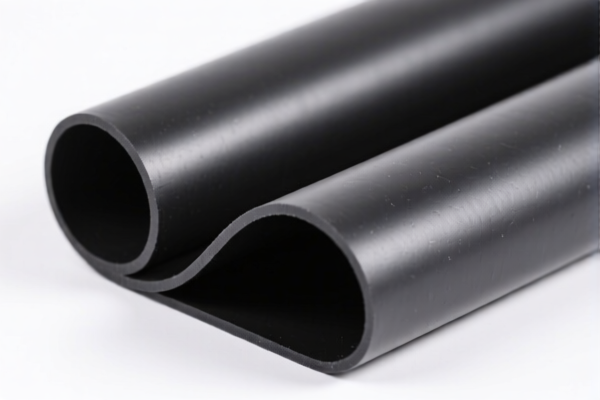
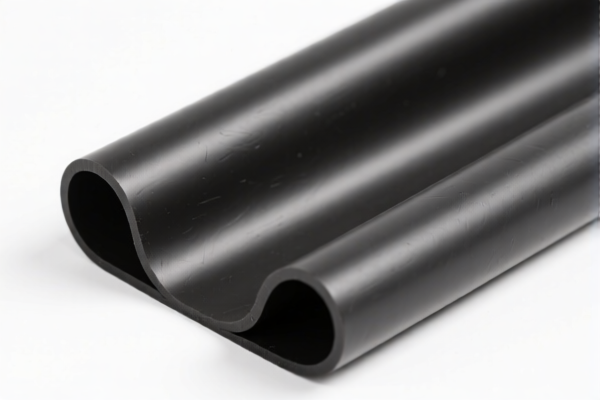
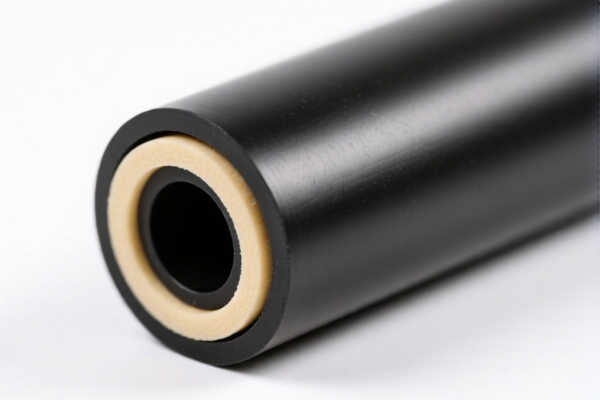
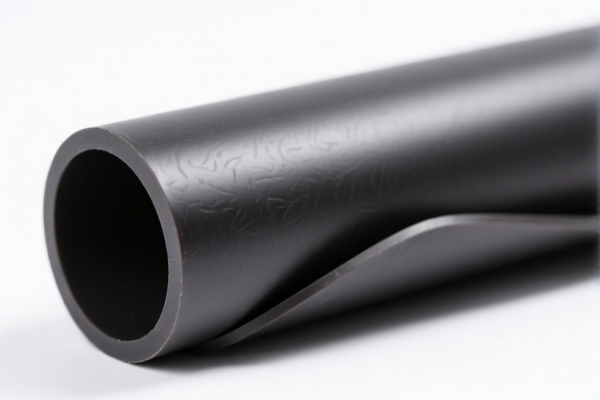
AI分析
🌑 Graphite-Based Vibration Damping Material (GVD)
🌐 HS Code Reference & Customs Clearance Guide | 2026 Tariff Analysis | Strategic Compliance Strategy
📌 I. Product Definition & Classification: What Exactly is "Graphite Vibration Damping Material"?
Graphite-Based Vibration Damping Materials are specialized industrial components designed to absorb mechanical energy, reduce noise, and prevent structural fatigue. In international trade, these materials are classified based on their origin (natural vs. artificial) and form (mineral commodity vs. manufactured article).
Key Distinction Criteria: * Natural Mineral Origin: If the material is primarily processed natural graphite (e.g., ground, purified, but not chemically transformed into synthetic structures), it often falls under Chapter 25 (Mineral Products). * Artificial/Synthetic Origin: If the material is made from carbon/graphite precursors through pyrolysis, graphitization, or other chemical processes, it is classified as an "other article of graphite or other carbon" under Chapter 68 or specific subheadings for artificial graphite under Chapter 38.
⚠️ Critical Classification Trap:
- If it is natural graphite processed for general industrial use (even if used for damping) → Likely 2530.90
- If it is artificial/synthetic graphite made into specific shapes or compounds → Likely 6815.11 or 3801.10
📦 II. HS Code Classification Matrix (Based on Provided Data)
| HS Code | Summary Description | Material Type | Key Characteristics |
|---|---|---|---|
2530.90.80.50 |
Graphite Damping Material, Mineral Category | Natural Mineral | Classified as "Other unlisted mineral substances." Shape is material form. |
2530.90.80.15 |
Graphite Damping Material, Mineral Nature | Natural Mineral | Classified as "Other unlisted mineral substances" without specific mention. |
6815.11.00.00 |
Graphite Damping Material, Non-Electrical Use | Graphite (General) | Specifically for "Other articles of graphite or carbon," non-electrical, used for damping. |
3801.10.50.10 |
Graphite Damping Material, Artificial Graphite | Artificial Graphite | Made from artificial graphite, functions as damping. Fallback category for "other." |
3801.10.50.90 |
Graphite Damping Material, Other Artificial Graphite | Artificial Graphite | Categorized under "Other artificial graphite," general purpose damping. |
🔍 Focus Point:
- The classification hinges on whether the graphite is natural or artificial.
- Natural Graphite products tend to have lower base tariffs but are subject to specific "122 Clause" surcharges.
- Artificial Graphite products face higher surcharges (25%) due to broader trade remedy measures.
💰 III. 2026 Tariff Rate Breakdown (Including Surcharges)
✅ Applicable Country: United States (US)
✅ Origin: China (CN)
✅ Effective Date: Current regulations apply (including Section 301 and Section 232/122 implications)
🎯 1. 2530.90.80.50 & 2530.90.80.15 — Natural Mineral Graphite Products
These codes classify the material as a raw or minimally processed mineral substance.
| Item | Detail |
|---|---|
| Base Duty Rate | 0.0% (Ad Valorem) |
| Section 301 Surcharge | 0.0% (No additional 25% tariff applied to these specific mineral subheadings in the provided data) |
| 122 Clause Surcharge | +10% (Specific surcharge for certain mineral/graphite products) |
| Total Duty Rate | 10.0% |
| Tax Calculation | CIF Value × 10% |
| De Minimis Eligibility | ❌ Not Eligible (High-risk classification for small packages) |
| Legal Basis Path | USITC:2530.90.80.50 / 2530.90.80.15 → Section 122: 10% Surcharge |
📌 Explanation:
- The 10% total rate is significantly lower than artificial graphite alternatives.
- The 122 Clause refers to specific US trade actions targeting certain critical minerals/graphite products from China.
- Advantage: If your product can be legitimately classified as a "mineral substance" (natural graphite), this is the most cost-effective option.
🎯 2. 6815.11.00.00 — Other Graphite/Carbon Articles (Non-Electrical)
This code is for manufactured graphite articles that are not electrical in nature.
| Item | Detail |
|---|---|
| Base Duty Rate | 0.0% (Ad Valorem) |
| Section 301 Surcharge | +25.0% (Standard Section 301 tariff on graphite articles) |
| 122 Clause Surcharge | +10% |
| Total Duty Rate | 35.0% |
| Tax Calculation | CIF Value × 35% |
| De Minimis Eligibility | ❌ Not Eligible |
| Legal Basis Path | USITC:6815.11.00.00 → Section 301: 25% + Section 122: 10% |
📌 Explanation:
- This is the standard classification for finished graphite damping pads, sheets, or components used in machinery.
- The 35% total rate includes both the 25% Section 301 tariff and the 10% 122 Clause surcharge.
- Risk: High cost impact. Must ensure the product is indeed a "non-electrical article" and not an electrical component (which might have different codes).
🎯 3. 3801.10.50.10 & 3801.10.50.90 — Artificial Graphite Products
These codes apply specifically to artificial (synthetic) graphite.
| Item | Detail |
|---|---|
| Base Duty Rate | 0.0% (Ad Valorem) |
| Section 301 Surcharge | +25.0% |
| 122 Clause Surcharge | +10% |
| Total Duty Rate | 35.0% |
| Tax Calculation | CIF Value × 35% |
| De Minimis Eligibility | ❌ Not Eligible |
| Legal Basis Path | USITC:3801.10.50.10 / 3801.10.50.90 → Section 301: 25% + Section 122: 10% |
📌 Explanation:
- Artificial Graphite is subject to the same high tariffs as manufactured graphite articles.
- Difference between .10 and .90:.10is for "other" artificial graphite with specific functions (like damping), while.90is the general "other" category. Both carry the 35% total rate.
- Crucial: If your material is made from petroleum coke or coal tar pitch and graphitized, it must use these codes, not the mineral codes.
🛠️ IV. Customs Clearance Operational Advice (Practical Pitfall Avoidance)
✅ 1. Documentation Checklist (Mandatory)
| Document | Required? | Notes |
|---|---|---|
| ✅ Material Safety Data Sheet (MSDS) | ✔️ | Confirms composition (Natural vs. Artificial) |
| ✅ Manufacturing Process Statement | ✔️ | Critical: Prove if it’s mined/ground (Natural) or synthesized (Artificial) |
| ✅ Product Specification Sheet | ✔️ | Include density, thermal conductivity, damping coefficient |
| ✅ Commercial Invoice | ✔️ | Clearly state "Graphite Vibration Damping Material" and HS Code |
| ✅ Bill of Lading/Air Waybill | ✔️ | Ensure packaging details match invoice |
| ✅ Certificate of Origin (CO) | ✔️ | Mandatory for Section 301 and 122 Clause assessment |
✅ 2. Declaration Strategy (Key Mantras)
🔥 “Nature Determines Code, Artificial Raises Rates! Natural 10%, Artificial 35%!”
| Scenario | Correct HS Code | Why? |
|---|---|---|
| Mined, ground, purified natural graphite in sheet/pad form | 2530.90.80.50 or 2530.90.80.15 |
Classified as mineral substance, not manufactured article |
| Synthesized artificial graphite in damping shape | 3801.10.50.10 or 3801.10.50.90 |
Artificial origin triggers higher surcharges |
| General graphite article (non-electrical, natural origin processed into shape) | 6815.11.00.00 |
"Other article of graphite" category |
| Electrical graphite (e.g., electrodes) | Not in provided data | Would likely fall under 8545 or similar, different tariff |
📌 Warning:
- Do NOT misdeclare artificial graphite as natural to save 25%. Customs labs can easily distinguish via isotopic analysis and microstructure.
- Ensure the term "Vibration Damping" is not the primary descriptor if it causes confusion with mechanical devices (Chapter 84/85). It’s a material property, not a machine.
✅ 3. Special Considerations
| Situation | Recommendation |
|---|---|
| Hybrid Materials (Graphite + Polymer) | If polymer > graphite by weight, may fall under Chapter 39 or 40. Check composition! |
| Custom Shapes | Even natural graphite cut into specific shapes may be reclassified as 6815.11.00.00 if it’s considered a "manufactured article" rather than a "mineral substance." |
| Pre-Clearance Ruling | Highly Recommended: Apply for an Advance Ruling with CBP to confirm whether your specific damping material is "natural mineral" or "artificial/graphite article." |
🌍 V. Global Market Comparison (2026)
| Region | Recommended HS Code (Example) | Total Duty Rate | Notes |
|---|---|---|---|
| 🇺🇸 USA | 2530.90.80.50 (Natural) |
10% | 122 Clause applies. Lowest cost if natural. |
| 🇺🇸 USA | 6815.11.00.00 / 3801.10.50.xx (Artificial) |
35% | 25% Sec 301 + 10% 122 Clause. |
| 🇨🇳 China | Varies | Low/Zero | No Section 301 or 122 Clause. |
| 🇪🇺 EU | Varies (e.g., 3801) | ~0-5% | No equivalent to US Section 301/122. |
| 🇯🇵 Japan | Varies | ~0-5% | Free trade agreements may apply. |
📌 Conclusion:
- The US market is the most costly due to layered tariffs (301 + 122).
- Cost Saving Opportunity: If technically feasible and legally defensible, classifying natural graphite damping materials under 2530.90 saves 25% in duties compared to artificial/artificial-graphite codes.
📌 VI. Common Errors & Pitfalls (Lessons Learned)
❌ Error 1: Misclassifying artificial graphite as natural mineral
👉 Consequence: Customs audit, back taxes + penalties, potential seizure.
👉 Fix: Provide lab tests proving natural origin if claiming 2530.90.
❌ Error 2: Ignoring the 122 Clause Surcharge
👉 Consequence: Underpayment by 10%.
👉 Fix: Always include 10% surcharge in cost calculations for graphite/mineral imports from China.
❌ Error 3: Confusing "Damping Material" with "Damping Equipment"
👉 Consequence: Wrong HS Code (e.g., 8483 for machinery parts).
👉 Fix: Emphasize that it is a raw or semi-finished material, not a functional machine part.
✅ Correct Declaration Example:
"Graphite-Based Vibration Damping Sheets, Natural Graphite Origin, Processed for Industrial Damping, HS Code 2530.90.80.50"
🎯 VII. Conclusion: Strategic Compliance for Cost Efficiency
🎯 Remember the Mantra:
🔹 "Natural is 10%, Artificial is 35%!"
🔹 "Verify Origin, Not Just Function!"
📌 Pro Tip:
If your supply chain involves re-packaging or blending materials, ensure the country of origin remains clearly documented. Transshipment through Vietnam or Malaysia does not automatically exempt you from US tariffs if the substantial transformation did not occur there.
📣 Immediate Action Required:
📞 Consult a Customs Broker: Provide your MSDS and manufacturing flowchart.
🚀 Apply for an Advance Ruling: Lock in the HS Code before shipping to avoid clearance delays.
✨ Professional Clearance, Starting with Precise Classification!
💼 Your Cost Savings Are Directly Proportional to Your Classification Accuracy!
用户评价
关于 HS 编码归类
协调制度(HS)是由世界海关组织(WCO)制定的国际贸易商品分类标准。全球 200 多个国家采用 HS 系统作为海关关税、贸易统计和进出口监管的基础。
每个 HS 编码遵循以下层级结构:
- 章(2 位)——商品大类(例如:第 84 章:机器和机械设备)
- 品目(4 位)——章内的更具体分类
- 子目(6 位)——国际通用细分,所有 WCO 成员国统一使用
- 本国细分(8-10 位)——各国自行扩展的细分编码,如美国 HTSUS 10 位编码
正确的 HS 编码归类对于顺利通关、准确缴纳关税和遵守贸易法规至关重要。错误归类可能导致海关延误、多缴关税或罚款。
从CN进口到US时,适用的关税税率可能包括:
- 最惠国(MFN)税率——适用于 WTO 成员国的标准关税税率
- 普通税率——适用于无贸易协定国家
- 贸易救济关税——附加关税,如 301 条款(反倾销)、232 条款(国家安全)或反补贴税
本页内容仅供参考。如需正式归类,请咨询当地海关或持牌报关代理。