graphite corrosion resistant material
CN → US| HS编码 | 关税税率 | 原产国 | 目的国 | 文档 |
|---|---|---|---|---|
| 3801105010 | 35.0% | CN | US | 官方文档 |
| 6815110000 | 35.0% | CN | US | 官方文档 |
| 6909195095 | 39.0% | CN | US | 官方文档 |
| 3801105090 | 35.0% | CN | US | 官方文档 |
| 6815190000 | 35.0% | CN | US | 官方文档 |
商品图片
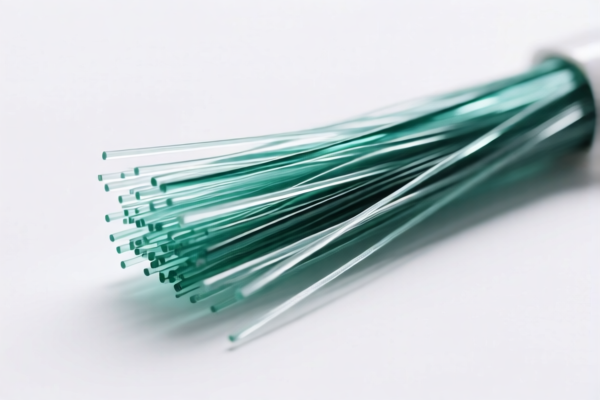
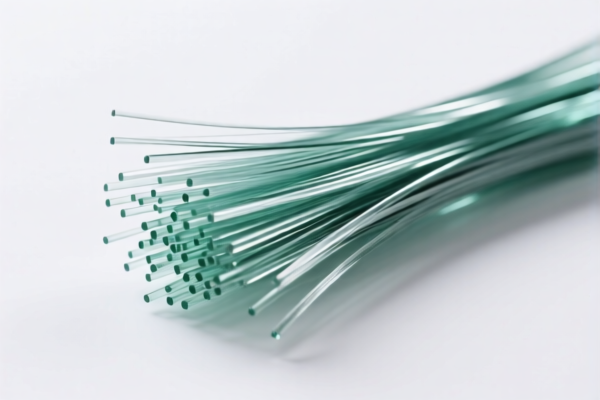
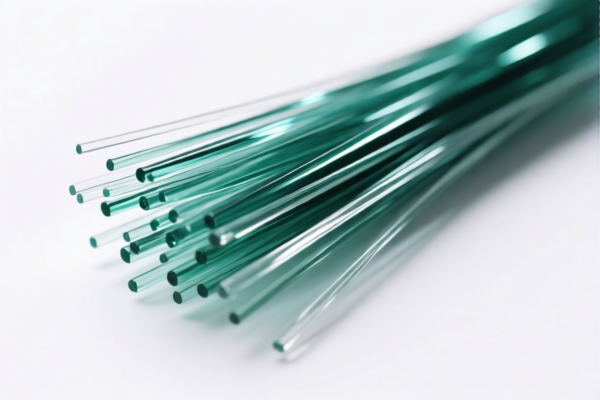
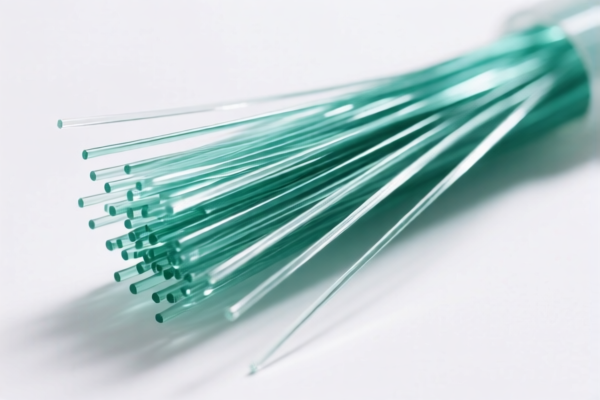
AI分析
🛡️ Graphite Corrosion Resistant Material (GCRM)
🌐 HS Code Reference & Customs Clearance Guide | 2026 Latest Tariff Analysis | Specialized Customs Strategy 📌 I. Product Definition & Classification: Do You Truly Understand "Graphite Corrosion Resistant Material"?
Graphite Corrosion Resistant Materials are critical components in chemical processing, semiconductor manufacturing, and high-corrosion industrial environments. In international trade, these materials are not monolithic; their classification depends entirely on material origin (artificial vs. natural/graphite products) and physical form (ceramic vs. non-electrical carbon products).
International customs authorities scrutinize these items heavily due to their dual-use potential and high-value supply chains. Misclassification can lead to severe penalties, delays, or total seizure.
⚠️ Key Distinction Point:
- Artificial Graphite Products (synthetic, high purity, specific mechanical properties) → Classified under 3801 or 6815 depending on specific sub-heading nuances.
- Ceramic-Infused or Carbon-Ceramic Composites → If the matrix is ceramic, it falls under 6909.
- General Graphite/Carbon Articles (non-electrical) → Classified under 6815.
📦 II. HS Code Classification Matrix (2026 Latest Tariff Authority Cross-Check)
Based on the provided data, here are the four potential classifications for Graphite Corrosion Resistant Material, along with their specific rationales and tax implications.
| HS Code | Product Description & Rationale | Tax Rate | Key Classification Logic |
|---|---|---|---|
| 3801.10.50.10 | Graphite base corrosion-resistant material, made of artificial graphite, unspecified form, classified under other headings. | 35.0% | Rationale: Specifically targets "artificial graphite" where the form is not explicitly defined as a standard electrode or brush, falling into residual categories. |
| 6815.11.00.00 | Graphite base corrosion-resistant material, material is graphite articles, fits the classification of other graphite or carbon articles for non-electrical uses. | 35.0% | Rationale: Broad category for graphite/carbon articles not elsewhere specified. Assumes standard graphite composition without ceramic binding. |
| 6909.19.50.95 | Graphite base corrosion-resistant material, inferred as ceramic material scope, purpose fits ceramic articles for chemical or technical uses. | 39.0% | Rationale: Highest Risk. If the material contains a ceramic binder or matrix (graphite-ceramic composite), it is classified as ceramic. This carries a higher base duty. |
| 3801.10.50.90 | Graphite base corrosion-resistant material, made of artificial graphite, unspecified specific form, classified under other headings. | 35.0% | Rationale: Similar to 3801.10.50.10, but falls into the "Other" residual bucket for artificial graphite articles not otherwise specified. |
| 6815.19.00.00 | Graphite base corrosion-resistant material, material is graphite, falls under the scope of non-electrical carbon articles. | 35.0% | Rationale: General residual heading for graphite articles not electrical, not specifically "artificial" in the strict 3801 sense, or broader carbon articles. |
🔍 Critical Warning:
- The Ceramic Trap: If your material is a graphite-ceramic composite (common in high-temp corrosion resistance), declaring it under 6815 or 3801 is incorrect and risky. It must be declared under 6909 (Ceramics), which triggers a higher duty (39%).
- Artificial vs. Natural: "Artificial Graphite" (synthetic) often falls under 3801, while generic "Graphite Articles" fall under 6815. Precision in the commercial invoice is vital.
💰 III. 2026 Latest Tariff Rate Breakdown (Including Surcharges & Policy Add-ons)
✅ Applicable Country: United States (US)
✅ Origin: China (CN)
✅ Effective Date: November 10, 2025 (and subsequent imports)
All classifications below share a common tariff structure due to US-China trade policies.
🎯 1. Classification under 3801.10.50.10 & 3801.10.50.90 (Artificial Graphite)
| Item | Detail |
|---|---|
| Base Duty Rate | 0.0% (Ad Valorem) |
| Section 301 Surcharge | +25.0% (USITC Footnote) |
| IEEPA Surcharge | +10.0% (Specific to China-origin goods under Section 122) |
| Total Effective Duty | 35.0% |
| Calculation Base | CIF Value × 35% |
| De Minimis Exemption | ❌ NOT APPLICABLE (deny_de_minimis) |
| Legal Authority Chain | IEEPA:9903.01.25 → USITC:3801.10.50.10 → FOOTNOTE:301-Surcharges |
📌 Explanation:
- Despite a 0% base duty, the 35% total effective rate makes these goods expensive to import.
- Section 122 Tariff (10%): This is a specific surcharge applied to certain industrial materials from China.
- Section 301 Tariff (25%): The standard high tariff on Chinese industrial goods.
🎯 2. Classification under 6815.11.00.00 & 6815.19.00.00 (Other Graphite/Carbon Articles)
| Item | Detail |
|---|---|
| Base Duty Rate | 0.0% |
| Section 301 Surcharge | +25.0% |
| IEEPA Surcharge | +10.0% |
| Total Effective Duty | 35.0% |
| Calculation Base | CIF Value × 35% |
| De Minimis Exemption | ❌ NOT APPLICABLE |
| Legal Authority Chain | IEEPA:9903.01.25 → USITC:6815.1x.xx → FOOTNOTE:301-Surcharges |
📌 Note:
- These rates apply to standard graphite corrosion-resistant plates, blocks, or seals.
- Crucial: Ensure the description explicitly states "Artificial Graphite" if using 3801, or "Graphite/Carbon Articles" if using 6815. Ambiguity leads to customs delays.
🎯 3. Classification under 6909.19.50.95 (Ceramic-Based Composite)
| Item | Detail |
|---|---|
| Base Duty Rate | 4.0% |
| Section 301 Surcharge | +25.0% |
| IEEPA Surcharge | +10.0% |
| Total Effective Duty | 39.0% |
| Calculation Base | CIF Value × 39% |
| De Minimis Exemption | ❌ NOT APPLICABLE |
| Legal Authority Chain | IEEPA:9903.01.25 → USITC:6909.19.50.95 → FOOTNOTE:301-Surcharges |
📌 Critical Alert:
- If your product is a graphite-ceramic composite, it MUST be classified under 6909.
- Trying to classify it under 6815 or 3801 to save 4% is fraudulent misclassification and can result in penalties, audits, and cargo holds.
- The 39% rate reflects the higher base duty for ceramics, which are not always duty-free.
🛠️ IV. Customs Clearance Operational Advice (Practical Pitfall Avoidance Guide)
✅ 1. Essential Documentation Checklist (Non-Negotiable)
| Document | Required | Description |
|---|---|---|
| ✅ Product Spec Sheet | ✔️ | Must detail: Material Composition (e.g., "95% Artificial Graphite, 5% Ceramic Binder"), Purity, Density, and Corrosion Resistance Rating. |
| ✅ Technical Drawings | ✔️ | Show the physical form. Is it a block, sheet, or complex shape? This helps determine if it’s "unspecified" (3801) or "standard article" (6815). |
| ✅ Product Photos | ✔️ | Clear images showing the texture (graphite vs. ceramic glaze), labeling, and any certifications. |
| ✅ Third-Party Test Report | ✔️ | Crucial for 6909: If claiming ceramic content, provide a material analysis report proving the ceramic matrix. If pure graphite, provide purity reports. |
| ✅ Commercial Invoice | ✔️ | Must explicitly state: "Graphite Corrosion Resistant Material, [Artificial/Composite], HS Code: [Insert Code]". Avoid vague terms like "Industrial Part." |
| ✅ Packing List | ✔️ | Ensure net/gross weights are accurate. Discrepancies trigger inspections. |
✅ 2. Declaration Strategy (Key Mantras)
🔥 "Material Defines HS, Form Defines Subheading, Origin Defines Tax!"
| Scenario | Correct Declaration | Incorrect Practice |
|---|---|---|
| Pure Artificial Graphite Block | HS: 3801.10.50.10 Desc: "Artificial Graphite Corrosion Resistant Block" |
Declaring as "Carbon Fiber" or "Ceramic" → 35% risk or penalty |
| Graphite-Ceramic Composite Plate | HS: 6909.19.50.95 Desc: "Ceramic-Graphite Composite Corrosion Resistant Plate" |
Declaring as "Graphite" to avoid 39% → High Audit Risk |
| Generic Graphite Seal | HS: 6815.11.00.00 Desc: "Graphite Seal Ring, Non-Electrical" |
Using vague "Corrosion Resistant Material" → Customs may reclassify |
| Unspecified Artificial Graphite Part | HS: 3801.10.50.90 Desc: "Artificial Graphite Part, Unclassified" |
Over-specifying as "Electrode" (if not electrical) → Wrong HS |
✅ 3. Special Handling for High-Risk Items
| Situation | Handling Advice |
|---|---|
| Dual-Use Concerns | Graphite can be used in nuclear/defense applications. Provide a End-Use Declaration stating it is for chemical/industrial corrosion resistance only. |
| Composite Materials | If the ratio of graphite to ceramic is borderline, consult a customs broker before shipment. Misclassification of 6909 vs. 6815 is a top audit trigger. |
| OEM Custom Parts | Provide the original design file and customer specification. Proves the item is not a standard commodity but a specialized industrial part. |
| Small Sample Shipments | NO DE MINIMIS. Even small shipments are subject to the 35-39% duty. Do not mark as "Sample, No Value." |
🌍 V. Global Market Comparison (2026 Context)
| Country/Region | Recommended HS Code | Total Duty (China Origin) | Key Certification | Note |
|---|---|---|---|---|
| 🇺🇸 USA | 6815 / 3801 / 6909 |
35% - 39% | None specifically for graphite, but FCC/UL if electronic component | Highest Barrier. 301 + IEEPA tariffs apply. |
| 🇨🇳 China | 6815 / 3801 |
0% - 5% | RoHS (if applicable) | No surcharges. Ideal for domestic processing. |
| 🇪🇺 EU | 6815 / 6909 |
0% - 4% | REACH / RoHS | Lower base duties. No Section 301 equivalent. |
| 🇯🇵 Japan | 6815 |
0% - 3% | JIS Standards | Generally favorable, but strict quality checks. |
📌 Conclusion:
- USA is the most challenging market for Graphite Corrosion Resistant Materials due to the 35-39% effective duty.
- EU and Japan offer significantly better tax environments, but quality certifications (REACH, JIS) are stringent.
📌 VI. Common Mistakes & Pitfall Guide (Lessons Learned)
❌ Mistake 1: Declaring a Graphite-Ceramic Composite under 6815.11.00.00 to save 4%.
👉 Consequence: Customs requests a material analysis. If found guilty, penalty = 50-100% of duty owed + cargo hold.
❌ Mistake 2: Using vague descriptions like "Industrial Graphite" without specifying Artificial vs. Natural or Composite.
👉 Consequence: Customs may assign the highest possible duty (39%) or classify as "Other Chemical Products" with unpredictable rates.
❌ Mistake 3: Assuming small shipments are tax-free (De Minimis).
👉 Consequence: All shipments under 3801/6815/6909 from China are subject to duty. No $800 exemption.
✅ Correct Approach:
"Graphite Corrosion Resistant Plate, Artificial Graphite, Non-Electrical, Model GCR-2026, For Chemical Processing Use Only, HS Code: 3801.10.50.10"
🎯 VII. Conclusion: Precision in Classification Saves Money
🎯 Remember the Mantra:
🔹 "Ceramic Matrix = 39%, Pure Graphite = 35%, Vague Description = Audit!"
🔹 "301 + IEEPA = 35% Minimum. Don't Gamble."
🔹 "Specify 'Artificial' for 3801, 'Other' for 6815, 'Ceramic' for 6909."
📌 Pro Tip:
If your product is originating from Vietnam, Malaysia, or Thailand (after substantial transformation), you may apply for IEEPA Exemption, potentially reducing the duty to 0-5%.
Action Plan:
1. Obtain a Certificate of Origin from the non-China country.
2. Request a Pre-Ruling (Advance Ruling) from US Customs (CBP) if the material composition is complex.
3. Ensure your supplier provides a Detailed Bill of Materials (BOM).
📣 Immediate Action Required:
📞 Contact a licensed customs broker before shipping.
📄 Provide full technical specs and material composition.
🚀 Ensure Compliance, Avoid Seizure, Maximize Profit Margin!
✨ Professional Classification Starts Here!
💼 Every Percent of Duty Saved is Pure Profit!
用户评价
关于 HS 编码归类
协调制度(HS)是由世界海关组织(WCO)制定的国际贸易商品分类标准。全球 200 多个国家采用 HS 系统作为海关关税、贸易统计和进出口监管的基础。
每个 HS 编码遵循以下层级结构:
- 章(2 位)——商品大类(例如:第 84 章:机器和机械设备)
- 品目(4 位)——章内的更具体分类
- 子目(6 位)——国际通用细分,所有 WCO 成员国统一使用
- 本国细分(8-10 位)——各国自行扩展的细分编码,如美国 HTSUS 10 位编码
正确的 HS 编码归类对于顺利通关、准确缴纳关税和遵守贸易法规至关重要。错误归类可能导致海关延误、多缴关税或罚款。
从CN进口到US时,适用的关税税率可能包括:
- 最惠国(MFN)税率——适用于 WTO 成员国的标准关税税率
- 普通税率——适用于无贸易协定国家
- 贸易救济关税——附加关税,如 301 条款(反倾销)、232 条款(国家安全)或反补贴税
本页内容仅供参考。如需正式归类,请咨询当地海关或持牌报关代理。