guide rail slider
CN → US| HS编码 | 关税税率 | 原产国 | 目的国 | 文档 |
|---|---|---|---|---|
| 7326908630 | 87.9% | CN | US | 官方文档 |
| 7326908610 | 87.9% | CN | US | 官方文档 |
| 8431499084 | 85.0% | CN | US | 官方文档 |
| 8431499005 | 85.0% | CN | US | 官方文档 |
商品图片
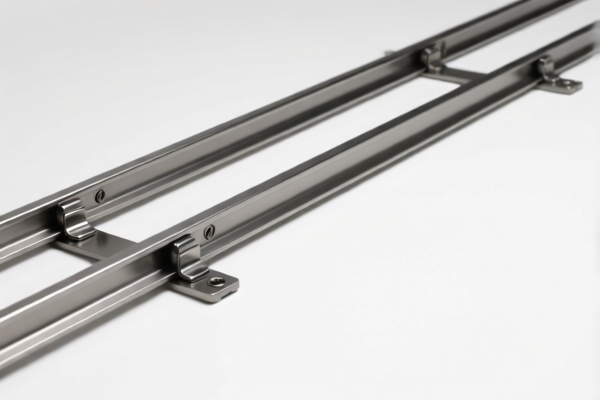
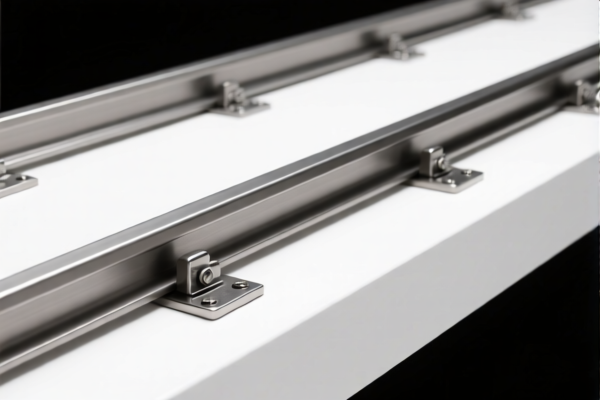
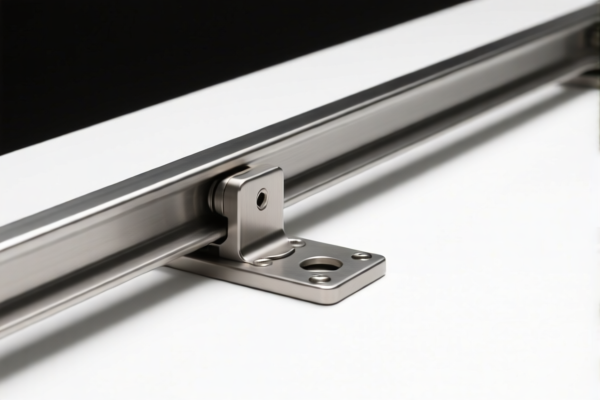
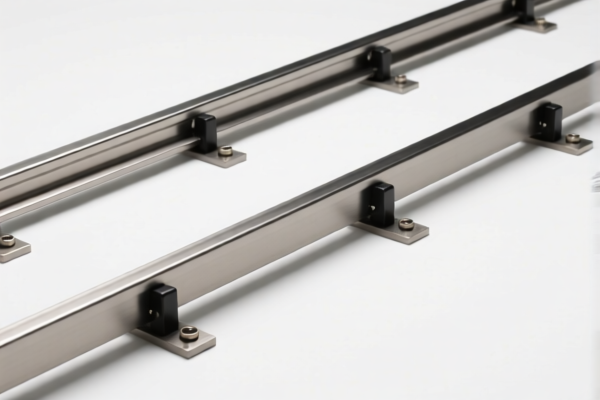
AI分析
🏗️ Guide Rail Sliders (Linear Motion Components)
🌐 HS Code Reference & Customs Clearance Guide | 2026 Latest Tariff Analysis | Professional Clearance Strategy
📌 I. Product Definition & Classification: Do You Really Know "Guide Rail Sliders"?
Guide rail sliders (also known as linear guide blocks or slide blocks) are critical mechanical transmission components used in CNC machines, robotics, automation lines, and precision equipment. They reduce friction and guide movement along linear tracks.
In international trade, their classification depends heavily on their primary function and material composition. However, due to specific US trade policies targeting Chinese steel, aluminum, and copper products, the tariff structure is complex and high-risk.
⚠️ Key Distinction:
- If classified purely as a "part of machinery" → Lower base tariff (0% or 2.9%), but HIGH additional tariffs apply.
- If classified as a "steel/iron article" → Higher base tariff (2.9%), but SAME additional tariffs apply.
- Crucial Note: Most slider classifications fall under Section 73 (Articles of Iron or Steel) or Section 84 (Machinery Parts), both triggering the same punitive measures.
📦 II. HS Code Classification Details (2026 Latest Tariff Authority Comparison)
| HS Code | Product Description | Application Scenario | Material/Function Logic |
|---|---|---|---|
7326.90.86.30 |
Other articles of iron or steel (Other) | General steel sliders, fallback classification | Fallback logic: "Parts/Categories" not specifically listed elsewhere |
7326.90.86.10 |
Other articles of iron or steel (Other) | Metal components, inferred material | Inferred metal nature, "Other articles" category |
8431.49.90.84 |
Parts suitable for use solely or principally with machinery (Other) | Mechanical transmission parts, metal components | Functional logic: "Mechanical transmission component" |
8431.49.90.05 |
Parts suitable for use solely or principally with machinery (Other) | Mechanical installation accessories | Logical definition: "Part/Component" of machinery |
🔍 Key Insight:
- Whether you classify under 7326 (Steel Articles) or 8431 (Machinery Parts), the Additional Tariffs are identical.
- The choice between 7326 and 8431 often depends on whether customs views the item as a generic metal part or a specialized machinery component.
- Do not assume that "Machinery Part" (8431) means lower tariffs. The base rate may be lower (0% vs 2.9%), but the final landed cost is nearly identical due to additional duties.
💰 III. 2026 Latest Tariff Rate Breakdown (Including Additional Taxes & Policy Surcharges)
✅ Applicable Country: United States (US)
✅ Origin: China (CN)
✅ Effective Date: Continuous (Subject to current trade policies)
🎯 1. 7326.90.86.30 & 7326.90.86.10 —— Articles of Iron or Steel
| Item | Detail |
|---|---|
| Base Tariff | 2.9% (General Rate) |
| Section 301 Additional Tariff | +25.0% (Trade Remedy Measures) |
| Section 122 Tariff | +10.0% (Steel & Aluminum Products) |
| Section 232 / 10% Steel-Alloy Surcharge | +50.0% (Specific to Steel/Aluminum/Copper products under certain clauses) |
| Total Effective Tax Rate | 87.9% |
| Tax Calculation | CIF Value × 87.9% |
| De Minimis Exemption Eligible | ❌ No (Section 301 & 122/232 measures generally exclude de minimis) |
| Legal Basis Path | USITC:7326.90.86.30 → Footnote:301-7326 → Footnote:122-Steel → Footnote:232-Steel/Aluminum |
📌 Explanation:
- Base 2.9%: Standard MFN rate for "Other articles of iron or steel."
- 301 (+25%): Standard US-China trade war tariff.
- 122 (+10%): Additional duty on steel articles.
- 232/Steel Surcharge (+50%): Critical: Some interpretations apply a high surcharge to steel components. If this 50% applies, the total hits 87.9%.
- Result: Extremely High Tariff. Importing guide rail sliders from China to the US is cost-prohibitive without careful structuring.
🎯 2. 8431.49.90.84 & 8431.49.90.05 —— Parts of Machinery
| Item | Detail |
|---|---|
| Base Tariff | 0.0% (Free for many machinery parts) |
| Section 301 Additional Tariff | +25.0% |
| Section 122 Tariff | +10.0% |
| Section 232 / 10% Steel-Alloy Surcharge | +50.0% |
| Total Effective Tax Rate | 85.0% |
| Tax Calculation | CIF Value × 85.0% |
| De Minimis Exemption Eligible | ❌ No |
| Legal Basis Path | USITC:8431.49.90.84 → Footnote:301-8431 → Footnote:122-Steel → Footnote:232 |
📌 Explanation:
- Base 0%: "Parts of machinery" often enjoy duty-free entry.
- However: The Additional Tariffs (25% + 10% + 50%) still apply if the part is made of steel/iron from China.
- Total 85.0%: Slightly lower than 87.9%, but still punitive.
- Risk: Customs may reclassify from 8431 to 7326 if the "machinery part" function is not clearly defined, potentially increasing the base rate to 2.9%.
🛠️ IV. Customs Clearance Practical Advice (Real-World Pitfall Guide)
✅ 1. Document Checklist (Mandatory)
| Document | Required | Notes |
|---|---|---|
| ✅ Product Specification Sheet | ✔️ | Must detail dimensions, load capacity, material (e.g., "Steel Alloy"), and application (e.g., "For CNC Machine X"). |
| ✅ Material Declaration | ✔️ | Explicitly state "Steel/Iron" or "Aluminum." Misdeclaration leads to penalties. |
| ✅ Function Description | ✔️ | Clearly state: "Used for linear motion guidance in machinery." Avoid vague terms like "Metal Block." |
| ✅ Commercial Invoice | ✔️ | Must include HS Code, origin (China), and CIF value. |
| ✅ Packing List | ✔️ | Detailed breakdown of contents. |
| ✅ OEM/End-User Statement | ✔️ | If applicable, prove the part is for a specific machine, supporting 8431 classification. |
✅ 2. Classification Strategy (Critical Tips)
🔥 Core Principle:
"Function over Material, but Material Triggers Tariff!"
| Scenario | Recommended HS Code | Reasoning |
|---|---|---|
| High-Precision CNC Slider | 8431.49.90.84 or 05 |
Stronger argument as a "specialized part." Lower base rate (0%). |
| Generic Industrial Slider | 7326.90.86.30 or 10 |
If function is generic, customs may default to steel article. Higher base rate (2.9%). |
| Aluminum Slider | 7616.99.50.00 (Alternative) |
Not in provided data, but if aluminum, check if 122/232 still apply. Check new data! |
| Plastic/Mixed Component | 3926.90.90.50 (Alternative) |
Not in provided data. If non-metal, avoid 122/232. Check new data! |
📌 Warning:
- Do NOT split shipments to avoid de minimis. Section 301 and 122 tariffs apply regardless of value.
- Do NOT misdeclare as "Plastic" if it is steel. This is fraud.
- Prepare for Audit: Customs may demand proof that the item is indeed a "part" and not just a "steel article."
✅ 3. Special Case Handling
| Situation | Recommendation |
|---|---|
| OEM for Specific Machine | Provide end-user machine model numbers to justify 8431 classification. |
| Bulk Import | Consider Section 301 Exclusions. Check if the specific HS code is excluded. (Rare for steel parts). |
| Third-Country Transshipment | High Risk. US Customs actively investigates origin fraud. Do not relabel China-origin goods as "Made in Vietnam/Mexico" without substantial transformation. |
| Aluminum Sliders | Note: The provided data only lists steel-related tariffs. If aluminum, verify if 122/232 apply equally. (Usually yes, but confirm with latest HTS). |
🌍 V. Global Market Comparison (2026 Outlook)
| Country/Region | Recommended HS Code | Estimated Total Duty | Notes |
|---|---|---|---|
| 🇺🇸 USA | 7326.90.86.30 / 8431.49.90.84 |
85% - 87.9% | Highest Barrier. 301 + 122 + 232/Alloy tariffs stack up. |
| 🇨🇳 China | 7326.90.86.30 / 8431.49.90.84 |
~5% - 10% | Low import duty. Export from China is cheap; import into US is expensive. |
| 🇪🇺 EU | 7326.90.86 / 8431.49.90 |
~2% - 5% | No US-style punitive tariffs. CE Certification required. |
| 🇲🇽 Mexico | Varies | 0% - 5% (if under USMCA) | Strategic Option: Manufacture in Mexico to avoid US tariffs. |
📌 Conclusion:
- USA is the most challenging market due to stacked tariffs.
- Alternative Supply Chains: Consider sourcing from Mexico, Vietnam, or Thailand to avoid Chinese origin penalties.
- USMCA (Mexico): If assembled in Mexico with sufficient local content, may enter US duty-free.
📌 VI. Common Mistakes & Pitfalls (Lessons Learned)
❌ Mistake 1: Declaring as "Plastic Part" to avoid steel tariffs
👉 Result: Customs inspection reveals steel → Seizure + Fine + Back Taxes.
❌ Mistake 2: Assuming 8431 means "Free"
👉 Result: Ignores 301/122/232 tariffs → Unexpected 85% bill at border.
❌ Mistake 3: Splitting shipment into < $800 to use de minimis
👉 Result: Section 301 and 122 do NOT allow de minimis exemption. Shipments will be held, taxed, and possibly returned.
❌ Mistake 4: Vague description "Metal Slider"
👉 Result: Customs assigns highest applicable tariff rate due to uncertainty.
✅ Correct Approach:
"Linear Guide Slider Block, Model XYZ, Material: Chrome Steel, For Use in CNC Milling Machine ABC, Origin: China"
🎯 VII. Conclusion: Strategic Clearance for Guide Rail Sliders
🎯 Key Takeaway:
🔹 Tariffs are Stackable: 301 (25%) + 122 (10%) + 232/Steel (50%) = ~85-88%.
🔹 Classification Matters Less for Total Cost: 0% base + 85% add-on ≈ 2.9% base + 85% add-on.
🔹 Supply Chain Redesign is Key: Do not import directly from China to USA for high-volume sliders. Consider Mexico (USMCA) or Southeast Asia.
📌 Pro Tip:
If you must import from China, ensure your broker files for Section 301 Exclusions (if available) and correctly declares all applicable footnotes.
Consult a Licensed Customs Broker before shipping. The savings from correct classification (if any) are minimal compared to the risk of misclassification penalties.
📣 Immediate Action:
📞 Review Supply Chain: Can you source from Mexico/SE Asia?
📄 Request Exclusion Status: Check if your specific HS code has a 301 exclusion.
🚀 Partner with Experts: Use a broker experienced in Section 122/232 steel imports.
✨ Precision Clearance, Profitable Trade!
💼 Every Percentage Point Counts in High-Tariff Environments!
用户评价
关于 HS 编码归类
协调制度(HS)是由世界海关组织(WCO)制定的国际贸易商品分类标准。全球 200 多个国家采用 HS 系统作为海关关税、贸易统计和进出口监管的基础。
每个 HS 编码遵循以下层级结构:
- 章(2 位)——商品大类(例如:第 84 章:机器和机械设备)
- 品目(4 位)——章内的更具体分类
- 子目(6 位)——国际通用细分,所有 WCO 成员国统一使用
- 本国细分(8-10 位)——各国自行扩展的细分编码,如美国 HTSUS 10 位编码
正确的 HS 编码归类对于顺利通关、准确缴纳关税和遵守贸易法规至关重要。错误归类可能导致海关延误、多缴关税或罚款。
从CN进口到US时,适用的关税税率可能包括:
- 最惠国(MFN)税率——适用于 WTO 成员国的标准关税税率
- 普通税率——适用于无贸易协定国家
- 贸易救济关税——附加关税,如 301 条款(反倾销)、232 条款(国家安全)或反补贴税
本页内容仅供参考。如需正式归类,请咨询当地海关或持牌报关代理。