gutta percha plates
CN → US| HS编码 | 关税税率 | 原产国 | 目的国 | 文档 |
|---|---|---|---|---|
| 4001300010 | 35.0% | CN | US | 官方文档 |
| 4001300055 | 35.0% | CN | US | 官方文档 |
| 4002990000 | 35.0% | CN | US | 官方文档 |
| 4002800000 | 35.0% | CN | US | 官方文档 |
| 4017000000 | 37.7% | CN | US | 官方文档 |
| 4017000000 | 37.7% | CN | US | 官方文档 |
商品图片
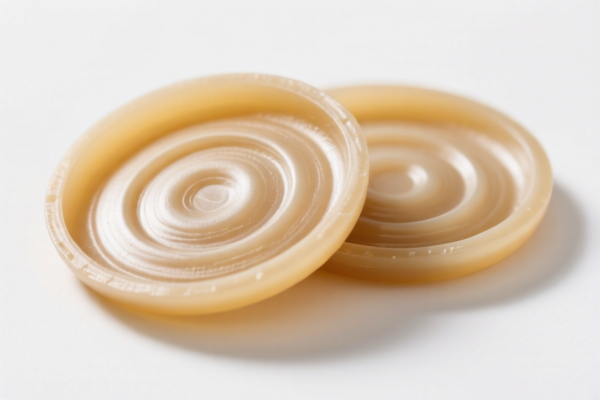
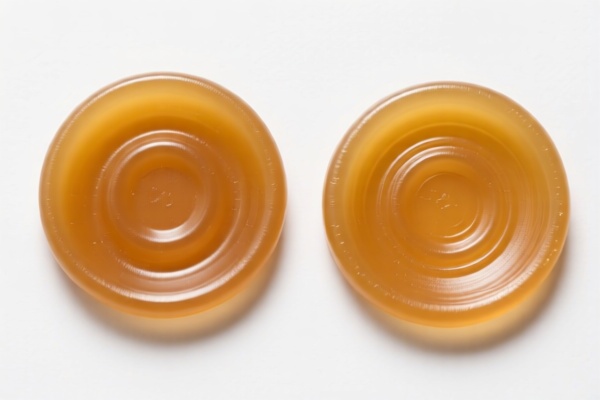
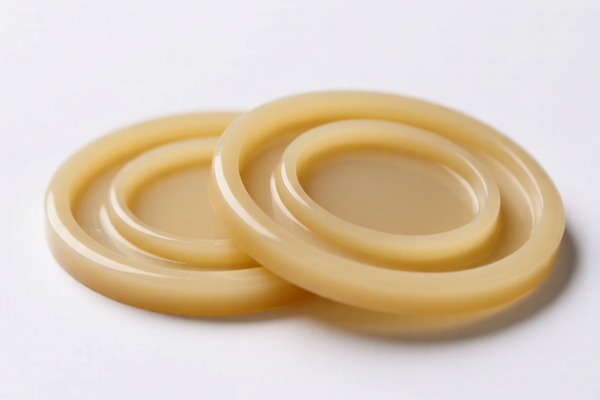

AI分析
🌿 Gutta Percha Plates: The Ultimate HS Code Guide & Customs Strategy (2026)
🌐 HS Code Reference & Customs Strategy | 2026 Tariff Analysis | Expert Clearance Protocol
📌 I. Product Definition & Classification: What Exactly Are "Gutta Percha Plates"?
Gutta Percha (derived from Palaquium trees) and Balata are natural gums with a unique property: they are thermoplastic at high temperatures and rigid at room temperature. Historically used for submarine cables, golf balls, and dental fillings, they are now a specialized industrial material.
When imported as "Plates," the product is defined as: * Physical Form: Solid sheets, slabs, or strips in primary forms (not yet molded into finished articles like balls or dentures). * Material Composition: Natural Gutta Percha, Balata, Guayule, Chicle, or similar natural gums. * Processing State: Vulcanized (hard rubber) or semi-vulcanized sheets.
⚠️ Key Distinction:
- Plates/Sheets (Raw Material): Must be classified under Chapter 40 (Rubber). Specifically 4001.30.00.10 or 4001.30.00.55. - Finished Articles: If the "plates" are already shaped into golf balls, dental crowns, or industrial gaskets, they move to Chapter 90 or 4017 (Hard Rubber Articles). - Hard Rubber (Ebonite): If the gutta-percha has been heavily vulcanized to become "ebonite" (rigid, black, unyielding), it may fall under 4017.00.00.00.
📦 II. HS Code Classification Details (2026 Tariff Authority)
Based on the provided data, here is the precise breakdown for importing Gutta Percha Plates:
| HS Code | Product Description | Material Type | Application |
|---|---|---|---|
4001.30.00.10 |
Gutta-percha and guttas (Not elsewhere specified) | Natural Gum (Gutta Percha specific) | Raw industrial feedstock, cable insulation prep, dental lab sheets |
4001.30.00.55 |
Balata, gutta-percha, guayule, chicle... (Other) | Mixed Natural Gums (Includes Balata/Gutta) | General natural rubber sheeting, alternative to Hevea rubber |
4017.00.00.00 |
Hard rubber (Ebonite) in all forms | Fully Vulcanized Natural Gum | Industrial gears, insulators, chemical-resistant plates, waste/scrap |
🔍 Critical Insight:
-4001.30.00.10vs4001.30.00.55: The distinction is often subtle.4001.30.00.10is for pure Gutta Percha. If the shipment contains a mixture of Balata, Chicle, or other "similar natural gums," it must be classified under4001.30.00.55. -4017.00.00.00: This is for Hard Rubber (Ebonite). If your Gutta Percha plates have undergone extensive vulcanization to become rigid, black, and non-sticky (indistinguishable from hard rubber), customs may reclassify them here to avoid the high 25% tariff, though this requires strong technical proof.
💰 III. 2026 Tariff Rate Breakdown (Detailed & Strategic)
✅ Applicable Market: United States (US)
✅ Origin: China (CN) (Assumed based on typical high-tariff scenarios)
✅ 生效时间: Current 2025-2026 Trade Regulations
🎯 1. 4001.30.00.10 & 4001.30.00.55 —— Natural Gums (Plates/Sheets)
The Standard Classification for Raw Gutta Percha
| Item | Detail |
|---|---|
| Base Duty (MFN) | 0.0% (Ad Valorem) |
| Section 301 / "Add-on" Tariff | +25.0% |
| Total Tariff Rate | 25.0% |
| Tax Calculation | CIF Value × 25% |
| De Minimis Exemption | ❌ No (Not eligible for Section 321 de minimis if value >$800 or if flagged) |
| Legal Basis | USITC Section 301 (China Specific) |
📌 Explanation:
While the base MFN rate for natural rubber is 0%, the Section 301 punitive tariff (often referred to as "Add-on Tariff" or "25% Tariff") applies heavily to Chinese-origin natural gums and rubber products. This brings the total duty to 25%. * Note: This applies regardless of whether it is4001.30.00.10(Pure Gutta) or4001.30.00.55(Mixed/Gutta).
🎯 2. 4017.00.00.00 —— Hard Rubber (Ebonite)
The "Low Tax" Loophole (If Applicable)
| Item | Detail |
|---|---|
| Base Duty (MFN) | 0.0% |
| Section 301 / "Add-on" Tariff | 0.0% (No additional punitive tariff) |
| Total Tariff Rate | 0.0% |
| Tax Calculation | $0 (Duty Free) |
| De Minimis Exemption | ✅ Yes (If under $800 and eligible) |
| Legal Basis | Standard Tariff Schedule (No Section 301 list entry for 4017) |
📌 Strategic Opportunity:
If your Gutta Percha plates are fully vulcanized to the point of being "Ebonite" (Hard Rubber), they qualify for 0% duty. This is a massive cost saving compared to the 25% on raw plates. However, this requires technical evidence (vulcanization degree, hardness testing) to prove the material is "Hard Rubber" and not just "Raw Gutta Percha."
🛠️ IV. Customs Clearance Operational Advice (Risk Mitigation)
✅ 1. Documentation Checklist (Non-Negotiable)
| Document | Requirement | Why? |
|---|---|---|
| Material Safety Data Sheet (MSDS) | ✔️ | Must specify "Gutta Percha" or "Balata" and vulcanization status. |
| Certificate of Origin (CO) | ✔️ | Crucial for China. Proves origin for the 25% tariff assessment. |
| Technical Specification Sheet | ✔️ | Must define: "Plates/Sheets" vs "Hard Rubber." Mention hardness (Shore A/D). |
| Commercial Invoice | ✔️ | Description must be precise: "Gutta Percha Plates, Natural Gum, Primary Form" |
| Vulcanization Report | ✔️ | Critical for 4017 claim. If claiming 0%, provide lab report proving "Hard Rubber" status. |
| Packing List | ✔️ | Must match invoice weight and dimensions. |
✅ 2. Classification Strategy (The "0% vs 25%" Battle)
| Scenario | Recommended HS Code | Duty | Action |
|---|---|---|---|
| Raw/Soft Gutta Percha Plates | 4001.30.00.10 / 55 |
25% | Accept cost; no legal way around Section 301. |
| Heavy Vulcanization (Ebonite) | 4017.00.00.00 |
0% | Apply for Pre-Ruling. Submit hardness tests and chemical analysis to prove it is "Hard Rubber." |
| Gutta Percha + Oil Mixture | 4002.80.00.00 |
25% | Avoid. Mixture with oils often triggers the same 25% penalty. |
| Gutta Percha + Synthetic Rubber | 4002.99.00.00 |
25% | Avoid. Mixtures still attract the 25% penalty. |
🔥 Key Warning:
Do NOT attempt to classify raw Gutta Percha plates as4017without proof. Customs will reject this as "misclassification," leading to seizure, heavy fines, and 100% back-taxes. The difference between "Natural Gum" and "Hard Rubber" is a matter of chemical structure (vulcanization level).
✅ 3. Special Cases & Handling
| Situation | Strategy |
|---|---|
| Gutta Percha for Dental Use | Even if for dental use, if imported as plates, it is 4001. Only shaped fillings go elsewhere. Expect 25%. |
| Gutta Percha for Golf Balls | Raw plates for ball manufacturing are 4001. The finished balls are different. Expect 25%. |
| Origin Shift | If the rubber is processed in Vietnam/Mexico and re-imported, check Rules of Origin. If "substantial transformation" occurred, it might avoid the 25% China tariff (requires proof). |
| Scrap/Offcuts | If the "plates" are waste/scrap, 4017.00.00.00 is the correct code with 0% duty. Clear distinction: "Scrap" vs "Product Plates." |
🌍 V. Global Market Comparison (2026)
| Region | HS Code for Plates | Tariff (China Origin) | Notes |
|---|---|---|---|
| 🇺🇸 USA | 4001.30.00.10/55 |
25% (Section 301) | High barrier. Hard Rubber (4017) is 0%. |
| 🇨🇳 China | 4001.30.00.10 |
~5-10% | Import duties vary; no Section 301 applies. |
| 🇪🇺 EU | 4001.30.00 |
0-2% | Generally low duty on natural gums. No 25% punitive tax. |
| 🇯🇵 Japan | 4001.30 |
0-5% | Competitive market; check FTAs. |
📌 Conclusion:
The US market is the most difficult for Gutta Percha plates due to the 25% Section 301 tariff. The 0% Hard Rubber (4017) classification is the only viable loophole for US importers, but it requires strict technical proof of vulcanization.
📌 VI. Common Mistakes & Pitfalls (Avoid at All Costs)
❌ Mistake 1: Calling "Gutta Percha" "Synthetic Rubber" to confuse customs. 👉 Consequence: Seizure. Gutta Percha is explicitly defined as "Natural Gum" in Chapter 40.
❌ Mistake 2: Claiming 4017.00.00.00 (0%) for raw, sticky Gutta Percha plates.
👉 Consequence: Audit, fines, and retroactive 25% tax. Customs officers know the difference between raw gum and hard rubber.
❌ Mistake 3: Missing the "Primary Form" definition. 👉 Consequence: If the plates are already cut into specific shapes for a machine, they might be considered "articles" (e.g., gaskets), shifting to a different code with different duties.
❌ Mistake 4: Ignoring the "Mixture" rule.
👉 Consequence: 4002.80.00.00 (Mixtures) also carries 25%. Don't assume mixing with a cheap additive lowers the tax; it often keeps it high.
✅ Best Practice:
"Gutta Percha Plates, Natural Gum, Primary Form, Hardness [X] Shore D, Unvulcanized/Vulcanized. Origin: [Country]."
🎯 VII. Final Verdict & Next Steps
🚀 Action Plan for Importers:
- Verify Material State: Is it raw (sticky/soft) or fully vulcanized (hard/black)?
- Raw → Prepare for 25% duty (
4001.30.00.10/55). - Hard/Vulcanized → Gather Lab Reports to claim 0% duty (
4017.00.00.00).
- Raw → Prepare for 25% duty (
- Check Origin: Is it truly China? If yes, the 25% is unavoidable unless you claim
4017. - Request Ruling: If unsure about "Hard Rubber" status, file an Advance Ruling with CBP before shipping.
- Cost Modeling: Budget for 25% CIF unless you have a
4017ruling.
🔹 Pro Tip:
"If your Gutta Percha is Hard Rubber, claim4017. If it is Soft/Natural, pay 25%. There is no middle ground!"
✨ Professional Clearance, From Precise Classification!
💼 Every 25% matters. Ensure your Gutta Percha plates are classified correctly!
用户评价
关于 HS 编码归类
协调制度(HS)是由世界海关组织(WCO)制定的国际贸易商品分类标准。全球 200 多个国家采用 HS 系统作为海关关税、贸易统计和进出口监管的基础。
每个 HS 编码遵循以下层级结构:
- 章(2 位)——商品大类(例如:第 84 章:机器和机械设备)
- 品目(4 位)——章内的更具体分类
- 子目(6 位)——国际通用细分,所有 WCO 成员国统一使用
- 本国细分(8-10 位)——各国自行扩展的细分编码,如美国 HTSUS 10 位编码
正确的 HS 编码归类对于顺利通关、准确缴纳关税和遵守贸易法规至关重要。错误归类可能导致海关延误、多缴关税或罚款。
从CN进口到US时,适用的关税税率可能包括:
- 最惠国(MFN)税率——适用于 WTO 成员国的标准关税税率
- 普通税率——适用于无贸易协定国家
- 贸易救济关税——附加关税,如 301 条款(反倾销)、232 条款(国家安全)或反补贴税
本页内容仅供参考。如需正式归类,请咨询当地海关或持牌报关代理。