hand tools e.g., hammer, screwdriver, wrench
CN → US| HS编码 | 关税税率 | 原产国 | 目的国 | 文档 |
|---|---|---|---|---|
| 8205203000 | 41.2% | CN | US | 官方文档 |
| 8205400000 | 41.2% | CN | US | 官方文档 |
| 8204110030 | 44.0% | CN | US | 官方文档 |
| 8204120000 | 44.0% | CN | US | 官方文档 |
| 8205400000 | 41.2% | CN | US | 官方文档 |
商品图片
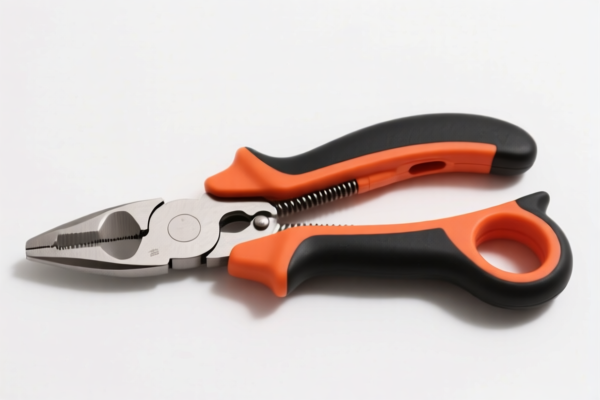
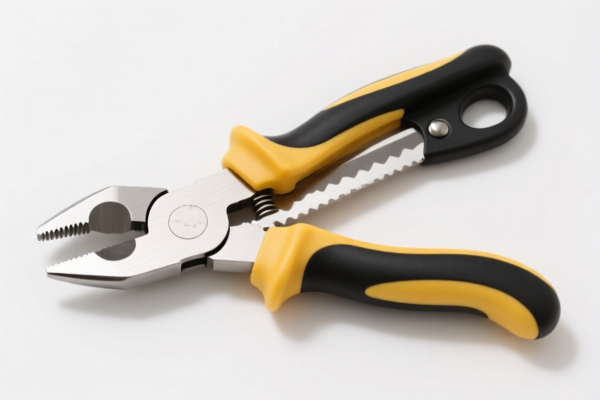

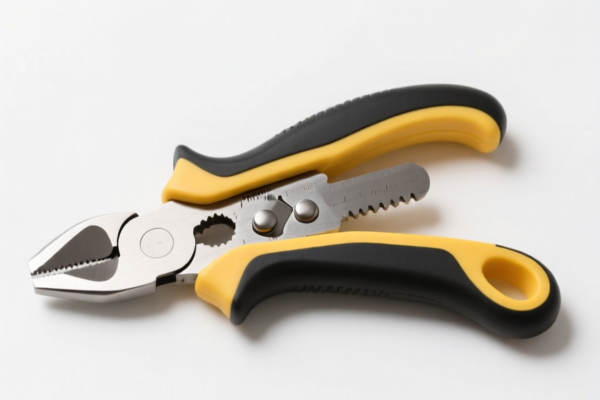
AI分析
🛠️ Hand Tools (Hammer, Screwdriver, Wrench)
🌐 HS Code Reference & Customs Clearance Guide | 2024-2026 Latest Tariff Analysis | Professional Entry Strategy
📌 1. Product Definition & Classification: Do You Really Know "Hand Tools"?
Hand tools, including hammers, screwdrivers, and wrenches, are fundamental manual instruments used for construction, maintenance, and assembly. In international trade, they fall under Chapter 82 of the Harmonized System (HS), specifically Heading 8205 (Hand tools, bladed, other tools...) and Heading 8204 (Hand wrenches, spanners...).
Key Distinctions for Classification: * Hammers: Generally fall under 8205.20 (Hammer heads and other hammer parts) or broadly as hand tools. * Screwdrivers: Specifically categorized under 8205.40 (Screwdrivers and similar tools). * Wrenches/Spanners: Classified under 8204.11 or 8204.12, depending on specific design (e.g., adjustable vs. fixed) and material assumptions (typically metal).
⚠️ Critical Note:
- These items are non-electric. If they are powered (e.g., electric screwdrivers), they fall under Chapter 85. - The classification assumes standard metal construction unless specified otherwise. - Combined Sets: If a set contains multiple types (e.g., hammer + screwdriver + wrench), customs may require splitting the declaration or applying the "essential character" rule, but often individual items are declared separately for precise tariff application.
📦 2. HS Code Classification Details (Based on Provided Data)
| HS Code | Product Description | Applicable Tool Type | Key Classification Logic |
|---|---|---|---|
8205.20.30.00 |
Hammer Heads / Other Hammer Parts | Hammer | Matches "Hammer" category under non-electric hand tools. |
8205.40.00.00 |
Screwdrivers and Similar Tools | Screwdriver | Explicitly covers screwdrivers and their parts. |
8204.11.00.30 |
Hand Wrenches, Spanners, and Adjustable Wrenches | Wrench | Matches "Wrench" category for hand tools; assumes metal material. |
8204.12.00.00 |
Hand Wrenches, Spanners, and Adjustable Wrenches | Wrenches | General category for wrenches; no material conflict. |
🔍 Important Clarification:
-8205.40.00.00is also cited for sets containing screwdrivers, hammers, and wrenches together, indicating that the screwdriver component often dictates the classification in mixed hand tool descriptions under this specific heading structure in the provided data. - Wrenches (8204.xx) have a higher base tariff (9.0%) compared to hammers and screwdrivers (6.2%).
💰 3. 2024-2026 Latest Tariff Rate Breakdown (Including Additional Duties)
✅ Applicable Country: United States (US)
✅ Country of Origin: China (CN)
✅ Effective Time: Current rates apply (Subject to Section 301 & IEEPA rules)
🎯 1. 8205.20.30.00 & 8205.40.00.00 (Hammer & Screwdriver)
| Item | Content |
|---|---|
| Base Tariff Rate | 6.2% |
| Section 301 Additional Tariff | +25.0% |
| Section 122 Tariff (IEEPA) | +10.0% |
| Total Tax Rate | 41.2% |
| Tax Calculation | CIF Value × 41.2% |
| De Minimis Exemption | ❌ Not Eligible (Due to Section 301 & IEEPA) |
| Legal Basis Path | USITC:8205.20.30.00 → SECTION_301:Footnote → IEEPA:122_Clause |
📌 Explanation:
- The 6.2% is the standard Most Favored Nation (MFN) duty for hand tools. - The 25% is the standard Section 301 tariff on Chinese goods in this category. - The 10% is the additional tariff under IEEPA (Section 122), specifically targeting certain Chinese imports. - Total: 41.2%. This is a significant cost factor.
🎯 2. 8204.11.00.30 & 8204.12.00.00 (Wrenches)
| Item | Content |
|---|---|
| Base Tariff Rate | 9.0% |
| Section 301 Additional Tariff | +25.0% |
| Section 122 Tariff (IEEPA) | +10.0% |
| Total Tax Rate | 44.0% |
| Tax Calculation | CIF Value × 44.0% |
| De Minimis Exemption | ❌ Not Eligible |
| Legal Basis Path | USITC:8204.11.00.30 → SECTION_301:Footnote → IEEPA:122_Clause |
📌 Note:
- Wrenches have a higher base rate (9.0%) compared to hammers/screwdrivers (6.2%). - Therefore, the total tariff for wrenches is 44.0%, which is 2.8% higher than for hammers/screwdrivers. - Even small wrench sets can be costly to import into the US from China.
🛠️ 4. Customs Clearance Practical Advice (Real-World Pitfall Guide)
✅ 1. Required Documentation Checklist (Must-Have)
| Document | Must Provide? | Explanation |
|---|---|---|
| ✅ Product Specification Sheet | ✔️ | Must clearly state: "Non-electric," material (e.g., "Steel"), type (Hammer/Screwdriver/Wrench). |
| ✅ Product Photos | ✔️ | Clear images showing the tool type. Crucial for distinguishing from electric tools. |
| ✅ Commercial Invoice | ✔️ | Must list each HS Code separately if items are mixed. Do not bundle under one vague code. |
| ✅ Packing List | ✔️ | Detail contents per box. Prevents "misdeclaration" flags. |
| ✅ Country of Origin Certificate | ✔️ | Essential for applying Section 301 and IEEPA tariffs correctly. |
✅ 2. Declaration Tips (Key Mantras)
🔥 "Separate Codes, Clear Names, Non-Electric is Key!"
| Scenario | Correct Declaration | Wrong Practice |
|---|---|---|
| Mixed Tool Set | Declare each item (Hammer, Screwdriver, Wrench) with its own HS Code. | Declare all as "Hand Tools Kit" with one code → Risk of penalty & misclassification. |
| Electric vs. Non-Electric | Clearly state "Manual/Hand Operation" in the description. | Omitting "Non-Electric" → May be checked for Chapter 85 (Electrical), causing delays. |
| Material Specification | State "Metal" (unless wooden handles are the primary feature, but even then, the working part matters). | Vague description like "Tool" → Customs may estimate higher duties or detain. |
✅ 3. Special Circumstances Handling
| Situation | Handling Suggestion |
|---|---|
| OEM Branded Tools | Provide brand authorization if requested, but HS Code is based on function, not brand. |
| Sets with Multiple Types | If a kit has 1 hammer and 10 wrenches, the "essential character" might shift to wrenches, but individual declaration is safer and clearer for customs. |
| Origin Diversification | Consider sourcing wrenches from non-China countries (e.g., Vietnam, Thailand) to avoid the 44.0% total tariff. Wrenches have the highest burden. |
🌍 5. Global Market Comparison for Hand Tools (2026 Outlook)
| Country/Region | Recommended HS Code | Base Tariff | Additional Tariffs (China) | Total Effective Rate | Notes |
|---|---|---|---|---|---|
| 🇺🇸 USA | 8205.xxxxx / 8204.xxxxx |
6.2% - 9.0% | +35% (301 + 122) | 41.2% - 44.0% | High Barrier. IEEPA 122 adds 10% on top. |
| 🇨🇳 China | 8205.xxxxx / 8204.xxxxx |
6.2% - 9.0% | None (Domestic) | 6.2% - 9.0% | Lower cost if produced locally. |
| 🇪🇺 EU | 8205.xxxxx / 8204.xxxxx |
4.5% - 6.0% | None | ~5% | No Section 301 equivalent. |
| 🇬🇧 UK | 8205.xxxxx / 8204.xxxxx |
4.5% - 6.0% | None | ~5% | Post-Brexit rates similar to EU for basic tools. |
📌 Conclusion:
- The US market is the most expensive for importing hand tools from China due to the cumulative effect of Base Duty + Section 301 + IEEPA. - Wrenches are particularly sensitive to tariff changes due to their higher base rate. - Diversifying supply chains to countries like Vietnam or Turkey can significantly reduce landed costs for the US market.
📌 6. Common Errors & Pitfalls (Lessons Learned)
❌ Error 1: Declaring "Hand Tools" without specifying type.
👉 Consequence: Customs may assign a higher default duty or reject the entry for insufficient detail.
❌ Error 2: Ignoring the IEEPA Section 122 tariff.
👉 Consequence: Unexpected 10% additional cost not accounted for in initial profit margins.
❌ Error 3: Mixing electric and non-electric tools in one shipment without clear separation.
👉 Consequence: High risk of audit, delay, and potential misclassification penalties (Chapter 85 vs. 82).
✅ Correct Approach:
"Hammer, Steel, Manual, 16oz, Model XYZ"
"Screwdriver, Flathead, Steel Handle, Model ABC"
"Wrench, Adjustable, Chrome Vanadium Steel, Model DEF"
🎯 7. Conclusion: Precision in Classification Saves Money!
🎯 Remember the Mantra:
🔹 "Hammer & Screwdriver: 41.2% | Wrench: 44.0% | Non-Electric is Mandatory!"
🔹 "Separate HS Codes for Accuracy, Avoid 'General' Descriptions!"
📌 Pro Tip:
If your hand tools are originating from countries other than China (e.g., Mexico under USMCA, or EU countries), you may qualify for 0% or reduced tariffs, avoiding the heavy 35%+ surcharges.
Action: Verify Country of Origin and consider Pre-Ruling from US Customs (CBP) for complex kits.
📣 Immediate Action:
📞 Consult a licensed customs broker for Section 301/122 applicability.
🚀 Optimize your supply chain to mitigate the 41-44% tariff burden on the US market.
✨ Professional clearance starts with precise classification!
💼 Your profit margin depends on your HS Code accuracy!
用户评价
关于 HS 编码归类
协调制度(HS)是由世界海关组织(WCO)制定的国际贸易商品分类标准。全球 200 多个国家采用 HS 系统作为海关关税、贸易统计和进出口监管的基础。
每个 HS 编码遵循以下层级结构:
- 章(2 位)——商品大类(例如:第 84 章:机器和机械设备)
- 品目(4 位)——章内的更具体分类
- 子目(6 位)——国际通用细分,所有 WCO 成员国统一使用
- 本国细分(8-10 位)——各国自行扩展的细分编码,如美国 HTSUS 10 位编码
正确的 HS 编码归类对于顺利通关、准确缴纳关税和遵守贸易法规至关重要。错误归类可能导致海关延误、多缴关税或罚款。
从CN进口到US时,适用的关税税率可能包括:
- 最惠国(MFN)税率——适用于 WTO 成员国的标准关税税率
- 普通税率——适用于无贸易协定国家
- 贸易救济关税——附加关税,如 301 条款(反倾销)、232 条款(国家安全)或反补贴税
本页内容仅供参考。如需正式归类,请咨询当地海关或持牌报关代理。