high grade bleached chemical pulp deinked paper
CN → US| HS编码 | 关税税率 | 原产国 | 目的国 | 文档 |
|---|---|---|---|---|
| 4805110000 | 35.0% | CN | US | 官方文档 |
| 4707200020 | 35.0% | CN | US | 官方文档 |
| 4707200040 | 35.0% | CN | US | 官方文档 |
| 4805191000 | 35.0% | CN | US | 官方文档 |
| 4810991060 | 35.0% | CN | US | 官方文档 |
商品图片
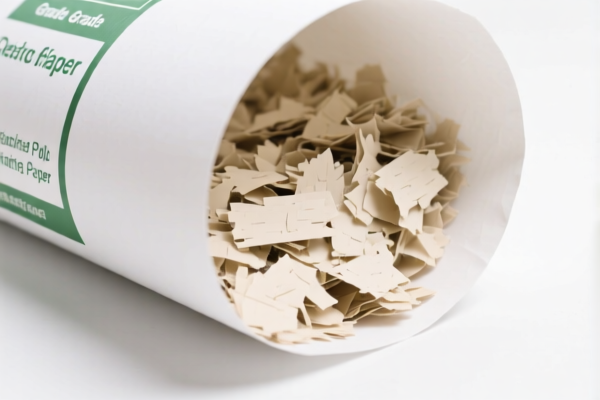
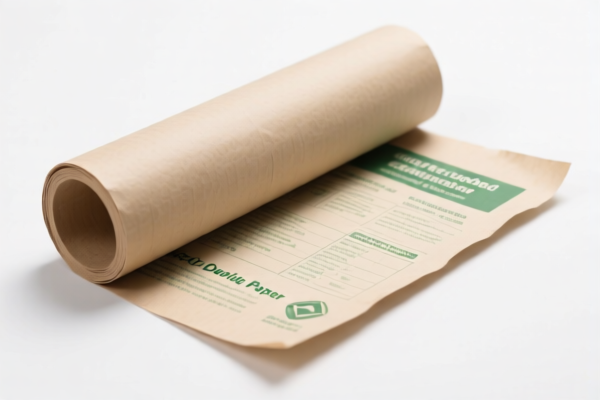
AI分析
📄 High Grade Bleached Chemical Pulp Deinked Paper
🌐 HS Code Reference & Customs Clearance Guide | 2026 Latest Tariff Analysis | Strategic Clearance Strategy
📌 Part 1: Product Definition & Classification: Do You Really Understand "Deinked Paper"?
Deinked Paper, in international trade, refers to paper or paperboard that has undergone a deinking process to remove ink, typically used for producing high-quality white paper. It is primarily derived from chemical pulp or mixed pulp sources.
In the context of US imports from China, this product is highly sensitive to trade policies and is subject to significant additional tariffs. It generally falls under Chapter 48 of the HTSUS (Harmonized Tariff Schedule of the United States).
⚠️ Key Classification Distinction:
- If the product is classified strictly as paper (flat sheets), it may fall under 4805.
- If it is classified as paperboard (thicker, stiffer sheets), it may fall under 4707 or 4810.
- Crucial Note: Regardless of the specific subheading, all identified HS codes for this product from China are subject to a 35% Total Tax Rate (Base 0% + Section 301 Tariff 25% + IEEPA Tariff 10%).
📦 Part 2: HS Code Classification Details (2026 Latest Tariff Authority Mapping)
| HS Code | Product Description | Applicable Scenario | Tax Status |
|---|---|---|---|
4805.11.00.00 |
Chemical pulp deinked paper; Material: Chemical pulp; Form: Paper | Standard deinked paper made purely from chemical pulp | ⚠️ 35% |
4707.20.00.20 |
High-grade bleached chemical pulp deinked paper; Made from bleached chemical pulp | Premium white deinked paper, often used for newsprint or light printing | ⚠️ 35% |
4707.20.00.40 |
Deinked paper classified as paperboard; Specific processed form under "Other" | Thicker deinked material classified as paperboard rather than paper | ⚠️ 35% |
4805.19.10.00 |
Paper and paperboard material; Deinked paper as a processed form classified as "Other" | General deinked paper falling under "Other paper of wood pulp" | ⚠️ 35% |
4810.99.10.60 |
High-whiteness deinked paperboard; Meets paper/board material requirements; Classified as "Other" | High-quality white deinked paperboard, potentially coated or uncoated | ⚠️ 35% |
🔍 Critical Reminder:
- All five HS codes listed above share the same total tax rate of 35%.
- The difference lies in the physical description (Paper vs. Paperboard) and the specific material composition (Chemical Pulp type).
- Do not assume lower tariffs: Even if the base duty is 0%, the additional tariffs push the total to 35%.
💰 Part 3: 2026 Latest Tariff Rate Breakdown (Including Surtaxes & Policy Surcharges)
✅ Applicable Country: United States (US)
✅ Country of Origin: China (CN)
✅ Effective Time: From November 10, 2025 (and subsequent imports)
🎯 1. Universal Tariff Structure for Deinked Paper
| Item | Content |
|---|---|
| Base Duty Rate | 0% (Ad Valorem) |
| USITC Additional Tariff (Section 301) | +25% (Under USITC Footnotes for Chapter 48/47) |
| IEEPA Additional Tariff | +10% (Targeting China/HK products, effective from Nov 10, 2025) |
| Total Effective Tax Rate | 35.0% |
| Tax Calculation | CIF Value × 35% |
| De Minimis Exemption Eligibility | ❌ NOT Eligible (deny_de_minimis) |
| Legal Basis Path | IEEPA:9903.01.25 → IEEPA:9903.01.24 → USITC:4805.11.00.00/4707.20.00/4810.99 → FOOTNOTE:301-related |
📌 Explanation:
- The 25% Section 301 Tariff is imposed under the US Trade Act of 1974, Section 301, targeting Chinese imports.
- The 10% IEEPA Tariff is imposed under the International Emergency Economic Powers Act, specifically targeting goods from China.
- Total 35% is a high-cost burden. Businesses must factor this into their landed cost calculations immediately.
- No De Minimis Exemption: Unlike small packages, commercial shipments of deinked paper cannot use the $800 de minimis exemption to avoid duties.
🛠️ Part 4: Customs Clearance Practical Advice (Risk Avoidance Guide)
✅ 1. Document Checklist (None Can Be Missing)
| Document | Required | Explanation |
|---|---|---|
| ✅ Product Specification Sheet | ✔️ | Must clearly state: Material (Chemical Pulp), Bleaching Status, Deinking Process, Whiteness Index (if applicable). |
| ✅ Product Photos | ✔️ | Clear images showing the paper texture, thickness (to distinguish Paper vs. Paperboard), and packaging. |
| ✅ Commercial Invoice | ✔️ | Must explicitly state: "Deinked Paper Made from Chemical Pulp" and accurate HS Code. |
| ✅ Packing List | ✔️ | Detailed weight and dimensions to support volume-based assessments. |
| ✅ Origin Certificate | ✔️ | Prove origin is China (triggers the 35% tax). If from Vietnam/Mexico, provide proof to avoid China-specific surcharges. |
| ✅ Third-Party Test Report | ✔️ | Optional but helpful: Verify pulp type and ink removal efficiency if questioned by customs. |
✅ 2. Declaration Techniques (Key Tips)
🔥 “Be Precise, Be Honest, Avoid Misclassification!”
| Scenario | Correct Declaration | Wrong Action |
|---|---|---|
| High-Gloss Deinked Paper | Declare as 4805.11.00.00 or 4810.99.10.60 depending on thickness |
Misdeclare as standard waste paper → Severe penalties |
| Thick Deinked Board | Declare as 4707.20.00.40 (Paperboard) |
Declare as thin paper → Classification error |
| Bleached Chemical Pulp | Emphasize "Bleached Chemical Pulp" in description | Vague description like "Recycled Paper" → Risk of audit |
| Mixed Pulp | Must declare exact pulp composition | If not chemical pulp, different HS code may apply (but still likely 35% if from China) |
✅ 3. Special Situations Handling
| Situation | Handling Advice |
|---|---|
| OEM Custom Deinked Paper | Provide customer orders and design specs. Avoid vague terms. |
| Ships from Vietnam but Origin is China | DO NOT claim Vietnamese origin without true transshipment proof. US Customs will look for "Substantial Transformation." If not transformed, still subject to 35%. |
| Small Samples vs. Commercial Bulk | Both are NOT eligible for de minimis if classified under these HS codes. Ensure proper entry type. |
| Alternative Sourcing | Consider sourcing from Southeast Asia (Vietnam, Thailand) or Mexico to potentially qualify for lower tariffs (0-5%) if truly manufactured there. |
🌍 Part 5: Global Market Comparison (2026 Latest)
| Country/Region | Recommended HS Code | Tariff (China Origin) | Certification | Notes |
|---|---|---|---|---|
| 🇺🇸 USA | 4805.11.00.00 / 4707.20.00.20 etc. |
35% (0% Base + 25% Sec 301 + 10% IEEPA) | None specific | High tariff barrier. |
| 🇨🇳 China | 4805.11 / 4707.20 |
0% (Import) | None | Domestic production. |
| 🇪🇺 EU | 4805.11 / 4707.20 |
6.5% - 8.5% | CE (if applicable) | No Section 301/IEEPA surcharges. |
| 🇬🇧 UK | 4805.11 / 4707.20 |
6.5% - 8.5% | UKCA | Post-Brexit standards. |
| 🇯🇵 Japan | 4805.11 / 4707.20 |
0% - 2.5% | JIS | Favorable for Asian imports. |
📌 Conclusion:
- USA is the only major market imposing the 35% effective tariff on Chinese deinked paper.
- EU, UK, Japan have much lower tariffs (0-8.5%).
- Strategic Advice: If targeting the US market, consider supply chain diversification to non-China origins to avoid the 35% cost.
📌 Part 6: Common Mistakes & Pitfalls (Lessons Learned)
❌ Mistake 1: Classifying deinked paper as "Waste Paper" (4707.10 or 4707.30)
👉 Consequence: Waste paper has different tariff rules. Misclassification leads to audits, fines, and cargo detention. Deinked paper is a finished/sorted product, not raw waste.
❌ Mistake 2: Ignoring the 10% IEEPA Surcharge
👉 Consequence: Many traders only account for the 25% Section 301 tariff. Missing the additional 10% leads to underpayment and penalties. Total is 35%, not 25%.
❌ Mistake 3: Assuming "De Minimis" applies for small shipments
👉 Consequence: Deinked paper HS codes are denied de minimis. Even small commercial shipments must file formal entries and pay the 35% tax.
❌ Mistake 4: Vague Product Descriptions
👉 Consequence: "Recycled Paper" is too vague. Customs may reject the entry or assign a higher duty code. Use precise terms: "High Grade Bleached Chemical Pulp Deinked Paper."
✅ Correct Practice:
"Deinked Paper, Made from 100% Bleached Chemical Pulp, White, 60-80 GSM, for Printing"
Ensure the description matches the physical reality and the chosen HS Code.
🎯 Part 7: Conclusion: Professional Declaration Saves Money!
🎯 Remember the Golden Rules:
🔹 “US Market + China Origin + Deinked Paper = 35% Tax”
🔹 “No De Minimis Exemption for This Category”
🔹 “Distinguish Paper vs. Paperboard for Correct HS Code, But Tax Rate Stays 35%”
🔹 “Consider Sourcing from Vietnam/Mexico to Avoid US Surcharges”
📌 Pro Tip:
If your deinked paper is truly manufactured in Vietnam, Thailand, or Mexico (not just transshipped), you may qualify for 0-5% tariffs in the US. Ensure your Certificate of Origin and Bill of Lading reflect the true country of manufacture. Consider applying for an Advance Ruling from US Customs to confirm your classification and avoid post-entry audits.
📣 Immediate Action:
📞 Consult a licensed customs broker + Provide precise product specs + Evaluate supply chain alternatives for US market
🚀 Avoid the 35% Tax Trap! Streamline your clearance, protect your margins!
✨ Professional Customs Clearance Starts with Accurate Classification!
💼 Every percentage point of tariff impacts your bottom line!
用户评价
关于 HS 编码归类
协调制度(HS)是由世界海关组织(WCO)制定的国际贸易商品分类标准。全球 200 多个国家采用 HS 系统作为海关关税、贸易统计和进出口监管的基础。
每个 HS 编码遵循以下层级结构:
- 章(2 位)——商品大类(例如:第 84 章:机器和机械设备)
- 品目(4 位)——章内的更具体分类
- 子目(6 位)——国际通用细分,所有 WCO 成员国统一使用
- 本国细分(8-10 位)——各国自行扩展的细分编码,如美国 HTSUS 10 位编码
正确的 HS 编码归类对于顺利通关、准确缴纳关税和遵守贸易法规至关重要。错误归类可能导致海关延误、多缴关税或罚款。
从CN进口到US时,适用的关税税率可能包括:
- 最惠国(MFN)税率——适用于 WTO 成员国的标准关税税率
- 普通税率——适用于无贸易协定国家
- 贸易救济关税——附加关税,如 301 条款(反倾销)、232 条款(国家安全)或反补贴税
本页内容仅供参考。如需正式归类,请咨询当地海关或持牌报关代理。